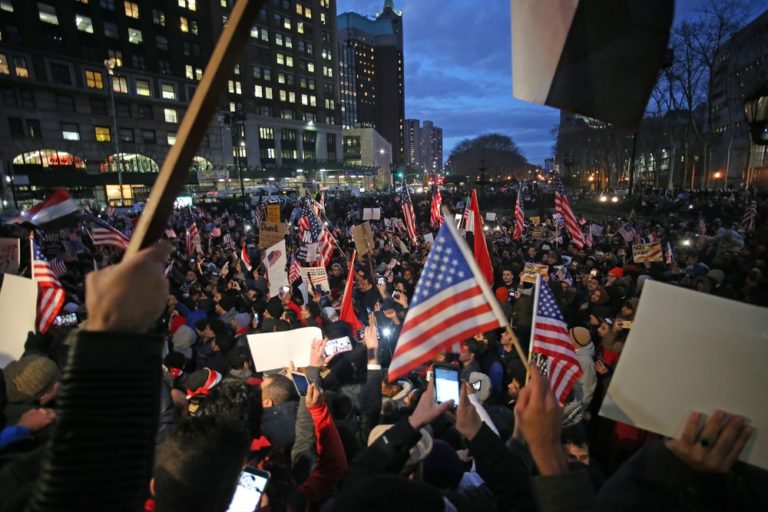
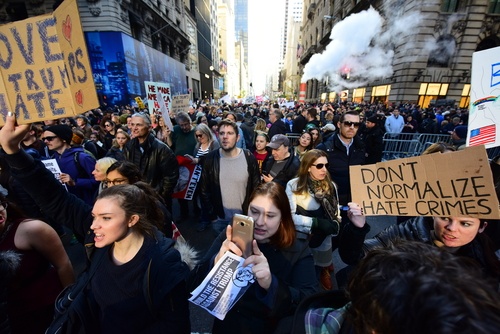
Hundreds of people came together in downtown Las Vegas on Wednesday night to voice their opposition to recent immigration raids and the Trump Administration’s deportation plans. The large crowd assembled on Las Vegas Boulevard, near the Federal Courthouse, causing several streets in the area to close.
The protesters carried signs and banners, chanting slogans against the government’s immigration policies. Many expressed concerns about families being separated and the fear of living in uncertainty.
Police Presence and Crowd Control
The Las Vegas Metropolitan Police Department was heavily involved in managing the protest. Officers in riot gear were seen lining the streets to prevent the situation from escalating further.
As the protest grew more intense, police deployed tear gas, flash-bang grenades, and rubber bullets to disperse the crowd. These measures were taken to restore order and ensure public safety, according to authorities.
What Happened Next
After the police intervention, many protesters left the area, but some remained, continuing to voice their concerns. The streets remained closed for several hours, causing disruptions to traffic and local businesses.
By late Wednesday night, the situation had calmed, but the impact of the protest was clear. The event highlighted the strong feelings of the community regarding immigration policies.
Why This Matters
The protest in Las Vegas is part of a larger movement across the U.S. opposing the Trump Administration’s immigration policies. Many people feel these policies are unfair and harm families and communities.
immigration is a complex issue, and events like this show how deeply it affects people. The protest also raises questions about how police handle large gatherings and the balance between public safety and First Amendment rights.
Looking Ahead
It’s unclear what will happen next, but one thing is certain: the debate over immigration policies will continue. More protests and discussions are likely as the community seeks solutions to these challenges.
For now, the people of Las Vegas and others across the country will keep watching and waiting to see how the government responds to their concerns.
The proposed 2026 budget may cut funding for LGBTQ-specific suicide hotline services.
The 988 suicide prevention line will still receive $520 million, same as last year.
LGBTQ youth face higher suicide rates, making specialized services crucial.
Understanding the Budget Cut: The Department of Health and Human Services has proposed a budget for 2026 that affects funding for specialized suicide prevention services tailored for LGBTQ youth and young adults. While the overall funding for the 988 suicide prevention line remains the same at $520 million, the specific support for LGBTQ-focused counseling will no longer be funded. This change has raised concerns about the impact on mental health support for this vulnerable group.
Impact on LGBTQ Youth: LGBTQ youth are at a higher risk of suicide due to unique challenges like bullying, discrimination, and family rejection. Specialized services provide understanding and tailored support, essential for their mental health. Losing this funding may leave many without the help they need.
Importance of Specialized Support: Dedicated services ensure that LGBTQ youth receive culturally competent care, addressing their specific experiences. Without these funds, accessing such specialized help might become difficult, potentially increasing mental health struggles within the community.
What You Can Do: If this issue concerns you, consider reaching out to elected officials to express your views. Staying informed and advocating for mental health support can make a difference. Together, we can ensure all youth have access to the help they need.
Conclusion: The proposed budget cut risks reducing vital support for LGBTQ youth. While the 988 line remains funded, losing specialized services could have serious implications. Advocating for continued support is crucial to protecting these essential resources.
About the Author: [Your Name] is a writer for Digital Chew, focusing on mental health and youth issues.
Texas Governor Greg Abbott deploying National Guard to maintain order.
Protests against ICE spread from Los Angeles to other parts of the country.
Hundreds arrested in LA during anti-ICE demonstrations.
Planned protest in San Antonio prompts Texas to take action.
Texas Takes Action as Anti-ICE Protests Grow
Tensions are rising across the U.S. as protests against Immigration and Customs Enforcement (ICE) continue to spread. Texas Governor Greg Abbott announced that the National Guard will be deployed to help keep the peace during these demonstrations.
Abbott made the announcement on social media, stating, “Peaceful protest is legal. Harming a person or property is illegal and will lead to arrest.” He also mentioned that the Texas National Guard will work closely with law enforcement to maintain order.
The decision comes after anti-ICE protests in Los Angeles led to hundreds of arrests. These protests began on Friday and have since gained attention nationwide. Now, similar demonstrations are planned in other cities, including San Antonio, Texas.
What’s Happening in Texas?
Governor Abbott’s decision to deploy the National Guard is a direct response to the growing protests. The Texas National Guard will be sent to areas where protests are expected to occur.
Meanwhile, a major protest is planned in San Antonio, and officials are preparing for potential disruptions. Abbott emphasized the importance of balancing peaceful protest with public safety.
Protests Spread Across the Country
The protests originally started in Los Angeles, where hundreds of people gathered to voice their opinions about ICE. The demonstrations turned chaotic, leading to arrests and concerns about safety.
As the protests grow, other cities are now seeing similar movements. This has put law enforcement and state leaders on high alert.
Understanding the Situation
Peaceful protests are a fundamental right in the U.S., but they can sometimes turn violent. When this happens, law enforcement steps in to protect people and property.
In Texas, Governor Abbott is taking a proactive approach by involving the National Guard. This is not the first time the Guard has been deployed to manage protests, but it highlights the seriousness of the situation.
What’s Next?
The situation remains uncertain as protests are expected to continue. Texas officials are urging everyone to remain calm and respect the law.
Abbott’s message is clear: peaceful protest is allowed, but any harm to people or property will not be tolerated. The Texas National Guard is ready to assist law enforcement in maintaining order.
Introduction: Rising Tensions Between Israel and Iran
Tensions are escalating in the Middle East as Israel signals its readiness to strike Iran, prompting the U.S. to issue urgent warnings. This potential conflict could have far-reaching consequences, impacting Americans abroad and regional stability. Let’s break down the situation and what it means for everyone involved.
Key Takeaways:
Israel is prepared to launch an operation in Iran, according to U.S. officials.
The U.S. fears Iran may retaliate against American targets in Iraq.
The State Department has advised some Americans to leave Iraq due to heightened tensions.
The Pentagon is allowing military families to depart the area as a precaution.
This escalation adds to ongoing concerns about regional stability.
Why Is This Happening?
The conflict between Israel and Iran is rooted in years of political and ideological differences. Israel views Iran’s nuclear Program as a significant threat, fearing it could lead to the development of nuclear weapons. Iran, however, claims its program is for peaceful purposes. This longstanding rivalry has often led to covert operations and public threats, creating a volatile situation in the region.
What’s the US Doing?
In response to the potential threat, the U.S. State Department issued an advisory urging some Americans to leave Iraq. This move reflects a proactive approach to protect citizens from possible Iranian retaliation. Additionally, the Pentagon has given military families the option to leave the area, highlighting the seriousness of the situation.
What Does This Mean for the Region?
The Middle East is already a volatile region, and this potential conflict could destabilize it further. Iran might target American interests in Iraq, leading to broader conflict. Additionally, such actions could disrupt global oil supplies, affecting economies worldwide.
Conclusion: A Delicate Situation
As Israel readies for a potential strike on Iran, the U.S. is taking cautious steps to protect its citizens. The situation is fraught with uncertainty, and the world waits to see how these tensions will unfold. Whether through diplomacy or conflict, the implications are significant, reminding us of the fragility of peace in the region.
Protests in Los Angeles over Trump’s immigration policies show differing media coverage approaches.
Some media outlets provide balanced reports, while others show clear bias.
Balanced coverage includes both peaceful and violent incidents and quotes from various perspectives.
Biased outlets often focus on one narrative, either downplaying or exaggerating violence and excluding opposing views.
Introduction: The recent protests in Los Angeles against the Trump administration’s immigration policies have brought attention to how media outlets report such events. While some strive for balance, others take sides, affecting public perception.
Balanced Coverage: Certain news outlets are commended for their balanced approach. They report on peaceful demonstrations and instances of violence, giving a complete picture. These outlets seek opinions from both critics of Trump’s policies and supporters, offering readers a nuanced understanding of the complexities involved.
Biased Coverage: Conversely, some media outlets lean heavily towards one side, sometimes ignoring the broader context. This bias can mislead the public by highlighting only parts of the story that align with their viewpoint. For example, some may focus solely on peaceful protests while others emphasize violence, creating a skewed narrative.
Impact of Biased Coverage: Biased reporting can lead to misinformation and reinforce existing beliefs, polarizing the public. It can also alienate those seeking unbiased news, potentially eroding trust in media overall.
Conclusion: The media plays a crucial role in shaping public opinion. By striving for neutrality and providing diverse perspectives, they can help the public form informed opinions. Encouraging balanced reporting is essential for fostering understanding in such contentious times.
Introduction: Recent actions by ICE have sparked controversy as legal residents face deportation or detention. This has raised questions about justice and fairness in the system.
Legal and Protected Status Explained: People with legal status or protected visas have the right to live in the U.S. These designations often reflect a need for safety or family ties.
Reasons Behind Deportations:
Anti-Israel Speech: Some deportations cite public statements critical of Israel, raising free speech concerns.
Criminal Charges: In some cases, minor offenses, like visa violations, are cited, leading to severe consequences.
National Security: Broad terms justify some deportations, some argue without clear evidence.
Minor Offenses: Deportations are sometimes based on unpaid fines or minor crimes, seen as unfair.
Notable Cases:
Kilmar Abrego Garcia: Deported despite deep community ties, highlighting family impact.
Rumeysa Öztürk: Faced deportation over minor legal issues despite protected status.
Mahmoud Khalil: Questions about national security concerns without evidence.
Consequences and Impact: Deportation can separate families, end careers, and affect mental health. It also allege fear in immigrant communities.
Response and Debate: Supporters argue for following laws, while critics see it as targeting certain groups. A balanced approach is urged.
Conclusion: These actions challenge the balance between law enforcement and human rights, emphasizing the need for a fair system.
The Trump administration rapidly deployed National Guard troops to LA without proper paperwork, leaving them unpaid and without benefits.
Troops face poor living conditions and supply issues.
Local community support is lacking, contrasting with usual positive reception during disasters.
Introduction: In a hurried move, the Trump administration sent California National Guard troops to Los Angeles to assist ICE agents, bypassing Governor Gavin Newsom’s request. This deployment has led to significant issues, as the Pentagon neglected essential paperwork, leaving troops unpaid and without benefits.
The Paperwork Problem: The Pentagon’s oversight has left troops without formal activation orders, crucial for pay and benefits. This administrative delay has caused frustration among service members, highlighting a lack of prioritization for their welfare.
Poor Living Conditions: Troops are enduring subpar conditions at staging areas like Naval Weapons Station Seal Beach, where they sleep on cots due to space shortages. Intermittent food and fuel supplies further exacerbate their challenges.
Community Backlash: Unhappy with the militarized presence, local merchants are withholding support, a stark contrast to the usual welcome during disasters. This cool reception adds to the troops’ difficulties.
A Stark Contrast to Previous Deployments: Unlike past missions, such as wildfire assistance, where communities generously provided supplies, this deployment has seen little support, straining troop morale and community relations.
The Impact on Troops: The combination of unpaid work, poor conditions, and community resentment has led to low morale and a sense of isolation among troops, emphasizing the mission’s mismanagement.
A Mission Gone Wrong: The rushed deployment and subsequent neglect of troops’ needs reflect poor planning and a disregard for their welfare, raising questions about the administration’s priorities.
Conclusion: The situation in LA underscores the importance of proper planning and support for troops, highlighting the need for accountability to ensure their well-being and effective mission execution.
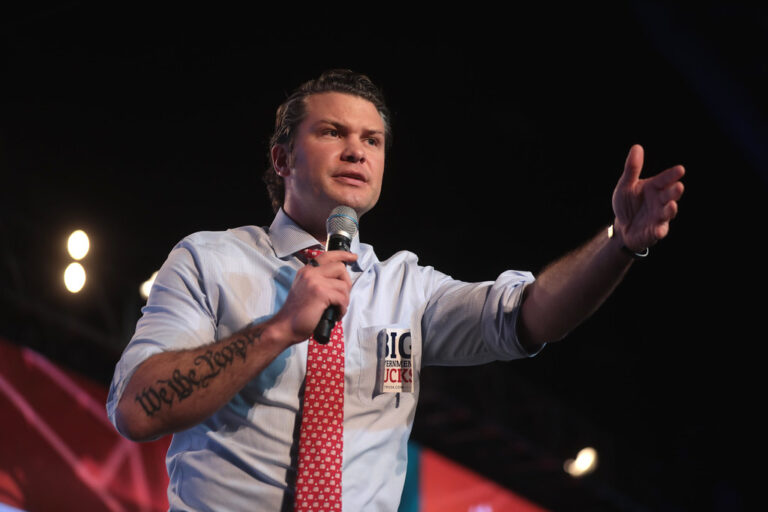
Defense Secretary Pete Hegseth declined to confirm or deny U.S. plans to invade Greenland.
Rep. Mike Turner expressed alarm over potential military actions in Greenland.
Greenland’s strategic resources and bases make it geopolitically significant.
The incident raises questions about U.S. foreign policy and international relations.
What Happened?
During a recent House Armed Services Committee hearing, Defense Secretary Pete Hegseth caused surprise when he did not deny U.S. plans to invade Greenland. Rep. Mike Turner (R-OH) pressed Hegseth on whether the Pentagon had such plans. Hegseth stated they prepare for all contingencies, adding they aim to secure Greenland from threats, prompting concerns about potential military action.
Why Is Greenland Important?
Greenland’s strategic location in the North Atlantic and access to resources like rare earth minerals make it crucial. The U.S. has a military base there, vital for defense. Its ice cap offers insights into climate change, and potential mineral wealth attracts global interest, making it a hotspot for geopolitical competition.
What Happens Next?
Hegseth’s response has sparked speculation about U.S. intentions. While some see it as routine contingency planning, others fear aggressive expansion. The administration has not detailed any specific plans, leaving many uncertain about U.S. policy towards Greenland.
Public Reaction
Critics argue that invading Greenland would undermine U.S. values of diplomacy and respect for sovereignty. Others highlight the potential economic and strategic benefits. The incident has drawn international attention, with Denmark, Greenland’s governing nation, likely to be concerned about their territory’s autonomy.
Conclusion
Secretary Hegseth’s refusal to deny invasion plans has raised major concerns, highlighting the complexity of geopolitical strategies. The situation underscores the need for clarity in U.S. foreign policy, ensuring actions align with stated values and international norms. As the story unfolds, it may reveal more about U.S. intentions and global reactions.
In a surprising turn of events, Donald Trump recently reversed his decision to exclude Senator Rand Paul from a White House picnic. This reversal has sparked curiosity and skepticism, especially after Paul’s opposition to a major budget bill. The situation has unfolded with Trump extending an olive branch, but some question his motives.
Paul’s Perspective:
Senator Rand Paul was initially excluded from the event, allegedly due to his opposition to a significant budget bill. Paul expressed his feelings, calling the situation both silly and sad, suggesting it reflected a petty mentality.
Trump’s Reversal:
Trump then extended a new invitation to Paul, praising him as a tough senator. Trump hinted that the invitation might help secure Paul’s vote for the budget bill, emphasizing the bill’s importance for the country.
Sharpton’s Insight:
MSNBC’s Al Sharpton cautioned Paul to be wary, suggesting Trump’s invitation might be a strategic move. Sharpton implied that Trump could use the event to pressure Paul publicly, a tactic seen with other leaders.
Implications:
This situation highlights the complex dynamics in politics, where relationships and decisions can shift rapidly. It also underscores the strategic maneuvering that often occurs behind the scenes in Washington.
Conclusion:
As the story unfolds, the true motives behind Trump’s invitation remain unclear. Whether it’s a genuine gesture or a strategic play, the outcome could influence both Paul’s vote and the political landscape. Stay tuned for further developments in this evolving narrative.
Thousands protest Trump’s immigration policies and federal intervention in cities.
People unite despite differences to oppose what they call undemocratic actions.
Protests remain peaceful but face police pushback in some areas.
Solidarity movements grow as ordinary citizens join the fight for rights.
Across America, people from all walks of life are coming together to stand up for what they believe in. From coast to coast, protests have erupted in cities big and small, showing a united front against President Trump’s policies. Whether it’s immigration, federal troop deployment, or the treatment of immigrants, Americans are making their voices heard.
This week, protests took place in over 100 cities, from Kansas City to Sacramento. People carried signs, chanted slogans, and shared stories of why they’re fighting. Many expressed anger over Trump’s policies, which they say target immigrants unfairly and threaten basic rights.
Kansas City, Missouri
In Kansas City, protesters marched from an underpass to the World War I Museum and Memorial. One marcher told a local news station, “I felt it was my duty to come here and yell.” The peaceful demonstration showed how ordinary citizens are stepping up to make a difference.
Denver, Colorado
In Denver, a crowd gathered outside the state capitol to protest Trump’s immigration policies. They carried flags and signs with messages like “No human is illegal.” The protest was a show of solidarity with immigrants and a call for change.
Tucson, Arizona
Hundreds met at the Garces Footbridge in Tucson. After the protest, chalk messages like “Love over Hate” and “Free Our Families” remained on the sidewalks. These messages reflect the hope and determination of the people.
Boston, Massachusetts
Outside the Massachusetts State House, protesters spoke out against Trump’s “reign of terror over the immigrant community.” They highlighted the cases of two local students detained by ICE without reason.
Sioux City, Iowa
Protesters marched along Singing Hills Boulevard, near the ICE office. One participant, Zayden Reffitt, said, “We’re not going to be silent. We’re going to say something about it.”
Chicago, Illinois
Thousands marched through the Loop, shutting down roads and public transport. Protesters chanted, “Whose streets? Our streets,” and supported each other when police tried to detain a man. Ivanna Vidal, a first-generation citizen, said, “I’m standing up for those who can’t speak for themselves.”
Des Moines, Iowa
At Cowles Commons, protesters rallied for immigrants, refugees, and the working class. Jake Grobe said, “We’re all under attack, and we’re here to stand up for each other.”
Austin, Texas
In Austin, around 500 people marched to the J.J. Pickle Federal Building. Police used pepper spray and arrest over a dozen, but the protesters didn’t back down.
San Antonio, Texas
Hundreds gathered outside City Hall, chanting, “People united will never be divided!” Signs read, “No human is illegal” and “I’m speaking for those who can’t.”
Sacramento, California
Protesters marched to the ICE federal building, carrying signs and banners. One participant, Chris, said, “We need people to get out there. It’s all about the numbers, getting people on the streets peacefully.”
The Reason Behind the Protests
These protests aren’t just about immigration. They’re about standing up for basic rights and standing against what many see as undemocratic actions by the Trump administration.
Deployment of Federal Troops
Many Americans are upset about federal troops being sent to cities where local leaders say they’re not needed.
Arbitrary Detentions
Protesters are angry over reports of federal agents detaining people without proper process. They say no one should be taken away without a fair chance to prove their case.
Targeting Hardworking Immigrants
Immigrants who contribute to their communities are being targeted, arrested, and even deported to dangerous places. Protesters say this is unfair and hurts families.
Freedom of Speech
People believe peaceful protests are a fundamental right. They’re speaking out against any effort to silence or punish those who express their views.
Military Parades and Waste
Some protesters also criticize Trump for spending millions on a military parade that they see as a way to celebrate himself.
A Growing Movement
What’s clear is that these protests are not just about one issue. They’re about standing up for what’s right.
Peaceful But Powerful
Most protests have been peaceful, but that doesn’t mean they’re quiet. Marchers are making noise and making their voices heard.
New Faces in the Crowd
Many people who’ve never protested before are joining in. They feel it’s their duty to stand up for others.
Solidarity Across America
Even though these protests don’t always make national news, they’re happening everywhere. From small towns like Sioux City to big cities like Chicago, people are united.
Why It Matters
This solidarity is the foundation of the common good. It’s about coming together to fight for what’s right, even when it’s hard.
Robert Reich, a professor and former Labor Secretary, calls this the “silver lining” of the Trump era. As more people stand up, the movement grows stronger.
The Future of Resistance
As protests continue, one thing is clear: Americans are not giving up. They’re finding courage in each other and standing up to Trump’s policies.
When people come together, they feel less afraid and more empowered. This unity is weakening Trump’s power and giving hope for a better future.
In the end, these protests show that even in tough times, solidarity can bring light and strength to the nation.
Final Word: America’s strength lies in its people’s ability to unite for what’s right. As the protests grow, so does the hope for a fair and just future.