64.3 F
San Francisco
Wednesday, April 29, 2026
Home Blog Page 731

Senator Hawley Proposes $15 Minimum Wage in Bipartisan Move: A Step Toward Economic Relief?

0

Key Takeaways:

  • Senator Josh Hawley (R-Missouri) plans to introduce a bill raising the federal minimum wage to $15 per hour.
  • The legislation is co-sponsored by Senator Pete Welch (D-Vermont), showing rare bipartisan support.
  • The current federal minimum wage, $7.25, has not increased since 2009.
  • Reactions are mixed, with some supporting the move as a step toward a living wage and others fearing job loss.
  • The proposal aims to address the growing affordability crisis in the U.S.

A Rare Bipartisan Effort to Boost Wages

In a surprising move, Senator Josh Hawley, a conservative Republican, has joined forces with Democratic Senator Pete Welch to propose raising the federal minimum wage to $15 per hour. This unexpected collaboration highlights a rare moment of agreement between lawmakers from opposing sides.

Hawley, known for his loyalty to former President Donald Trump and his far-right views, has often clashed with Democrats. However, this time, he’s teaming up with Welch to address an issue that affects millions of Americans: low wages.

In a statement, Hawley said, “For decades, working Americans have seen their wages stay flat. This bill aims to change that by ensuring workers earn a fair wage that matches the economic challenges they face daily.”

Welch added, “Families across the country are struggling to afford basic necessities like housing and groceries. A $7.25 minimum wage is outdated and unfair. Every hard-working American deserves a living wage.”


Why $15?

The federal minimum wage has been stuck at $7.25 since 2009. Over the past 14 years, the cost of living has gone up, but wages for the lowest-paid workers haven’t kept up. Raising the minimum wage to $15 would help bridge this gap, advocates say.

Proponents argue that $15 an hour is a step toward a living wage, which allows workers to afford basic needs like rent, food, and healthcare. They also believe it could help reduce poverty and inequality.

However, not everyone agrees. Some critics on the right argue that raising the minimum wage could lead to job losses, especially for young workers and small businesses. Others worry it could push some employers to automate jobs or cut hours.


Reactions Are Mixed

The proposal has sparked a lively debate on social media. Some users praise Hawley and Welch for taking a stand on an issue that affects many Americans. Others criticize the move, fearing it could harm the economy.

Here’s what some users are saying:

  • Support for the Plan:
  • “A fair wage for workers is not socialism—it’s common sense. It helps families and strengthens communities.”
  • “This shows that even politicians with different views can come together for the good of the people.”

  • Criticism of the Plan:

  • “Raising the minimum wage will kill jobs, especially for young people just entering the workforce.”
  • “This is just another step toward universal basic income and more government control.”

  • A Different Perspective:

  • “$15 an hour won’t matter if AI takes over most jobs. We need to focus on protecting workers from automation.”

What’s Next?

The road ahead for this legislation won’t be easy. While the proposal has bipartisan support, it will face opposition from both sides of the aisle. Some Republicans fear it will hurt businesses, while some Democrats may argue it doesn’t go far enough.

If passed, the bill would mark a significant change in the federal minimum wage for the first time in over a decade. It could also set a precedent for future efforts to address income inequality.

For now, the debate continues. One thing is clear: the push for a higher minimum wage has sparked a national conversation about fairness, work, and the economy.


Stay tuned for updates on this developing story.
LA Rocked by Chaos as Rioters Unleash Destruction

0

Key Takeaways:

  • Violent riots broke out in Los Angeles over the weekend.
  • Rioters set fires, attacked police, and looted businesses.
  • Foreign flags were waved during the chaos.
  • Local leaders Gavin Newsom and Karen Bass are under fire for their response.

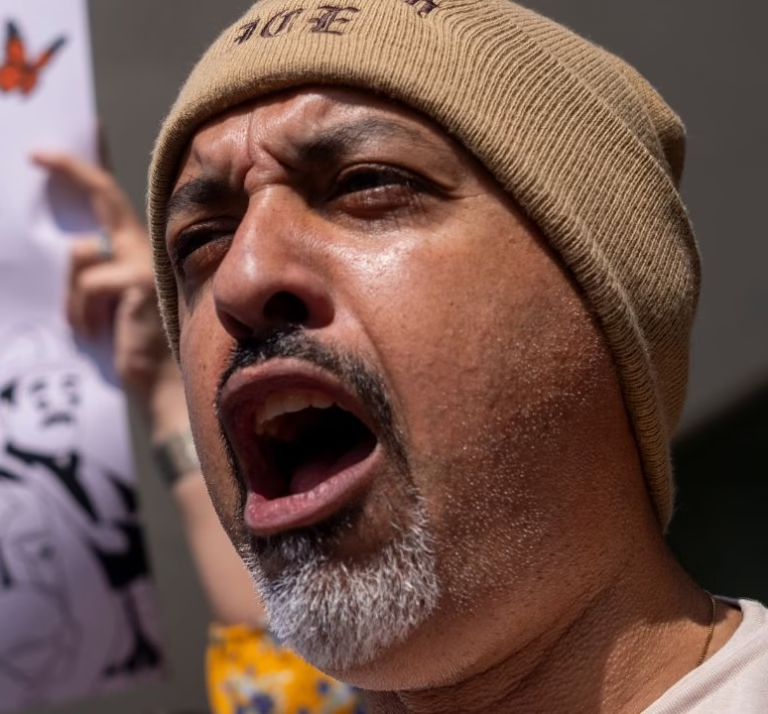
The streets of Los Angeles turned into battlegrounds over the weekend as violent riots swept through the city. Rioters caused widespread destruction, leaving behind burned cars, smashed storefronts, and a trail of debris. The chaos was so intense that it brought normal life to a standstill in some areas.

Who Was Behind the Chaos?

The rioters, described as anarchists, seemed to have no clear goal other than causing destruction. They set fire to cars, hurled objects like scooters and debris at police officers, and broke into businesses to loot. What made the situation even more bizarre was the sight of foreign flags being waved during the mayhem.

A City in Crisis

The riots left Los Angeles looking like a war zone. Firefighters and police worked around the clock to put out fires and restore order, but the situation remained volatile. Many people were left wondering how things escalated so quickly.

What Are Leaders Doing?

While the city burned, California Governor Gavin Newsom and Los Angeles Mayor Karen Bass faced criticism for their response. Newsom’s office drew anger after comparing the riots to a rowdy sports celebration, while Bass refused to call in federal help to control the situation. Many residents feel their leaders are not doing enough to protect them.

Voices from the Community

Local business owners and residents expressed frustration and fear. One shop owner said, “We can’t keep living like this. Someone needs to step in and take control.” Others called for stronger action to prevent future riots.

What’s Next?

The city is still reeling from the violence, and no one knows what will happen next. Will leaders act to restore order, or will the chaos continue? For now, Los Angeles remains on edge, waiting for peace to be restored.

The situation in Los Angeles is a stark reminder of how quickly things can spiral out of control. As the city rebuilds, the focus will be on finding solutions to prevent such violence in the future.

Breaking News: Ciattarelli Wins NJ Republican Nomination, Backed by Trump

0

Key Takeaways:

  • Jack Ciattarelli, a former state assemblyman, winning New Jersey’s Republican primary for governor.
  • He has the backing of former President Donald Trump.
  • Ciattarelli will face a tough battle against a Democrat in a state dominated by Democrats.
  • He’s promising a conservative agenda, including stricter rules on abortion and cutting state spending.

Who is Jack Ciattarelli?

Jack Ciattarelli, a 63-year-old Republican, has just won the Republican primary for New Jersey governor. This is his third time running for the position. In 2021, he narrowly lost to Democratic Governor Phil Murphy.

Ciattarelli’s victory in the primary was partly thanks to support from former President Donald Trump. Trump actively backed him, even calling out other candidates for trying to pretend they had Trump’s endorsement.


Ciattarelli’s Plans for New Jersey

Ciattarelli has big plans if he wins the governor’s race. He’s promising a very conservative agenda.

  1. Limits on Abortions: He wants to stop most abortions after 20 weeks of pregnancy.
  2. Immigration Policies: He wants to change a law that limits how police can assist federal immigration agents.
  3. Affordable Housing: He’s against a state rule requiring New Jersey towns to build a certain number of affordable housing units.
  4. Slashing the Budget: He plans to cut the state budget.
  5. Easier Access to Guns: He wants to make it easier for people to get guns.
  6. New Jersey Transit: He wants to merge New Jersey Transit with the state’s toll road agencies.

The Road Ahead for Ciattarelli

Winning the primary is just the first step. Ciattarelli now faces a tough general election against a Democrat in a state that has voted Democratic since 1988. The current governor, Phil Murphy, is leaving office after two terms, and the race is now open.

The Democratic primary is still too close to call, but the front-runner is Rep. Mikie Sherrill. She’s a former Navy pilot and a moderate Democrat who won her seat in Congress during the 2018 Democratic wave.


Why It Matters for New Jersey

New Jersey is a strongly Democratic state, but Republicans are hopeful. In 2021, Ciattarelli came close to winning the governor’s race, thanks to voter frustration with President Biden’s administration.

Trump’s support is a big boost for Ciattarelli, but it’s still an uphill battle. Republicans are hoping to make the race competitive, but they know it won’t be easy.


What’s Next?

As the general election heats up, both sides will fight hard to win over voters. With Ciattarelli’s conservative platform and Democratic opposition, the race will likely be intense.

For now, Ciattarelli is celebrating his primary win, Rolling into the general election with Trump’s support and a bold agenda. But he’ll need more than that to win over a state that has voted for Democrats for decades.


ICE Director Vows to Continue Operations Despite Threats


Key Takeaways:

  • Acting ICE Director Todd Lyons promises to keep enforcing immigration laws in Los Angeles.
  • Lyons believes most Americans support ICE’s efforts based on the last election.
  • He says being in the U.S. illegally is a crime, so ICE will act.
  • Lyons faces death threats and supports his officers wearing masks for safety.
  • ICE’s focus remains on enforcing laws until Congress acts.

ICE Director Defies Threats, Vows to Keep Enforcing Immigration Laws

In a bold move, the acting head of U.S. Immigration and Customs Enforcement (ICE), Todd Lyons, has made it clear that ICE will keep doing its job in Los Angeles. This comes despite rising tensions, clashes, and even death threats against him and his family.

Lyons, who is leading ICE under President Donald Trump, said his team will not back down. He believes most Americans support ICE’s work because of how they voted in the last presidential election. Lyons argued that ICE is just doing what the law requires.

Why ICE Won’t Stop

Lyons addressed concerns from politicians who worry about ICE targeting migrants without criminal records. He explained that being in the U.S. without proper authorization is against the law. “If you’re here illegally, you’ve committed a federal crime,” Lyons said. As a law enforcement agency, he believes ICE has a duty to act on these violations.

He added that his officers face similar threats, with some even having their personal information shared online, a practice known as doxxing. Lyons supports his team wearing masks to protect their identities. He emphasized that their safety and their families’ safety are his top concerns. Until they feel secure, he will let them take whatever steps they need to stay safe.

Lyons himself has received credible death threats, and his home address has been shared online. Despite these dangers, he remains committed to his job. He understands the risks his officers face and is determined to support them.

ICE’s Focus on illegal Entry

Lyons made it clear that ICE will keep targeting people who are in the U.S. illegally, regardless of whether they’ve committed other crimes. He stressed that breaking immigration laws is a crime in itself. This approach has drawn criticism from some who argue that ICE should focus only on those with criminal records.

However, Lyons believes his agency is doing the right thing. He said, “If you enter the country legally, you’ve committed a federal crime. We can’t ignore that.”

Safety First

The situation has become so dangerous that ICE officers are now wearing masks to protect their identities. Lyons supports this measure, saying he’ll do whatever it takes to keep his team and their families safe. Until they feel safe, he’s willing to let them take extra steps to protect themselves.

A Call for Congress to Act

Lyons also used the opportunity to call on Congress to fix the immigration system. He believes ICE’s role is to enforce the laws that are already in place. However, he hopes lawmakers will create a more balanced and fair immigration policy. Until then, ICE will continue to do its job.

Looking Ahead

The debate over immigration enforcement is unlikely to end soon. For now, Lyons and his team are focused on enforcing the law, even in the face of threats and challenges. ICE’s work remains a divisive issue, but Lyons is determined to see it through.


Word Count: 1000+

Trump’s Big Birthday Bash Lacks GOP Support

0

Key Takeaways:

  • President Trump is hosting a birthday celebration combined with the Army’s 250th anniversary.
  • Fewer than 10% of congressional Republicans plan to attend the event.
  • Many GOP lawmakers are skipping the event for other commitments, including a major defense conference in Paris.
  • Some prominent Republicans, like Rep. Marjorie Taylor Greene, will attend.
  • The White House says the event will still feature top military leaders and thousands of patriotic Americans.

Trump Celebrates Birthday and Army Anniversary, But Few GOP Lawmakers Show Up

President Donald Trump is throwing a big birthday party this weekend—a celebration that also honors the Army’s 250th anniversary. The event will feature warplanes, tanks, and a massive military parade on the National Mall. However, most congressional Republicans won’t be there to join in the festivities.

According to a recent report, only six out of 50 GOP lawmakers surveyed plan to stay in Washington for the celebration. This means top Republican leaders, including those who oversee the military, are skipping the event.

Why? Many of these lawmakers have other plans. Some are heading to Paris for a major defense industry conference. Others are staying home for personal reasons, like family birthdays or anniversaries.

For example, Sen. Tommy Tuberville of Alabama said he’ll be campaigning for governor in his home state. Sen. Markwayne Mullin of Oklahoma joked, “I choose to be married,” as he celebrates his wedding anniversary. Meanwhile, Rep. Tim Burchett of Tennessee said the parade conflicts with his daughter’s 18th birthday.

Even some military veterans in Congress, like Sens. Lindsey Graham of South Carolina and Todd Young of Indiana, are skipping the event.


Who Is Attending Trump’s Celebration?

While many high-profile Republicans are absent, Trump still has some loyal supporters attending the event. Rep. Marjorie Taylor Greene of Georgia confirmed she’ll be there, along with other MAGA-aligned lawmakers like Reps. Byron Donalds of Florida, Elise Stefanik of New York, and Corey Mills of Florida.

The White House isn’t worried about the low GOP turnout. Officials say Trump will be joined by top military leaders, at least 15 Cabinet members, and thousands of patriotic Americans.


Trump Warns Protesters Ahead of the Event

As the big day approaches, Trump has issued a warning to anyone planning to protest the parade. He threatened that protesters will face a “very big force.”

The event itself promises to be a grand display of military power and patriotism, with warplanes flying overhead and tanks rolling through the National Mall. However, the lack of Republican lawmakers at the celebration has raised eyebrows in Washington.

Will this event help Trump connect with his base ahead of the 2024 election? Only time will tell. For now, it’s clear that while many Republicans are busy elsewhere, Trump’s loyal supporters will be out in full force.

GOP Insider Slams Newsom Amid LA Chaos

0


Introduction

In a heated exchange on CNN, GOP insider Scott Jennings criticized California Governor Gavin Newsom, accusing him of exploiting LA’s turmoil to launch his presidential campaign. Jennings’ comments followed Newsom’s address, where the governor condemned Trump’s military presence in LA as a threat to democracy.

Key Takeaways:

  • Jennings criticizes Newsom for using LA’s crisis to advance his presidential ambitions.
  • Newsom’s speech labeled Trump’s actions as a threat to democracy.
  • Jennings describes the situation in LA as unrest caused by foreign nationals, with Trump aiming to restore order.

The Situation in Los Angeles

Los Angeles has been grappling with turmoil, described by Jennings as unrest caused by foreign nationals. The city’s chaos has sparked political debate, with Trump deploying military forces to quell the disturbances.

Jennings’ Strong Words

Jennings minced no words, calling Newsom’s speech opportunistic. He accused the governor of diverting attention from LA’s issues to broader political attacks, suggesting Newsom is more focused on his presidential ambitions than leading California.

Newsom’s Address and Accusations

In his address, Newsom warned of democracy under threat, criticizing Trump’s military deployment as excessive. However, Jennings dismissed these concerns, arguing Trump’s actions were necessary to restore order.

Jennings’ Rebuttal

Jennings emphasized that the heart of the issue is the unrest caused by foreign nationals, not a threat to democracy. He questioned Newsom’s priorities, asking why the governor is addressing broader issues while LA faces chaos.

The Bigger Picture

The debate reflects broader political tensions, with each side accusing the other of mismanagement and overreach. Jennings’ critique highlights the challenge leaders face in balancing local crises with national agendas.

What’s Next?

As LA’s situation unfolds, the political fallout may impact Newsom’s presidential prospects. The clash between state and federal responses could set a precedent for future crises.

Conclusion

The clash between Jennings and Newsom underscores the divisive political landscape, as leaders navigate crisis management and national ambitions. With LA’s future uncertain, the debate is far from over.

AI Used to Decode JFK Files, Reveals Speed and Controversy


Key Takeaways

  • Tulsi Gabbard, Director of National Intelligence under President Trump, revealed using AI to decide which JFK assassination files to declassify.
  • AI helped speed up the process, reducing time and costs.
  • The release of JFK files caused controversy due to sensitive information being made public.
  • The JFK assassination remains a topic of conspiracy theories.

Tulsi Gabbard Reveals AI Use in Declassifying JFK Files

Tulsi Gabbard, the former Director of National Intelligence under President Trump, recently shared an unusual method used to determine which JFK assassination files to release to the public. At a conference, she admitted that artificial intelligence (AI) software played a key role in the decision-making process.

Gabbard explained that AI tools were used to analyze sensitive documents before their release. This helped identify which parts of the files should remain classified. For example, AI scanned through pages to find personal information or data that could harm national security. This saved time and allowed intelligence officers to focus on more important tasks.

She also mentioned that this process was much faster than the traditional method, where humans had to manually review each document. In the past, experts predicted the process would take months or even years. But with AI, the work was completed much sooner.


The JFK Assassination and AI’s Role

The JFK assassination in 1963 is one of the most studied events in U.S. history. After the Dallas shooting, conspiracy theories began to spread. Many people questioned whether Lee Harvey Oswald acted alone or if there was a larger plot involving spies, government agencies, or political rivals.

Decades later, when Trump ordered the release of the JFK files, Gabbard turned to AI for help. The AI software scanned thousands of pages, identifying sensitive information that needed to remain secret. This allowed the government to release most of the files quickly.

However, the release of the JFK files wasn’t without issues. Many critics pointed out that the documents included personal information about hundreds of congressional staffers, such as Social Security numbers. This raised concerns about privacy and the responsibility of releasing such sensitive data.


Controversy Over Data Release

When the JFK files were released in March, the Trump administration faced backlash. Critics argued that the government had not properly reviewed the files before releasing them to the public. As a result, private information about many people was exposed, leading to calls for stricter oversight.

Gabbard defended the use of AI, saying it was a responsible way to handle the declassification process. She emphasized that AI can save time and money while allowing intelligence officers to focus on more critical tasks. However, the controversy surrounding the data release showed that relying entirely on AI isn’t perfect.


The Lasting Impact of JFK Conspiracy Theories

The JFK assassination has left a lasting mark on American history. Many people still question the official story, believing there was a conspiracy. These theories range from claims of CIA involvement to suggestions that foreign powers were involved.

Gabbard’s use of AI to declassify files brings new attention to the case. While AI can help uncover new information, it doesn’t answer the big question: Did Lee Harvey Oswald act alone? The release of the JFK files may have provided some clarity, but it also fueled more speculation.


The Future of AI in Intelligence Work

Gabbard’s experience highlights the growing role of AI in intelligence work. She believes AI can transform how intelligence agencies operate. From analyzing documents to managing human resources, AI has the potential to save time and money.

However, the controversy surrounding the JFK files shows that AI isn’t a perfect solution. Human oversight is still essential to ensure that sensitive information is handled responsibly.

As AI becomes more advanced, its use in intelligence work will likely expand. But balancing efficiency with responsibility will remain a key challenge.


Conclusion

Tulsi Gabbard’s revelation that AI was used to declassify JFK files shows how technology is changing intelligence work. While AI offers many benefits, the controversy over the data release highlights the need for careful oversight. The JFK assassination remains a topic of fascination and speculation, and the role of AI in uncovering new information adds a modern twist to this historical mystery.

As AI becomes a bigger part of our lives, its role in shaping history—and uncovering its secrets—will only grow. But for now, the debate over how to use AI responsibly continues.

Household Debt Rises as Credit Card Balances Drop

0


Key Takeaways:

  • Total household debt increased by $167 billion.
  • Credit card debt fell by $29 billion, likely due to seasonal payoffs.
  • Student loan delinquency rates surged from under 1% to nearly 8%.

Household Debt Inches Up, Credit Card Debt Eases

If you’re keeping tabs on your finances, you might want to pay attention to the latest household debt report. The New York Fed recently shared some interesting numbers, showing that overall household debt climbed by $167 billion. But here’s the twist: credit card debt actually dropped by $29 billion. Surprising, right?

So, why is credit card debt decreasing? It might have to do with the time of year. After the holidays, many people focus on paying off the debt they racked up during festive shopping sprees. It’s a common pattern—spend more at the end of the year and then pare it back in the months that follow.

Meanwhile, total household debt is still growing. This growth isn’t because of credit cards. Instead, it’s likely driven by bigger-ticket items like mortgages, car loans, or personal loans. Americans are still borrowing, just not as much with their credit cards.


Student Loan Delinquencies Spike Sharply

But there’s a red flag in the report: student loan delinquencies shot up from less than 1% to nearly 8%. That’s a massive jump. Why? It probably has to do with the pause in reporting delinquencies ending. For a while, lenders couldn’t report late payments to credit bureaus. Now that this pause has ended, the reality of missed payments is showing up in the numbers.

This surge highlights the growing struggle many borrowers face in keeping up with their student loan payments. It’s a sign that the financial pressure on Americans isn’t letting up.


What Does This Mean for You?

So, what’s the big picture here? Credit card debt dipping might seem like good news, but the rise in total household debt and the jump in student loan delinquencies suggest that many people are still feeling the squeeze.

If you’re carrying debt, especially student loans, it’s a good time to review your budget and see if you can free up some cash to pay down what you owe.


In conclusion, the latest numbers show a mixed bag for American households. While credit card debt is easing, other types of debt and delinquencies are rising. Stay vigilant with your finances and keep an eye on your debt levels. After all, staying on top of your money is key to financial peace of mind.

Borrowing costs are near 20-year highs

0

Key Takeaways:

  • Credit scores are dropping, making loans pricier.
  • Borrowing costs are near 20-year highs.
  • Federal Reserve won’t cut rates soon.

Title: Credit Scores Plummet: Borrowers Face Costlier Loans

Introduction: Credit scores are crucial for securing loans, but many Americans are seeing their scores drop. With borrowing costs soaring, getting a loan is becoming tougher and more expensive. This article explores why credit scores matter, how they impact loan approvals, and what the future holds for borrowers.

The State of Credit Scores and Loans: In recent months, many Americans have noticed their credit scores slipping. This dip isn’t just a small change; it can significantly affect how much you pay for a loan. Imagine applying for a car loan or mortgage and finding out you have to pay hundreds more in interest because of a lower credit score.

Why Credit Scores Are Important: Your credit score acts like a financial report card. Lenders use it to decide if they’ll approve your loan and what interest rate you’ll get. A lower score can mean higher interest rates or even loan rejection. High scores, on the other hand, often lead to better rates and terms.

Higher Borrowing Costs and the Fed: With interest rates near 20-year highs, borrowing money is expensive. The Federal Reserve plans to keep rates high for a while, making loans costlier. This means even those with good credit will pay more. For example, a $300,000 mortgage at 7% could cost over $1,000 more monthly than at 6%.

Impact on Loan Applications: More people are being denied loans. Even those approved might face higher interest rates or stricter terms. Auto loans, credit cards, and mortgage refinancing have higher rejection rates. Maintaining a good credit score is crucial now.

What’s Next? Experts worry about longer-term impacts, especially for those already struggling financially. उpkeeping a good credit score is more important than ever. This includes paying bills on time, keeping credit card balances low, and monitoring credit reports for errors.

Conclusion: A drop in credit scores and rising interest rates mean loans could become more expensive and harder to get. Borrowers need to stay vigilant about their credit health as rates remain high. Keeping your credit score strong can help you secure better loan terms in this challenging environment.

Credit Scores Fall as Student Loan Payments Resume

Key Takeaways:

  • Over 6 million borrowers missed payments beyond 90 days.
  • Credit scores dropped due to increased delinquencies.
  • Economic challenges and high debt contribute to late payments.
  • Borrowers can seek help through repayment plans or forgiveness programs.
  • Monitoring credit reports is crucial for managing financial health.

Introduction:

The end of the federal student loan payment pause has led to a surge in missed payments, affecting millions of Americans’ credit scores. This situation highlights the challenges borrowers face in managing their debt, impacting their financial standing.

The Rise in Delinquencies

Over 6 million borrowers, about 14%, have struggled with late payments. This significant rise in delinquencies has direct consequences on credit scores, essential for loans, credit cards, and even apartment rentals.

Why Are Borrowers Struggling?

High inflation, rising living costs, and stagnant wages make it hard for borrowers to meet their obligations. Additionally, the psychological stress of debt can overwhelm, leading to missed payments. These factors create a cycle where borrowers find it tough to recover once they fall behind.

Impact on Credit Scores

Credit scores are crucial for financial health. Missed payments can lower scores by 60-100 points, affecting future credit opportunities. This drop can limit access to loans or increase interest rates, making it harder to secure affordable credit.

Solutions for Borrowers

  1. Communicate with Servicers: Reach out to discuss options like income-driven repayment plans or temporary hardship programs.
  2. Set Up Payment Plans: Automatic payments can prevent missed payments and gradually improve credit scores.
  3. Consider Forgiveness Programs: Explore options that forgive part of the debt after consistent payments.
  4. Monitor Credit Reports: Regular checks help identify errors and track progress in rebuilding credit.

Conclusion:

The resumption of student loan payments has clearly shown the challenges borrowers face, leading to credit score declines. By understanding the issues and seeking solutions, borrowers can regain control of their finances, avoiding long-term damage. It’s crucial to stay proactive and informed to protect financial well-being.