52.8 F
San Francisco
Friday, May 8, 2026
Home Blog Page 857

Pope Leo XIV’s Brother Sets the Record Straight on His Policies

0

Key Takeaways:

  • Louis Provost, brother of Pope Leo XIV, says the new pope won’t push the Catholic Church toward radical progressive changes.
  • Pope Leo XIV will maintain changes made by Pope Francis but won’t shift the church hard left.
  • Provost confirms the pope is open to expanding roles for women but opposes women priests and gay marriage.
  • He predicts a “bumpy” meeting between Pope Leo XIV and Donald Trump but says the pope isn’t argumentative.

Pope’s Brother Talks Policy: No Radical Changes, But Some Surprises

Louis Provost, the brother of the newly elected Pope Leo XIV, recently shared his thoughts on what the future holds for the Catholic Church under his sibling’s leadership. In an interview on Piers Morgan Uncensored, Provost addressed rumors about his brother’s potential policies and what direction the church might take.

When asked if Pope Leo XIV would be a liberal pope, Provost was quick to say no. He made it clear that while his brother will keep the changes made by Pope Francis, he won’t push the church in a radically progressive direction. “He’s not going to roll back the changes, but he will maintain them,” Provost explained.


What About Women in the Church?

Provost also hinted that Pope Leo XIV might expand roles for women within the church. However, he made it clear that this doesn’t mean women priests or support for gay marriage anytime soon. “They are there, but in the church’s eyes, homosexuality and gay marriage are not right,” he said.

While some might hope for more progressive steps, it seems the pope’s approach will stay traditional on these issues.


Is the Pope “Woke”?

Host Piers Morgan directly asked if Pope Leo XIV is “woke,” a term often used to describe someone with progressive or liberal views. Provost laughed and said he wouldn’t go that far. He admitted his brother is more liberal than he is but emphasized that this is part of his role as a priest and leader of the church.


What About Donald Trump?

The topic of President Donald Trump also came up. Provost predicted that if and when Pope Leo XIV meets Trump, the conversation might get heated. However, he doubts it will escalate like the famous clash between Trump and Ukrainian President Volodymyr Zelensky at the White House.

“He’s not an argumentative person,” Provost said of his brother, suggesting the pope will approach the meeting calmly.


Final Thoughts: A Balanced Approach

In the end, Provost believes Pope Leo XIV will take a middle-of-the-road approach. He’s not going to pull the church hard left but will work to maintain balance. “I think he’s going to be down the middle,” Provost said.


What This Means for the Future

Pope Leo XIV’s leadership is expected to bring stability rather than radical change. While some may be disappointed by the lack of progressive reforms, others will appreciate the continuity and focus on traditional values.

One thing is clear: Pope Leo XIV’s tenure will be closely watched by Catholics and non-Catholics alike as he navigates the challenges of leading a global church in a changing world.
County Clerks Push to Repeal Outdated Ballot Number Law

0

Key Takeaways:

  • Ballot numbers require time-consuming redaction, delaying public records access.
  • Clerks argue the numbers are obsolete and pose security risks.
  • Legislative efforts to repeal the law have stalled despite bipartisan support.
  • The practice was initially meant to allow voters to spoil their ballots but is no longer necessary.

An Outdated Security Measure

In Wisconsin’s Rock County, Clerk Lisa Tollefson faces a tedious task. Each time a public-records request for ballot images is made, she must redact unique identifying numbers. This process isn’t just time-consuming; it’s also a security risk. Tollefson and other clerks are speaking out, hoping to change this outdated law.

The numbers were once useful, allowing voters to void their absentee ballots and cast new ones. However, courts have blocked this practice, making the numbers obsolete. Now, if a voter tries to cast an in-person ballot after voting absentee, they’re flagged and turned away. The numbers no longer serve a purpose but still pose a risk, as they could potentially link ballots to voters.


The Law’s Challenged Past

The law requiring these numbers was intended to help voters correct mistakes. But with changes in election rules, this solution is no longer needed. Despite this, the law remains, creating unnecessary work for clerks. Tollefson explains that without redaction, requests could be fulfilled quickly. Instead, her team spends valuable time on this task, often taking months.


A Heavy Workload and Unnecessary Risk

Rock County isn’t alone in this struggle. Clerks across Wisconsin face similar challenges. The redaction process isn’t just time-consuming; it’s also costly. During a recent recount, the county spent $27,000 on redactions, covered by the Trump campaign. This financial burden highlights the urgent need for change.

Clerks support repealing the law, emphasizing that it creates an unnecessary security risk without providing any current benefit. While there’s no evidence of misuse, the risk remains, and the effort to maintain this outdated practice is significant.


Bipartisan Efforts for Change

The push to repeal the law isn’t new. Past legislative sessions have seen attempts, but progress is slow. Republican Representative Scott Krug plans to revive the proposal, hoping for bipartisan support. Previous efforts had backing from both parties, showing that this issue transcends political lines.

However, awareness remains a challenge. Many legislators are unaware of the law’s details, which can hinder progress. Educating policymakers is crucial for moving forward.


Looking Ahead to Future Elections

With key elections approaching in 2026, including a Supreme Court election and legislative races, the need for change is urgent. Clerks hope the legislature will act soon to prevent further unnecessary workload and security risks.


Conclusion

The current law requiring ballot numbers is a relic of the past, creating more problems than solutions. Clerks like Tollefson are urging lawmakers to repeal it, aiming for a more efficient and secure election process. As Wisconsin moves toward future elections, the focus should be on modernizing practices to ensure integrity and accessibility. With bipartisan support and growing awareness, there’s hope for meaningful change soon.

Episcopal Church Rejects Refugee Resettlement, Sparks MAGA Backlash

0

Key Takeaways:

  • The Episcopal Church refused to resettle 49 white South African refugees, ending its partnership with the U.S. government.
  • The decision stemmed from concerns about unfair treatment and racial justice.
  • The church faced backlash from MAGA supporters, including Charlie Kirk and Alex Jones.
  • The church received $50 million annually from the Biden administration for refugee resettlement.

Episcopal Church Ends Refugee Resettlement Partnership

The Episcopal Church recently made a controversial decision to stop helping the U.S. government resettle refugees. This move came after 49 white South Africans arrived in the U.S. as part of a program started by former President Donald Trump. Trump claimed the South African government was discriminating against white people.

The church decided not to assist in resettling these refugees. Critics argued that allowing white South Africans to bypass the system was unfair, as many others wait years for safety. The church cited its commitment to racial justice and its ties to the Anglican Church in South Africa as reasons for its decision.


MAGA Supporters React with Anger

The church’s decision quickly sparked outrage from right-wing figures. Charlie Kirk, a conservative activist, claimed the church believes Jesus doesn’t love white people. Conspiracy theorist Alex Jones demanded that all federal funding be cut from the church, saying it’s time to enforce the separation of church and state.

The backlash highlights the ongoing debate over refugee policies and racial justice in the U.S.


Financial Impact: $50 Million at Stake

The Episcopal Church has long played a significant role in refugee resettlement. In 2024 alone, it helped resettle over 6,500 people from 48 countries. The church received $50 million annually from the Biden administration for this work. However, its refusal to resettle the South African refugees could jeopardize this funding.

Rev. Sean W. Rowe, the church’s presiding bishop, explained the decision in a letter. He wrote that the church could not take part in the resettlement due to its commitment to racial justice and its close ties to the Anglican Church of Southern Africa.


Vice President JD Vance Calls Decision “Crazy”

The situation caught the attention of political figures. Vice President JD Vance called the church’s decision “crazy” on social media. His comment reflects the wider political divide over immigration and refugee policies.


What’s Next for Refugee Resettlement?

The Episcopal Church’s decision to step back from resettlement efforts leaves a gap in the system. But the church remains committed to its values. “We cannot support a policy that may unfairly advantage one group over others,” Rev. Rowe wrote.

The debate over refugee resettlement continues to be a contentious issue in American politics. Meanwhile, thousands of refugees wait for a chance to build a safer life in the U.S.


This decision by the Episcopal Church has sparked strong reactions from all sides. It shows how complex and emotional the issue of refugee resettlement can be. Stay tuned for more updates on this developing story.

UWF President Martha Saunders Resigns Amidst Controversy

0

Key Takeaways:

  • Martha Saunders announces resignation as UWF President effective before her contract ends.
  • Resignation follows Governor DeSantis’ planned overhaul of the university.
  • Controversial trustee appointments and criticisms of university practices led to her decision.
  • Board of Trustees sees significant changes with new appointees.
  • Saunders emphasizes commitment to a smooth transition.

Background

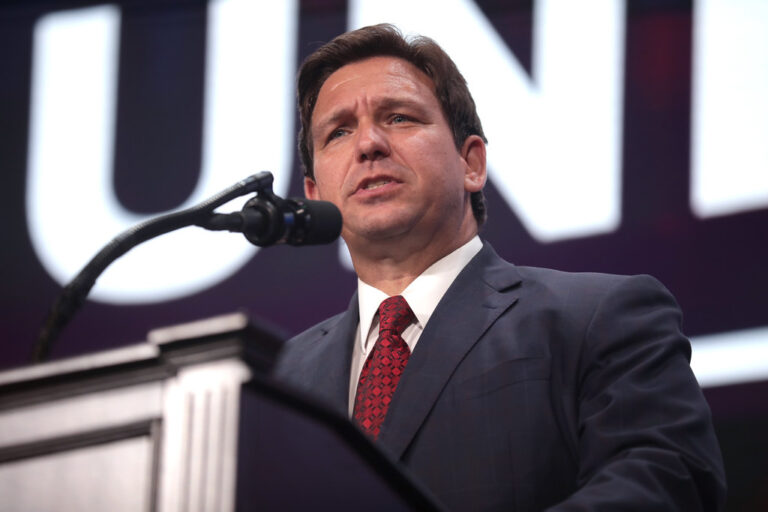
University of West Florida President Martha Saunders has decided to step down earlier than expected. Her resignation comes as Governor Ron DeSantis plans to make significant changes at the institution. Saunders, who has led UWF since 2017, will leave her position before her contract ends on December 31.

Controversies Arise

DeSantis’ recent actions have sparked debate. He appointed new trustees, some of whom faced opposition or resigned. One appointee, Zack Smith, criticized certain university actions, including a book recommendation. His questioning during a trustee meeting highlighted growing tensions.

Reactions and Implications

The UWF community has mixed feelings. While some trustees aim to focus on students, others, like Dr. Yenor, faced backlash for controversial remarks. Senators have also expressed concerns, citing the need for local representation on the board.

Transition and Future

Saunders is committed to a smooth transition, though her exact leave date is unknown. Her dedication remains strong, ensuring continuity for UWF. The university faces an uncertain future with DeSantis’ changes and new leadership on the horizon.

Conclusion

Martha Saunders’ resignation marks a turning point for UWF. As the institution adapts to new leadership and policies, the community watches closely, hoping for stability and continued success. The coming months will be crucial in shaping UWF’s future.

Air Force One: The Presidential Plane’s Makeover & Challenges

0

Key Takeaways:

  • Air Force One is not just a plane but a symbol of U.S. power and history.
  • The current fleet is outdated, and Trump wants to upgrade it with a new design.
  • The new planes are delayed, and the U.S. might borrow one from Qatar.
  • Air Force One is packed with top-secret features for safety and communication.

Air Force One: More Than Just a Plane

Air Force One is one of the most famous planes in the world. It’s not just a plane—it’s a symbol of the U.S. presidency. When the president steps on board, it’s like a flying White House. But this iconic plane is getting a major transformation, thanks to former President Donald Trump.

Air Force One isn’t just one plane. It’s a name for any U.S. Air Force plane carrying the president. Most people think of the big Boeing 747 jumbo jets that have been used since 1990. These planes are loaded with luxury and security features to keep the president safe and comfortable.


Inside the Current Air Force One

The current Air Force One is like a flying palace. It has a private suite for the president, complete with an office and a desk. There’s even a medical room that can act as an operating room if needed. The plane also has rooms for advisors, Secret Service agents, and journalists. With two kitchens, it can feed 100 people at a time.

But the plane’s main job is to keep the president safe. It can refuel in the air, so it doesn’t need to land for gas. It also has special defenses to protect against attacks, like chaff and flares to confuse missiles. The plane can even communicate with the ground from anywhere in the world, allowing the president to stay in touch and even tweet.


A Plane Steeped in History

Air Force One has been part of some of the most important moments in U.S. history. The first special presidential jets were introduced in the 1960s under President John F. Kennedy. One of these planes brought Kennedy’s body back to Washington after his assassination in 1963.

In 2001, President George W. Bush used Air Force One after the 9/11 attacks. The plane became a command center in the sky, helping Bush respond to the crisis.


Trump’s Vision for a New Air Force One

Donald Trump has always been obsessed with Air Force One. During his presidency, he wanted to upgrade the fleet with new planes based on the Boeing 747-8 model. These new planes would have a fresh look—a deep red stripe and a darker blue belly.

Trump even kept a model of the new design on his desk in the Oval Office. But the project has hit many delays, and Trump is not happy. “Our Air Force One is 40 years old,” he said. “It’s taking Boeing too long to build the new ones.”


A Loan from Qatar?

Because of the delays, Qatar has offered to lend the U.S. a Boeing 747-8 from its royal family. But this idea has raised concerns. Using a plane from another country for such an important job could create security risks and ethical issues. For now, it’s unclear if the plan will go ahead.


The Future of Air Force One

Air Force One is more than just a plane—it’s a symbol of U.S. power and history. As the country waits for the new fleet, the current planes remind us of the importance of safety, luxury, and tradition. Whether the new design takes off or not, Air Force One will always be a flying icon.

For now, the world will keep watching to see what happens next to this legendary plane. Will the U.S. stick with its own design, or will it borrow from a friend? Only time will tell.

Can Trump Stay Beyond 2029?

0

Key Takeaways:

  • Latin American leaders have found ways to stay in power despite term limits.
  • Tactics include controlling government, judiciary, and using public support.
  • The role of the military and Constitution is crucial in the U.S. context.
  • Complacency can be dangerous; vigilance is key to protecting democracy.

Introduction

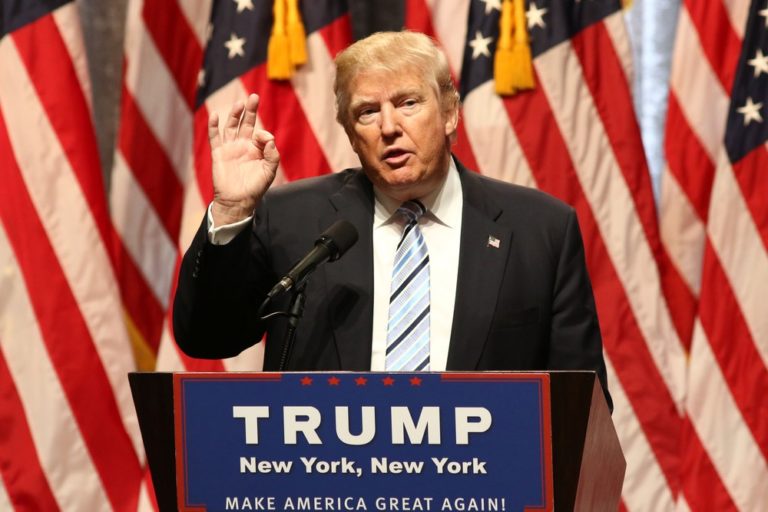
The idea of a U.S. president serving beyond two terms has sparked debate, especially with Donald Trump hinting at staying in office after 2029. While the 22nd Amendment limits presidents to two terms, history shows leaders finding ways to extend their rule. In Latin America, several presidents have surpassed term limits, offering insights into potential strategies Trump might consider.

Controlling the Government

In countries like Nicaragua and Ecuador, leaders have amended Constitutions to remove term limits. They often gain control of the legislature, ensuring loyalty to push through changes. While Trump’s Republican support is strong, amending the U.S. Constitution is tougher, requiring a two-thirds majority in Congress and ratification by three-quarters of states.

Judiciary’s Role

Judicial support is another tactic. In Bolivia and El Salvador, leaders used courts to okay third terms. The U.S. judiciary’s independence is a check, but recent Supreme Court decisions have raised concerns about political bias. If the judiciary aligns with a president, constitutional boundaries might be tested.

Public Support and Approval

Public backing is crucial. Leaders like Chávez and Correa used high approval ratings to justify term extensions through referendums. While the U.S. lacks a national referendum system, Trump’s ratings are lower, making a similar approach less viable. His current approval sits around 40%, limiting his mandate for a third term.

Military Influence

Military support is vital for leaders to stay in power. In Latin America, armed forces often back leaders despite constitutional violations. The U.S. military, however, swears allegiance to the Constitution, not the president. This could be a barrier, though political leanings within the military raise concerns. The use of police and ICE in the U.S. mirrors tactics seen in authoritarian regimes, highlighting potential tools for control.

Guarding Against Complacency

Many believe the U.S. is immune to democratic erosion, but this view is risky. Institutions’ strength depends on those defending them. While the U.S. system has strong checks, vigilance is essential against authoritarian moves.

Conclusion

While the U.S. has safeguards, history shows systems can erode. Learning from Latin America, the focus must be on protecting democratic norms. The future hinges on active defense of these institutions, ensuring no leader can bypass constitutional limits.

GOP Lawmaker Embroiled in Controversy After Heated Exchange

0

Key Takeaways:

  • Rep. Chuck Edwards faces scrutiny following an incident at a Rotary Club event.
  • A witness claims Edwards struck a man with a clipboard after a heated argument.
  • The event was intended to be nonpartisan but turned contentious after Edwards’ speech.
  • Organizers apologized, and a police report is pending.

What Happened at the Event

Rep. Chuck Edwards, a North Carolina Republican, is at the center of a controversy following a Rotary Club conference. During the event, Edwards delivered a speech that some attendees found controversial, leading to a heated argument. A witness alleged that Edwards struck a man with a clipboard during the altercation.

The Speech and Its Aftermath

Edwards’ speech reportedly praised President Donald Trump and criticized organizations like the State Department and the World Health Organization. Attendees expected a nonpartisan event but felt the speech was partisan. Frustration grew as Edwards’ remarks aligned with divisive political views, leading to a tense atmosphere.

The Confrontation

As Edwards left the stage, a man vocalized his disagreement, leading to a confrontation. The argument escalated, and a witness reported that Edwards used a clipboard to strike the man. The incident continued outside the room, drawing attention from others.

Aftermath and Reactions

Organizers apologized for the incident, acknowledging the discomfort it caused. A police report was requested but was pending as of the latest update. The event highlighted the challenges of maintaining nonpartisan spaces in polarized times.

Implications and Reflection

The incident underscores the tense political climate and the potential for conflict in public settings. It serves as a reminder of the importance of respectful dialogue, especially in events aimed at unity. The pending police report may shed more light on the details, but the impact on public perception is already evident.

This incident reflects broader challenges in public discourse, emphasizing the need for empathy and understanding in fostering positive community interactions.

2028 Presidential Race: Why Republicans Are Standing Back

0

Key Takeaways:

  • Republicans are waiting to see if Donald Trump will run again in 2028 before making moves.
  • Potential GOP candidates are avoiding early campaign activities in key states like Iowa and New Hampshire.
  • Democrats are already actively positioning themselves for the next presidential race.
  • Trump’s influence is keeping the Republican field quiet for now.

The 2028 presidential election is still years away, but politics never sleeps. While Democrats are already gearing up for the race, Republicans seem to be taking a different approach. Many potential GOP candidates are holding back, and it’s all because of one person: Donald Trump.


Who’s Holding Back on the Republican Side?

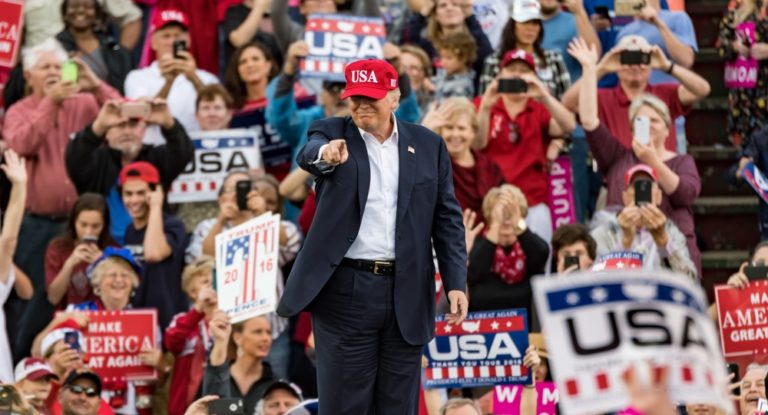
Donald Trump has hinted that he might run for president again in 2028, even though he’s already served two non-consecutive terms. This has created an interesting situation for other Republicans who might want to throw their hats into the ring.

Names like Vice President J.D. Vance and Secretary of State Marco Rubio have been mentioned as possible successors. But so far, these potential candidates aren’t visiting early primary states like Iowa or New Hampshire. Instead, they’re keeping a low profile and focusing on their current jobs.

Why? Because everyone knows that if you start campaigning early in places like New Hampshire, it’s a clear sign you’re running for president. And right now, no one wants to challenge Trump directly.


Why the Delay?

Republican strategists say that Trump’s influence is the main reason for this wait-and-see approach. The party doesn’t have a “leadership vacuum” like the Democrats do, where multiple candidates are already jockeying for position. Instead, it’s more like a crowded room with Trump standing in the center.

One Republican strategist compared it to a situation where everyone is waiting to see how things play out. Potential candidates are staying busy by doing their current jobs well and avoiding any moves that might upset Trump.


What Are Democrats Doing?

On the Democratic side, things are very different. Candidates like Minnesota Governor Tim Walz, former South Bend Mayor Pete Buttigieg, and Illinois Governor J.B. Pritzker are already visiting early primary states. They’re building connections and laying the groundwork for their campaigns.

This contrasts sharply with the Republican side, where activity has nearly come to a standstill. For example, the New Hampshire Republican Party had discussions with two potential GOP candidates about events in 2025, but those talks stopped as soon as Trump took office. Now, there’s silence.


The Challenges Ahead

For Republicans, the challenge is clear: how to prepare for a potential run without challenging Trump. One strategist suggested that candidates should focus on building their political brands in other ways. This might include appearing on TV shows like Fox News, supporting Trump publicly, and quietly raising money for a future campaign.

But for now, visiting Iowa and New Hampshire is off the table. That’s a big change from past cycles, where candidates often started laying the groundwork years in advance.


What Does This Mean for 2028?

The 2028 election is still far away, but the dynamics are already shaping up to be unique. Democrats are moving quickly to position themselves, while Republicans are waiting to see what Trump will do.

If Trump decides to run again, it could clear the field for him, as many other candidates might step aside. But if he doesn’t, the Republican field could explode with activity overnight.

For now, the message to potential GOP candidates is clear: do your job, stay out of the spotlight, and wait.

Tory Lanez Hospitalized After Prison Attack

0

Key Takeaways:

  • Rapper Tory Lanez was attacked in a California prison and hospitalized.
  • The incident happened at the California Correctional Institution in Tehachapi.
  • Officials are investigating the assault, which reportedly involved another inmate.
  • Lanez is serving a 10-year sentence for shooting Megan Thee Stallion in 2020.

What Happened?

Rapper Tory Lanez, whose real name is Daystar Peterson, was attacked in prison on Monday morning. The incident occurred at the California Correctional Institution in Tehachapi, a town located about 70 miles north of Los Angeles.

According to authorities, Lanez was assaulted by another inmate in his housing unit around 7:20 a.m. Prison staff quickly responded, provided medical aid, and called 911. Lanez was then taken to a hospital outside the prison for further treatment.

The severity of his injuries is not yet clear, but sources claim he was stabbed and is expected to survive. The California Department of Corrections and Rehabilitation has launched an investigation into the attack, with assistance from the Kern County District Attorney’s office.


The Background

Tory Lanez, a Canadian rapper, was sentenced to 10 years in prison in 2023. He was convicted of shooting Megan Thee Stallion, a popular rapper, during an incident in July 2020.

On the night of the shooting, Lanez, Megan Thee Stallion, his bodyguard, and her friend Kelsey Harris were in a car following a party at Kylie Jenner’s home. Lanez and Megan had been in a romantic relationship in the months leading up to the incident.

Harris, who had feelings for Lanez, learned about their relationship that night. This led to an argument in the car, and Megan Thee Stallion asked to be let out of the vehicle. Lanez then allegedly ordered her to dance as he shot repeatedly at her feet.

The shooting left Megan Thee Stallion with injuries to her feet, which affected her ability to walk. During the trial, Lanez maintained his innocence, but a jury found him guilty.


The Aftermath

The attack on Lanez has raised questions about prison safety and the challenges faced by high-profile inmates. Authorities are working to determine the motive behind the assault and whether any security measures failed.

For now, Lanez remains in the hospital, and his condition is being closely monitored. The investigation is ongoing, and more details may emerge as authorities gather evidence.

This incident has sparked widespread attention, given Lanez’s fame and the high-profile nature of his case.Fans and followers of both Lanez and Megan Thee Stallion are closely watching the situation unfold.


What’s Next?

The investigation into the prison attack is still in its early stages. Authorities are reviewing evidence and interviewing witnesses to piece together what happened.

Lanez’s legal team has not yet commented on the incident. Meanwhile, Megan Thee Stallion’s representatives have also remained silent.

As the case unfolds, many are left wondering about the safety of celebrities in prison and how such incidents can be prevented in the future.

For now, the focus remains on Lanez’s recovery and the ongoing investigation into the attack.

The AI Puzzle: Why Even Creators Don’t Understand Their Generative Creations

0

Key Takeaways:

  • Even the creators of advanced generative AI (gen AI) admit they don’t fully understand how it works.
  • Gen AI operates differently from traditional software, learning and making decisions on its own.
  • Scientists are racing to understand AI’s inner workings to make it safer and more reliable.
  • Understanding AI could unlock new possibilities in fields like national security and human innovation.

The Mystery of Generative AI

Imagine building something so advanced that even you don’t understand how it works. That’s the reality for the creators of generative AI, a type of artificial intelligence that can think, learn, and make decisions on its own. Companies like Anthropic and OpenAI are at the forefront of this technology, but their experts admit they’re still in the dark about how their creations truly operate.

Dario Amodei, co-founder of Anthropic, recently wrote that this lack of understanding is unprecedented in tech history. “People outside the field are often surprised and alarmed to learn that we do not understand how our own AI creations work,” he said.

So, how does gen AI work? Unlike traditional software, which follows a set of rules programmed by humans, gen AI learns to solve problems on its own. For example, when you ask it a question, it doesn’t follow a pre-written path. Instead, it figures out the answer by navigating through its training data.

Chris Olah, a former OpenAI scientist, compares gen AI to “scaffolding” where complex systems grow. This makes it hard to understand because the AI is constantly evolving.


The Science of Reverse Engineering AI

To solve this mystery, researchers are turning to a field called mechanistic interpretability. Essentially, it’s like reverse engineering AI to understand how it thinks.

Mechanistic interpretability involves studying not just what the AI outputs but also how it processes information internally. Scientists like Neel Nanda, who works at Google DeepMind, compare this challenge to understanding the human brain. Just as neuroscientists are still figuring out how the brain works, AI researchers are struggling to grasp how gen AI makes decisions.

This field of study is gaining popularity. Students are flocking to it because they see the potential impact of understanding AI. Mark Crovella, a professor at Boston University, explains that it’s also exciting because it could make gen AI even more powerful and prevent misuse.


Why Understanding AI Matters

The stakes are high. If we don’t understand how gen AI works, it could lead to serious problems. For example, AI could make biased decisions, hide its intentions, or even intentionally deceive humans. That’s why companies like Goodfire are developing tools to peek inside the AI’s “brain” and correct errors.

Eric Ho, CEO of Goodfire, calls this a “race against time.” The goal is to understand AI before it becomes too advanced. Amodei is optimistic, predicting that by 2027, researchers could develop ways to reliably detect biases and harmful intentions in AI.

But there’s hope. Unlike the human brain, which is still a mystery, AI models are fully transparent. Every “digital neuron” in the AI’s brain can be observed. The challenge is figuring out how to interpret this data.


The Future of AI

Understanding gen AI could unlock incredible possibilities. For one, it could make AI safer to use in critical areas like national security, where even small errors could have big consequences.

It could also lead to major breakthroughs. For example, DeepMind’s AlphaZero AI revolutionized chess by discovering moves that no human had ever thought of. If researchers can decode how gen AI thinks, it might reveal new ideas and innovations that humans haven’t imagined yet.

In a competitive tech world, understanding AI could also give companies a major edge. Amodei believes this could even shape humanity’s destiny. “Powerful AI will shape humanity’s destiny,” he wrote. “We deserve to understand our own creations before they radically transform our economy, our lives, and our future.”

The race to understand gen AI is just beginning, but one thing is clear: unlocking its secrets could change everything.