58.4 F
San Francisco
Thursday, May 14, 2026
Home Blog Page 996

Judge Questions Trump Officials Over Deportation Flights

0

Key Takeaways:

  • A heated court hearing occurred where a judge questioned Trump administration officials about deportation flights.
  • The administration is accused of ignoring a court order to halt deportations under an old law.
  • Flights deported individuals using the rare Alien Enemies Act of 1798.
  • Officials admitted a mistake in deporting an innocent man to El Salvador.
  • The judge expressed skepticism over the administration’s actions and lack of information.
  • A decision on whether to hold officials in contempt is pending.

Introduction: A recent federal court hearing turned tense as Judge James Boasberg challenged Trump administration officials about their handling of deportation flights. Central to the issue was whether the administration intentionally disregarded a court order, raising questions about compliance with judicial directives.

The Hearing Unfolds: Judge Boasberg focused on the administration’s use of the Alien Enemies Act of 1798, a law rarely invoked since World War II. He ordered the deportation flights to return to the U.S., citing the need for further legal review. Deputy Attorney General Drew Ensign faced tough questions, explaining he informed senior officials but lacked flight details. The judge remained unconvinced, questioning why the administration proceeded without awaiting the court’s decision.

A Mistake Admitted: The administration acknowledged an error, deporting at least one innocent man to an El Salvadoran prison. This mistake underscored concerns about the handling of the deportations and the urgency to rush the flights, anticipating a possible court overrule.

Implications and Next Steps: The judge highlighted the feasibility of reversing the deportations, as some individuals were returned. However, he deferred a decision on contempt charges, promising a ruling later this month. This case raises significant questions about governmental compliance with court orders and the use of antiquated laws in modern deportations.

Conclusion: The hearing revealed tensions between the judiciary and the executive branch, emphasizing the importance of accountability and transparency. As the case progresses, it may set precedents for future deportation policies and judicial oversight.

South Korea’s Presidency in Balance as Court Decides Yoon’s Fate

0

Key Takeaways:

  • South Korea’s Constitutional Court is set to decide whether to uphold President Yoon Suk Yeol’s impeachment.
  • Yoon faces charges over a controversial martial law declaration and insurrection.
  • The ruling will determine if Yoon is removed or reinstated as President.
  • High security and protests mark a tense wait for the court’s decision.

A Nation on Edge

South Korea’s political landscape hangs in the balance as the Constitutional Court prepares to announce its decision on President Yoon Suk Yeol’s impeachment. This historic ruling will either restore Yoon to power or make him the second South Korean leader to be removed from office, following Park Geun-hye in 2017. The nation is gripped by tension, with protests intensifying and security heightened in Seoul.


High Stakes in Seoul

The court’s decision is critical. For Yoon to be removed, at least six of the eight justices must vote against him. If not, he will return to office. The build-up to this moment has been fraught with unrest. Yoon’s attempt to impose martial law in December, deploying soldiers to parliament, was controversial, leading to his impeachment and criminal charges for insurrection.


A Divided Society

Public opinion is deeply divided. Yoon’s supporters argue his actions were necessary, while opponents view them as an attack on democracy. The situation has led to violence, with tragic incidents including self-immolations by Yoon’s supporters and attacks on political figures. The court’s decision is expected to deepen these divisions, regardless of the outcome.


What’s Next for South Korea?

If impeached, Yoon’s removal could lead to political instability, affecting South Korea’s ability to handle current challenges. These include recent natural disasters and economic tariffs imposed by the U.S. The leadership vacuum has already impacted the country, highlighting the urgent need for stable governance.


The Bigger Picture

This decision is a test of South Korea’s democratic resilience. Experts believe the impeachment will likely be upheld, citing the unconstitutionality of Yoon’s actions. However, some predict a close vote, leaving the nation in uncertainty. The ruling will not only shape Yoon’s future but also define South Korea’s democratic strength.


A Global Watch

International eyes are on Seoul. The decision will influence South Korea’s global standing and its relations with key allies like the U.S. The world watches as South Korea navigates this critical moment, hoping for stability and continuity.


Conclusion

The Constitutional Court’s decision is a pivotal moment in South Korea’s history. It underscores the resilience of its democracy and sets a precedent for future leadership. As the nation awaits the ruling, the world holds its breath, aware of the profound implications for South Korea’s political and social future.

Trump’s New Tariffs Spark Outrage Among US Businesses

0

Key Takeaways

  • President Trump announced new tariffs on imports from most US trading partners.
  • The tariffs include a 10% baseline starting April 5 and higher rates from April 9.
  • Businesses warn the tariffs will raise prices, hurt jobs, and slow the economy.
  • Some groups support the move, saying it protects US workers.

New Tariffs Explained

President Trump recently announced new tariffs on imported goods, affecting nearly all US trading partners. Starting April 5, a 10% tariff will apply to most imports. From April 9, some countries will face even higher rates if they already have trade barriers against the US.

For example, most goods from China will face a total tariff of 34% on top of existing fees. The European Union, India, and other major trading partners will also see tariffs of at least 20%.


Businesses React with Concern

US business groups are alarmed by the tariffs. Many say the new taxes on imports will create problems for companies and consumers.

The National Restaurant Association warned that the tariffs will force restaurants to adapt quickly to stay open. “Restaurants will have to navigate these changes to survive,” they said in a statement.

Manufacturers are also worried. Jay Timmons, head of the National Association of Manufacturers, said, “The stakes for manufacturers could not be higher.” He believes the tariffs will hurt investment, jobs, and supply chains, making it harder for the US to compete globally.


Higher Prices for Consumers

Experts predict the tariffs will lead to higher prices for everyday items. A recent study by Yale University’s Budget Lab found that a 20% tariff on imports could cost the average US household at least $3,400.

Neil Bradley of the US Chamber of Commerce called the tariffs “a tax increase that will raise prices for Americans and hurt the economy.” He said the tariffs will lead to inflation and possibly even a recession.

Gary Shapiro, head of the Consumer Technology Association, agreed. “These tariffs are like a tax hike for consumers,” he said. “They will drive up prices and lead to retaliation from other countries.”


Construction and Wine Industries Hit Hard

The tariffs will also affect specific industries. Buddy Hughes of the National Association of Home Builders said the tariffs will increase construction costs. “This will undoubtedly make it more expensive to build homes and other projects,” he said.

The US wine industry is also concerned. The US Wine Trade Alliance said the tariffs on imported wines will harm American businesses more than foreign ones.


Retaliation Fears

Business groups fear other countries will retaliate against the US by imposing their own tariffs. The Business Roundtable, which represents CEOs, warned that these retaliatory measures could worsen the damage to the US economy.


Some Support for the Tariffs

Not all groups oppose the tariffs. The Alliance for American Manufacturing praised Trump’s announcement. Scott Paul, the group’s president, said the tariffs prioritize US workers and manufacturers. “These measures are a necessary step in the right direction,” he said.


A Divided Opinion

While some see the tariffs as a way to protect US jobs, others fear the consequences for businesses and consumers. The debate highlights the challenges of balancing trade policies with economic growth.

As the tariffs take effect, one thing is clear: their impact will be felt across the US economy. Whether they help or hurt remains to be seen.

Trump’s Plan to Reshape America’s Families

0

Key Takeaways:

  • Project 2025, a blueprint for Donald Trump’s second term, includes a push for traditional, Christian family values.
  • The plan promotes heterosexual, married couples with children as the ideal family structure.
  • Proposed changes include tax incentives for married couples, programs to encourage marriage, and a focus on men as breadwinners and women as caregivers.
  • These policies aim to create a society resembling the 1950s, with limited government involvement in healthcare and education.

Project 2025: A Vision for America’s Families

When Donald Trump won the 2024 presidential election, many wondered how he would govern during his second term. A key guide for his administration has been Project 2025, a detailed plan created by the Heritage Foundation. While much attention has focused on Trump’s efforts to shrink the federal government, another major goal of Project 2025 has flown under the radar: reshaping American families.

This vision of family life is deeply rooted in Christian fundamentalist values. It promotes traditional roles for men and women, with husbands working outside the home and wives caring for children. The plan also encourages larger families and emphasizes marriage as the ideal setup for raising kids.

How It Would Work

If fully implemented, Project 2025’s family-focused policies would touch nearly every part of American life. Here’s how:

  1. Tax Incentives for Married Couples The plan proposes making tax rules more favorable for married couples. For example, changes to 401(k)s and other savings programs would benefit husbands and wives who file taxes together. This is designed to encourage marriage and make it financially easier for couples to start families.
  2. Government-Backed Marriage Programs The Department of Health and Human Services would partner with churches and faith-based groups to promote marriage and parenting. These programs would focus on teaching traditional roles for fathers and mothers, based on what the plan calls a “biological and sociological understanding” of family.
  3. Rewriting Welfare Policies The federal welfare system would be updated to track data on marriage rates, family formation, and teen pregnancy. The goal is to use this information to push for marriage as the norm and encourage unmarried couples to tie the knot.
  4. A Return to 1950s Values Project 2025 paints a picture of America that looks a lot like the 1950s. Men are seen as the primary earners, women as stay-at-home moms, and families as large and close-knit. Abortion would be illegal, vaccines would be optional, and the government would play a limited role in healthcare and education.

What This Means for America

These policies could have a huge impact on everyday life. For one, they would disproportionately affect women, who might face pressure to leave the workforce and focus on raising children. Additionally, the push for traditional families could marginalize single parents, same-sex couples, and non-traditional households.

The plan also reflects a broader vision of America as a deeply Christian nation. While the country has always had strong religious influences, Project 2025 takes this to an extreme by tying government policies to specific religious beliefs.

Why It Matters

Project 2025’s focus on family is no accident. It reflects the deeply held beliefs of many conservatives who contributed to the plan. They see traditional families as the foundation of a stable society and believe that restoring these values is key to America’s future.

However, critics argue that this vision is overly simplistic and ignores the diversity of modern American life. They also point out that shrinking the government’s role in healthcare and education could hurt the very families the plan aims to support.

The Road Ahead

While much of Project 2025’s focus has been on shrinking the federal government, its vision for American families could have an even bigger impact on daily life. If fully enacted, these policies would reshape everything from how people raise their kids to how they interact with the government.

For now, the Trump administration has prioritized other parts of the plan, but the push for traditional families remains a key part of its agenda. As the second term unfolds, this vision of America’s future will likely become a major topic of debate.

What Do You Think? Would you support a return to traditional family values, or do you believe this vision of America is outdated? Let us know your thoughts in the comments.

Trump’s Tariff Showdown: Republicans Rebel Against President

0

Key Takeaways:

  • President Trump’s plan for tariffs on Canada is facing major opposition in the Senate.
  • Four Republican Senators, including Mitch McConnell, are set to join Democrats to block the tariffs.
  • These senators have historically opposed tariffs, citing concerns over higher prices for consumers.
  • North Carolina Senator Thom Tillis has warned that the tariffs could severely harm farmers, pushing some to bankruptcy.
  • More Republican Senators might join the opposition as concerns over the economic impact grow.
  • Vice President JD Vance could play a crucial role if the Senate vote results in a tie.
  • House Democrats are also introducing a similar resolution, though it faces tougher odds.
  • If passed, Trump has vowed not to sign the legislation, setting up a potential showdown.

Trump’s Tariff Plan in Trouble

President Trump’s plan to impose tariffs on Canada, one of America’s closest trading partners, is hitting a major roadblock. Republican Senators, traditionally allies of Trump, are turning against him. This unexpected rebellion could mean the end of Trump’s tariff plan before it even starts.

At the heart of this conflict is a group of GOP Senators who disagree with Trump’s approach to trade. They argue that tariffs—taxes on imported goods—hurt American consumers by making things more expensive. This stance has put them at odds with the President, who believes tariffs can help negotiate better trade deals.


Republican Senators Defy Trump

Leading the charge against Trump’s tariffs is Senate Majority Leader Mitch McConnell. McConnell, who has long opposed tariffs, recently told Democratic Senator Tim Kaine, “I’m with you.” This statement signals McConnell’s support for a Democratic-led bill to stop the tariffs.

McConnell isn’t alone. Three other Republican Senators—Rand Paul, Susan Collins, and Lisa Murkowski—are also backing the legislation. These senators were even criticized by Trump in a late-night rant, but they remain committed to blocking the tariffs.

McConnell’s opposition to tariffs goes back years. Even before Trump became President, McConnell made it clear he was against tariffs. “I’m a free trade kind of Republican,” he said. “Tariffs raise prices for American consumers and hurt jobs.”


Farmers and the Tariff Impact

The tariffs aren’t just a political issue—they could have real-world consequences for American farmers. Senator Thom Tillis of North Carolina recently warned that the tariffs could do “irreparable harm” to farmers in his state. Many farmers are already struggling, and the added pressure of tariffs could push some to bankruptcy.

Tillis emphasized the urgency of the situation, saying, “They don’t have time. We’ve got to be crisp on this implementation. Otherwise, we could do damage that is irreparable to farmers.”


Other Republicans Wavering

The opposition to Trump’s tariffs isn’t limited to the four Senate rebels. Other Republican Senators are starting to speak out. Some, like Chuck Grassley of Iowa and John Cornyn of Texas, are still undecided but have expressed concerns. Others may soon join McConnell, Paul, Collins, and Murkowski in opposing the tariffs.

Democratic Senator Tim Kaine, who is leading the charge against the tariffs, says more Republicans are reaching out to him for information. He also believes Trump’s recent announcement of new tariffs could push even more Republicans to join the opposition.


What’s Next for Trump’s Tariffs

The battle over Trump’s tariffs is far from over. The Senate will soon vote on the resolution to block the tariffs. If the vote is tied, Vice President JD Vance could cast the deciding vote.

Meanwhile, Democrats in the House of Representatives are introducing their own resolution to end the tariffs. While this version faces steeper odds, it shows the growing bipartisan opposition to Trump’s trade policies.

If both the House and Senate pass their resolutions, Trump has vowed not to sign them into law. This sets up a potential showdown between the President and Congress over the future of U.S. trade policy.


The Bigger Picture

The rebellion against Trump’s tariffs highlights a growing divide within the Republican Party. While Trump remains a powerful figure, some GOP lawmakers are willing to stand up to him on key issues. The outcome of this battle could have major implications for the future of American trade policy and the Republican Party itself.

As the situation unfolds, one thing is clear: Trump’s tariff plan is in trouble, and the President may be forced to retreat from one of his signature policies.

California Man to Plead Guilty to Trying to Kill Supreme Court Justice

0

Key Takeaways:

  • Nicholas Roske, 29, from California, will plead guilty to attempting to assassinate Supreme Court Justice Brett Kavanaugh.
  • Roske was arrested in June 2022 with a gun, knife, and tactical gear near Kavanaugh’s home.
  • He was motivated by anger over abortion rights, gun control, and recent mass shootings.
  • Roske faces up to life in prison and a $250,000 fine.
  • His case highlights tensions over controversial Supreme Court rulings and public safety concerns.

A Plot to Assassinate a Supreme Court Justice

Nicholas Roske, a 29-year-old man from California, has agreed to plead guilty to attempting to kill Supreme Court Justice Brett Kavanaugh. This shocking case has drawn national attention, revealing how political tensions and personal anger can lead to dangerous actions.

In June 2022, Roske was arrested near Kavanaugh’s home in a Maryland suburb. He was carrying a semi-automatic pistol, a knife, and a tactical vest. Roske later admitted to police that he had traveled across the country with the intent to kill Kavanaugh.


What Motivated Roske?

Roske’s decision to act was driven by two major events: the leak of a draft Supreme Court decision on abortion rights and the mass shooting at a school in Uvalde, Texas.

The Supreme Court draft indicated that the court was preparing to overturn Roe v. Wade, a landmark decision that protected a woman’s right to abortion. Roske was deeply upset by this possibility.

Additionally, Roske was angered by the Uvalde shooting, where 19 children and two adults were killed. He believed that Kavanaugh, as a conservative justice, would support decisions that would loosen gun control laws. Roske thought that killing Kavanaugh would prevent such rulings and potentially reduce gun violence.


How Was Roske Caught?

Roske’s plan unraveled when he was spotted by U.S. Marshals near Kavanaugh’s home. Unaware he had been seen, Roske walked away and called 911. During the call, he told emergency services that he was feeling suicidal and had come from California to kill Kavanaugh.

Local police arrived while Roske was still on the phone. They arrested him without any resistance.


The Charges and Potential Punishment

Roske has agreed to plead guilty to attempting to assassinate a Supreme Court justice. This is a federal crime that carries serious consequences. He could face up to life in prison and a $250,000 fine.

Roske’s guilty plea means he will not go to trial, which was originally scheduled for June. His lawyers filed the plea agreement in federal court, stating that Roske “took a substantial step” toward killing Kavanaugh.


The Broader Implications of the Case

Roske’s attempt to kill Kavanaugh highlights the intense emotions surrounding Supreme Court decisions. The leak of the abortion draft in May 2022 sparked widespread protests and debates across the country. Some supporters of abortion rights feared that overturning Roe v. Wade would strip women of their reproductive freedoms.

Meanwhile, the Uvalde shooting reignited calls for stricter gun control laws. Many Americans, including Roske, were frustrated by the lack of progress on this issue despite repeated mass shootings.

Roske’s actions, while extreme, show how deeply people feel about these issues. His case also raises concerns about the safety of public figures, especially judges and politicians, who may face threats from individuals angered by their decisions or beliefs.


Conclusion

Nicholas Roske’s decision to plead guilty brings an end to a shocking and disturbing chapter in American history. His actions were driven by anger over Supreme Court rulings and mass shootings, but they also remind us of the importance of peaceful and lawful ways to express dissent.

As Roske faces the consequences of his actions, his case serves as a reminder of the volatility of political tensions in the U.S. and the need for greater dialogue to address the issues that divide the nation.

Elon Musk’s Time in the White House Might Be Ending Soon

0

Key Takeaways:

  • Elon Musk might step back from his influential role in the White House.
  • Despite leading significant government cuts, his tenure is facing challenges.
  • President Trump hints Musk could return to his companies soon.
  • Tension arises as Musk’s prominent role creates friction.
  • A recent election loss in Wisconsin and Tesla’s sales drop add to his struggles.
  • His special government status is set to expire in June.

Musk’s Role in Question

Elon Musk, known for his vast influence as a tech mogul, has been a key figure in the White House, leading major cuts through an initiative called the Department of Government Efficiency. However, recent reports suggest his time there may be limited, sparking debate over his future in politics.

White House Denies Reports

The White House has dismissed these rumors, calling them unfounded. Yet, speculation persists about Musk’s ability to maintain his position, especially given the tension his presence has caused. As someone who stands out, Musk’s role has led to friction, challenging Trump’s preference for being the sole center of attention.

Trump Hints at Musk’s Departure

President Trump recently mentioned that Musk might soon return to his businesses. This hint comes as Musk faces setbacks, including a significant loss in a Wisconsin election, where his candidate did not win despite substantial investment. This defeat, along with a drop in Tesla’s sales, highlights the challenges Musk is encountering.

Tension in the White House

Musk’s prominent role has always been a subject of speculation. His involvement in major meetings and frequent appearances with Trump have raised eyebrows. However, his recent failures are leading some to question his staying power in politics.

Election Loss and Tesla’s Struggles

Musk’s costly support for a candidate in Wisconsin ended in defeat, signaling potential political vulnerabilities. Additionally, Tesla’s declining sales add to the pressures he faces, both in business and politics.

Legal Deadline Looms

Beyond the political challenges, Musk’s special government status is set to expire in June, which might necessitate his departure from the White House. This legal deadline could mark the end of his tenure, regardless of other factors.

As the situation unfolds, one thing is clear: Elon Musk’s time in the White House is uncertain. Whether he steps back voluntarily or due to external pressures, the end of his influential role may be nearing. Stay tuned for more updates on this developing story.

US Supreme Court Debates Funding for Planned Parenthood

0

Key Takeaways:

  • The US Supreme Court heard arguments about South Carolina cutting Medicaid funding to Planned Parenthood.
  • The state claims funding Planned Parenthood supports abortion, even though the funds aren’t for abortion services.
  • Planned Parenthood argues patients should choose their own doctors.
  • The court is divided, and the ruling could affect other states.
  • A decision is expected by June 2024.

What’s Happening?

The US Supreme Court recently listened to arguments in a case about whether South Carolina can stop Medicaid funding for Planned Parenthood. Medicaid is a government program that helps low-income people pay for healthcare.

In 2018, South Carolina Governor Henry McMaster, a Republican, signed an executive order cutting off Medicaid payments to two Planned Parenthood clinics. McMaster argued that even though the funds don’t directly pay for abortions, they still support an organization that provides abortions.

But Planned Parenthood and a South Carolina woman with diabetes sued the state. They said Medicaid patients have the right to choose their own doctors, and Planned Parenthood is a qualified provider.


The Arguments for Both Sides

South Carolina’s Side

South Carolina’s lawyer, John Bursch, said states should decide which healthcare providers are qualified for Medicaid. He argued that patients don’t get to pick any doctor they want, just like how insurance companies don’t let you choose any doctor.

Bursch also said Planned Parenthood is “unqualified” because it’s the largest abortion provider in the US. However, Planned Parenthood’s lawyer, Nicole Saharsky, pointed out that the organization is fully qualified to provide other healthcare services.

Planned Parenthood’s Side

Justice Elena Kagan, one of the court’s liberal justices, suggested that banning Planned Parenthood from Medicaid might violate the rule that patients can choose their doctors. She said this could create a situation where states split healthcare providers into groups based on services like abortion or contraception.

Planned Parenthood’s lawyer, Saharsky, added that the state is punishing the organization for offering abortions outside of Medicaid, even though Planned Parenthood provides many other essential services.


What’s at Stake?

If South Carolina wins, other conservative states with strict abortion laws might also stop funding Planned Parenthood through Medicaid. This could make it harder for low-income patients to access healthcare services like birth control, cancer screenings, and diabetes care.

On the other hand, if Planned Parenthood wins, states might have fewer reasons to exclude healthcare providers from Medicaid programs.


How the Court Reacted

The Supreme Court, which has a 6-3 conservative majority, seemed divided during the arguments. Conservative Justice Amy Coney Barrett worried that letting Planned Parenthood win could lead to more lawsuits from patients who can’t see their preferred doctors.

But liberal justices like Kagan emphasized that states must allow Medicaid patients to choose their healthcare providers.


What’s Next?

The Supreme Court will rule on the case by the end of June 2024. The decision could have a big impact on healthcare access for millions of low-income Americans.

This case is part of a bigger debate over abortion rights and government funding. Whatever the court decides, it will likely shape how states handle Medicaid funding for organizations like Planned Parenthood in the future.


The outcome of this case is far from certain, but one thing is clear: the decision will have major consequences for healthcare access and the fight over abortion in the US.

GOP Sticks by Musk Despite Wisconsin Loss

0

Key Takeaways:

  • Republican senators defend Elon Musk after Wisconsin Supreme Court race loss.
  • Democrats criticize Musk, calling him toxic and corrupt.
  • Musk spent millions, but the GOP candidate lost.
  • Republicans dismiss criticism, blaming other factors.

The Battle Over Musk Intensifies

The recent Wisconsin Supreme Court race has sparked a heated debate among politicians about Elon Musk’s role in the election. Despite the GOP’s loss, many Republican senators are standing by Musk, while Democrats are quick to criticize him.


GOP Support for Musk

Republican senators like Ron Johnson from Wisconsin believe Musk was helpful. Johnson mentioned that without Musk’s financial support, the race might have had a worse outcome for the GOP. He suggested that the Democrats’ strong reaction against Musk is a sign of their obsession with opposing Trump.

Other Republican senators, such as Deb Fischer from Nebraska, downplay Musk’s influence. Fischer argued that local elections can’t be blamed on someone in Washington. Meanwhile, Shelley Moore Capito from West Virginia expressed no concern over Musk being a liability, focusing instead on the election’s broader issues.


Democrats’ Criticism

Democrats, however, are vocal about their disapproval of Musk. Chris Murphy from Connecticut criticized Musk for his actions, which he believes hurt people and enriched himself. Murphy sees Musk as a key figure in what he calls the most corrupt White House in history.

Tammy Baldwin from Wisconsin highlighted Musk’s active involvement, pointing out his campaign efforts in the state. She suggests that Musk’s presence undermines the GOP’s attempt to distance themselves from him.


The Impact of Musk’s Involvement

Musk invested heavily in the race, spending millions. He even wore a cheesehead hat in Green Bay to show support. However, his efforts didn’t prevent the GOP’s loss. Despite this, many Republicans believe his contribution was significant and helpful.


Looking Ahead

Democrats argue that even if Musk’s influence wanes, the issues he represents will remain. They plan to keep the focus on the Trump administration’s close ties with billionaires, regardless of Musk’s role.

Murphy emphasizes that the broader debate should focus on the president rather than Musk, as these elections often reflect public opinion on the ruling party.


Conclusion

The Wisconsin race has highlighted the deepening divide between Democrats and Republicans over Musk’s influence. As the political landscape evolves, this debate may set the stage for future elections, showing how external factors can shape voter decisions. The clash over Musk’s role is just the beginning of a larger discussion on money and influence in politics.

Louisiana Voters Reject Trump-Backed Governor’s Amendments

0

Key Takeaways:

  • Louisiana voters overwhelmingly rejected four amendments proposed by Governor Jeff Landry.
  • The amendments aimed to cut taxes for the wealthy, create specialty courts, change election dates, and allow sending minors to adult prisons.
  • High voter turnout, especially in New Orleans, contributed to the defeat.
  • An unexpected alliance between liberal and conservative groups opposed the amendments.
  • Landry’s base support was weaker than anticipated, leading to the loss.

A Significant Setback for Governor Landry

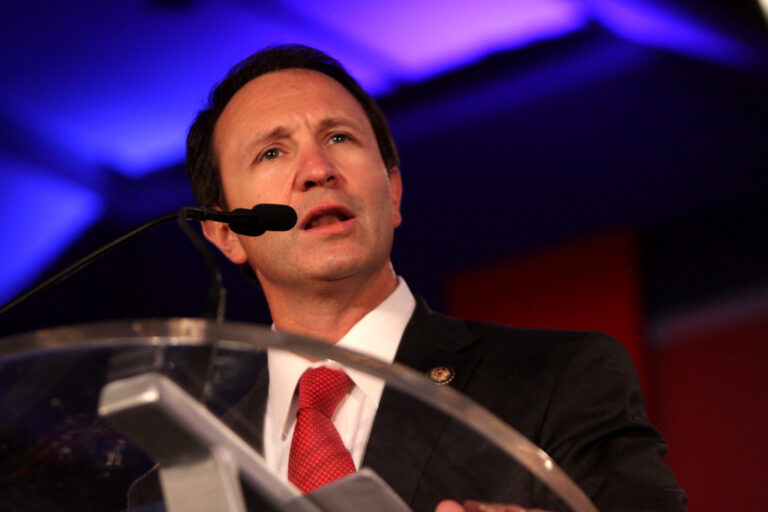
Louisiana Governor Jeff Landry, a strong ally of former President Donald Trump, faced a major defeat as voters rejected four controversial amendments he championed. These amendments were designed to reshape the state constitution in favor of Republican interests. The rejection was resounding, with voters opposing each amendment by a 2-to-1 margin, signaling a clear disapproval of Landry’s agenda.


The Amendments: What Were They About?

The four amendments were met with controversy from the start. They sought to:

  1. Cut Taxes for the Rich: This amendment aimed to reduce taxes for the wealthy, a move critics argued would widen income inequality.
  2. Create Specialty Courts: These courts would handle specific cases, raising concerns about fairness and access to justice.
  3. Change Judicial Election Dates: Critics feared this could influence election outcomes and undermine judicial independence.
  4. Ease Sending Kids to Adult Prisons: This amendment faced backlash for potentially harming juvenile justice reform efforts.

Each amendment’s defeat highlighted strong public opposition to policies perceived as unfair and regressive.


High Turnout and Motivated Voters

Voter turnout, especially in New Orleans, played a crucial role in the amendments’ defeat. More voters cast their ballots than in the previous governor’s race, with 91% in New Orleans rejecting all amendments. This surge was partly due to a successful grassroots digital campaign that mobilized black voters, many motivated by opposition to Landry and Trump.


Landry’s Response and Analyst Insights

Governor Landry blamed the loss on George Soros, a familiar target for conservatives. However, analysts suggest the defeat reflects his failure to garner sufficient Republican support. Even in GOP-dominated areas, the amendments struggled, indicating weakened backing from his base.


Unlikely Allies Against the Amendments

An unusual alliance between liberal and conservative groups emerged to oppose the amendments. Reverend Tony Spell, a conservative preacher, joined forces with progressive activists. Spell’s opposition to the tax-cut amendment exemplified this collaboration, showing that concern over the amendments transcended political lines.


Conclusion: A Blow to Landry’s Agenda

The rejection of these amendments is a significant blow to Governor Landry’s efforts to reshape Louisiana’s constitution. It underscores the power of voter engagement and bipartisan cooperation. As Landry faces this setback, the outcome may signal challenges ahead for his political ambitions and the broader Republican agenda in the state.