

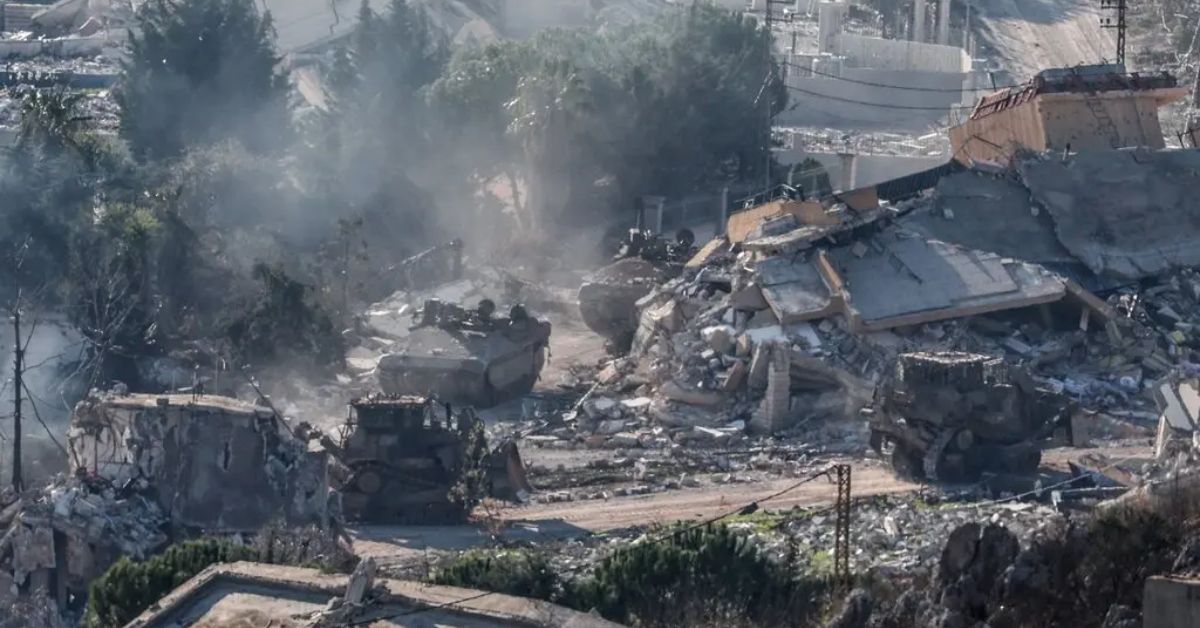

Quick Summary: Ceasefire in Lebanon Begins as International Reactions Remain Divided
- A ceasefire in Lebanon has been initiated, aiming to reduce tensions in the region.
- President Trump expressed confidence in the Iran nuclear deal, impacting diplomatic relations.
- The ceasefire is expected to stabilize the situation in Lebanon, providing relief to affected areas.
- International reactions are mixed, with some countries supporting the ceasefire and others remaining skeptical.
- Ongoing monitoring and diplomatic efforts are crucial to maintaining the ceasefire’s effectiveness.
Source: Read original article
A ceasefire in Lebanon has officially gone into effect, marking a significant step toward reducing regional tensions. President Trump has expressed confidence in the Iran nuclear deal, which plays a key role in the current diplomatic landscape. The ceasefire aims to stabilize Lebanon, offering a reprieve for those affected by the conflict. However, international responses are varied, with some nations supporting the move while others remain cautious. Continued monitoring and diplomatic engagement will be essential in ensuring the ceasefire’s longevity and success.
Ceasefire in Lebanon remains central to this report as researchers continue evaluating efficacy, safety, and long-term durability in broader patient groups.
Researchers are now focusing on reproducibility, adverse-event tracking, and long-term monitoring to determine where Ceasefire in Lebanon can deliver consistent benefit. That means larger cohorts, clearer inclusion criteria, and better public reporting of both positive outcomes and treatment-limiting complications. In practical terms, clinicians want stronger evidence on durability, relapse patterns, and how outcomes differ by age, severity, and coexisting conditions. These details matter because early success in one subgroup does not automatically translate to broad, real-world effectiveness across all patient populations.
Health systems evaluating Ceasefire in Lebanon are also weighing cost, infrastructure, and patient access before scaling these protocols into standard care pathways. Specialized staffing, lab capacity, patient monitoring, and reimbursement models all influence whether promising therapies can move beyond pilot programs. Even when a treatment is clinically compelling, hospitals still need operational readiness to deliver it safely and consistently. As a result, policy and implementation planning now sit alongside clinical research as core factors that will determine near-term adoption.
Another key issue is long-term follow-up. Medical teams tracking Ceasefire in Lebanon outcomes are placing greater emphasis on post-treatment surveillance, quality-of-life measures, and adverse-event registries that continue well beyond initial response windows. This broader lens helps distinguish short-term improvement from durable remission and clarifies which patient groups may need supplemental therapies over time. The quality of that longitudinal data will likely shape future guidelines, payer decisions, and clinician confidence in recommending treatment at scale.
Experts also note that public interpretation can outpace clinical certainty. Headlines often highlight breakthrough narratives, while trial investigators remain cautious about sample size, endpoint design, and external validity. For Ceasefire in Lebanon, that gap between public excitement and evidence maturity is especially important: decision-makers need both urgency and rigor. Clear communication around uncertainty, limitations, and expected timelines can reduce confusion and help patients make better-informed choices with their care teams.
For anyone following Ceasefire in Lebanon with a practical goal in mind, it helps to separate what is confirmed from what is still being reported or speculated. Official sources, direct statements, and verified documents form the most reliable foundation for understanding where things actually stand. Secondary commentary and analysis — while useful for context — should be weighed carefully against what primary sources have actually confirmed. As the story continues to develop, the gap between confirmed fact and informed speculation will gradually close, making the overall picture clearer and more actionable. Keeping that distinction in mind is one of the most useful habits for anyone trying to make sense of a fast-moving story like this one.
Researchers are now focusing on reproducibility, adverse-event tracking, and long-term monitoring to determine where Ceasefire in Lebanon, can deliver consistent benefit. That means larger cohorts, clearer inclusion criteria, and better public reporting of both positive outcomes and treatment-limiting complications. In practical terms, clinicians want stronger evidence on durability, relapse patterns, and how outcomes differ by age, severity, and coexisting conditions. These details matter because early success in one subgroup does not automatically translate to broad, real-world effectiveness across all patient populations. More details are expected to emerge in the coming days.
Health systems evaluating Ceasefire in Lebanon, are also weighing cost, infrastructure, and patient access before scaling these protocols into standard care pathways. Specialized staffing, lab capacity, patient monitoring, and reimbursement models all influence whether promising therapies can move beyond pilot programs. Even when a treatment is clinically compelling, hospitals still need operational readiness to deliver it safely and consistently. As a result, policy and implementation planning now sit alongside clinical research as core factors that will determine near-term adoption. More details are expected to emerge in the coming days.
Another key issue is long-term follow-up. Medical teams tracking Ceasefire in Lebanon, outcomes are placing greater emphasis on post-treatment surveillance, quality-of-life measures, and adverse-event registries that continue well beyond initial response windows. This broader lens helps distinguish short-term improvement from durable remission and clarifies which patient groups may need supplemental therapies over time. The quality of that longitudinal data will likely shape future guidelines, payer decisions, and clinician confidence in recommending treatment at scale. More details are expected to emerge in the coming days.
Experts also note that public interpretation can outpace clinical certainty. Headlines often highlight breakthrough narratives, while trial investigators remain cautious about sample size, endpoint design, and external validity. For Ceasefire in Lebanon,, that gap between public excitement and evidence maturity is especially important: decision-makers need both urgency and rigor. Clear communication around uncertainty, limitations, and expected timelines can reduce confusion and help patients make better-informed choices with their care teams. More details are expected to emerge in the coming days.
For anyone following Ceasefire in Lebanon, with a practical goal in mind, it helps to separate what is confirmed from what is still being reported or speculated. Official sources, direct statements, and verified documents form the most reliable foundation for understanding where things actually stand. Secondary commentary and analysis — while useful for context — should be weighed carefully against what primary sources have actually confirmed.
As the story continues to develop, the gap between confirmed fact and informed speculation will gradually close, making the overall picture clearer and more actionable. Keeping that distinction in mind is one of the most useful habits for anyone trying to make sense of a fast-moving story like this one. More details are expected to emerge in the coming days.
Conclusion
The situation around Ceasefire in Lebanon continues to evolve. What started as a single development has grown into a story with real consequences — for the people involved, for the institutions responding, and for anyone watching closely. The full picture is not yet clear, but the direction is becoming harder to ignore.
Staying informed matters here. Each new update adds context that changes how earlier events should be understood. Follow verified sources and check back as the story develops — the next confirmed detail could shift the narrative significantly.