

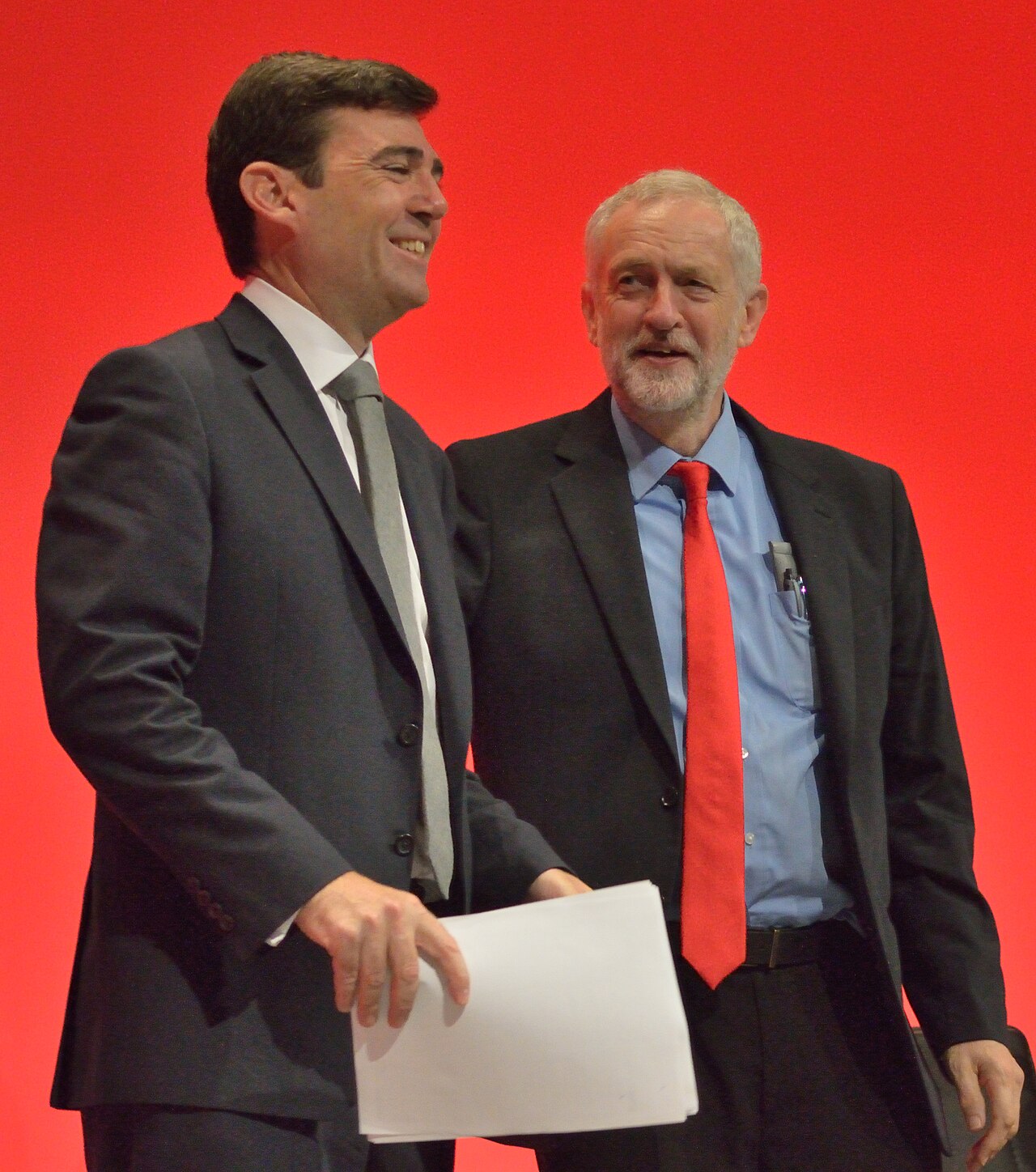

Quick Summary: Andy Burnham’s Decisive Makerfield Win Intensifies Pressure on Keir Starmer
- Andy Burnham’s decisive win in the Makerfield by-election has positioned him as a credible threat to Keir Starmer’s leadership.
- Burnham secured nearly 55% of the vote, defeating Reform UK’s Rob Kenyon by over 9,000 votes.
- The by-election was a critical test for Labour, with a previous majority of just over 5,000 votes.
- Burnham’s victory challenges Starmer’s authority amidst internal Labour unrest.
- Starmer remains committed to his leadership despite Burnham’s growing influence.
Source: Read original article
Andy Burnham’s stunning victory in the Makerfield by-election has sent shockwaves through the Labour Party, posing a direct challenge to Keir Starmer’s leadership. With nearly 55% of the vote, Burnham not only secured a decisive win but also emerged as a formidable contender for the Labour leadership.
The Makerfield by-election was more than just a local contest; it was a litmus test for Labour’s current leadership under Starmer. The constituency, with a previously slim majority, had become a battleground, and Burnham’s triumph has shifted the political landscape, raising questions about Starmer’s grip on the party.
Burnham, often referred to as the ‘King of the North,’ has capitalized on his victory to assert his political ambitions. His win is not just a personal success but a statement against the backdrop of Labour’s internal turmoil. Starmer, on the other hand, has publicly reaffirmed his commitment to lead, despite the mounting pressure from Burnham’s camp.
The implications of Burnham’s win extend beyond Makerfield, as it signals a potential shift in Labour’s leadership dynamics. The party’s internal debate is likely to intensify, with Burnham’s supporters advocating for change at the top. As the political drama unfolds, all eyes are on Burnham’s next move and Starmer’s response.
Andy Burnham’s win in the Makerfield by-election early Friday has turned a local parliamentary race into the clearest immediate threat yet to Keir Starmer’s grip on Labour and Downing Street, with Burnham taking almost 55% of 45,510 votes cast and finishing more than 9,000 votes ahead of Reform UK’s Rob Kenyon. Burnham won nearly 55% of the 45,510 ballots cast in Makerfield, in a race with more than a dozen candidates, beating Reform UK’s Rob Kenyon by over 9,000 votes.
Starmer has also tried to contain the threat by saying he wants Burnham to have “a big role in government,” an offer that reads both as conciliation and as an acknowledgment of Burnham’s new leverage. The constituency had already become a national test because Labour’s previous majority there was described as only a little over 5,000 at the 2024 general election, while Reform had recently performed strongly in local wards in the area.
Then, in the early hours of June 19, the result landed: Burnham had not merely scraped through but won decisively enough to emerge as the only rival who looks immediately credible. On June 12, Starmer publicly recommitted to fighting any challenge after the exit of Defence Secretary John Healey intensified the sense of crisis around his leadership.
Burnham, 56, the mayor of Greater Manchester known as the “King of the North,” has the momentum and parliamentary legitimacy he lacked a week ago. AP reported that Burnham’s victory “cements” his status as the top contender to replace Starmer, and Burnham himself used his acceptance speech to signal that he is aiming far beyond a backbench return.
Burnham had already said publicly that “if people put their trust in me, I will change politics,” a line AP highlighted before the vote as a not-so-subtle declaration of leadership intent. Critics inside Labour warned the rules should “not be tweaked” for him, while his allies argued the party had to do “what it takes” to make him available as the next leader.
With nearly 55% of the vote, Burnham not only secured a decisive win but also emerged as a formidable contender for the Labour leadership. Burnham won nearly 55% of the 45,510 ballots cast in Makerfield, in a race with more than a dozen candidates, beating Reform UK’s Rob Kenyon by over 9,000 votes.
The constituency had already become a national test because Labour’s previous majority there was described as only a little over 5,000 at the 2024 general election, while Reform had recently performed strongly in local wards in the area. Then, in the early hours of June 19, the result landed: Burnham had not merely scraped through but won decisively enough to emerge as the only rival who looks immediately credible.
On June 12, Starmer publicly recommitted to fighting any challenge after the exit of Defence Secretary John Healey intensified the sense of crisis around his leadership. Burnham, 56, the mayor of Greater Manchester known as the “King of the North,” has the momentum and parliamentary legitimacy he lacked a week ago.
The scale and speed of this development has caught many observers off guard. Each new update adds another dimension to a story that is still unfolding, and the full picture will only become clear as more verified details emerge from the people and institutions directly involved.
Analysts who have tracked this issue closely say the current moment represents a genuine turning point. The decisions made in the coming weeks are expected to set the direction for months ahead, with ripple effects likely to extend well beyond the immediate actors in the story.
For those directly affected, the practical impact is already visible. People navigating this fast-changing situation are dealing with real consequences while new information continues to reshape what is known and what remains open to interpretation.
Historical parallels offer some context, though experts caution against drawing too close a comparison. Similar situations have played out before, but the specific combination of pressures, personalities, and timing here makes this moment distinct in ways that matter for how it ultimately resolves.
The political and economic dimensions of this story are deeply intertwined. What appears as a single event on the surface is in practice the convergence of multiple pressures that have been building quietly over a longer period than most public reporting has captured.