

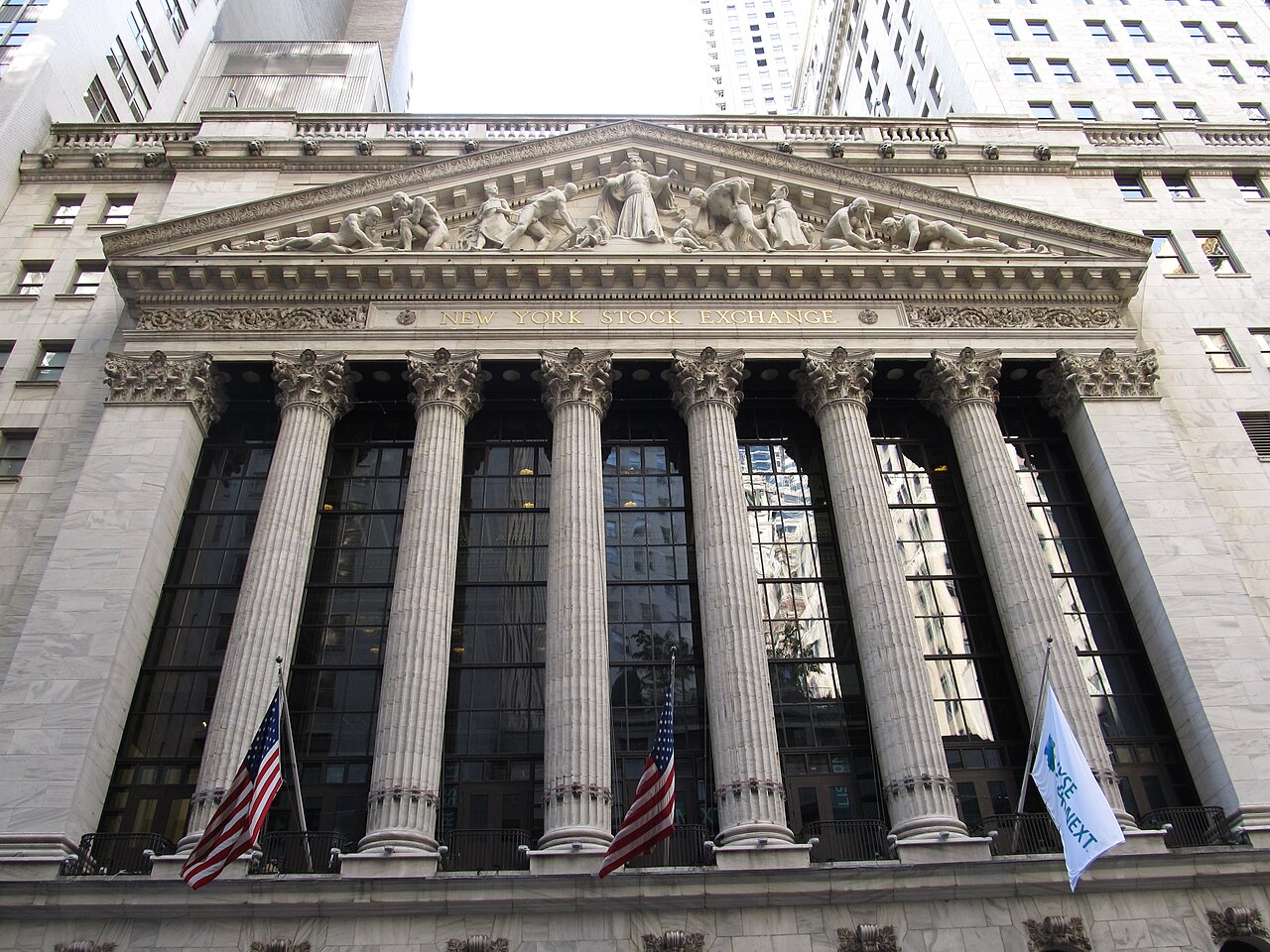

Quick Summary: Dow Jones Surges to Record Close as Investors Shift From AI Stocks
- The Dow Jones Industrial Average surged 1.7%, marking a record close as investors moved away from AI stocks.
- Oil prices eased, with Brent crude falling 2.8% to $95.03 a barrel, reducing inflation pressure.
- Bank stocks led the market advance, with Goldman Sachs rising 5.0% and Fifth Third Bancorp gaining 4.7%.
- The Nasdaq slipped 0.1%, highlighting a shift in investor focus from tech to other sectors.
- Broadcom fell 12.6% despite strong earnings, indicating a rotation away from AI-driven stocks.
Source: Read original article
The Dow Jones Industrial Average has shattered records, surging 1.7% as investors pivot away from the once-dominant AI stocks. This seismic shift in market dynamics comes as oil prices ease, providing a much-needed reprieve from inflationary pressures.
Brent crude’s decline to $95.03 a barrel has sparked optimism, encouraging investors to explore opportunities beyond the tech sector. The result? A rally in bank stocks, with Goldman Sachs and Fifth Third Bancorp leading the charge. This rotation signifies a potential long-term shift in market leadership, as sectors previously overshadowed by AI mania gain traction.
While the Nasdaq slipped slightly, the broader market’s enthusiasm was palpable. The S&P 500 recorded its 10th gain in 11 days, and the Russell 2000 of smaller companies jumped 1.4%, underscoring the appeal of rate-sensitive stocks amid easing borrowing costs. The market’s current trajectory hinges on oil prices and bond yields, as investors weigh the sustainability of this newfound diversity.
Ultimately, the Dow’s record-breaking performance is a testament to the market’s evolving landscape. As investors seek alternatives to AI, the broader market stands to benefit, provided external factors like oil prices remain favorable. This shift could redefine market dynamics, offering a more balanced and diversified investment environment.
6% even though it reported profit and revenue above analysts’ expectations. 1%, a sharp sign that investors are rotating into banks, small caps and other lagging sectors as oil prices and Treasury yields ease.
4%, suggesting traders are moving into parts of the market that could benefit most if borrowing costs come down. 4%, a reversal that underlined how aggressively investors favored sectors that had been left behind by AI euphoria.
49% late Wednesday, a small move numerically but meaningful for rate-sensitive stocks, especially smaller companies that rely more heavily on borrowed cash. The S&P 500 had been riding a nine-day winning streak before it ended Wednesday, one session shy of its longest run in three decades, and then the Dow powered to a fresh record on Thursday, June 4, 2026.
If Brent holds near or below $95 instead of reigniting toward the roughly $100 level seen in recent war-driven swings, banks and small caps could continue to gain ground; if oil spikes again or AI earnings once more overpower everything else, the market may snap back to the narrow leadership that defined much of the rally. Kurtz said the latest quarter was when “the worlds of cybersecurity and frontier AI collided,” as CrowdStrike also announced a stock split intended to make its shares more affordable.
Right now, the most important revelation from the latest reporting is that investors finally found a reason to buy something other than AI, and they did it forcefully enough to send the Dow to a record while tech blinked. 03 a barrel, easing some inflation pressure after earlier oil spikes tied to fighting involving Iran, the United States and its allies.
6% even though it reported profit and revenue above analysts’ expectations. 1%, highlighting a shift in investor focus from tech to other sectors.
6% despite strong earnings, indicating a rotation away from AI-driven stocks. 4%, underscoring the appeal of rate-sensitive stocks amid easing borrowing costs.
1%, a sharp sign that investors are rotating into banks, small caps and other lagging sectors as oil prices and Treasury yields ease. 4%, suggesting traders are moving into parts of the market that could benefit most if borrowing costs come down.
4%, a reversal that underlined how aggressively investors favored sectors that had been left behind by AI euphoria. 49% late Wednesday, a small move numerically but meaningful for rate-sensitive stocks, especially smaller companies that rely more heavily on borrowed cash.
The S&P 500 had been riding a nine-day winning streak before it ended Wednesday, one session shy of its longest run in three decades, and then the Dow powered to a fresh record on Thursday, June 4, 2026. 7%, marking a record close as investors moved away from AI stocks.
The scale and speed of this development has caught many observers off guard. Each new update adds another dimension to a story that is still unfolding, and the full picture will only become clear as more verified details emerge from the people and institutions directly involved.
Analysts who have tracked this issue closely say the current moment represents a genuine turning point. The decisions made in the coming weeks are expected to set the direction for months ahead, with ripple effects likely to extend well beyond the immediate actors in the story.
For those directly affected, the practical impact is already visible. People navigating this fast-changing situation are dealing with real consequences while new information continues to reshape what is known and what remains open to interpretation.
Historical parallels offer some context, though experts caution against drawing too close a comparison. Similar situations have played out before, but the specific combination of pressures, personalities, and timing here makes this moment distinct in ways that matter for how it ultimately resolves.
The political and economic dimensions of this story are deeply intertwined. What appears as a single event on the surface is in practice the convergence of multiple pressures that have been building quietly over a longer period than most public reporting has captured.