

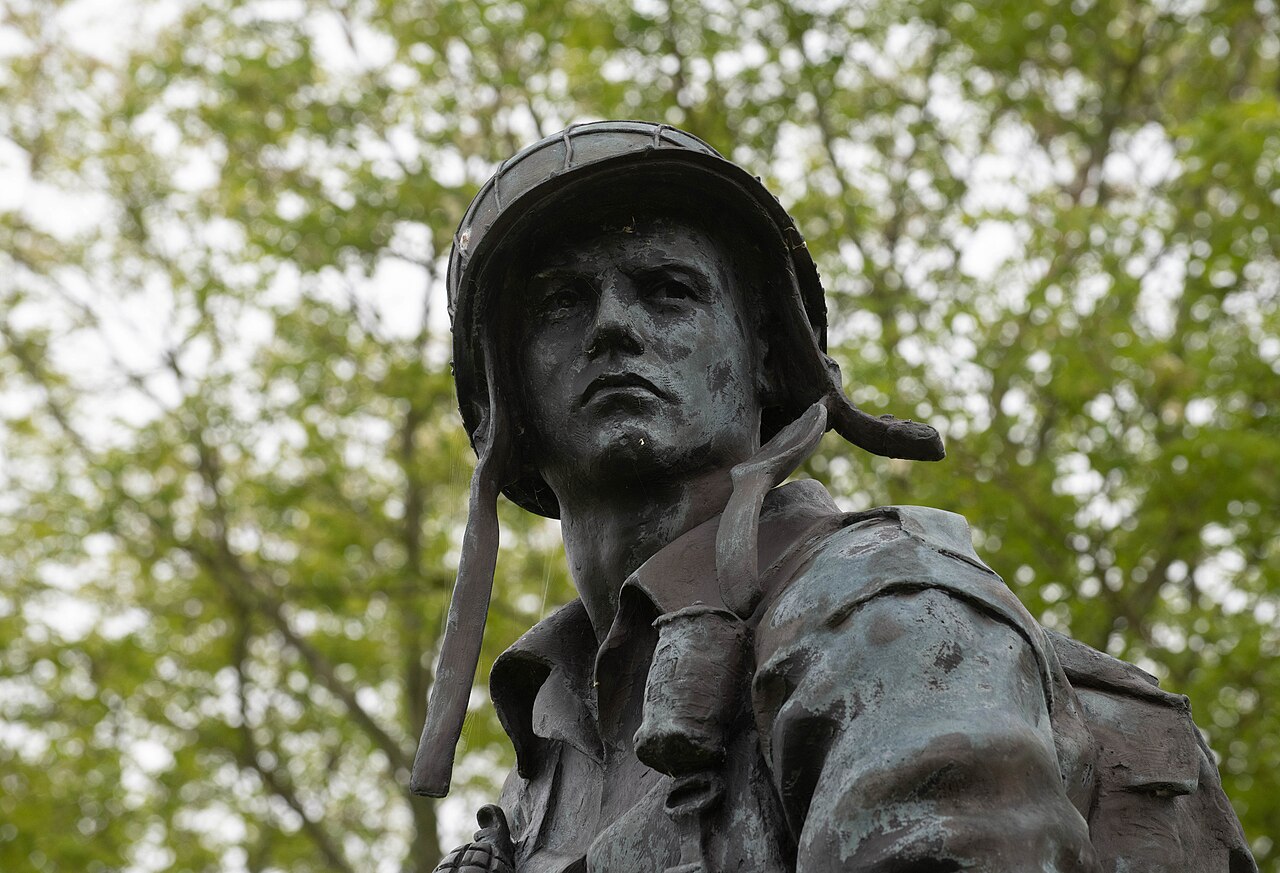

Quick Summary: Sir George Dowty Unveiled Statue Marks Significant National Act of Remembrance
- Sir George Dowty’s statue was unveiled on 27 May 2026 at the International Bomber Command Centre in Lincoln.
- This is the first statue at the IBCC, marking a significant national act of remembrance.
- Dowty’s contributions were pivotal during WWII, with no aircraft delayed due to lack of his equipment.
- The ceremony was led by Air Chief Marshal Sir Michael Graydon and attended by key figures.
- Future plans include a statue of poet and aviator John Gillespie Magee Jr.
Source: Read original article
In a historic move, Sir George Dowty has been immortalized with a statue at the International Bomber Command Centre in Lincoln. This unveiling on 27 May 2026 marks him as the first individual to receive such an honor at the site, highlighting his crucial role in WWII aviation history.
Dowty, the mastermind behind the Lancaster bomber’s undercarriage, was celebrated not just for his engineering prowess but for his operational impact during the war. The ceremony, led by Air Chief Marshal Sir Michael Graydon, underscored Dowty’s legacy as a pivotal figure whose innovations ensured the RAF’s fleet remained operationally decisive.
The International Bomber Command Centre, a significant memorial venue, now hosts this statue as part of its broader mission to commemorate the sacrifices and contributions of those involved in Bomber Command operations. This initiative not only honors Dowty but also opens the door for further commemorations, including a planned statue of John Gillespie Magee Jr.
Sir George Dowty’s statue is more than a tribute; it’s a corrective to historical oversight. As Martin Robins of the Dowty Memorial Committee noted, Dowty’s work saved lives on a monumental scale, making this recognition long overdue. This unveiling is a step toward a more inclusive remembrance of all who contributed to the war effort.
This statue marks the beginning of a new chapter for the IBCC, integrating Dowty’s legacy into its narrative of remembrance. The site, already a hub for historical commemoration, now has a tangible symbol of Dowty’s enduring impact.
Earlier memorial-committee material said the first statue had already drawn “enormous worldwide interest” after its 2024 unveiling in Wiltshire, and a February 2026 committee report described active planning for the Lincoln installation, including support from IBCC chief executive Nicky van der Drift and the expectation that the Dowty statue would stand at the front of the site. On 27 May 2026, the unveiling ceremony took place in Lincoln, according to the event programme.
The February 2026 planning note said the Dowty statue would be followed by one of John Gillespie Magee Jr and added, “We understand that there will be no other statues,” which gives the Dowty unveiling added significance: it may be one of only two such individual monuments at the site. The most specific new detail in the latest reporting is the ceremony itself: the printed programme for 27 May 2026 says the unveiling was led by Air Chief Marshal Sir Michael Graydon, former head of the Royal Air Force, with Martin Robins, chair of the Sir George Dowty Memorial Committee, opening the event at the IBCC site on Canwick Avenue, Lincoln, LN4 2HQ.
The key new development is that Sir George Dowty’s statue was unveiled on Tuesday, 27 May 2026, at the International Bomber Command Centre in Lincoln, making him the first individual to be commemorated there with a statue and elevating a long-running campaign to honor the engineer behind the Lancaster bomber’s undercarriage into a formal national act of remembrance. In the months immediately preceding it, the memorial committee had finalized the siting and messaging for the statue at a 4 February 2026 meeting, while Dowty heritage material had been preparing supporters for a spring 2026 unveiling.
The central tension in the story is less a live political row than a debate over who gets remembered in Britain’s war memorial culture: frontline aircrew are publicly memorialized, but the ceremony material argues that the industrial engineer who kept aircraft serviceable had been comparatively overlooked for more than 50 years after his death. That same report said another future statue, of the poet and aviator John Gillespie Magee Jr, was planned later, suggesting Dowty’s installation may open the door to a broader sculptural programme at the centre.
What happens next is not a vote or court hearing but a question of how the IBCC expands the commemoration. The IBCC itself is not a minor venue: its own site describes it as a memorial and interpretation centre with a 31-metre, 102-foot spire weighing 73 tons, and says it records 67,500 Bomber Command deaths in its losses database while commemorating 125,000 volunteer aircrew and support personnel from 62 nations.
In the months immediately preceding it, the memorial committee had finalized the siting and messaging for the statue at a 4 February 2026 meeting, while Dowty heritage material had been preparing supporters for a spring 2026 unveiling. That same report said another future statue, of the poet and aviator John Gillespie Magee Jr, was planned later, suggesting Dowty’s installation may open the door to a broader sculptural programme at the centre.
The ceremony, led by Air Chief Marshal Sir Michael Graydon, underscored Dowty’s legacy as a pivotal figure whose innovations ensured the RAF’s fleet remained operationally decisive. The IBCC itself is not a minor venue: its own site describes it as a memorial and interpretation centre with a 31-metre, 102-foot spire weighing 73 tons, and says it records 67,500 Bomber Command deaths in its losses database while commemorating 125,000 volunteer aircrew and support personnel from 62 nations.
This is the first statue at the IBCC, marking a significant national act of remembrance. Dowty’s contributions were pivotal during WWII, with no aircraft delayed due to lack of his equipment.
The scale and speed of this development has caught many observers off guard. Each new update adds another dimension to a story that is still unfolding, and the full picture will only become clear as more verified details emerge from the people and institutions directly involved.
Analysts who have tracked this issue closely say the current moment represents a genuine turning point. The decisions made in the coming weeks are expected to set the direction for months ahead, with ripple effects likely to extend well beyond the immediate actors in the story.
For those directly affected, the practical impact is already visible. People navigating this fast-changing situation are dealing with real consequences while new information continues to reshape what is known and what remains open to interpretation.
Historical parallels offer some context, though experts caution against drawing too close a comparison. Similar situations have played out before, but the specific combination of pressures, personalities, and timing here makes this moment distinct in ways that matter for how it ultimately resolves.
The political and economic dimensions of this story are deeply intertwined. What appears as a single event on the surface is in practice the convergence of multiple pressures that have been building quietly over a longer period than most public reporting has captured.