

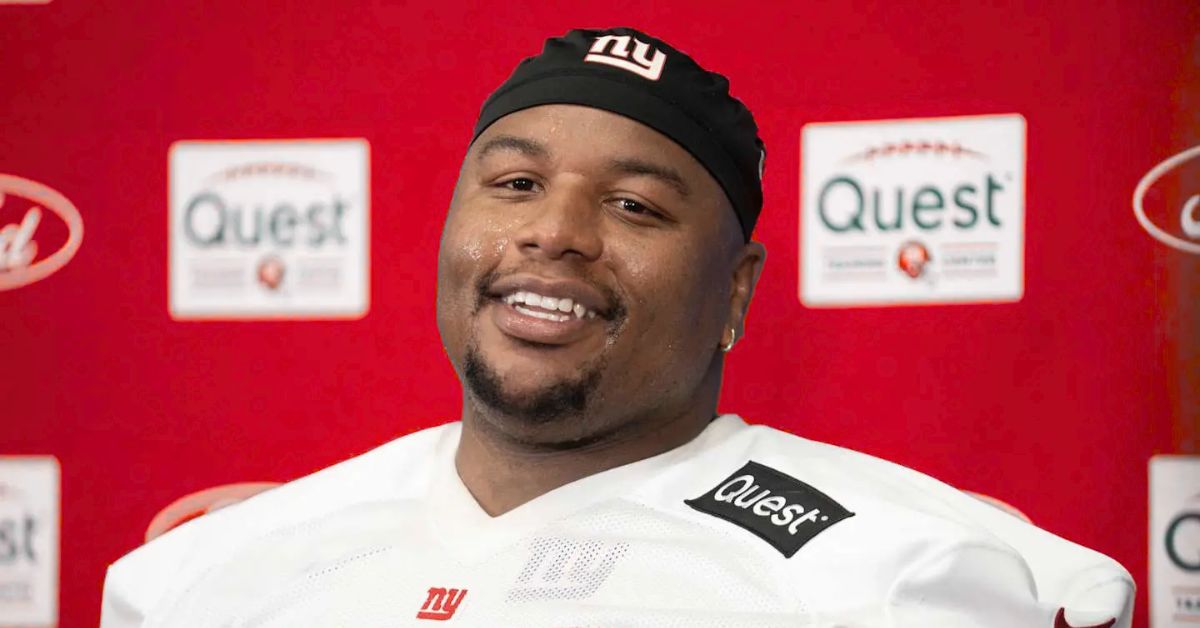

Quick Summary: Giants trade Dexter Lawrence to Bengals in Strategic NFL Move
- The New York Giants have traded defensive tackle Dexter Lawrence to the Cincinnati Bengals in a major NFL deal.
- The trade gives the Giants two picks in the top ten of the upcoming NFL draft, enhancing their rebuilding efforts.
- Dexter Lawrence’s move to the Bengals adds significant strength to their defensive line.
- The Bengals traded a first-round pick to the Giants, leaving them with seven picks in the draft.
- This trade is seen as a strategic move for both teams to address their immediate needs.
Source: Read original article
The New York Giants have made a significant move by trading defensive tackle Dexter Lawrence to the Cincinnati Bengals. This blockbuster trade is set to shake up the NFL landscape as both teams look to strengthen their positions. Giants trade Dexter Lawrence to Bengals is at the center of this development.
In exchange for Lawrence, the Giants received a first-round draft pick, giving them two top-ten selections in the upcoming NFL draft. This move is expected to aid the Giants in their rebuilding strategy, providing them with valuable assets to bolster their roster.
For the Bengals, acquiring Dexter Lawrence adds a powerful presence to their defensive line, addressing a key area of need. The Bengals now have seven picks in the draft, allowing them flexibility to further enhance their team.
This trade marks a strategic shift for both teams, with the Giants focusing on future potential and the Bengals aiming to fortify their current lineup. As the NFL draft approaches, the impact of this trade will become more apparent.
Overall, this trade highlights the dynamic nature of the NFL as teams continuously adapt to improve their chances of success. The coming weeks will reveal how these changes affect both teams’ prospects in the upcoming season.
Giants trade Dexter Lawrence to Bengals remains the central development in this story, with the latest facts shaping how readers should understand the immediate stakes.
The next step depends on what the main parties say and do, because those responses will determine whether this is a short-lived update or a bigger shift.
In practical terms, Giants trade Dexter Lawrence to Bengals now raises a simple question: what changes first, and who feels it most quickly? The answer depends on the timeline, the decision-makers involved, and whether the response is immediate or delayed. Those three pieces usually determine how fast a story moves from headline to wider consequence.
The biggest value in following Giants trade Dexter Lawrence to Bengals closely is separating the confirmed facts from the early speculation. When a story is moving quickly, the first version is often incomplete, which is why verified updates matter more than reactions built on fragments. Readers get a clearer view when the reporting stays tied to what is known, who said it, and what changed afterward.
Context also matters. A single development can look routine in isolation and significant when set against the broader pattern around it. That is why the timing, the scale of the change, and the response from the people involved are all important parts of the story. They show whether this is a one-off update or the start of something larger.
As the reporting develops, the most useful details are usually the ones that answer what happened, why it matters, and what comes next. Those facts help explain whether the story affects a narrow group or has wider reach. They also make it easier to understand which new details actually change the picture and which ones simply add noise.
For Giants trade Dexter Lawrence to Bengals, the most useful reading comes from the verified sequence of events: what happened first, how the main parties responded, and what changed after that. That timeline is often the difference between a routine update and a development with wider consequences. When the reporting stays tied to those facts, the story becomes much easier to understand and harder to distort.
Another useful question is whether the latest move changes the direction of the story or simply adds one more detail to it. That distinction matters because headlines can make a small update feel bigger than it is, while the underlying facts may point in a different direction. Readers get a clearer picture when they focus on the concrete action, the immediate response, and the next confirmed step.
In practical terms, Giants trade Dexter Lawrence to Bengals, now raises a simple question: what changes first, and who feels it most quickly? The answer depends on the timeline, the decision-makers involved, and whether the response is immediate or delayed. Those three pieces usually determine how fast a story moves from headline to wider consequence. More verified context may surface as the story develops.
The biggest value in following Giants trade Dexter Lawrence to Bengals, closely is separating the confirmed facts from the early speculation. When a story is moving quickly, the first version is often incomplete, which is why verified updates matter more than reactions built on fragments. Readers get a clearer view when the reporting stays tied to what is known, who said it, and what changed afterward. More verified context may surface as the story develops.
Context also matters. A single development can look routine in isolation and significant when set against the broader pattern around it. That is why the timing, the scale of the change, and the response from the people involved are all important parts of the story. They show whether this is a one-off update or the start of something larger. More verified context may surface as the story develops.
As the reporting develops, the most useful details are usually the ones that answer what happened, why it matters, and what comes next. Those facts help explain whether the story affects a narrow group or has wider reach. They also make it easier to understand which new details actually change the picture and which ones simply add noise. More verified context may surface as the story develops.
For Giants trade Dexter Lawrence to Bengals,, the most useful reading comes from the verified sequence of events: what happened first, how the main parties responded, and what changed after that. That timeline is often the difference between a routine update and a development with wider consequences. When the reporting stays tied to those facts, the story becomes much easier to understand and harder to distort. More verified context may surface as the story develops.
Another useful question is whether the latest move changes the direction of the story or simply adds one more detail to it. That distinction matters because headlines can make a small update feel bigger than it is, while the underlying facts may point in a different direction. Readers get a clearer picture when they focus on the concrete action, the immediate response, and the next confirmed step. More verified context may surface as the story develops.
Conclusion
For now, the story around Giants trade Dexter Lawrence to Bengals turns on the verified facts, the immediate response, and how the next confirmed update changes the picture.
The broader impact will become clearer as more details are confirmed and the main parties respond. Until then, the most useful reading comes from the facts that can be checked, not the speculation around them.