


Quick Summary: Leading California Governor Candidates Spar in Debate as Topsy
- Six candidates debated in California’s governor race following major campaign disruption
- The race intensified after Eric Swalwell exited amid allegations
- Candidates clashed over housing costs, homelessness, and economic concerns
- Steve Hilton and Xavier Becerra were among key voices
- No clear frontrunner has emerged ahead of the primary election
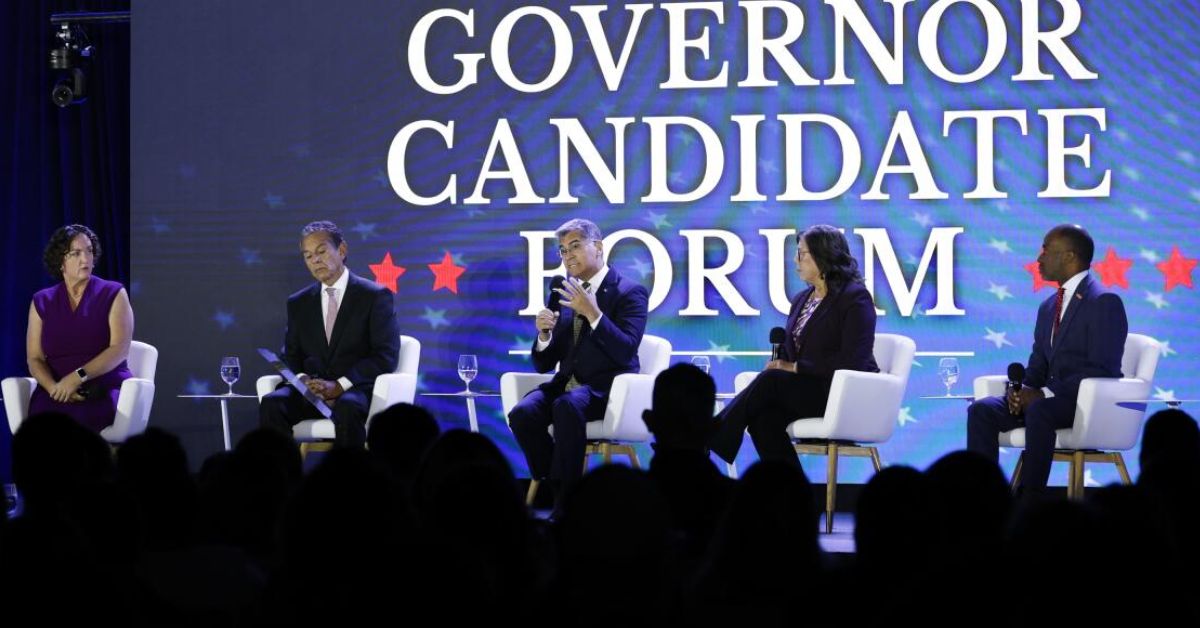
The race to become California’s next governor took center stage as six leading candidates faced off in a high-stakes debate, highlighting deep divisions over policy priorities and the future direction of the state. The debate marked a critical moment in an already volatile contest, coming shortly after the sudden collapse of Eric Swalwell’s campaign following allegations that forced him to exit the race. With the primary election approaching, the field remains wide open, with no clear frontrunner emerging.
The candidates presented competing visions for addressing some of California’s most pressing challenges, including the high cost of living, housing affordability, and homelessness. These issues have become central to the campaign, reflecting widespread concerns among voters about economic stability and quality of life. The debate offered a platform for candidates to outline their approaches while also drawing sharp contrasts with their opponents.
On the Republican side, Steve Hilton emphasized dissatisfaction with the current system, arguing that long-standing Democratic leadership has contributed to the state’s challenges. His remarks reflected a broader strategy of positioning himself as an alternative to established political approaches. Hilton’s campaign has gained attention, particularly following his endorsement from former President Donald Trump, which has added momentum to his bid.
Democratic candidates, meanwhile, largely agreed on policy goals but competed over who could best deliver results. Xavier Becerra highlighted his experience in government, emphasizing the importance of leadership during times of crisis. His comments underscored a focus on experience and readiness, suggesting that voters should prioritize candidates with a proven track record.
Katie Porter brought attention to the financial pressures faced by many Californians, framing her campaign around the everyday struggles of residents. She sought to distinguish herself by presenting a perspective grounded in personal experience, emphasizing her understanding of the challenges faced by families across the state. Her approach aimed to connect with voters on a more personal level.
Tom Steyer, leveraging his financial resources, has maintained a strong presence in the race. He positioned himself as a candidate willing to challenge economic inequality, including advocating for higher taxes on wealthy individuals. His stance reflects a broader progressive agenda, though it has also drawn criticism from opponents who question his background and past business activities.
San Jose Mayor Matt Mahan highlighted his experience in Silicon Valley, focusing on the role of technology and innovation in addressing the state’s challenges. He emphasized the need for forward-looking policies, particularly in areas such as artificial intelligence and economic development. His approach reflects an effort to appeal to voters interested in technological solutions.
Chad Bianco, another Republican candidate, reinforced criticisms of Democratic governance, arguing that current policies have contributed to the state’s difficulties. His comments aligned with a broader narrative among Republican candidates, emphasizing the need for change in leadership and policy direction.
Despite the range of perspectives presented during the debate, the event did little to clarify the race. With nearly a quarter of voters still undecided, the outcome remains uncertain. The lack of a defining moment during the debate suggests that candidates will need to continue working to differentiate themselves as the election approaches.
The broader context of the race includes a growing sense of concern among voters about the state’s economic future. Rising costs of living and housing have created significant challenges for residents, contributing to a sense of pessimism about the direction of the state. These concerns have become a central theme in the campaign, influencing how candidates frame their messages.
The debate also highlighted the impact of California’s unique primary system, where the top two candidates advance to the general election regardless of party affiliation. This system creates the possibility of unexpected outcomes, including scenarios where candidates from the same party face off in the final round. As a result, strategic considerations play a significant role in how campaigns are conducted.
The recent upheaval in the race, including the exit of Eric Swalwell, has added another layer of complexity. His departure has reshaped the field, creating opportunities for other candidates while also increasing uncertainty. The timing of this development, so close to the primary, has intensified the competition and heightened the stakes.
As the campaign continues, candidates will need to address both immediate concerns and long-term challenges facing the state. This includes not only proposing solutions but also convincing voters of their ability to implement them effectively. The ability to communicate a clear and compelling vision will be critical in gaining support.
The role of endorsements and external support is also likely to influence the race. Hilton’s endorsement from Trump, for example, highlights the potential impact of high-profile backing. Similarly, financial resources and organizational strength will play a role in shaping campaign dynamics.
The debate served as an important moment for candidates to introduce themselves to voters who are beginning to pay closer attention to the race. As ballots are prepared for distribution, the window for influencing public opinion is narrowing. Candidates will need to make the most of this period to build momentum and secure support.
Conclusion
The California governor’s race remains highly competitive and uncertain following a debate that highlighted key issues but failed to produce a clear frontrunner. With candidates offering contrasting approaches to challenges such as housing, affordability, and economic growth, the decision now rests with voters navigating a complex and evolving political landscape. As the primary approaches, the outcome will depend on how effectively candidates can connect with voters and address the concerns shaping the state’s future.