

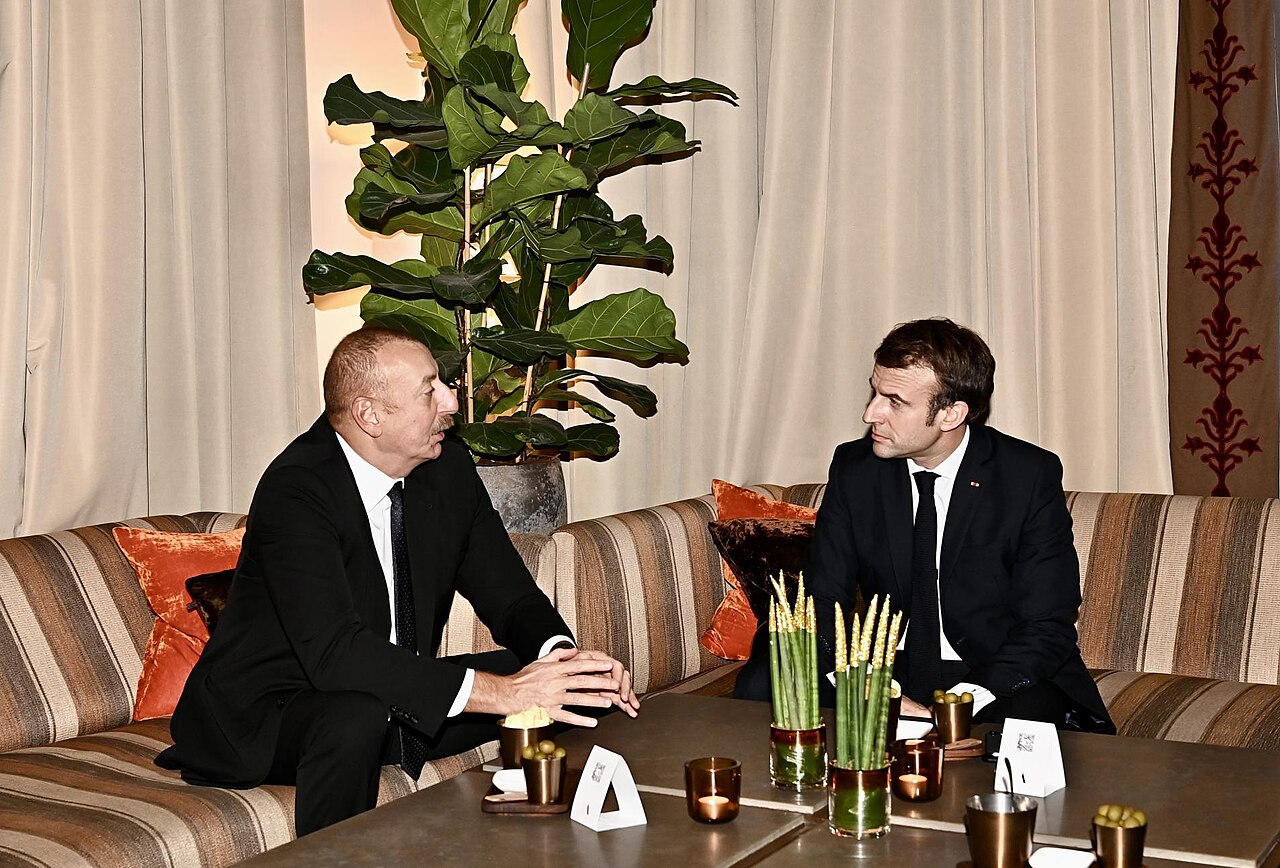

Quick Summary: Macron Says Armenia’s Future Lies With Europe
- Macron endorsed Pashinyan, arguing Armenia’s future lies with Europe, just before Armenia’s June 7, 2026 election.
- Pashinyan faces pressure from pro-Russia and nationalist rivals accusing him of excessive concessions to Azerbaijan.
- Macron signed a strategic partnership with Armenia, moving beyond rhetoric to concrete agreements.
- Macron’s intervention is seen as interference by critics, raising stakes in Armenia’s political landscape.
- The outcome of Armenia’s election will test whether Macron’s support can translate into tangible benefits.
Source: Read original article
Macrons Armenia: Key Takeaways
Macrons Armenia is at the center of this developing story, and the following analysis explains what matters most right now.
Emmanuel Macron’s recent visit to Yerevan was more than a diplomatic courtesy call; it was a calculated political maneuver. By endorsing Armenian Prime Minister Nikol Pashinyan, Macron has positioned France as a key supporter of Armenia’s pivot towards Europe. This move comes at a critical juncture, with Armenia’s parliamentary elections looming on June 7, 2026.
Pashinyan, who has been in power for eight years, is under fire from pro-Russian and nationalist factions. They accuse him of making too many concessions to Azerbaijan, compromising Armenia’s sovereignty. Macron’s backing is a bold statement that challenges this narrative, suggesting that Armenia’s break from Moscow is not only necessary but also feasible.
Macron’s visit wasn’t just symbolic. He signed a strategic partnership with Armenia, covering areas like AI, cybersecurity, and defense technologies. This partnership aims to show that Armenia’s European alignment can yield real economic and security benefits. However, critics argue that Macron’s involvement is tantamount to meddling in Armenia’s internal politics.
The stakes are high. The upcoming election will reveal whether Macron’s support can bolster Pashinyan’s position or if it will backfire, energizing his opponents. The newly signed agreements need to deliver visible results quickly to sway voters. Macron’s gamble is clear: he believes Pashinyan can leverage French support to secure a European future for Armenia.
Pashinyan, in power for eight years, is heading into the June 7, 2026 election under pressure from pro-Russia and nationalist rivals who accuse him of making excessive concessions to Azerbaijan in exchange for peace, while Macron is publicly validating the opposite argument: that Armenia’s break from Moscow is both necessary and workable. The decisive next test is Armenia’s parliamentary election on June 7, 2026, and the immediate question is whether Macron’s backing boosts Pashinyan as the leader who can unlock visas, trade liberalization, investment, and security ties with Europe, or whether it energizes opponents who say he has become too dependent on outside patrons.
It is about whether Pashinyan’s peace-and-Europe strategy is a rescue plan or a dangerous gamble after Armenia’s losses in Nagorno-Karabakh and the 2023 displacement of tens of thousands of Armenians. The most important statistic in the latest coverage is economic and political at once: Macron pointed to Armenia’s 6% growth as evidence that the country’s pivot can produce real gains, while the diplomatic staging was also extraordinary in scale.
Emmanuel Macron’s trip to Yerevan turned into an overt, election-season endorsement of Nikol Pashinyan, with the French president using a European summit on May 4-5 to argue that Armenia’s “destiny lies with Europe” and to sign a new strategic partnership just weeks before Armenia’s June 7 parliamentary vote. The Guardian reported that three pro-Russia or nationalist parties are trying to end Pashinyan’s rule, and Macron’s intervention was explicit enough that critics immediately framed it as interference rather than ordinary alliance-building.
More than 40 European leaders gathered in Yerevan for the EPC summit, the first such meeting in the South Caucasus, and Armenia simultaneously hosted what reports described as the first EU-Armenia summit. In practical terms, the next phase to watch is whether the newly signed France-Armenia agreements begin producing visible deliverables quickly enough to influence voters before election day, because Macron has now raised the stakes: he has effectively bet that Pashinyan can survive the backlash and turn France’s support into a winning political argument.
That moved the relationship from rhetoric into a concrete state-to-state package at precisely the moment Pashinyan is trying to prove that his westward turn can deliver tangible benefits, not just diplomatic applause. ” Those are unusually direct words from a foreign leader appearing one month before a national election.
Pashinyan, who has been in power for eight years, is under fire from pro-Russian and nationalist factions. He signed a strategic partnership with Armenia, covering areas like AI, cybersecurity, and defense technologies.
The scale and speed of this development has caught many observers off guard. Each new update adds another dimension to a story that is still unfolding, and the full picture will only become clear as more verified details emerge from the people and institutions directly involved.
Analysts who have tracked this issue closely say the current moment represents a genuine turning point. The decisions made in the coming weeks are expected to set the direction for months ahead, with ripple effects likely to extend well beyond the immediate actors in the story.
For those directly affected, the practical impact is already visible. People navigating this fast-changing situation are dealing with real consequences while new information continues to reshape what is known and what remains open to interpretation.
Historical parallels offer some context, though experts caution against drawing too close a comparison. Similar situations have played out before, but the specific combination of pressures, personalities, and timing here makes this moment distinct in ways that matter for how it ultimately resolves.
The political and economic dimensions of this story are deeply intertwined. What appears as a single event on the surface is in practice the convergence of multiple pressures that have been building quietly over a longer period than most public reporting has captured.