

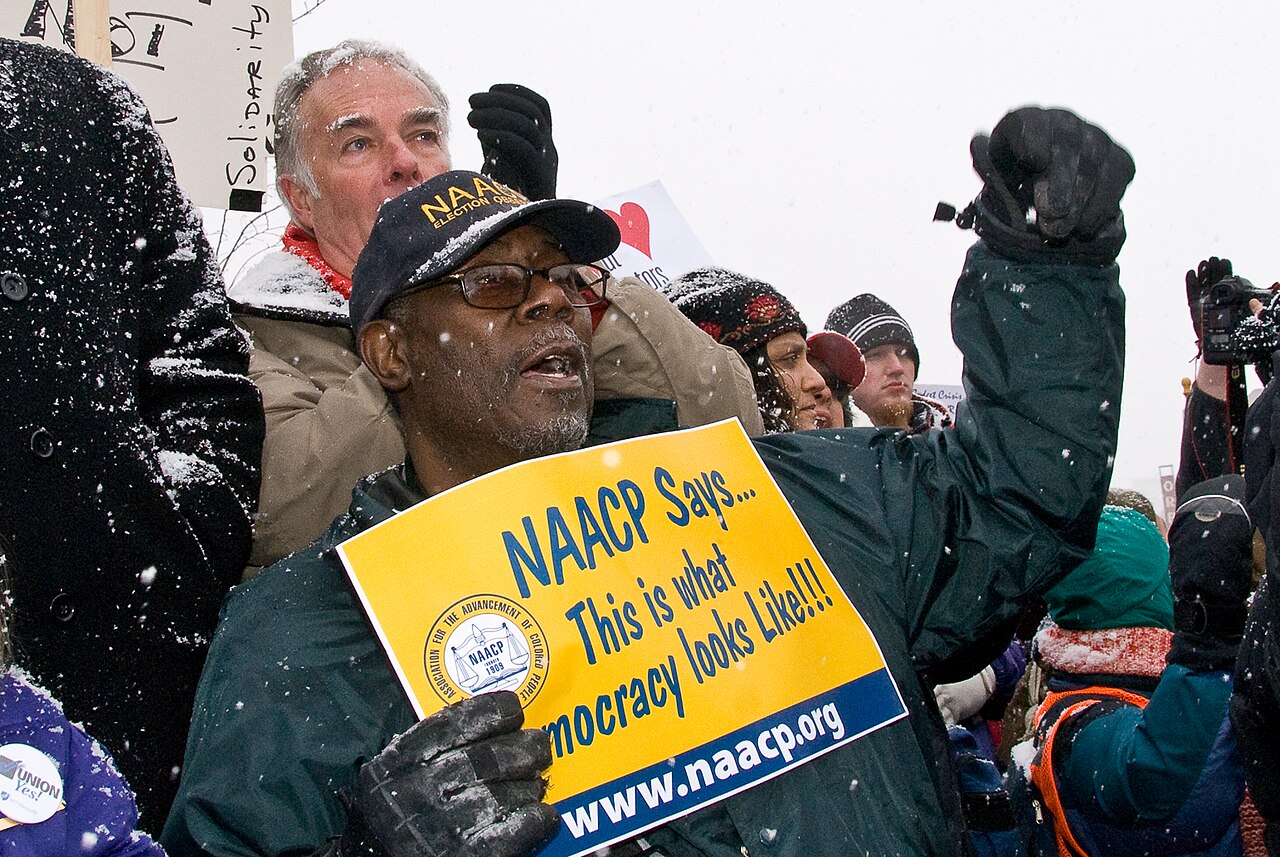

Quick Summary: NAACP Launched Boycott Against Southern College Sports Programs
- The NAACP launched a boycott on May 19, 2026, targeting Southern college sports programs over voting rights issues.
- The boycott affects public universities in Alabama, Florida, Georgia, Louisiana, Mississippi, Texas, and South Carolina.
- NAACP President Derrick Johnson accused Republican-led states of undermining Black voting power while profiting from Black athletes.
- The Congressional Black Caucus opposes the SCORE Act unless sports conferences address Southern redistricting efforts.
- Silence from major conferences like the ACC and SEC has fueled controversy and increased pressure.
Source: Read original article
NAACP boycott: Key Takeaways
NAACP boycott is at the center of this developing story, and the following analysis explains what matters most right now.
The NAACP has thrown down the gauntlet, launching a boycott against Southern college sports programs in a bold move to defend voting rights. Announced on May 19, 2026, this campaign targets public universities in seven Southern states—Alabama, Florida, Georgia, Louisiana, Mississippi, Texas, and South Carolina—calling on Black athletes and their supporters to withhold their participation and financial backing.
NAACP President Derrick Johnson didn’t mince words, accusing these states of exploiting Black athletes to generate wealth and prestige while simultaneously working to dilute Black voting power. Johnson’s rhetoric is clear: Black athletes should not fuel the success of institutions that undermine their communities’ political influence. This isn’t just a protest; it’s a direct challenge to billion-dollar college sports brands to take a stand on voting rights.
The Congressional Black Caucus has added weight to this initiative by threatening to block the SCORE Act, a bill that would set federal rules for paying college athletes, unless athletic conferences speak out against Southern redistricting efforts. This strategic move ties athlete compensation to voting rights, forcing sports power brokers to choose a side in this escalating battle.
As the boycott unfolds, the silence from major conferences like the ACC and SEC has only added to the controversy. The NAACP’s campaign is not just a stand-alone effort but part of a broader legal and political fight already active in courts, statehouses, and Congress. The question now is whether these institutions will break their silence or face the potential disruption of one of the South’s most lucrative industries.
Supreme Court ruling that narrowed a key part of the Voting Rights Act of 1965, touching off new map fights across the South. On Monday, May 18, the CBC said it would unanimously oppose the SCORE Act, a bill backed by major athletic conferences to set federal rules for paying college athletes, unless those sports power brokers speak out against the Southern redistricting efforts.
The boycott campaign was unveiled Tuesday, May 19, one day after the CBC’s Monday warning on the SCORE Act, and only weeks after the Supreme Court decision that activists say opened the door to the latest round of Southern remapping. ” On the other side, the ACC, SEC, Florida State, Alabama and several HBCU conferences were reported as not immediately responding to requests for comment, and that silence itself has become part of the controversy.
The biggest new development is that the NAACP and the Congressional Black Caucus have moved from condemning Southern redistricting to openly threatening the talent pipeline and money engine of major college sports, launching a boycott campaign on Tuesday, May 19, 2026, aimed at public-university programs in seven Southern states. Capitol on May 19, NAACP President Derrick Johnson framed the fight in blunt economic and political terms.
The practical implication, highlighted in the latest reports, is that powerhouse football and basketball rosters in the SEC and ACC could be hit if even a small share of recruits or current players opt out. ” That is a major escalation because it pulls college presidents, athletic directors and conference leadership into what had been framed primarily as a legislative and court battle.
That makes the college-sports boycott less a stand-alone campaign than a new front in a legal and political fight that is already active in courts, statehouses and Congress. Third, Congress will have to decide whether the SCORE Act can move without CBC support, which gives Black lawmakers a concrete upcoming leverage point.
On Monday, May 18, the CBC said it would unanimously oppose the SCORE Act, a bill backed by major athletic conferences to set federal rules for paying college athletes, unless those sports power brokers speak out against the Southern redistricting efforts. The boycott campaign was unveiled Tuesday, May 19, one day after the CBC’s Monday warning on the SCORE Act, and only weeks after the Supreme Court decision that activists say opened the door to the latest round of Southern remapping.
” On the other side, the ACC, SEC, Florida State, Alabama and several HBCU conferences were reported as not immediately responding to requests for comment, and that silence itself has become part of the controversy. Capitol on May 19, NAACP President Derrick Johnson framed the fight in blunt economic and political terms.
The scale and speed of this development has caught many observers off guard. Each new update adds another dimension to a story that is still unfolding, and the full picture will only become clear as more verified details emerge from the people and institutions directly involved.
Analysts who have tracked this issue closely say the current moment represents a genuine turning point. The decisions made in the coming weeks are expected to set the direction for months ahead, with ripple effects likely to extend well beyond the immediate actors in the story.
For those directly affected, the practical impact is already visible. People navigating this fast-changing situation are dealing with real consequences while new information continues to reshape what is known and what remains open to interpretation.
Historical parallels offer some context, though experts caution against drawing too close a comparison. Similar situations have played out before, but the specific combination of pressures, personalities, and timing here makes this moment distinct in ways that matter for how it ultimately resolves.
The political and economic dimensions of this story are deeply intertwined. What appears as a single event on the surface is in practice the convergence of multiple pressures that have been building quietly over a longer period than most public reporting has captured.