

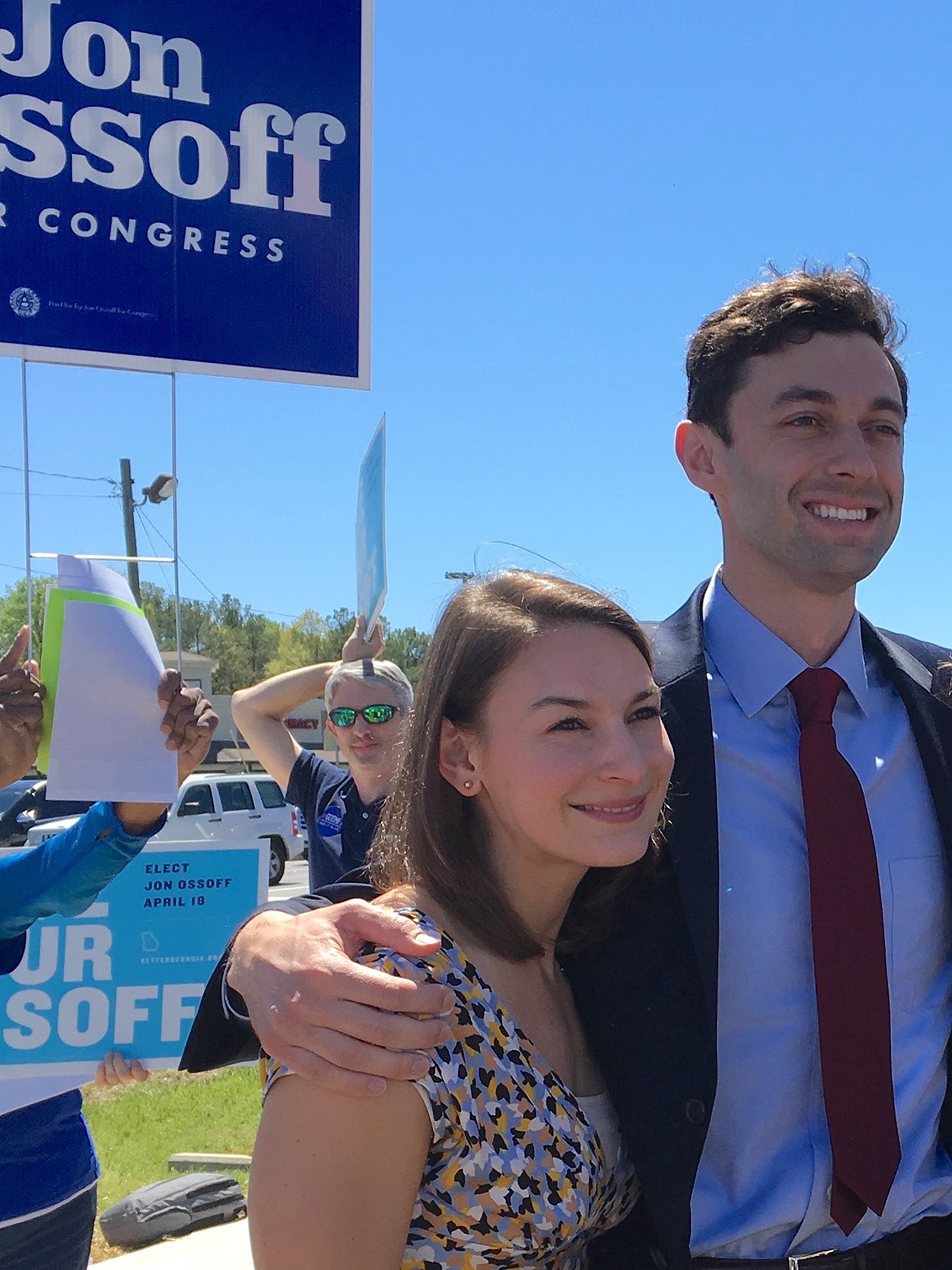

Quick Summary: Ossoff’s Campaign Momentum Triggers Georgia Runoff Amid GOP Challenges
- Georgia’s May 19 primary left Republicans without a clear winner in Senate and governor races, forcing a runoff.
- Over $125 million was spent on the governor’s race primary, with Rick Jackson’s campaign contributing more than $66 million.
- Ossoff has over $30 million on hand, providing a financial advantage as Republicans continue to drain resources.
- Ossoff is the only Senate Democrat running in a state Trump carried in 2024, yet he shows confidence and momentum.
- Ossoff and Bottoms are campaigning together, focusing on issues like Medicaid expansion and cost-of-living concerns.
Source: Read original article
In the political theater of Georgia, Jon Ossoff is making a bold statement: while Republicans are mired in a runoff quagmire, he and gubernatorial nominee Keisha Lance Bottoms are striding confidently toward November. The Democrats are not just campaigning; they are orchestrating a narrative of unity and forward momentum, starkly contrasting with the GOP’s internal strife.
The numbers tell a compelling story. Georgia’s May 19 primary saw no Republican candidate clear the 50% threshold in key races, leading to a June 16 runoff. Meanwhile, Ossoff stands strong with over $30 million in campaign funds, a stark contrast to the Republicans’ resource-draining battle. This financial cushion allows Ossoff to focus on defining his opponents and rallying his base, while the GOP scrambles to unify.
Ossoff’s strategy is clear: capitalize on the Republicans’ delay and frame the race around pressing issues like healthcare and cost-of-living, areas where Democrats believe they can resonate with voters. By campaigning alongside Bottoms, Ossoff is not only reinforcing his message but also projecting an image of a cohesive Democratic front ready to tackle Georgia’s challenges.
The stakes are high. Ossoff is the only Senate Democrat seeking reelection in a state Trump carried in 2024, a position that should make him vulnerable. Yet, his confident campaigning suggests a different narrative, one where the Democrats are not just defending but advancing. As Republicans continue to battle internally, Ossoff’s early start could prove decisive in shaping the general election landscape.
Georgia’s May 19 primary failed to produce a Republican winner in the marquee Senate or governor’s races because no candidate cleared the 50% threshold required to avoid a runoff. In the governor’s contest alone, more than $125 million had already been spent on advertising during the primary, including more than $66 million from Rick Jackson’s campaign, according to figures cited by ABC via AdImpact.
Meanwhile, The Guardian reported that Ossoff entered the stretch with more than $30 million on hand, a huge financial cushion as Republicans keep draining resources against one another. There is also a broader electoral twist here: Ossoff is the only Senate Democrat seeking reelection this year in a state Donald Trump carried in 2024, which should in theory make him highly vulnerable, yet the freshest reporting shows him operating from a position of visible confidence.
Bottoms, who is trying to become Georgia’s first Democratic governor in more than 20 years, is using that message to frame the Republican field as tied to a stale, Trump-era politics rather than offering a state-level alternative. On May 27, Georgia Public Broadcasting reported both parties were gearing up for the June 16 runoff; on June 1, AP, GPB, Axios Atlanta, and CBS Atlanta all focused on the Atlanta rally and the Democrats’ attempt to capitalize on their head start; and on June 8, early voting begins for the Republican runoff electorate that will choose Ossoff’s Senate opponent and Bottoms’ gubernatorial opponent.
Jon Ossoff and gubernatorial nominee Keisha Lance Bottoms appearing together in Atlanta while Republicans were still attacking each other in dual June 16 runoffs for Senate and governor, a split-screen that underscored the biggest new development in the race: Democrats are already running a general-election message while the GOP is still burning time and money in intraparty combat. Republicans are still locked in a June 16 runoff for the Senate nomination between Collins and Dooley, and a separate gubernatorial runoff that will determine who faces Bottoms in November.
That means the GOP is spending the first half of June fighting internally while Ossoff, who was unopposed for renomination, and Bottoms, who already won the Democratic gubernatorial nomination on May 19, are free to consolidate donors, define their opponents, and energize base voters statewide. Ossoff used the moment to dismiss the Republican Senate runoff as irrelevant to his broader attack, telling supporters of Rep.
Meanwhile, The Guardian reported that Ossoff entered the stretch with more than $30 million on hand, a huge financial cushion as Republicans keep draining resources against one another. Over $125 million was spent on the governor’s race primary, with Rick Jackson’s campaign contributing more than $66 million.
There is also a broader electoral twist here: Ossoff is the only Senate Democrat seeking reelection this year in a state Donald Trump carried in 2024, which should in theory make him highly vulnerable, yet the freshest reporting shows him operating from a position of visible confidence. Quick Summary: Ossoff’s Campaign Momentum Triggers Georgia Runoff Amid GOP Challenges Georgia’s May 19 primary left Republicans without a clear winner in Senate and governor races, forcing a runoff.
Ossoff has over $30 million on hand, providing a financial advantage as Republicans continue to drain resources. Georgia’s May 19 primary saw no Republican candidate clear the 50% threshold in key races, leading to a June 16 runoff.
The scale and speed of this development has caught many observers off guard. Each new update adds another dimension to a story that is still unfolding, and the full picture will only become clear as more verified details emerge from the people and institutions directly involved.
Analysts who have tracked this issue closely say the current moment represents a genuine turning point. The decisions made in the coming weeks are expected to set the direction for months ahead, with ripple effects likely to extend well beyond the immediate actors in the story.
For those directly affected, the practical impact is already visible. People navigating this fast-changing situation are dealing with real consequences while new information continues to reshape what is known and what remains open to interpretation.
Historical parallels offer some context, though experts caution against drawing too close a comparison. Similar situations have played out before, but the specific combination of pressures, personalities, and timing here makes this moment distinct in ways that matter for how it ultimately resolves.
The political and economic dimensions of this story are deeply intertwined. What appears as a single event on the surface is in practice the convergence of multiple pressures that have been building quietly over a longer period than most public reporting has captured.