


Summary
- RAF Typhoon Russian drone alert triggered early-morning deployment of British fighter jets from Romania near NATO borders.
- Aircraft tracked aerial targets but did not engage as drones remained inside Ukrainian airspace.
- NATO forces maintained defensive posture to avoid escalation with Russia.
- Incident highlights increasing cross-border risks linked to the ongoing Ukraine conflict.
- Military readiness in Eastern Europe continues to rise amid repeated aerial threats.
RAF Typhoon Russian Drone Alert Triggers Rapid Military Response
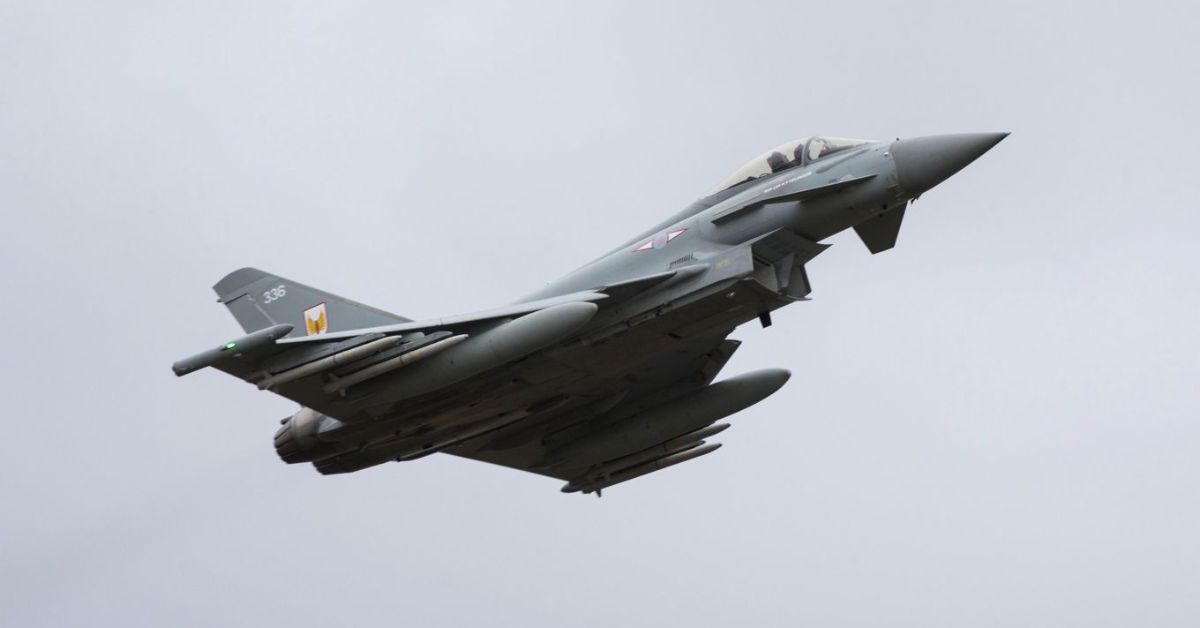
A sudden RAF Typhoon Russian drone alert prompted a swift military response near NATO’s eastern boundary, as British fighter jets were scrambled from Romania in the early hours of Saturday. The move came after radar systems detected aerial objects believed to be Russian drones operating dangerously close to alliance airspace.
The incident unfolded amid ongoing tensions linked to the war in Ukraine, where cross-border security risks have increasingly drawn the attention of NATO forces. While no weapons were fired during the operation, the deployment itself signaled a heightened level of readiness among allied nations.
Early-Morning Detection Raises Concerns
The RAF Typhoon Russian drone alert began around 2 a.m., when surveillance systems identified multiple airborne objects approaching NATO-monitored zones. Military officials confirmed that the jets quickly established radar contact with the targets.
Despite the initial alarm, the drones remained within Ukrainian airspace, preventing direct engagement under NATO’s strict rules of engagement. Defense authorities emphasized that any action would have required a confirmed breach into alliance territory.
The rapid response highlights how quickly NATO forces must react to emerging threats, particularly in regions where the line between conflict zones and allied territories remains extremely thin.
RAF Typhoon Mission and Strategic Positioning
The deployed jets, part of the Royal Air Force contingent stationed in Romania, were operating under a NATO air policing mission. These missions are designed to ensure constant surveillance and protection of eastern European airspace.
The RAF Typhoon Russian drone operation demonstrated several key aspects of NATO strategy:
- Continuous aerial monitoring of potential threats
- Immediate response capability for unidentified aircraft
- Strict adherence to defensive engagement protocols
By maintaining this posture, NATO aims to deter aggression while avoiding unnecessary escalation.
RAF Typhoon Russian Drone Alert Reflects Rising Tensions
The RAF Typhoon Russian drone alert is the latest example of how the conflict in Ukraine is influencing regional security dynamics. With drones increasingly used in modern warfare, incidents like this have become more frequent along contested borders.
Reports from nearby regions suggested that explosions were heard close to Ukrainian port areas, adding to concerns about ongoing military activity near NATO countries. While these developments remain largely contained within Ukraine, their proximity to alliance territory continues to raise alarm.
Military analysts note that such incidents carry the risk of miscalculation, where a single escalation could trigger broader consequences.
Why No Engagement Took Place
Although the RAF Typhoon Russian drone alert prompted immediate action, no engagement occurred. Officials clarified that NATO forces are prohibited from firing on targets that remain outside alliance airspace.
Engaging drones within Ukraine would represent a significant shift in policy and could escalate tensions between NATO and Russia. For this reason, restraint remains a key principle guiding military decisions in the region.
Defense sources reiterated that pilots had full authorization to act if the situation changed. However, the absence of a direct threat allowed them to maintain a defensive stance.
NATO’s Defensive Strategy in Focus
The RAF Typhoon Russian drone alert highlights NATO’s broader strategy of deterrence without provocation. By maintaining a strong but controlled military presence, the alliance seeks to protect its members while avoiding direct confrontation.
Key elements of this approach include:
- Forward deployment of air assets in strategic locations
- Real-time intelligence sharing among member states
- Strict operational guidelines to prevent escalation
This strategy has become increasingly important as the conflict in Ukraine continues to evolve, with new threats emerging in unpredictable ways.
Growing Role of Drones in Modern Conflict
The RAF Typhoon Russian drone alert also underscores the growing importance of drones in modern warfare. These unmanned systems are frequently used for surveillance, reconnaissance, and sometimes offensive operations.
Their ability to operate near borders without immediate detection makes them a significant challenge for defense systems. As a result, NATO has been investing in improved detection and response capabilities.
The incident demonstrates how even a small aerial object can trigger a large-scale military response, reflecting the high stakes involved.
Regional Impact and Civilian Concerns
Beyond military implications, the RAF Typhoon Russian drone alert has raised concerns among civilians living near the border regions. Reports of falling debris and distant explosions have added to anxiety in nearby communities.
Authorities are working to ensure public safety while also maintaining transparency about such incidents. However, the unpredictable nature of aerial threats continues to pose challenges for both governments and local populations.
Escalation Risks Remain a Key Concern
While the RAF Typhoon Russian drone alert did not result in direct conflict, it serves as a reminder of the fragile security environment in eastern Europe. The proximity of military operations to NATO territory increases the likelihood of unintended escalation.
Experts warn that repeated incidents could heighten tensions further, especially if misinterpretations occur during high-pressure situations. Maintaining clear communication channels and strict operational discipline remains essential.
International Attention on Border Security
The RAF Typhoon Russian drone alert has drawn attention from global observers, as it reflects broader geopolitical tensions. Incidents near NATO airspace are closely monitored due to their potential implications for international stability.
Countries within the alliance continue to coordinate closely, ensuring that responses remain unified and measured. This collective approach is seen as a critical factor in preventing isolated incidents from escalating into larger conflicts.
RAF Typhoon Russian Drone Alert Signals Continued Vigilance
As the situation develops, the RAF Typhoon Russian drone alert reinforces the importance of constant vigilance. NATO forces are expected to remain on high alert, particularly in regions close to active conflict zones.
Military officials have indicated that similar responses will continue whenever potential threats are detected. This readiness is essential to safeguarding alliance territory and maintaining regional stability.
Conclusion
The RAF Typhoon Russian drone alert highlights the delicate balance NATO must maintain between defense and restraint. While the rapid deployment of fighter jets demonstrates strong preparedness, the decision not to engage reflects a commitment to avoiding escalation.
As tensions persist in the region, incidents like this are likely to continue shaping the security landscape. NATO’s approach—firm yet cautious—will remain central to managing risks and preventing a broader conflict.
For more updates, read the latest news on Digital Chew.