


Key Takeaways:
– Economist Paul Krugman signals that Trump’s threat to Mexico and Canada may be an overreach.
– The Mexican President Claudia Sheinbaum appears to rebuff Trump’s tariff threats.
– Sheinbaum refutes Trump’s claims about alleged major concessions on immigration and fentanyl.
– Other nations may react similarly to Trump’s tactics, as per Krugman.
Trade Wars on the Horizon
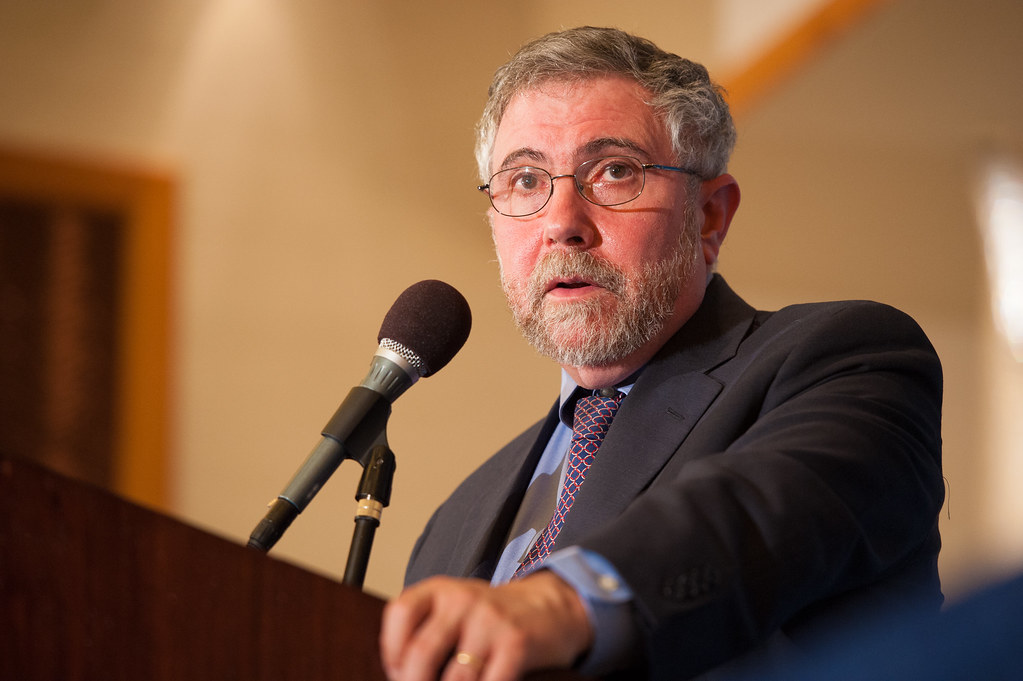
Paul Krugman, an economist given the nod by the Nobel Committee and renowned New York Times columnist, is hinting that the President-elect Donald Trump might have bit more than he could chew. This is with regard to Trump’s threats about deploying trade wars against both Mexico and Canada.
Trump’s Bluff and a Potential Balancing Act
Expressing his views on BlueSky, Krugman illustrates how Claudia Sheinbaum, the Mexican President, appeared ready to defy Trump’s threats tying her country’s products with 25 percent tariffs. Krugman vents the possibility of other global leaders recognizing, and capitalizing on, Trump’s alleged weakness and susceptibility to manipulation.
Moreover, Trump’s previous behavior seems to back this theory. Krugman uses a strong-worded vernacular, possibly learnt in New Jersey, to describe the response of Sheinbaum to Trump’s tariff threats.
Sheinbaum Holds Her Ground
Following a phone call with Trump, Sheinbaum was swift in rejecting Trump’s assertions of her offering massive concessions on hot topics like immigration and fentanyl. This indicates that she would not easily back down during any conflict with the soon-to-be president.
Are Other Nations Likely to Follow Suit?
This brings us to Krugman’s thought-provoking speculation. Other trading partners, he suggests, might respond in the same vein. They might already acknowledge, something that Trump seems to overlook, that the US doesn’t have a definite upper hand in a potential trade war scenario, especially if it’s America pitted against all other nations. Hence, it might be prudent not to offer Trump even symbolic concessions.
The Hidden Aspects of Trade Wars
Every trade war brings with it several considerations that often go unnoted. Other leaders of the world may perceive Trump as someone easily fooled. It can be backed up by his previous behavior suggesting the same. This observation by Krugman hints towards a lack of coherence in Trump’s trade policy.
The dialogue brewing between Trump and Sheinbaum probes a latent effect of adopting such an aggressive approach towards trade negotiations. A strong resistance to placate theatrical, bravado-driven demands can render them ineffective.
Will this be the case if Trump continues to toss around tariff threats like confetti? One must also take into account the ripple effects of such actions. They might do more harm than good, straining relationships with trading partners and disrupting the international economic equilibrium.
Conclusion
If we follow Krugman’s analysis, it appears clear that Trump’s approach to trade wars needs reevaluation. With formidable leaders like Sheinbaum at the other end of the spectrum, it will not be easy to impose trade sanctions without potential pushback.
As the support for global cooperation grows, the world may be ready to defend its trade interests more assertively than before. The potential backfires circling Trump’s tactics underscore the need for him to tread carefully in the economic warfare terrain.