


Key Takeaways:
– US inflation rates increased to 2.7% in November.
– This rise was parallel to Wall Street’s predictions.
– The inflation growth could trigger expected Federal Reserve rate cut next week.
Inflation in the US Hits 2.7%
American economic climate witnessed a substantial change last month as inflation rates escalated to 2.7%. The jump, perfectly in sync with Wall Street’s predictions, could lead to important shifts in the nation’s fiscal policies. Notably, this increase also marches in tandem with the expectations of economists who were part of a Bloomberg survey.
Continuing the Trend
We need to highlight that this isn’t a sudden shift. In fact, the November surge follows the pattern observed in the previous month. In October, inflation had reached 2.6%, registering a rise from the previous month’s figures. So, the recent development signifies a continuation in this upward trend.
The significance of these numbers can’t be underestimated. Raising inflation rates are a significant indicator of an economy’s well-being, truthfully reflecting the nation’s financial health. For ordinary people, it affects daily life, as an escalation in inflation rates could lead to increased prices of goods and services.
Implications for the Federal Reserve
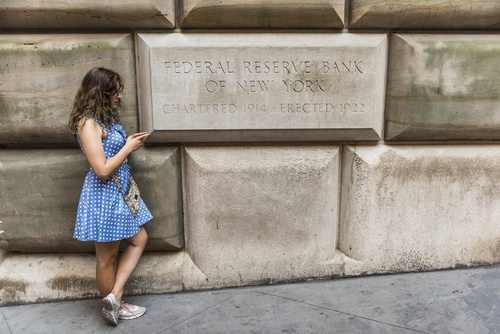
Now, all eyes are on the Federal Reserve, the central banking system of the US. The latest inflation figures have seemingly paved the way for an expected cut in rates by the Federal Reserve. Why is that?
Well, the Federal Reserve usually responds to scenarios like these in an attempt to maintain economic stability. They can do this by adjusting the federal funds rate, the interest rate at which banks lend funds maintained at the Federal Reserve to one another. By slicing the rates, they could potentially ease inflation and encourage economic growth.
What’s Next?
The forthcoming week promises to be a game-changer in the fiscal landscape of the country. The Federal Reserve has its plate full, especially considering the latest hike in inflation. It will be interesting to see how the institution responds to the demand for a rate cut.
This development also carries significance for all those invested in the market. Investors and economists will be looking closely at the Federal Reserve’s actions. Its decisions can influence the markets significantly, shaping investment and economic strategies.
Conclusion
In conclusion, the inflation rate hike to 2.7% is a significant event in the US fiscal sphere. This development reverberates through the country’s economic system, from Wall Street’s forecasts to the everyday budgeting of the ordinary American household. Now, as the Federal Reserve gears up for a possible rate cut next week, we wait and look toward the resultant economic landscape.