

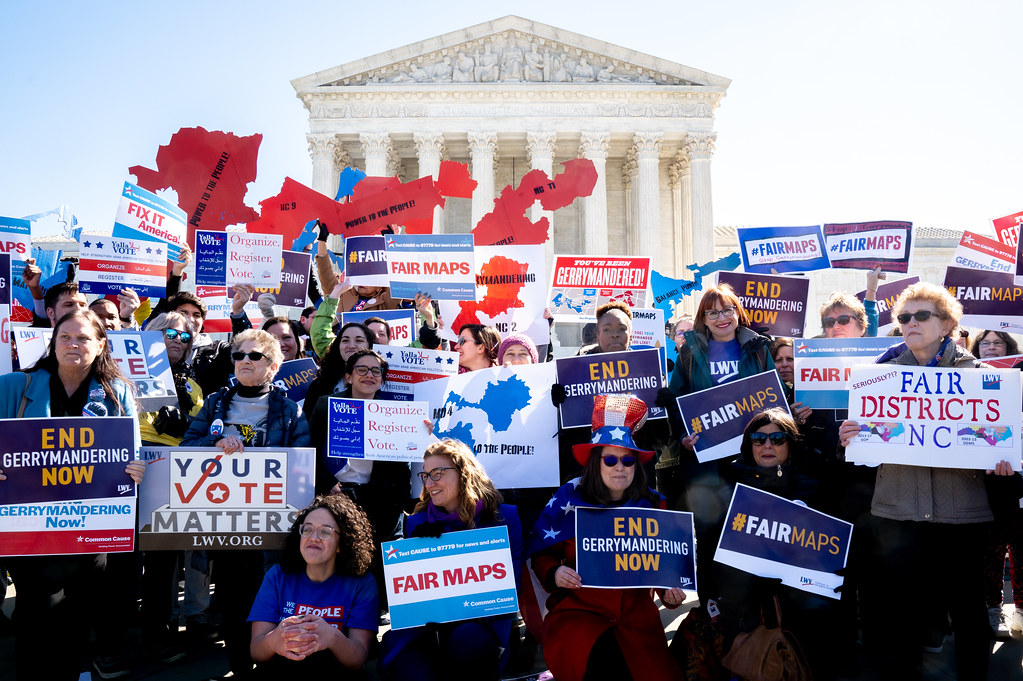

Key Takeaways
- Gerrymandering is when politicians draw voting maps to win more seats.
- Texas and California are racing to reshape their districts for party gain.
- Courts can strike down unfair maps, but federal limits make change hard.
- Independent commissions help, yet they may not stop map wars.
- A national fix seems unlikely without big political shifts.
What Is Gerrymandering?
Gerrymandering is the act of drawing voting districts to help one party win. Originally, leaders redrew maps every ten years after the census. Today, they redraw maps almost constantly. They do this to protect current power or grab new seats. Polls show people dislike it because it feels unfair. Yet states keep racing to outdo each other.
Redistricting Wars Heat Up
After the 2021 census, Texas Republicans drew new maps to boost their seats. They aimed to flip five Democratic districts to Republican ones. Now, California’s Democratic governor plans to redraw his state’s map. He wants to win back five seats to offset Texas gains. The California legislature approved his plan on August 21. Then governor Newsom signed it the same day. Voters will decide in a special election on November 4, 2025. Newsom says this move is temporary. He promises to return to an independent system by 2031.
How Gerrymandering Works
Politicians often use fancy computer tools to pick the best lines. They look at past voting trends, census data, and party loyalties. Then they group or split neighborhoods to create “safe” seats. Such districts might snake around highways or link distant areas. This ensures one party has an edge. For example, a lawmaker might place many opposing voters into one district. That makes other districts safer for their own party.
Why Courts and Commissions Struggle
Some states have strict rules for map drawing. They limit how many lines can split cities or require compact shapes. But crafty politicians find workarounds. In North Carolina, lawmakers avoided limits by making secret “concept maps.” Software like Dave’s Redistricting lets anyone draw maps online. Thus, it is hard to block unofficial plans from influencing lawmakers.
Courts can step in when maps violate voting rights or race laws. State courts sometimes overturn extreme gerrymanders. Yet the U.S. Supreme Court ruled in 2019 that it won’t handle partisan gerrymandering claims. Now, these battles must play out in state courts. That slows change and leaves many unfair maps in place.
Independent Commissions in Action
A growing number of states use independent commissions to draw maps. Experts say these commissions create fairer and more competitive districts. Residents also like this idea. Many say they trust a neutral group more than elected officials. However, California’s recent move shows this can fail. Even a state with a commission can switch back to partisan maps under political pressure.
Towards a National Solution
Some experts argue that only national reform can stop map wars. One idea is to use proportional representation. In that system, parties get seats based on the percentage of votes they win. Yet changing the U.S. system so drastically seems near impossible. Another idea is a federal ban on gerrymandering. However, Congress would need supermajority votes to pass such a law. The people who benefit from the current system must agree to give it up. That makes reform unlikely.
What Happens Next?
As more states watch Texas and California, they may follow suit. Republicans in Indiana, Missouri, and South Carolina have signaled they might draw new maps. Democrats in Illinois and New York are also considering it. Thus, the national map war could intensify. Unless leaders choose bold reforms, gerrymandering will remain a feature of American politics. This means voters may feel their choices matter less. It also means elected officials might focus more on drawing districts than solving real problems.
Ending the Map War
While better rules, courts, and commissions can help, they are not a full cure. Only a national change in how we choose lawmakers can truly end gerrymandering. Yet the odds for sweeping reform are slim. Therefore, voters should stay informed and hold officials accountable. They can push for transparency and support groups that monitor map drawing. Ultimately, citizens must demand fair maps, or the arms race will only grow.
FAQs
Why does gerrymandering matter?
Gerrymandering affects who wins elections. It can reduce competition and make politicians less responsive to voters.
Can courts stop unfair maps?
State courts have struck down some maps. Yet the Supreme Court won’t hear partisan gerrymandering cases, making federal fights harder.
Do independent commissions work?
Yes. Commissions tend to create fairer and more competitive districts. Still, political pressure can undo their work.
Is there hope for nationwide reform?
Major changes like proportional representation or a federal ban face huge political hurdles. True reform would require lawmakers to give up power they now hold.