


Key Takeaways
- Senator Mark Kelly criticized Stephen Miller for lacking a clear Venezuela plan.
- Kelly warned that past U.S.-led regime change efforts usually fail.
- He urged the White House to focus on restoring democracy in Venezuela.
- Kelly argued that the U.S. should avoid running foreign governments.
Senator Mark Kelly sharply criticized the White House’s approach after Stephen Miller’s recent remarks. Kelly said the administration needed a solid Venezuela plan. He warned that trying to run another country often backfires. As a veteran and member of the Armed Services Committee, Kelly spoke out on CNN. He stressed that the United States should help Venezuela return to democracy instead of seizing control.
What Stephen Miller Said
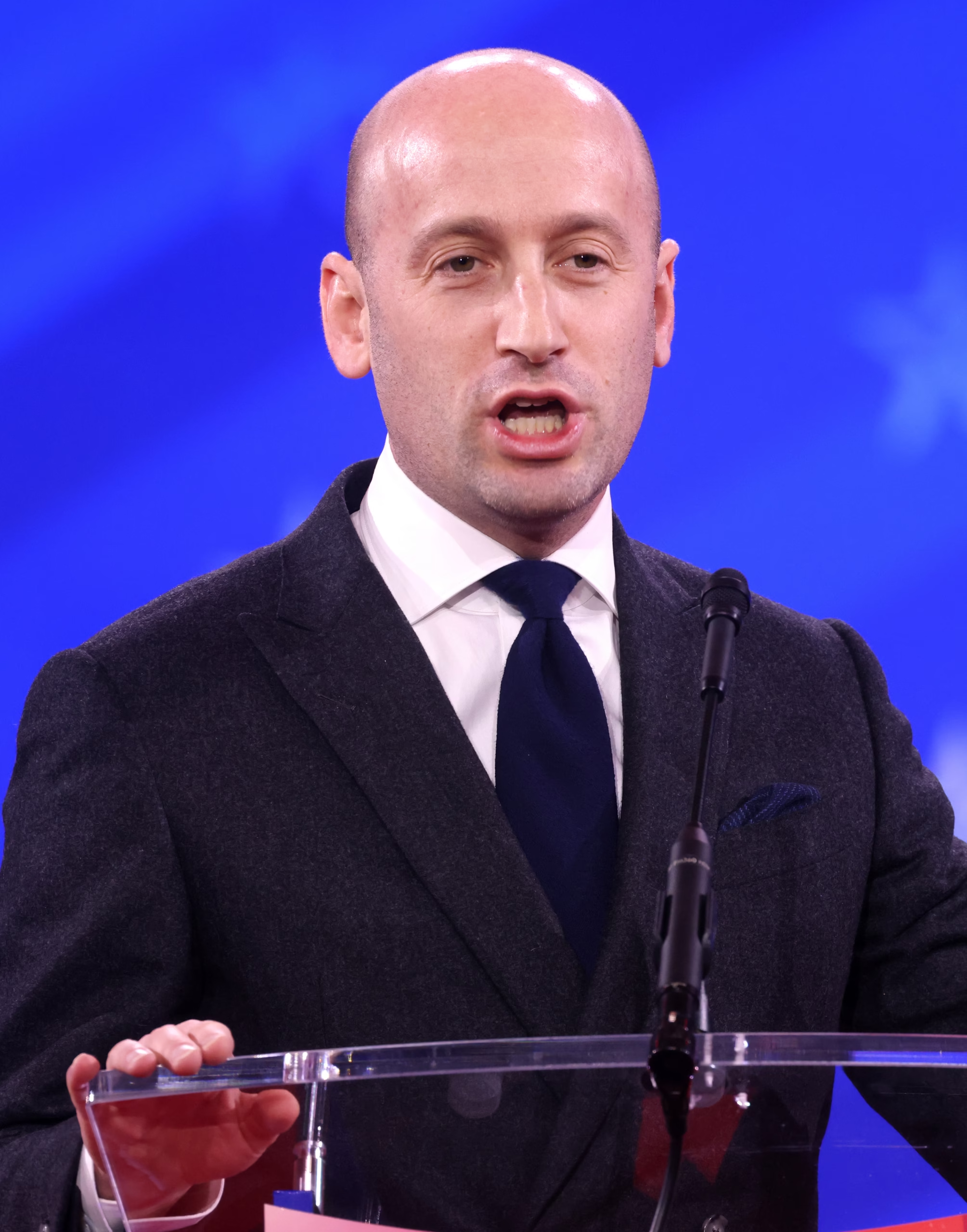
On Monday evening, Stephen Miller appeared on CNN with anchor Jake Tapper. Miller defended talks about the future of Venezuela and even Greenland. Tapper asked if the U.S. should hold new elections in Venezuela. Miller sidestepped the question and spoke about broader strategy. He claimed the Trump administration had answers. However, he did not explain any detailed Venezuela plan.
Kelly called Miller’s answers vague and unconvincing. “Does anybody believe this guy?” Kelly asked. He said the administration “does not have a plan.” Instead, Kelly wants clear steps to support a free and fair election in Venezuela. He believes Americans deserve a realistic approach, not empty talking points.
Why Kelly Says the Venezuela Plan Is Missing
First, Kelly noted that Venezuela once had a working democracy. He argued the U.S. should help restore that system. He pointed out how the U.S. has no business running other nations. Moreover, he warned that regime change often leads to worse outcomes. He cited past conflicts in South Vietnam, Cuba, Libya, Iraq, and Afghanistan.
By contrast, he said a proper Venezuela plan would support democracy, not military action or direct rule. He urged the White House to present a roadmap. That roadmap should include diplomatic engagement, humanitarian aid, and election monitoring. Without these parts, Kelly said the administration simply lacks a plan.
The Perils of Past Regime Change
Historically, U.S.-led regime changes have caused long-term harm. First, in South Vietnam, American involvement ended with a chaotic exit and reunification under a harsh communist government. In Cuba, a failed invasion left tensions for decades. Later, Libya saw the toppling of its leader, but the country fell into civil war. Iraq and Afghanistan followed similar paths: initial success then costly occupation and instability.
Kelly argued that these examples show why the U.S. must avoid direct intervention. He stressed that service members often bear the brunt of unclear missions. Instead, he said, support for local democratic forces can achieve better results. This approach would reduce the chance of repeating past mistakes.
A Focus on Democracy
Kelly believes any Venezuela plan should center on helping Venezuelans choose their own government. First, the U.S. could back the United Nations or regional organizations to oversee elections. Second, Washington could coordinate humanitarian relief for food and medicine. Third, it could impose targeted sanctions on corrupt officials, not on the general population.
Through these steps, Kelly said the U.S. can encourage fair elections. He warned that rushing to install a new leader without voter input risks creating another crisis. Instead, he urged patience and respect for the democratic process. He argued that this path offers the best chance for a stable and free Venezuela.
What’s Next for the Administration
As of now, the White House has not released a detailed Venezuela plan. Stephen Miller has not clarified his earlier remarks. Meanwhile, Kelly and other lawmakers will press for hearings and briefings. They want to see classified and unclassified proposals for supporting a democratic transition.
Furthermore, congressional committees may call in administration officials to answer questions. They will ask how the U.S. will coordinate with allies and regional partners. They will also probe whether the administration plans any military involvement. Kelly made clear that he opposes putting American troops at risk in Venezuela.
What This Means for Venezuelans
For the people of Venezuela, the lack of a clear U.S. stance adds uncertainty. Millions face shortages of food, medicine, and basic services. A well-structured Venezuela plan could deliver more aid and hope. It could also strengthen moderate leaders who back democratic reforms. Conversely, continued political chaos may worsen the humanitarian crisis.
Kelly noted that Venezuelans deserve to decide their own fate. He said outside powers should only encourage free and fair processes. He called on his colleagues in Congress to work across the aisle. In his view, a bipartisan push can send a strong message that democracy matters.
The Role of Congress
Congress has the power to shape U.S. foreign policy. Kelly said lawmakers should demand a full debate on the Venezuela plan. They could pass resolutions outlining clear objectives. They could also attach conditions to any funding or support. Through oversight hearings, Congress can hold the executive branch accountable.
Kelly emphasized that members from both parties share an interest in democracy abroad. He urged them to set aside partisan politics. By working together, they can craft a balanced approach that helps stabilize Venezuela. Their actions could influence the administration to refine its Venezuela plan.
Looking Ahead
In the coming weeks, the focus will shift to detailed proposals. Will the White House outline specific steps for elections, aid, and sanctions? Will it involve international bodies like the Organization of American States? As questions mount, Kelly and other leaders will push for answers. They want to ensure the U.S. does more than just talk about restoring democracy.
In the end, a solid Venezuela plan must balance principles with practical support. It must avoid the pitfalls of past interventions. If the administration listens to voices like Kelly’s, it may adopt a more effective strategy. Until then, criticism will continue over the absence of a clear path forward.
Frequently Asked Questions
What did Stephen Miller say about Venezuela?
He spoke on CNN but did not detail how the U.S. would support or shape Venezuela’s future. His answers left many wondering about the administration’s real strategy.
Why does Sen. Mark Kelly oppose regime change?
He pointed to failed U.S. interventions in South Vietnam, Libya, Iraq, and other places. He believes they often lead to instability and put service members at risk.
What kind of Venezuela plan does Kelly support?
Kelly favors a plan focused on diplomatic support, humanitarian aid, election monitoring, and targeted sanctions on corrupt officials.
How can Congress influence the administration’s Venezuela plan?
Through hearings, resolutions, and budgetary oversight. Congress can require clear goals and conditions for any U.S. involvement.