

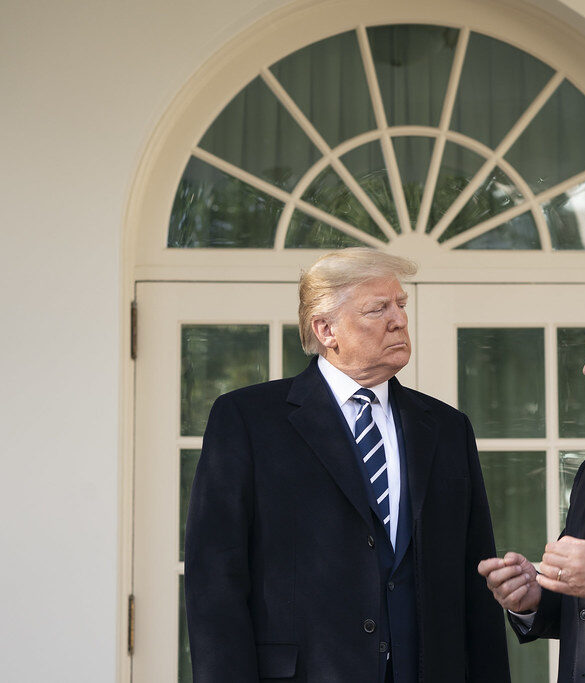

Key Takeaways
- President Trump said only his “morality” and the Constitution limit his actions.
- He insisted courts won’t block him if his choices benefit the country.
- Trump made these remarks in Detroit after visiting a Ford plant.
- His comments come amid efforts on voter rolls and gerrymandering for 2026.
President Donald Trump traveled to Detroit on Tuesday. He spoke before the Detroit Economic Club. Then he toured a Ford factory and greeted workers. Later, he gave a wide-ranging interview to CBS News. During that talk, he made a startling threat about the limits of power.
He had already said that morality was his main check. So reporter Tony Dokoupil pressed him on other barriers. He asked if courts and the Constitution also stop him. Trump quickly agreed the Constitution matters. Then he claimed neither courts nor that document will ever block him.
“Well, the Constitution of course. That goes without saying,” Trump said. “But you’re asking me what really can stop— we’ll never get to the courts, we’ll never get to the Constitution, because … I want to see what’s good for our country. And you know what? The courts want to see that too.”
With that statement, he seemed to hint he might ignore court rulings. Furthermore, he suggested judges share his political goals. Naturally, many critics and legal experts reacted with alarm.
Trump’s Detroit Visit
First, Trump addressed the Detroit Economic Club. He painted a rosy picture of the U.S. economy. Then, he joked with factory workers at the Ford plant. Video shows him laughing with employees on the assembly line. He praised them and claimed job growth under his watch.
He often points to pre-pandemic job figures to boost his record. Yet, some say his claims lack full context. Also, the motor city keeps shifting between parties in recent elections. Thus, his trip looked part policy pitch, part campaign stop.
His CBS Interview
Next, Trump sat down for an hour with CBS’s Tony Dokoupil. They covered topics like the pandemic, taxes, and crime. However, the most eyebrow-raising moment came at the end. Dokoupil asked about the real limits of power facing a president.
Trump said only morality stands in his way. Then he circled back to the Constitution. But still, he insisted courts and that document will never halt his agenda. In effect, he pledged to press on with policies he deems “good for our country.”
He did not name specific actions. Yet in recent months, his Department of Justice requested voter rolls from many states. Also, his allies backed gerrymandering bills in GOP-run legislatures. These moves suggest he sees strong tools to shape elections.
Why These Limits of Power Matter
When the president downplays the courts and the Constitution, it raises big concerns. Those institutions stand at the heart of American democracy. They offer checks and balances on presidential power. Without them, a single person might rule without oversight.
Furthermore, the Supreme Court and lower judges guard civil rights. They protect speech, privacy, voting, and due process. If a president claims courts will not stop him, democracy can weaken fast. In addition, such claims can test public trust in elections and laws.
Moreover, talk of ignoring limits of power can embolden others. State leaders might follow suit. They could pass extreme laws and defy court orders too. Thus, the warning rings far beyond Washington.
Reactions and Concerns
Legal scholars quickly commented on Trump’s words. Many said no leader sits above the law. They noted the judiciary has struck down presidents before. For example, federal courts forced presidents to release records and obey subpoenas.
In addition, some former officials warned on social media. They called his comments a threat to democracy itself. Meanwhile, Trump supporters praised his stance. They see a bold leader ready to push boundaries. For them, it shows strength, not danger.
Still, a divided nation will react sharply. Some worry an emboldened president could sidestep courts. Others doubt judges would let that happen. They expect legal battles if Trump tries to ignore rulings.
What Comes Next
As the 2026 midterm elections near, these words carry more weight. Trump’s allies seek to shape voting rules in several states. His Justice Department has asked for voter lists with personal details. Also, Republicans redrew district maps in key regions.
If those plans succeed, the GOP may gain seats in Congress. Yet critics say these tactics threaten fair elections. Thus, Trump’s limits of power warning may foreshadow a bigger fight. Lawmakers, courts, and voters will likely clash over rules and authority.
Meanwhile, public opinion may swing on how far a president can go. If courts push back, it could reaffirm their role. But if courts retreat, executive power could expand. Thus, the debate over the limits of power will not end soon.
In the next weeks, watch how states respond. Follow legal challenges in federal courts. Also, pay attention to public polls on presidential authority. American democracy faces a defining test on checks and balances.
Frequently Asked Questions
What did Trump mean by “limits of power”?
He implied that only his personal sense of morality and the Constitution limit him. He also suggested that courts will not block actions he believes help the country.
Why did people worry about his comments?
Many fear that ignoring court rulings or the Constitution weakens checks and balances. That system prevents any single branch of government from gaining too much power.
How do courts limit a president?
Courts review presidential actions for legality and constitutionality. They can strike down orders, regulations, and policies that exceed presidential authority.
Could Trump actually bypass the courts?
In theory, presidents must obey court decisions. If a leader tries to ignore a ruling, it triggers legal battles and possible enforcement through other branches.
What happens next in this debate?
Expect legal challenges in federal courts, state responses on voting rules, and public opinion shifts. The fight over presidential power limits will shape future elections and policies.