

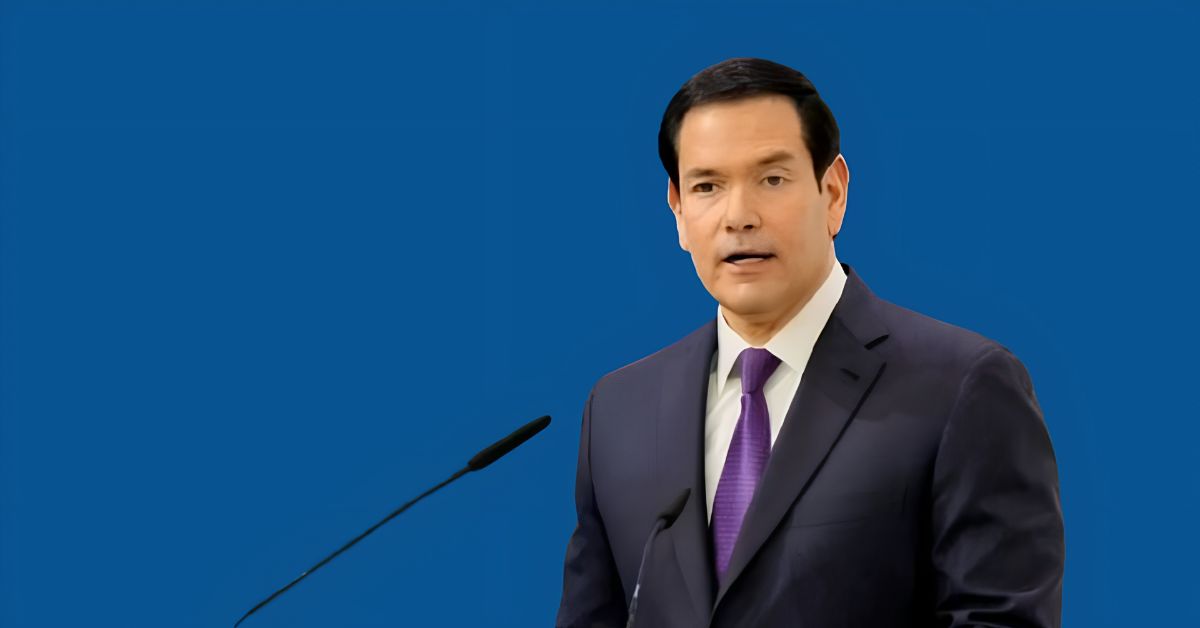

As global leaders gathered in Bavaria for the annual Munich Security Conference, one speech quickly became the focal point of diplomatic attention. The Rubio Munich address delivered before ministers, security chiefs and foreign policy experts signaled a sharper tone in Washington’s approach to Europe.
Rubio Munich
The remarks were measured but firm. They reaffirmed alliance commitments while clearly stating that expectations within the transatlantic partnership are changing. At a time of ongoing war in Ukraine and mounting geopolitical uncertainty, the speech landed with unusual weight.
A Defining Moment in Munich
The Munich Security Conference has served as a diplomatic crossroads since 1963. It is where global powers articulate strategy, test alliances and signal policy shifts. This year, the forum carried heightened importance as the war in Ukraine continues to reshape European security architecture.
The Rubio Munich speech did not question NATO’s foundations. Instead, it emphasized adaptation. The alliance, according to the message conveyed, must evolve beyond historical reliance and focus on sustained strategic coordination.
Observers noted that the address avoided inflammatory rhetoric. The tone was calm. But the substance carried urgency. The Rubio Munich moment reflected a recalibration rather than confrontation.
Defense Spending and Burden Sharing
One central theme in the Rubio Munich address concerned defense spending. Since Russia’s invasion of Ukraine, many European countries have expanded military budgets. However, not all members consistently meet NATO’s two-percent GDP benchmark.
The speech underscored that credible deterrence requires long-term investment, not temporary responses to crisis. Rubio Munich reinforced that defense contributions must align with evolving threats across Europe’s eastern flank.
Eastern European states, already increasing expenditures, welcomed the emphasis. Western European leaders responded more cautiously, highlighting fiscal constraints and domestic political realities.
Still, Rubio Munich brought renewed visibility to a long-standing debate: how responsibilities should be distributed within the alliance.
Ukraine’s War and Alliance Resolve
Ukraine remained central to discussions in Bavaria. President Volodymyr Zelensky addressed delegates with updated assessments from the battlefield and renewed appeals for assistance.
The Rubio Munich remarks reaffirmed support for Kyiv. Yet they also stressed that unity among Western partners must remain durable. Policy divergence, the speech suggested, risks weakening collective leverage.
In private discussions, diplomats described Rubio Munich as reinforcing continuity rather than introducing a new doctrine. The United States remains engaged, but expectations of coordination are rising.
Security analysts noted that public messaging from gatherings like Munich carries strategic implications. The optics of solidarity influence perceptions far beyond Europe.
Energy Security and Economic Policy
Energy strategy formed another pillar of the Rubio Munich message. Europe’s accelerated shift away from Russian gas has reshaped its energy landscape. Meanwhile, the United States has expanded domestic production and export capacity.
The speech linked energy diversification to geopolitical resilience. Secure supply chains, infrastructure investment and reduced dependency were presented as foundational to alliance stability.
Rubio Munich also touched indirectly on industrial policy tensions. Differences over electric vehicle subsidies, semiconductor manufacturing incentives and climate frameworks have surfaced in recent years.
The address did not dwell on these disputes. Instead, it framed economic coordination as a shared interest. Economic fragmentation, the message implied, weakens strategic positioning.
Migration and Domestic Pressures
Migration policy emerged as another element within the Rubio Munich discussion. European governments continue to grapple with fluctuating migration flows from Africa and the Middle East. The United States faces similar pressures along its southern border.
The speech connected border management to political stability, arguing that unmanaged migration strains democratic institutions. However, Rubio Munich avoided prescribing specific solutions, emphasizing consultation instead.
Political analysts interpreted this framing as an acknowledgment of domestic sensitivities on both sides of the Atlantic.
European Reactions
European leaders responded cautiously to the Rubio Munich address. German officials emphasized strategic autonomy within a cooperative framework. French representatives highlighted the importance of strengthening Europe’s industrial and defense capabilities.
Privately, some diplomats characterized Rubio Munich as unsurprising. Calls for greater alignment have surfaced repeatedly over the past decade. What stood out was the clarity and cadence of delivery.
The address did not trigger open disagreement. Instead, it added momentum to ongoing conversations about modernization within NATO.
Eastern European delegates appeared particularly receptive. For nations near Russia’s borders, the emphasis on sustained deterrence resonated strongly.
Public Opinion and Political Context
Public attitudes toward NATO remain generally supportive across member states. However, economic pressures, inflation and domestic political shifts shape how foreign policy commitments are perceived.
Rubio Munich arrives during a period of electoral uncertainty in several European capitals. In the United States, foreign assistance packages are often scrutinized through fiscal lenses.
The speech seemed carefully calibrated to acknowledge these dynamics. It reinforced alliance values while underscoring accountability.
Polling trends indicate that while citizens favor cooperation, they increasingly expect measurable outcomes. Rubio Munich reflected that balancing act between solidarity and responsibility.
Institutional Stability Within NATO
Despite sharper language, NATO’s operational frameworks remain intact. Joint military exercises, intelligence sharing and coordinated deterrence strategies continue without disruption.
Rubio Munich did not challenge these mechanisms. Rather, it called for reinforcing them through sustained commitment.
Defense officials present in Munich suggested that budget discussions in upcoming summits may reflect themes raised during the speech.
Diplomatic messaging often sets tone rather than policy overnight. In that sense, Rubio Munich shapes expectations more than immediate action.
Broader Geopolitical Landscape
Beyond Europe’s eastern border, global competition continues to intensify. The Indo-Pacific remains a theater of strategic focus. Instability in parts of Africa and the Middle East compounds uncertainty.
The Rubio Munich message implicitly acknowledged this broader environment. Transatlantic alignment, it suggested, strengthens the West’s ability to respond to challenges across multiple regions.
Observers described the speech as pragmatic rather than ideological. It emphasized practical coordination over rhetorical flourish.
Economic Security and Strategic Interdependence
Economic resilience increasingly intersects with defense. Supply chain security, rare earth mineral access and semiconductor production now carry national security implications.
Rubio Munich framed economic alignment as integral to collective strength. The speech suggested that fragmented industrial policy could create vulnerabilities.
European leaders share concerns about overdependence on external suppliers. The dialogue now centers on how to harmonize approaches without undermining domestic priorities.
What Rubio Munich Means Going Forward
As delegates departed Bavaria, analysts debated the long-term impact of Rubio Munich. Some view it as a recalibration within a durable partnership. Others see it as a marker of a more transactional era.
The speech reaffirmed that the alliance endures. At the same time, it conveyed that unity requires renewal.
Future indicators will include defense budget trajectories, energy diversification strategies and industrial cooperation agreements.
For now, Rubio Munich stands as a defining diplomatic moment. It encapsulated a period of adjustment within one of the world’s most enduring alliances.
The transatlantic foundation remains strong. Yet expectations are evolving. The Munich address signaled that partnership must be continuously reinforced through action.
As policy debates unfold across Washington, Berlin, Paris and beyond, the themes raised during Rubio Munich will likely echo in legislative chambers and cabinet meetings.
In a shifting geopolitical landscape, adaptation becomes essential. The speech delivered in Bavaria underscored that while history binds the alliance, its future depends on deliberate coordination.
Rubio Munich ultimately conveyed firmness paired with partnership — a message that may shape the next chapter of US-European relations.