

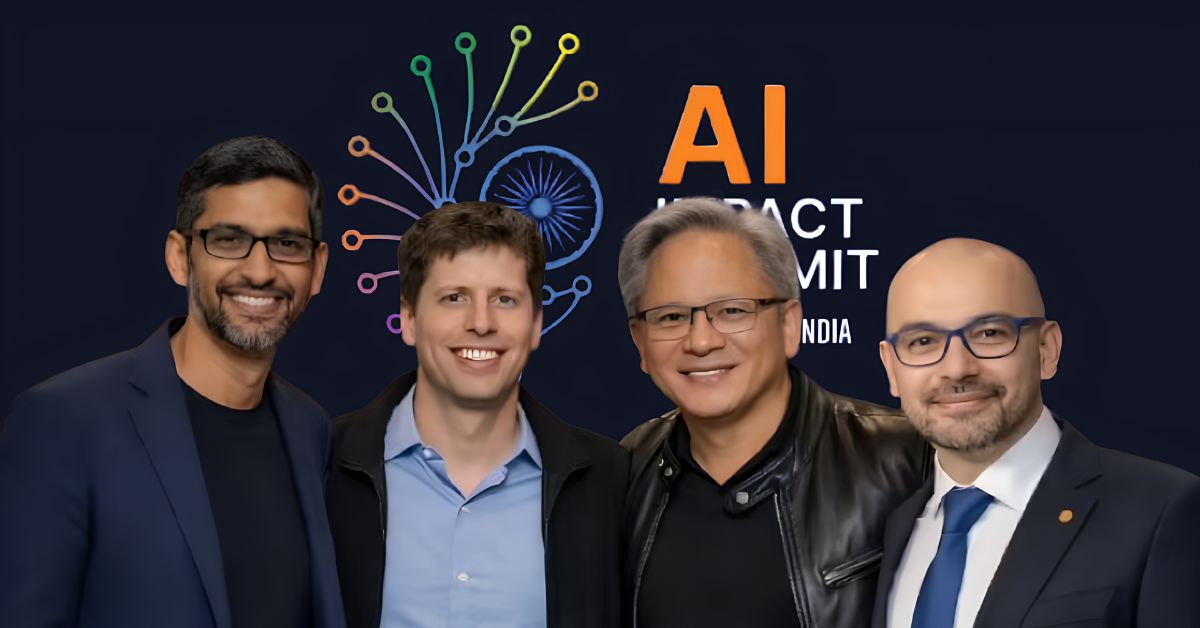

New Delhi opened its doors this week to one of the most closely watched technology gatherings of the year, as heads of state, policymakers and global CEOs convened for a high-level meeting on artificial intelligence and global regulation.
AI Summit
The AI Summit is unfolding at a moment when artificial intelligence is no longer a niche research field but a central force shaping economies, security strategies and public services worldwide.
A Defining Moment for Global Technology
The AI Summit 2026 marks a turning point in the global conversation about artificial intelligence. Delegations from more than 20 nations have traveled to India’s capital, signaling broad recognition that AI governance must become coordinated rather than fragmented.
Unlike earlier conferences that centered largely on safety theory, this year’s forum brings economic planning, trade strategy and industrial policy into the discussion. The scale of participation demonstrates how seriously governments now treat AI development.
Artificial intelligence already influences healthcare diagnostics, financial fraud detection, manufacturing efficiency and digital public infrastructure. As systems become more advanced, policymakers are under pressure to create safeguards without suppressing innovation.
Why Global CEOs Matter in This Forum
The presence of global CEOs has elevated the AI Summit beyond a diplomatic dialogue. Executives from major cloud providers, semiconductor companies and AI research labs are seated alongside political leaders.
Their involvement reflects a simple reality: regulation cannot succeed without industry participation. Many of the technologies under discussion are developed and deployed by private corporations operating across borders.
Several global CEOs participating in the AI Summit have emphasized the need for clarity and predictability. Investors and companies prefer stable regulatory frameworks, especially when committing billions of dollars to infrastructure.
By combining political authority with private sector expertise, the gathering attempts to balance economic growth with responsible deployment.
Governance and Regulation at the AI Summit
Regulation remains one of the most sensitive topics on the agenda. Governments are exploring how to implement safety testing, transparency requirements and accountability standards for advanced AI systems.
The AI Summit includes sessions examining audit mechanisms before deployment, oversight committees and structured reporting requirements. These discussions are designed to prevent misuse while encouraging innovation.
Some delegations favor stricter oversight, particularly in areas involving data privacy and autonomous decision-making. Others argue that excessive regulation could limit growth in emerging markets.
Despite differing perspectives, the AI Summit seeks common ground through shared principles rather than binding treaties.
Economic Stakes and Infrastructure Investment
The economic dimension of artificial intelligence is impossible to ignore. Analysts estimate that AI-driven productivity gains could significantly reshape global GDP over the coming decade.
Participants at the AI Summit are examining infrastructure needs, including data centers, semiconductor supply chains and high-speed connectivity. Such investments require alignment between governments and corporations.
Emerging economies attending the AI Summit are particularly focused on equitable access to computing power. Without inclusion, they argue, the benefits of artificial intelligence may remain concentrated in advanced markets.
Global CEOs attending the event have expressed interest in expanding operations where regulatory clarity exists. This alignment between public policy and corporate planning could accelerate innovation across regions.
India’s Expanding Technology Diplomacy
By hosting the AI Summit, India positions itself as a bridge between developed and developing economies. Over the past decade, the country has invested heavily in digital public infrastructure, including biometric identification and real-time payment systems.
Officials argue that this experience demonstrates how technology can scale to serve large populations responsibly. The New Delhi gathering reinforces India’s ambition to play a leadership role in shaping global standards.
Prime Minister Narendra Modi is expected to highlight inclusive growth and digital transformation during keynote remarks. Government representatives describe the event as part of a broader effort to strengthen international cooperation.
Workforce, Ethics and Risk Discussions
Artificial intelligence inevitably affects employment. Automation could reshape traditional roles while creating new technical opportunities.
During the AI Summit, policymakers and industry leaders are discussing reskilling initiatives and education reform. Universities and vocational institutions worldwide are expanding AI-related programs.
Ethical concerns remain central. Delegates are evaluating bias mitigation, transparency and accountability frameworks. Experts stress that public trust is essential for sustained adoption.
The forum also addresses misinformation risks and cybersecurity challenges associated with advanced AI systems.
Security and Geopolitical Dimensions
Artificial intelligence carries strategic implications beyond economics. Defense systems, intelligence analysis and cyber operations increasingly rely on advanced algorithms.
Security discussions at the AI Summit examine confidence-building measures and transparency standards. The goal is to reduce risks of destabilizing competition.
Geopolitical tensions influence negotiations, particularly regarding supply chains and semiconductor access. Yet organizers maintain that dialogue remains constructive.
The presence of global CEOs alongside political leaders underscores the interconnected nature of technology and diplomacy.
Toward a Shared Framework
The gathering is expected to conclude with a joint declaration outlining shared principles. While not legally binding, such statements often influence national policy frameworks.
Observers suggest that the AI Summit declaration may emphasize transparency, cooperation and proportional regulation. Even symbolic alignment can reduce uncertainty in global markets.
Several participants have indicated that harmonized standards would support cross-border innovation while maintaining safety.
What Comes After the AI Summit
As the conference progresses, its broader significance becomes clearer. Artificial intelligence is transitioning from experimental research to foundational infrastructure.
The AI Summit reflects a maturing global conversation. Governments and corporations alike recognize that fragmented regulation could hinder progress.
By convening world leaders and global CEOs in one structured forum, the event signals an effort to coordinate rather than compete.
The impact of the AI Summit will depend on how nations translate dialogue into policy. Yet the mere act of gathering diverse stakeholders demonstrates recognition that artificial intelligence governance requires shared responsibility.
As the final sessions approach, expectations remain high. The discussions in New Delhi may shape the direction of global AI policy for years to come.
The AI Summit closes later this week, but its influence is likely to extend far beyond the conference hall.
Artificial intelligence continues to redefine economic systems and geopolitical alignment. In that context, this gathering represents more than a meeting it marks a defining chapter in global technology governance.