

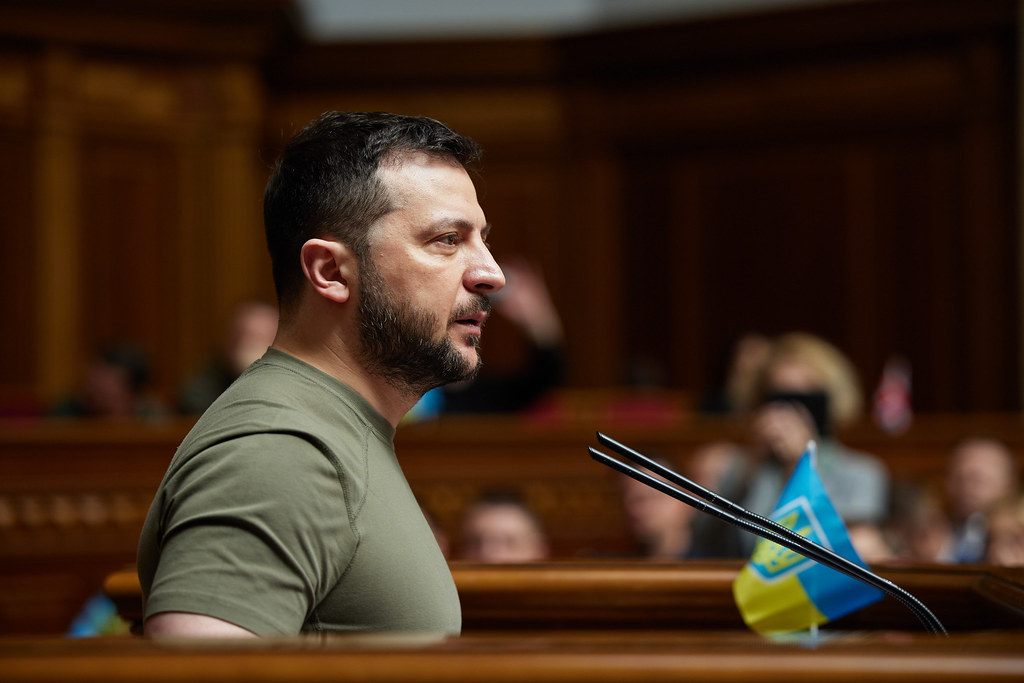

Diplomatic momentum surrounding the war in Eastern Europe has intensified ahead of a renewed round of negotiations in Geneva, where global leaders are watching closely for signs of de-escalation. Political rhetoric has sharpened, expectations remain cautious, and financial markets are responding to every development with visible sensitivity.
Ukraine Russia peace
The phrase has returned to international headlines as President Donald Trump urged Ukrainian officials to accelerate negotiations before formal trilateral talks begin in Switzerland. His comments signal a shift toward urgency at a time when the battlefield situation remains fluid and diplomatic trust is fragile.
Renewed Diplomatic Push
The concept of Ukraine Russia peace has evolved considerably since the conflict escalated in 2022. Early mediation attempts were fragmented and often collapsed under the weight of territorial disagreements. Now, nearly four years later, international actors appear determined to test whether structured diplomacy can produce incremental gains.
Senior U.S. officials describe the upcoming summit as an opportunity to “reframe expectations.” Rather than seeking a sweeping settlement, negotiators may pursue limited confidence-building measures designed to reduce hostilities in targeted regions.
Even incremental progress toward Ukraine Russia peace could alter the tone of the broader geopolitical climate. European capitals, many of which have expanded defense budgets since the invasion, are balancing deterrence with cautious support for dialogue.
Trump’s Call for Faster Talks
President Trump’s remarks have placed renewed focus on Ukraine Russia peace, emphasizing the economic and humanitarian costs of prolonged conflict. Speaking during a press briefing, he noted that diplomatic windows can close quickly if political leaders hesitate.
While reiterating support for Ukraine’s sovereignty, Trump underscored that prolonged stalemate benefits neither side. His administration argues that accelerating discussions does not mean forcing concessions but rather creating space for structured engagement.
Critics within Washington warn that excessive urgency could complicate Ukraine’s negotiating leverage. Supporters counter that visible momentum toward Ukraine Russia peace may prevent further battlefield escalation and stabilize energy markets.
Geneva’s Strategic Role
Geneva’s reputation as a neutral venue has historically attracted high-stakes negotiations. Its diplomatic infrastructure, established security framework, and tradition of confidentiality offer a controlled environment for complex talks.
Organizers believe the setting itself reinforces the seriousness of Ukraine Russia peace efforts. Swiss neutrality provides symbolic reassurance to both delegations, even as core disagreements remain unresolved.
Past diplomatic rounds held elsewhere struggled with coordination and agenda clarity. This time, working groups are expected to focus on ceasefire monitoring, humanitarian corridors, and verification mechanisms.
The structure of these meetings reflects an acknowledgment that Ukraine Russia peace will likely require phased implementation rather than a single dramatic agreement.
Core Disputes and Negotiation Risks
Territorial sovereignty remains the most sensitive obstacle. Russian forces continue to control contested areas in eastern and southern Ukraine, while Kyiv maintains that international law demands full territorial restoration.
The tension between legal principles and political realities defines the debate around Ukraine Russia peace. Legal scholars argue that any compromise must respect international norms. Strategists, however, emphasize the importance of conflict cessation even if interim arrangements are imperfect.
Security guarantees represent another central issue. Ukrainian leaders seek durable assurances against future aggression. Russian officials continue to frame NATO expansion as a strategic concern. Bridging these perspectives is essential if Ukraine Russia peace is to move beyond rhetorical aspiration.
Diplomats privately acknowledge that mistrust accumulated over years of war complicates every procedural step. Even minor wording disputes in draft communiqués can derail momentum.
Global Economic Implications
Financial markets respond swiftly to signals regarding Ukraine Russia peace. Energy prices, agricultural exports, and currency movements fluctuate based on diplomatic headlines.
Europe’s natural gas supply chain remains sensitive to geopolitical developments. Investors interpret any sign of de-escalation as a potential stabilizing factor. Conversely, stalled negotiations can trigger renewed volatility.
Analysts note that sustainable Ukraine Russia peace could ease inflationary pressures linked to disrupted grain exports and energy distribution. Emerging economies, heavily affected by food supply instability, are monitoring the talks closely.
Global shipping insurance rates, defense sector investments, and commodity futures are also indirectly shaped by expectations around Ukraine Russia peace.
European Security Calculations
Since 2022, European security architecture has undergone profound reassessment. NATO’s eastern flank has strengthened, and defense cooperation among member states has intensified.
Yet European leaders increasingly discuss long-term stability alongside deterrence. Many view Ukraine Russia peace as essential to preventing a frozen conflict that destabilizes the continent for decades.
The diplomatic path is complex. Some European policymakers favor gradual steps—localized ceasefires and monitored humanitarian zones. Others caution against partial measures that risk entrenching territorial divisions.
Ultimately, Europe’s strategic future is intertwined with whether Ukraine Russia peace can transition from aspiration to structured framework.
Domestic Political Pressures
Negotiations do not occur in isolation from domestic politics. In Kyiv, leadership faces strong public sentiment demanding territorial integrity. In Moscow, authorities balance international diplomacy with internal messaging.
In Washington, debate surrounding Ukraine Russia peace intersects with broader discussions about foreign policy priorities and defense spending. Supporters argue that diplomacy reflects pragmatic leadership. Critics question whether accelerated talks could undermine Ukraine’s position.
Public opinion across Europe similarly influences negotiation posture. Voters concerned about energy costs and security stability shape the diplomatic environment.
These layered political dynamics underscore how Ukraine Russia peace depends not only on negotiators but also on domestic constituencies.
Humanitarian Stakes
Beyond strategy and geopolitics lies the human cost. Millions remain displaced, infrastructure damage continues to affect civilian life, and reconstruction needs are mounting.
International organizations emphasize that Ukraine Russia peace must prioritize civilian protection. Safe corridors for evacuation, restoration of essential services, and coordinated rebuilding funds are central to sustainable recovery.
Aid agencies warn that prolonged uncertainty complicates planning for housing, education, and healthcare delivery. Durable Ukraine Russia peace would enable more predictable humanitarian operations.
Reconstruction experts argue that early frameworks for rebuilding can accompany ceasefire discussions, reinforcing incentives for stability.
Scenarios Ahead
Analysts outline several possible outcomes for the Geneva summit.
One scenario envisions limited agreements on prisoner exchanges and humanitarian access. While modest, such steps could build trust.
Another scenario anticipates a broader roadmap outlining negotiation stages tied to monitoring benchmarks. This approach would not finalize Ukraine Russia peace but could formalize procedural commitments.
A third possibility involves stalemate, where entrenched positions prevent measurable progress. In that case, Ukraine Russia peace would remain an aspirational headline rather than a tangible shift.
Diplomats caution that expectations should remain measured. Even incremental steps may require months of technical negotiation.
Strategic and Legal Implications
International law principles—sovereign equality, territorial integrity, and non-aggression—frame the discourse surrounding Ukraine Russia peace. Legal precedents established in this conflict may influence how future disputes are addressed globally.
Security experts also analyze how technological warfare, cyber operations, and economic sanctions reshape negotiation leverage. The evolution of hybrid warfare complicates traditional ceasefire monitoring models.
Ukraine Russia peace therefore carries implications beyond the immediate region, influencing strategic doctrine and diplomatic practice worldwide.
Media and Public Perception
Media coverage shapes public understanding of Ukraine Russia peace. Leaders must balance transparency with negotiation confidentiality.
Overexposure of draft proposals can inflame public opinion. Under-communication risks misinterpretation. Effective messaging remains essential to preserving flexibility while maintaining credibility.
Global audiences, fatigued by years of conflict coverage, nonetheless remain attentive to developments that may signal de-escalation.
Conclusion
As Geneva prepares to host renewed discussions, the stakes surrounding Ukraine Russia peace could hardly be higher. Diplomatic urgency reflects recognition that prolonged conflict carries escalating humanitarian and economic consequences.
Significant differences persist between Moscow and Kyiv, and skepticism remains justified. Yet the willingness of leaders to return to the negotiating table suggests acknowledgment that military stalemate alone cannot secure long-term stability.
Whether these talks produce incremental confidence-building measures or merely restate entrenched positions, the global community will assess their implications carefully. The coming weeks will test whether Ukraine Russia peace can evolve from a recurring headline into a structured pathway toward de-escalation.