

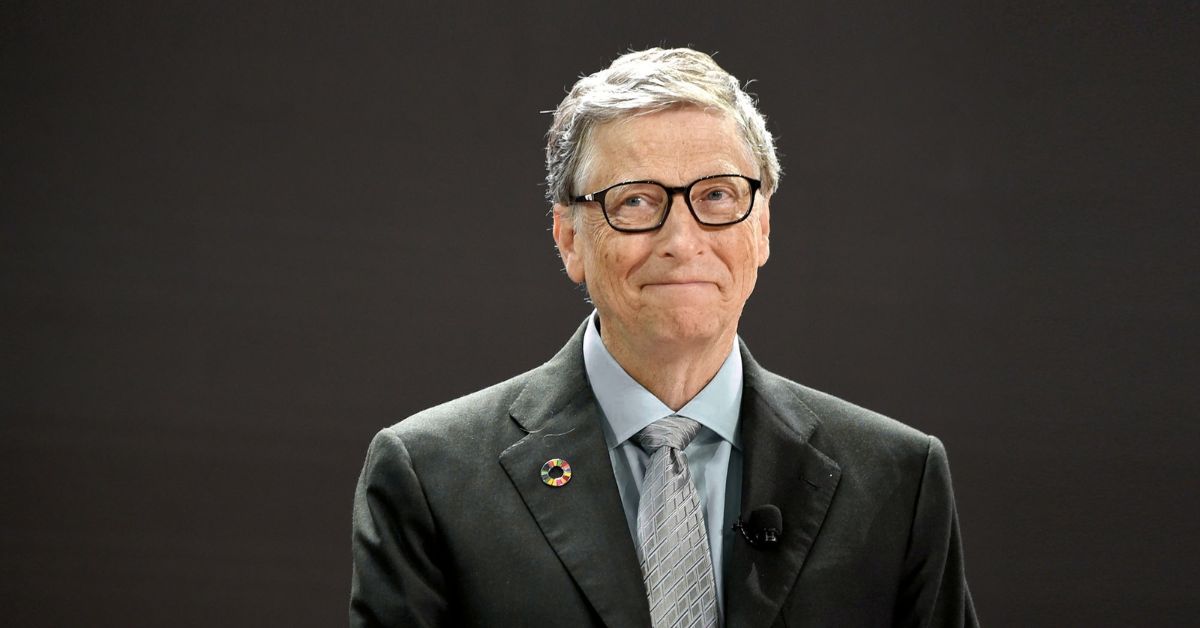

The Bill Gates AI summit became the center of international attention after his unexpected withdrawal from a high-profile artificial intelligence conference in India.
The announcement came just hours before he was scheduled to deliver a keynote address. Organizers confirmed the event would proceed as planned, but the absence of one of the world’s most influential technology figures immediately shifted media focus.
The Bill Gates AI summit had been positioned as a platform to discuss artificial intelligence in global health, development policy and digital infrastructure. Instead, public discourse quickly turned toward the circumstances surrounding the cancellation and renewed scrutiny linked to past controversies.
In a brief statement, the Gates Foundation said the decision was made to ensure the summit’s priorities remained the central focus. No direct explanation connected the withdrawal to ongoing public debate, though observers noted the timing.
The development surrounding the Bill Gates AI summit underscores how global leadership appearances now intersect with evolving reputational landscapes.
Why the Bill Gates AI summit matters for global AI policy
The Bill Gates AI summit was conceived as a strategic gathering aimed at positioning emerging economies at the forefront of artificial intelligence governance.
India, which hosted the event, has rapidly expanded its digital public infrastructure. Government leaders have emphasized AI as a driver of economic modernization, healthcare innovation and agricultural resilience.
Delegates attending the Bill Gates AI summit included policymakers, startup founders, academic researchers and nonprofit executives. Their discussions centered on how machine learning tools can strengthen public systems while maintaining ethical safeguards.
Artificial intelligence has moved beyond private-sector experimentation. It now shapes global economic competitiveness and diplomatic engagement. That context elevated the importance of the Bill Gates AI summit beyond a routine technology forum.
Although the keynote cancellation attracted attention, many participants insisted that the institutional goals of the summit remained intact.
Renewed scrutiny and reputational risk
Public attention intensified in the days leading up to the event as renewed media discussion resurfaced around historical associations involving Gates and Jeffrey Epstein.
Gates has previously described meeting Epstein as a mistake in judgment while consistently denying wrongdoing. No new legal findings have been announced.
However, the visibility of the Bill Gates AI summit created a high-profile backdrop for renewed commentary. In the digital age, archival material can re-enter public conversation with little warning.
Experts in corporate governance note that leadership appearances at global forums carry reputational considerations that extend beyond the technical subject matter. Even if policy discussions remain unaffected, headlines can redefine the tone of coverage.
In this instance, the Bill Gates AI summit illustrates how preventative communication strategies often guide institutional decisions.
Inside the agenda of the Bill Gates AI summit
Despite the withdrawal, the Bill Gates AI summit continued with panels examining responsible AI frameworks, cross-border collaboration and innovation funding.
Healthcare applications featured prominently. Researchers presented data modeling tools designed to predict disease outbreaks and optimize vaccine distribution systems.
Agricultural experts discussed satellite-driven analytics that help farmers adapt to climate variability. Financial technology leaders highlighted AI systems that expand credit access and insurance coverage in underserved regions.
The Bill Gates AI summit also addressed ethical standards. Delegates debated algorithmic transparency, bias mitigation and regulatory harmonization across jurisdictions.
Participants emphasized that artificial intelligence must balance innovation with accountability. Many argued that sustained dialogue is essential to prevent fragmented governance approaches.
Political implications of the Bill Gates AI summit development
The event unfolded amid intensifying global competition over AI regulation. Governments worldwide are racing to define standards that shape investment flows and technological leadership.
Hosting the Bill Gates AI summit signaled India’s ambition to influence that conversation. Officials described the gathering as a step toward positioning the country as a bridge between developed and developing AI economies.
Political analysts observed that leadership changes at such forums inevitably carry symbolic weight. Even if policy outcomes remain unchanged, public perception can influence diplomatic messaging.
The Bill Gates AI summit demonstrates how technology policy and political narrative increasingly intersect.
Economic stakes surrounding the Bill Gates AI summit
Artificial intelligence is projected to contribute trillions of dollars to global GDP over the next decade. Conferences like this serve as meeting grounds where economic partnerships take shape.
Investors attending sessions at the Bill Gates AI summit focused on infrastructure development, semiconductor supply chains and startup ecosystems.
India’s engineering workforce and digital payment systems have drawn sustained interest from venture capital firms. Many analysts view emerging markets as central to the next phase of AI expansion.
While the keynote withdrawal dominated headlines, economic discussions at the Bill Gates AI summit continued without interruption.
Institutional continuity after the keynote change
Foundation representatives confirmed that senior leadership would remain engaged in discussions throughout the summit.
Panels on climate analytics, digital identity systems and health modernization proceeded according to schedule.
Participants at the Bill Gates AI summit stressed that artificial intelligence governance requires long-term collaboration across sectors.
Although the absence of a keynote speech altered the media spotlight, delegates described the event as substantive and forward-looking.
Broader lessons from the Bill Gates AI summit
The episode offers insight into how global technology leadership navigates scrutiny.
Public trust has become central to shaping AI governance frameworks. Institutions must demonstrate transparency while advancing innovation agendas.
The Bill Gates AI summit may influence how future conferences assess speaker participation and communication strategies.
Technology forums now operate at the intersection of innovation, diplomacy and public accountability.
Conclusion: The lasting impact of the Bill Gates AI summit
The Bill Gates AI summit will likely be remembered for both its policy ambitions and the unexpected shift in narrative.
Discussions on healthcare modeling, agricultural analytics and financial inclusion moved forward, even as public attention focused on leadership optics.
Artificial intelligence continues to reshape global economic and social systems. Forums such as the Bill Gates AI summit play a critical role in coordinating international standards.
At the same time, the event illustrates how perception and accountability are inseparable from modern technology leadership.
As governments and institutions prepare for future AI gatherings, the Bill Gates AI summit stands as a reminder that innovation and public trust must evolve together.