

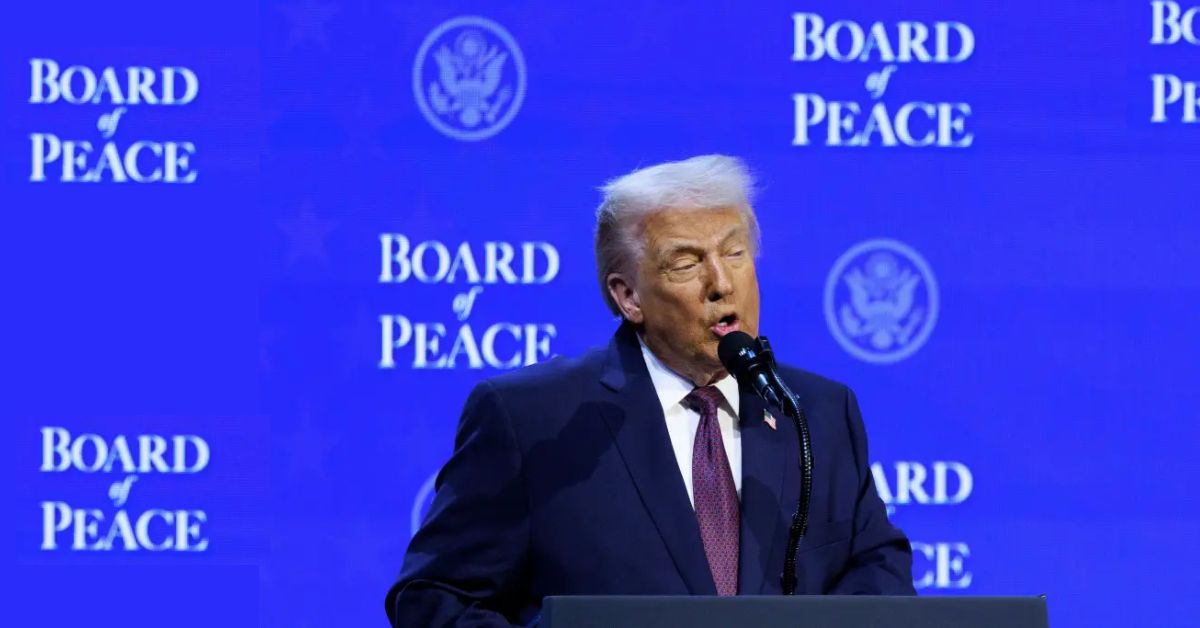

The diplomatic initiative branded as the Trump peace summit opened in Washington this week under intense global scrutiny, drawing delegations from multiple regions while several key European allies declined to attend. The gathering marks one of the most ambitious foreign policy efforts of President Donald Trump’s current term and reflects a broader attempt to reshape how post-conflict reconstruction and mediation are organized outside traditional multilateral institutions.
Trump peace summit Opens in Washington
The Trump peace summit began with high-level speeches, closed-door negotiations, and public commitments aimed at accelerating reconstruction efforts in conflict-affected regions, particularly Gaza. Administration officials framed the meeting as a pragmatic response to what they describe as slow-moving global bureaucracies and stalled diplomatic mechanisms.
Supporters argue that the Trump peace summit represents a shift toward faster, more flexible diplomacy that prioritizes tangible financial commitments over prolonged institutional debate. The White House presented the gathering as a platform capable of mobilizing billions of dollars in pledges within days rather than months.
Critics of the Trump peace summit, however, contend that speed cannot replace structure. They note that established peacekeeping and reconstruction frameworks rely on multilateral oversight precisely to ensure accountability and durability. For them, questions remain about how decisions made during the Washington talks will be implemented and monitored.
European leaders viewed the Trump peace summit with caution. While none publicly rejected the goal of reconstruction, several governments signaled discomfort with what they described as unclear governance standards and evolving operational rules. Their absence from the summit hall underscored those reservations.
Funding announcements at the Trump peace summit dominated the opening day. U.S. officials stated that more than $5 billion in pledges had been secured for rebuilding infrastructure, housing, and public utilities in Gaza. The administration emphasized that these commitments combine public and private resources.
Officials involved in the Trump peace summit insist that the integration of private capital will allow reconstruction projects to move more rapidly. According to briefings, project proposals are being reviewed through a streamlined approval process designed to reduce administrative delays.
Beyond funding, the Trump peace summit also aims to redefine the diplomatic architecture surrounding post-conflict stabilization. Organizers described the meeting as the beginning of a recurring forum rather than a one-time event. Future sessions may address additional regions facing humanitarian crises.
Questions about legitimacy continue to shadow the Trump peace summit as analysts debate whether executive-driven initiatives can achieve sustained international endorsement. In global diplomacy, recognition often hinges on multilateral participation, something the Washington gathering did not fully secure.
Economists studying the Trump peace summit warn that reconstruction financing requires careful alignment between humanitarian needs and long-term development strategy. While rapid disbursement may provide immediate relief, long-term sustainability depends on governance stability and institutional transparency.
Private investors attending the Trump peace summit expressed interest in infrastructure and energy projects. Yet analysts note that private capital typically demands predictable regulatory environments and clear return structures, conditions that may not yet be firmly established in conflict-affected territories.
Domestically, the Trump peace summit has become a defining foreign policy moment. Supporters highlight the administration’s ability to convene global stakeholders quickly. Critics argue that headline announcements must be matched by consistent follow-through.
International observers say the Trump peace summit could reshape diplomatic norms if it produces measurable results. They caution, however, that innovation in diplomacy must be accompanied by safeguards against misuse of funds and political overreach.
As negotiations continue, the Trump peace summit faces the test of translating pledges into operational plans. Delegations spent hours discussing mechanisms for tracking commitments, coordinating with local authorities, and ensuring security conditions allow reconstruction crews to work safely.
European Allies Decline Participation
The absence of several European governments from Washington stood out as one of the most notable developments surrounding the summit. Diplomats cited procedural uncertainty and overlapping mandates with existing institutions as primary concerns.
Officials in Brussels indicated that reconstruction in Gaza remains a shared priority. However, they questioned whether a newly formed forum could effectively coordinate with established agencies already operating in the region. Some expressed preference for reforms within existing structures rather than parallel initiatives.
The Vatican also declined formal participation. Analysts interpreted the decision as a cautious signal rather than outright opposition. The Holy See has traditionally emphasized multilateral legitimacy and humanitarian neutrality in peace processes.
Despite European hesitation, delegations from parts of the Middle East, Asia, and Africa attended the Washington meeting. Representatives from these regions voiced optimism that fresh financing channels might accelerate rebuilding timelines.
Funding Pledges and Reconstruction Goals
The administration’s headline announcement of $5 billion in pledges formed the centerpiece of opening remarks. According to officials, funds are earmarked for restoring housing, hospitals, schools, water systems, and electricity grids damaged by conflict.
Reconstruction experts note that pledges often represent initial commitments rather than immediately available funds. Delivery schedules depend on security conditions, procurement processes, and administrative oversight mechanisms.
Administration briefings suggested that a dedicated coordination office will monitor the allocation of resources. Organizers emphasized transparency reporting as a key objective moving forward.
The challenge lies in ensuring that financial flows reach intended beneficiaries without diversion or delay. Past reconstruction efforts in other regions have encountered obstacles ranging from political interference to logistical bottlenecks.
Governance and Transparency Questions
Foreign policy analysts have raised concerns about how decisions reached in Washington will be enforced. Unlike established multilateral bodies governed by charters ratified by member states, this initiative operates through executive authority.
Questions center on voting mechanisms, oversight standards, and long-term institutional continuity. Without clearly codified procedures, skeptics argue that governance structures could shift depending on political priorities.
Administration officials counter that adaptability is precisely the initiative’s strength. They argue that rigid frameworks sometimes hinder urgent humanitarian action.
Transparency advocates insist that adaptability must not undermine accountability. Clear reporting requirements and independent audits are often considered essential in post-conflict environments.
International Legitimacy Debate
Global legitimacy in diplomacy is rarely instantaneous. Recognition often evolves as initiatives demonstrate effectiveness over time.
Some observers argue that the absence of unanimous support at the outset does not necessarily doom the effort. They note that many institutions began with limited participation before expanding.
Others caution that bypassing established forums could fragment international coordination. Parallel mechanisms may create confusion about jurisdiction and authority.
Whether skepticism softens may depend on visible progress in reconstruction zones over the coming months.
Economic and Political Implications
The integration of private capital into humanitarian rebuilding represents a significant departure from traditional aid models. Proponents believe market discipline can improve efficiency and reduce waste.
Critics worry that profit incentives may conflict with community needs. Balancing investor expectations with humanitarian priorities remains a delicate task.
Domestically, the summit carries political resonance. Supporters view it as evidence of decisive leadership on the world stage. Opponents question whether structural innovation alone guarantees durable peace.
Economists emphasize that reconstruction success hinges not only on funding but on local governance capacity. Infrastructure projects require trained personnel, supply chains, and stable security conditions.
Challenges and the Road Ahead
Turning pledges into completed projects is a complex undertaking. Implementation requires detailed planning, coordination with local authorities, and sustained oversight.
Security conditions in affected regions remain fragile. Aid corridors must function reliably for materials and personnel to move safely.
Diplomatic engagement must also continue beyond the summit stage. Peacebuilding typically involves long-term negotiation and incremental trust-building among stakeholders.
Officials indicated that follow-up meetings may be scheduled later this year. These sessions are expected to review progress, refine governance standards, and assess additional funding requirements.
Conclusion
Ultimately, the Trump peace summit will be judged not by its opening speeches or financial headlines, but by measurable outcomes on the ground. If pledged resources translate into rebuilt communities and restored infrastructure, skepticism may ease. If implementation falters, critics will likely intensify their concerns.
For now, the Washington gathering stands as a bold diplomatic experiment. It seeks to blend executive initiative, private investment, and humanitarian ambition into a single framework. Whether that framework proves resilient will depend on transparency, accountability, and sustained international cooperation in the months ahead.