

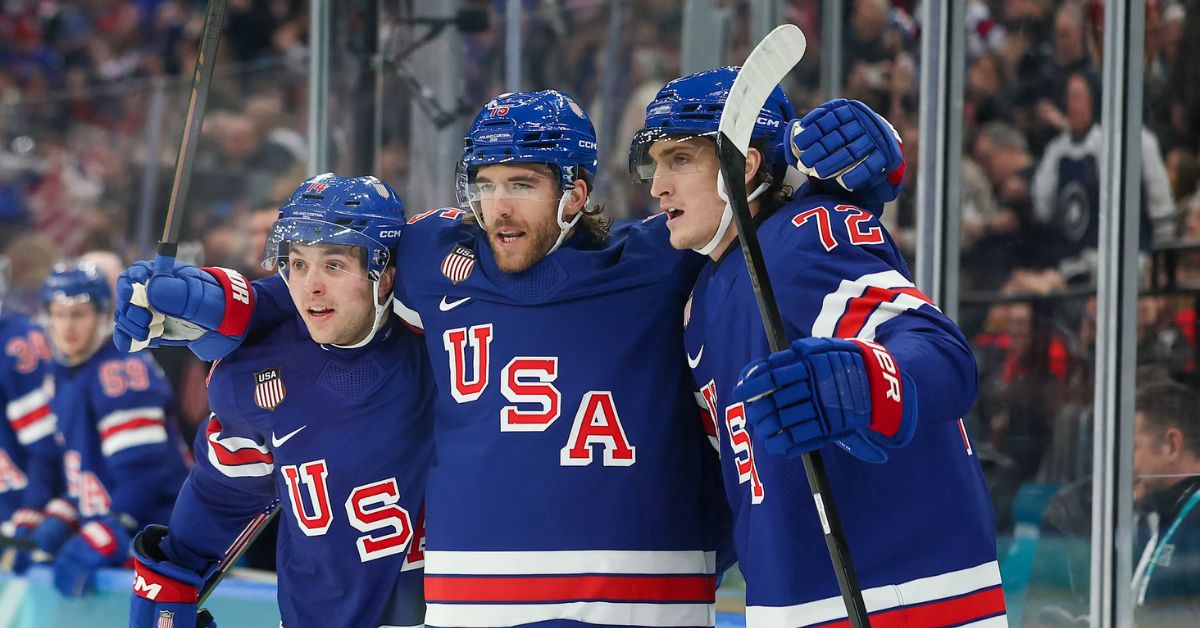

The Olympic tournament in Milan delivered another tense chapter on the ice as the United States secured a place in the semifinals with a hard-fought overtime victory. The atmosphere inside the arena reflected the stakes: every shift mattered, every defensive lapse threatened to change the narrative, and every rush carried national expectation.
US men’s hockey
The US men’s hockey campaign now stands within striking distance of a medal, rekindling memories of past Olympic success while signaling a renewed competitive edge in international play. What unfolded in the quarterfinal was not a display of overwhelming offense but a disciplined, structured performance built on composure and calculated aggression.
For US men’s hockey, the semifinal berth represents more than progression in a bracket. It marks validation of a system that has emphasized speed, defensive cohesion, and resilience under pressure. The team’s overtime goal was not simply a highlight; it was the culmination of sustained tactical commitment throughout regulation.
Semifinal Breakthrough in Milan
US men’s hockey powers into semifinals
The quarterfinal contest began cautiously, with both teams prioritizing defensive discipline over aggressive offensive pushes. Early shifts were marked by tight neutral zone coverage, reduced passing lanes, and an unwillingness to concede odd-man rushes. US men’s hockey controlled possession for stretches but remained patient rather than forcing low-percentage shots.
The Americans struck first midway through the second period. A redirected shot in front of the net broke the deadlock and shifted momentum. The US men’s hockey bench responded with visible energy, yet the coaching staff signaled restraint, urging the players to maintain structure rather than chase additional goals.
As regulation wound down, Sweden pressed aggressively. The equalizer arrived late, leveling the score and amplifying tension inside the arena. For US men’s hockey, the response to that setback would ultimately define the night.
Defensive Structure Defines the Game
From the opening faceoff, the strategy was clear. The defensive pairs remained compact, limiting clean entries and steering opponents toward the boards. The emphasis on layered coverage allowed US men’s hockey to dictate tempo even when possession shifted.
Shot blocking and disciplined backchecking prevented high-danger scoring chances. The forwards committed to defensive responsibilities, supporting defensemen in the slot and collapsing when necessary. This cohesion demonstrated the tactical identity that US men’s hockey has cultivated through the tournament.
Physical engagement was measured rather than reckless. The team avoided unnecessary penalties, recognizing that special teams could tilt momentum quickly. That discipline ensured that US men’s hockey remained at full strength during critical stretches.
When Sweden intensified pressure in the third period, the defensive core absorbed it without panic. Clearing rebounds and controlling second-chance opportunities became the immediate priority. The performance reinforced the team’s emphasis on systemic reliability over individual flair.
Overtime Execution and Mental Fortitude
Sudden-death overtime in Olympic play compresses decision-making into seconds. Every misread risks elimination. As overtime began, US men’s hockey leaned on speed and controlled puck movement to exploit open ice.
The decisive moment arrived just over three minutes into extra time. A swift transition from defense to offense created a clean lane, and the finishing shot beat the goaltender high. The arena erupted as US men’s hockey secured advancement.
That goal underscored a defining characteristic of the roster: emotional steadiness. Rather than allowing the late regulation equalizer to undermine confidence, the players reset mentally. The coaching staff emphasized composure, and the execution in overtime reflected that clarity.
In tournaments of this magnitude, psychological resilience separates contenders from participants. The way US men’s hockey managed momentum swings highlighted its growing maturity on the Olympic stage.
Goaltending Stability Under Pressure
Elite goaltending frequently determines Olympic outcomes. In this quarterfinal, the American netminder delivered a performance rooted in positioning and rebound control. Sweden generated nearly thirty shots, yet few were allowed uncontested follow-ups.
Throughout the third period surge, US men’s hockey relied on its goaltender to anchor defensive structure. Key saves during traffic-heavy sequences preserved the tie and enabled the overtime opportunity.
Rebound management prevented chaos in the crease. The goalie’s calm demeanor influenced teammates, reinforcing collective stability. For US men’s hockey, dependable goaltending has become a cornerstone of its identity during the Games.
As the tournament advances, continued consistency in net will remain central. Semifinal contests often hinge on narrow margins, and the confidence instilled by reliable goaltending cannot be overstated.
Historical Context and Medal Aspirations
The semifinal appearance carries historical weight. US men’s hockey last reached the Olympic podium over a decade ago, and expectations have intensified with each tournament since.
Reaching this stage guarantees participation in a medal-deciding match, either for gold or bronze. That assurance alone signals progress for US men’s hockey, but ambitions extend further. The roster includes players who understand the significance of converting opportunity into tangible achievement.
Previous Olympic cycles revealed moments of promise that did not culminate in medals. This year, the trajectory feels more cohesive. US men’s hockey has demonstrated adaptability across varying styles of play, from fast-paced offensive contests to tightly structured defensive battles.
The semifinal now presents a platform to redefine recent history. Victory would return US men’s hockey to the gold medal stage, reviving narratives of past triumphs and signaling a generational resurgence.
Tactical Adjustments and Bench Strategy
Coaching decisions shaped the quarterfinal outcome as much as on-ice execution. Adjustments in neutral zone alignment reduced opponent speed through the middle, forcing controlled entries rather than explosive transitions.
Rotational shifts were managed deliberately. The staff balanced ice time to maintain stamina, recognizing that overtime fatigue could become decisive. US men’s hockey maintained depth usage without overextending key players prematurely.
Special teams discipline further illustrated strategic clarity. By minimizing infractions, US men’s hockey avoided conceding power-play momentum. The emphasis remained on five-on-five stability, a reflection of confidence in even-strength systems.
Timeout usage and communication during stoppages reinforced alignment. Bench conversations centered on spacing, forechecking angles, and defensive recovery. The collective approach illustrated how US men’s hockey integrates tactical foresight with execution.
Locker Room Leadership and Emotional Control
Veteran leadership has quietly shaped the tournament narrative. Within the locker room, experienced voices emphasize resilience, reminding younger teammates that Olympic momentum can shift rapidly.
After Sweden’s equalizing goal, body language remained composed. Leaders reassured teammates that structure would prevail. This emotional steadiness influenced the overtime approach and ultimately reinforced US men’s hockey cohesion.
Postgame remarks reflected humility rather than exuberance. Players acknowledged that advancement represents progress but not completion. For US men’s hockey, the focus has already pivoted to semifinal preparation.
Such maturity often distinguishes teams capable of sustaining deep runs. Emotional balance under intense spotlight conditions has become an asset as valuable as speed or skill.
International Implications and Tournament Momentum
Across the bracket, other contenders continue to assert strength. Traditional powers remain present, and potential semifinal matchups carry significant narrative weight.
Yet US men’s hockey appears increasingly comfortable navigating international pressure. The blend of domestic development and global experience has cultivated a roster adept at adapting to diverse styles.
Momentum matters in short tournaments. Consecutive victories reinforce belief and sharpen focus. US men’s hockey now carries forward the confidence generated by overtime success.
Observers note the balance between defensive reliability and opportunistic offense. That duality positions the team as a legitimate contender rather than a surprise participant.
Olympic Atmosphere and Crowd Influence
The arena environment in Milan amplified every moment. International crowds generate a distinctive intensity, blending national pride with global spectacle.
As the third period waned and Sweden equalized, audible tension swept through the venue. When overtime began, anticipation felt palpable. US men’s hockey responded not to crowd noise but to internal rhythm.
The overtime winner shifted the atmosphere instantly. Celebration erupted among American supporters while neutral spectators acknowledged the drama of elimination play.
Olympic competition differs from league contests precisely because of such emotional weight. For US men’s hockey, adapting to that heightened context has become part of the journey.
What the Semifinal Means for the Program
Advancing to the semifinals reshapes immediate expectations and long-term perceptions. Development pathways within the national program have emphasized depth and adaptability.
Younger players have contributed meaningfully without being overwhelmed by stage magnitude. That blend of youth and experience suggests sustainability beyond a single Olympic cycle.
The semifinal will test endurance and focus. Opponents at this stage possess similar tactical sophistication and emotional resilience. For US men’s hockey, preparation now becomes as critical as performance.
The path ahead remains demanding, yet the quarterfinal victory signals belief. If momentum persists, US men’s hockey could translate semifinal opportunity into podium reality.
In Milan, the ice has revealed more than a bracket advancement. It has highlighted a roster capable of discipline, unity, and timely execution. As the semifinal approaches, US men’s hockey stands poised between recent history and potential renewal, carrying both expectation and determination into the Games’ decisive phase.