

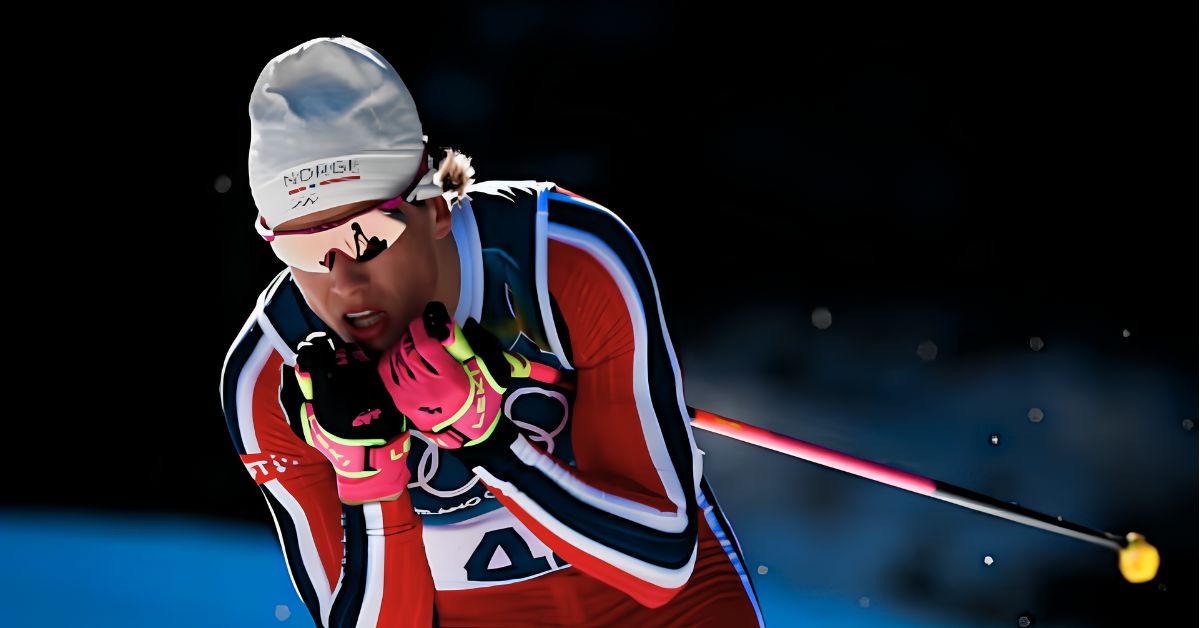

The margins that separate Olympic champions from contenders are often measured in seconds. Rarely are they measured in eras.
At the Milano Cortina Games, one athlete did more than win he altered a 46-year benchmark in winter sport.
Johannes Høsflot Klæbo’s six-gold campaign at the 2026 Winter Olympics stands as one of the most commanding performances in Olympic history.
From the opening sprint heats to the final endurance event, the Norwegian cross-country skier remained unbeaten. Six races. Six finals. Six gold medals. The result reshaped expectations in a sport where fatigue, weather, and tactics often prevent complete dominance.
Breaking a 46-Year Olympic Record
Before 2026, the record for most gold medals at a single Winter Olympics stood at five. That benchmark had remained untouched since Lake Placid 1980.
Johannes Høsflot Klæbo surpassed it.
By securing a sixth gold medal in Milano Cortina, Johannes Høsflot Klæbo became the first athlete in Winter Games history to claim six titles in one edition. In winter sport, where athletes compete in fewer events than their summer counterparts, such dominance is statistically rare.
Cross-country skiing compounds the difficulty. The schedule spans multiple days. Recovery windows are short. Weather shifts alter snow texture and ski preparation. Even favorites can fade under accumulated strain.
The 2026 Games offered no such fade.
Johannes Høsflot Klæbo and Sprint Supremacy
Johannes Høsflot Klæbo entered Milano Cortina already regarded as one of the finest sprint skiers of his generation.
Sprint races demand explosive acceleration and technical efficiency in tight transitions. They reward timing as much as strength. In the early heats of the Games, the Norwegian executed each round with visible control. He conserved energy through opening sections and surged decisively in final stretches.
In the sprint final, he accelerated past rivals in the closing meters with calculated precision. There was no frantic overextension. His timing was exact.
That victory set the tone for what followed.
Observers noted that his ski handling remained composed even on variable terrain. While competitors pushed aggressively early, he maintained rhythm. By the finish line, the gap was clear.
The first gold confirmed expectation. The second and third began building a narrative.
The Distance Evolution
Earlier in his career, questions surrounded his endurance ceiling in the longest Olympic formats. Sprint brilliance did not automatically translate to sustained distance success.
Milano Cortina delivered the clearest answer yet.
Johannes Høsflot Klæbo approached distance races with disciplined pacing. He tracked leaders without forcing early breaks. On extended climbs, his stride appeared smoother than in previous cycles. Oxygen efficiency, measured through race consistency, indicated improved aerobic conditioning.
In the skiathlon, he remained within striking range throughout transitional phases. When the race intensified near the closing kilometers, he shifted tempo with composure rather than urgency.
The transformation from sprint specialist to complete cross-country athlete had been gradual. In 2026, it was unmistakable.
Each distance victory strengthened the sense that this was not a momentary surge. It was structural progression.
Relay Responsibility Under Pressure
Team events introduce unique tension. A single miscalculation can undo collective effort.
In relay competition, Johannes Høsflot Klæbo delivered technically precise legs. He balanced aggression with strategic restraint, ensuring Norway remained tactically secure through exchanges.
Observers highlighted his drafting awareness. Rather than launching risky breakaways, he positioned himself efficiently within lead groups before accelerating on decisive inclines.
The team sprint and relay gold medals extended the sweep beyond individual dominance. They reinforced Norway’s coordinated preparation system.
Yet within that system, it was clear that one athlete remained the stabilizing force.
The 50km Classic That Defined the Games
The 50km classic remains the ultimate endurance test in Olympic cross-country skiing. Terrain shifts. Weather variables influence wax performance. Energy conservation becomes paramount.
For Johannes Høsflot Klæbo, this race carried symbolic weight.
Earlier Olympic cycles included setbacks in long-distance formats. Extreme conditions and tactical misfortune had previously disrupted ambitions.
In Milano Cortina, conditions stabilized. Strategy prevailed.
He remained patient through early laps, conserving power output while shadowing the leaders. His pole rhythm remained consistent even as competitors showed visible fatigue.
On the final climb, he accelerated with measured force. It was not an explosive sprint, but a sustained surge built on controlled endurance.
Crossing the finish line first, he secured his sixth gold medal.
The record was complete.
Tactical Precision and Equipment Mastery
Cross-country skiing is as much technical science as physical exertion.
Race footage from 2026 reveals deliberate corner transitions and minimal lateral drift. Equipment decisions — including ski selection and wax application — were optimized for snow density and temperature.
Johannes Høsflot Klæbo demonstrated disciplined drafting through mid-race pack phases. He avoided unnecessary lead exposure that could elevate heart rate prematurely.
Recovery sections were used strategically to regulate breathing and maintain stride efficiency.
Six victories across sprint and endurance formats required not just stamina but intelligent energy management.
Mental Composure in Olympic Spotlight
Physical conditioning alone cannot sustain six gold medals under Olympic scrutiny.
With each victory, attention intensified. Expectations multiplied. Historical comparisons surfaced after the fourth medal.
Yet composure remained steady.
Post-race interviews reflected focus on preparation rather than record counting. The Norwegian consistently redirected credit toward training teams and structured planning.
Sports psychologists often emphasize process orientation — concentrating on controllable variables rather than outcomes. That philosophy appeared evident throughout the Games.
Even after securing the fifth gold medal, there was no visible emotional release. The objective remained singular.
Finish the sweep.
Norway’s System Behind the Success
Elite performance does not emerge in isolation.
Norway’s winter sports infrastructure has long emphasized athlete development from youth programs through elite competition. Climate-adapted training environments allow year-round conditioning. Data analytics guide endurance modeling and recovery cycles.
Johannes Høsflot Klæbo benefits from this ecosystem.
However, infrastructure alone does not produce records. Execution under Olympic pressure differentiates systems from individuals.
The 2026 campaign reflected both.
Where This Performance Ranks in History
Six gold medals at a single Winter Games had never been achieved before 2026.
Across all Winter Olympic disciplines, multi-gold performances are uncommon due to limited event participation opportunities.
Johannes Høsflot Klæbo’s cumulative Olympic gold total now stands among the highest in winter sport history. His 100 percent gold conversion rate in Milano Cortina distinguishes this campaign from previous multi-medal efforts.
Statistical analysis underscores its rarity:
• Six entries
• Six finals
• Six gold medals
• Zero performance decline
Such efficiency across a multi-week schedule challenges precedent.
Global Impact Beyond Nordic Nations
Cross-country skiing traditionally commands strongest followings in Nordic regions. The 2026 Games expanded its visibility.
Television ratings rose during events featuring the Norwegian champion. Youth participation inquiries reportedly increased across European federations.
Coaching discussions have already begun analyzing hybrid conditioning models that balance sprint explosiveness with long-distance resilience.
The influence extends beyond medals.
Johannes Høsflot Klæbo’s performance may redefine how emerging athletes structure development cycles.
A Career Still Within Its Peak Window
At 29, endurance athletes often remain within optimal physiological range.
The adaptability displayed in 2026 suggests sustained competitiveness in future world championships. While generational transitions are inevitable in sport, the benchmark established in Milano Cortina sets a formidable standard.
Records invite pursuit. They rarely invite immediate replication.
Conclusion: A Winter Games Defined by One Name
The Milano Cortina Games featured emerging talents, national rivalries, and tightly contested podiums.
Yet the defining storyline remains singular.
Johannes Høsflot Klæbo did not merely collect medals. He delivered a performance that rewrote the statistical boundaries of Winter Olympic achievement.
Six races. Six victories.
In a discipline shaped by endurance and patience, dominance is usually incremental.
In 2026, it was absolute.
And long after the snow settles in Milano Cortina, the legacy of Johannes Høsflot Klæbo will remain the benchmark against which future Winter Olympic campaigns are measured.