

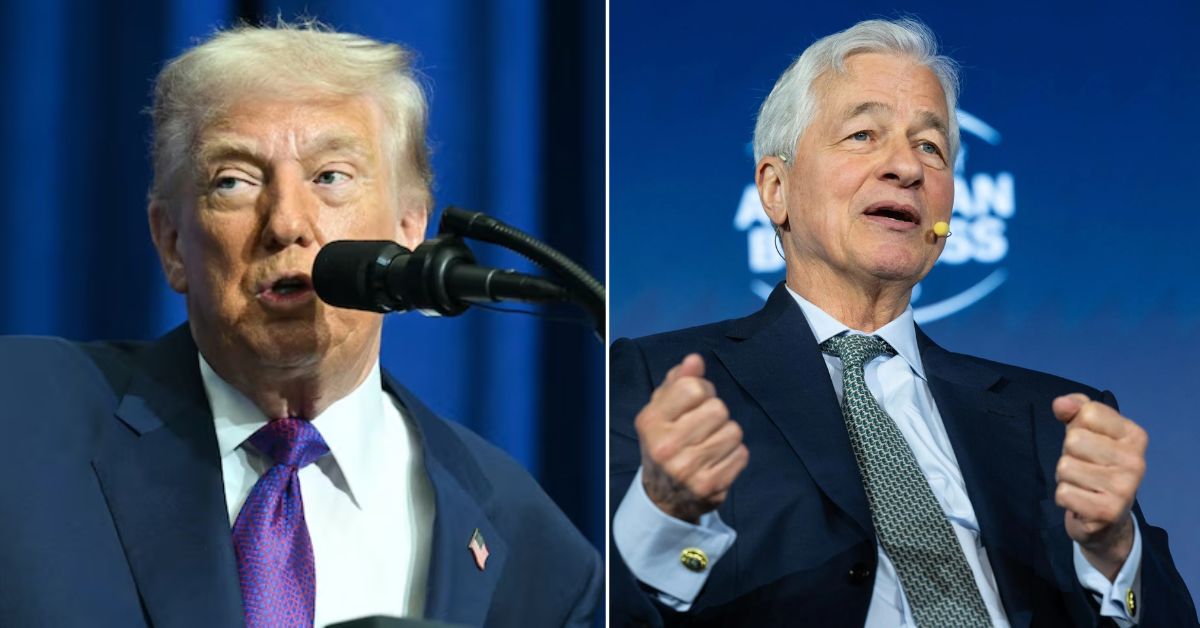

The legal dispute between President Donald Trump and the nation’s largest bank has entered a new and consequential phase in 2026, drawing national attention from lawmakers, regulators and the financial industry.
JPMorgan Trump debanking lawsuit
That phrase now defines one of the most closely watched corporate legal battles in the United States, as fresh court filings confirm that JPMorgan Chase closed accounts linked to Trump and several affiliated entities in February 2021, shortly after the January 6 Capitol attack.
The JPMorgan Trump debanking lawsuit has evolved into far more than a dispute over banking services. It now sits at the center of debates about financial discretion, political neutrality, reputational risk and the limits of corporate authority in a polarized era.
Background of the JPMorgan Trump Debanking Lawsuit
The origins of the JPMorgan Trump debanking lawsuit trace back to early 2021, when JPMorgan informed Trump and certain related business entities that specific accounts within its private banking and commercial divisions would be terminated. For years, public confirmation remained limited. However, recent procedural filings have acknowledged the closures in writing, intensifying scrutiny.
Trump’s legal team argues that the account terminations were politically motivated. The lawsuit seeks $5 billion in damages, alleging trade libel and violations of state unfair trade practices laws. According to the complaint, the closures disrupted financial operations and damaged business relationships.
JPMorgan, for its part, maintains that it acted within its contractual rights and compliance policies. The bank argues that institutions routinely reassess client relationships based on risk management frameworks and that such discretion is embedded in deposit agreements.
The JPMorgan Trump debanking lawsuit has therefore become a test case for how courts interpret banking discretion when high-profile political figures are involved.
Court Filings Confirm the Account Closures
A former senior executive confirmed in court filings that JPMorgan notified Trump and certain entities in February 2021 that their accounts would be closed. This written acknowledgment has given the JPMorgan Trump debanking lawsuit a firmer factual foundation.
While the filings do not detail internal deliberations, they establish the timeline. That timeline has become central to Trump’s claim that the closures followed intense political fallout from January 6 and were influenced by reputational considerations.
Banks often close accounts citing compliance or risk. Yet the scale and prominence of this case have elevated the JPMorgan Trump debanking lawsuit beyond routine banking disputes.
Legal experts note that factual confirmation does not automatically establish liability. The core question remains whether the decision was lawful under contractual and statutory frameworks.
What “Debanking” Means in the JPMorgan Trump Debanking Lawsuit
The term “debanking” is widely used in political and legal commentary but has no formal statutory definition. In the context of the JPMorgan Trump debanking lawsuit, it refers to the termination of banking services by a private institution.
Banks operate under strict anti-money laundering and compliance obligations. They are required to assess risk exposure, monitor transactions and protect institutional integrity. Deposit agreements typically grant broad authority to terminate accounts with notice.
The JPMorgan Trump debanking lawsuit challenges whether those broad contractual rights were exercised appropriately. Trump’s complaint suggests that reputational or political factors outweighed standard financial risk analysis.
Supporters of stronger corporate discretion argue that banks must protect themselves from legal, regulatory and reputational harm. Critics counter that politically sensitive decisions can create perceptions of financial exclusion.
This tension defines much of the debate surrounding the JPMorgan Trump debanking lawsuit.
Allegations of Political Motivation
A central theme in the JPMorgan Trump debanking lawsuit is the allegation that political considerations influenced the account closures.
Trump’s legal team contends that the timing—shortly after the Capitol attack—indicates a reputational reaction rather than a compliance-based assessment. The lawsuit alleges that the closures were discriminatory and caused measurable economic damage.
JPMorgan denies wrongdoing. The bank asserts that it followed internal risk frameworks consistent with industry standards. Institutions frequently reassess client relationships during periods of heightened scrutiny.
Courts reviewing the JPMorgan Trump debanking lawsuit will likely examine whether there is evidence of improper motive or whether the decision aligns with contractual provisions and regulatory expectations.
Jurisdictional Dispute Shapes the JPMorgan Trump Debanking Lawsuit
Another critical element of the JPMorgan Trump debanking lawsuit involves jurisdiction. Trump filed the complaint in Florida state court. JPMorgan has sought to move the case to federal court in New York, where many of the accounts were maintained.
Venue disputes are common in complex commercial litigation. The chosen forum can affect procedural rules, evidentiary standards and potential appellate paths.
If transferred, the JPMorgan Trump debanking lawsuit may face federal pleading thresholds that differ from state court standards. Legal analysts say this procedural question could influence the trajectory of the case before substantive arguments are even addressed.
Trade Libel and Unfair Trade Practices
The JPMorgan Trump debanking lawsuit includes allegations of trade libel. Trade libel typically requires proof of false statements that harm economic interests.
A key issue is whether account termination alone constitutes actionable harm absent defamatory public statements. The complaint also references unfair trade practices statutes, which vary by state.
The court’s interpretation of these claims could set precedent for future disputes involving high-profile clients and financial institutions.
Reputational Risk and Banking Discretion
Financial institutions routinely evaluate reputational exposure. Following major events, banks often reassess relationships with politically exposed persons.
The JPMorgan Trump debanking lawsuit brings reputational risk policies into sharp focus. How far may a private bank go in evaluating potential public backlash? Where is the boundary between prudent risk management and improper discrimination?
Industry observers say the outcome of the JPMorgan Trump debanking lawsuit could influence internal compliance frameworks across the banking sector.
Broader Political Context
The dispute unfolds at a time when debates over corporate neutrality have intensified. Critics of “debanking” argue that financial exclusion can function as informal sanctioning. Supporters of bank autonomy argue that institutions must retain discretion to protect shareholders and depositors.
As the current president of the United States, Trump’s involvement amplifies the stakes. The JPMorgan Trump debanking lawsuit now carries political as well as legal implications.
Lawmakers on both sides of the aisle have expressed interest in examining how financial institutions manage politically sensitive accounts.
Possible Discovery Phase
If the JPMorgan Trump debanking lawsuit survives early dismissal motions, it could enter discovery. That stage would involve internal communications, compliance documents and decision-making records.
Discovery often shapes complex litigation. Internal emails or risk assessments could either strengthen or weaken allegations of improper motive.
Legal experts note that high-value commercial disputes frequently resolve before trial. Yet the political prominence of this case may complicate settlement dynamics.
Implications for the Banking Industry
The JPMorgan Trump debanking lawsuit could influence how banks document and justify account closures.
Potential ripple effects include:
- Greater transparency in termination notices
- Enhanced documentation of compliance rationales
- Revisions to reputational risk frameworks
- Increased regulatory scrutiny
Banks already operate under oversight from the Federal Reserve and other regulators. A court ruling clarifying limits of discretion could shape policy nationwide.
Comparison With Other Financial Disputes
While rare, disputes over account closures do occur. However, few cases match the scale and visibility of the JPMorgan Trump debanking lawsuit.
The damages sought—$5 billion—underscore the seriousness of the allegations. Observers say the case could become a reference point for future litigation involving prominent clients and financial institutions.
Economic and Market Reaction
Markets have responded cautiously. JPMorgan remains financially strong, and analysts do not view the lawsuit as an immediate balance-sheet risk.
However, the JPMorgan Trump debanking lawsuit has prompted conversations about reputational exposure for banks serving politically active clients.
Institutional investors often evaluate governance risk. Extended litigation could factor into long-term assessments of corporate oversight practices.
Legal Timeline Ahead
The next phase of the JPMorgan Trump debanking lawsuit centers on jurisdictional arguments. If the case remains in Florida, proceedings may advance under state court timelines. If transferred, federal procedural standards will apply.
Motions to dismiss could narrow the scope of claims. Should the case proceed, discovery and potential trial preparation may extend into 2027.
High-profile commercial litigation frequently unfolds over years. The JPMorgan Trump debanking lawsuit appears positioned for a prolonged legal process.
Constitutional Considerations
Although banks are private entities, constitutional arguments sometimes surface when disputes involve elected officials. Legal scholars emphasize that the First Amendment primarily constrains government action, not private corporations.
Nevertheless, public policy debates surrounding the JPMorgan Trump debanking lawsuit often invoke constitutional language, reflecting broader concerns about financial access in a democratic society.
Industry-Wide Policy Review
Some industry groups have begun reviewing internal protocols in light of the JPMorgan Trump debanking lawsuit. Even absent a ruling, high-profile litigation can prompt precautionary adjustments.
Compliance officers may reassess how reputational assessments are documented and how termination notices are communicated to clients.
Such reviews illustrate how a single case can influence sector-wide governance practices.
Conclusion: A Defining Corporate Legal Battle
The JPMorgan Trump debanking lawsuit stands at the intersection of finance, law and politics.
By confirming in court filings that accounts were closed in February 2021, JPMorgan has moved the case beyond speculation. The legal battle now turns on motive, contractual interpretation and statutory standards.
As the current president, Trump’s involvement ensures continued national attention. The outcome may clarify how banks balance discretion with accountability in politically sensitive contexts.
Whether resolved through dismissal, settlement or trial, the JPMorgan Trump debanking lawsuit is poised to leave a lasting imprint on the financial and legal landscape of the United States.