

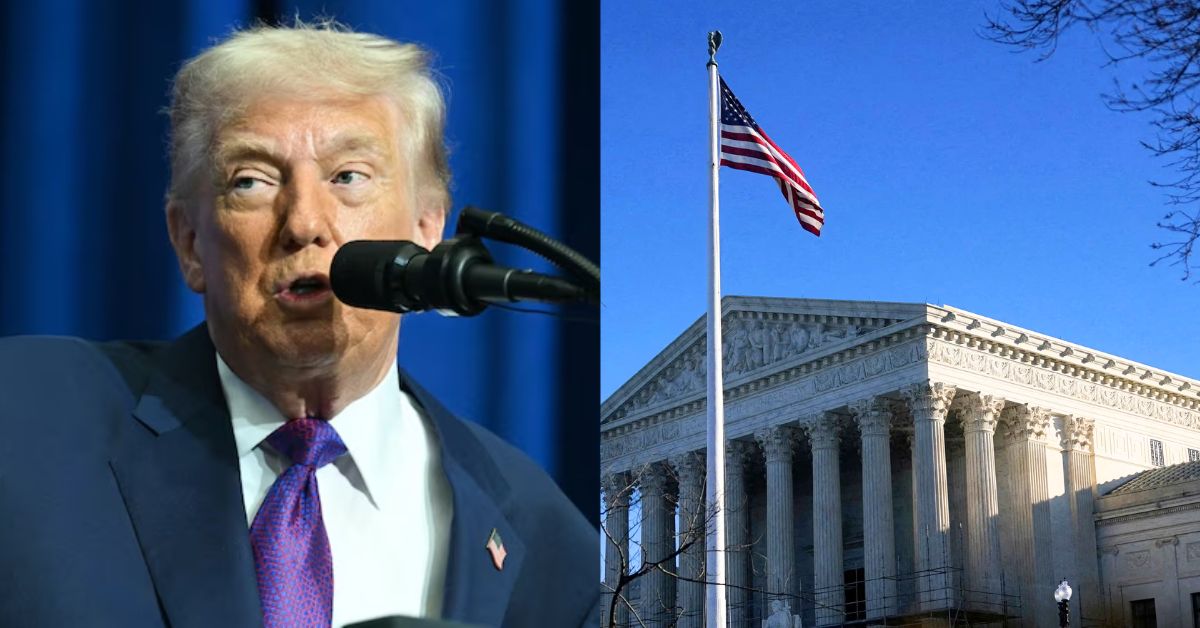

WASHINGTON — A landmark Supreme Court decision has delivered a major legal blow to the use of emergency economic authority in trade policy, dramatically reshaping how the federal government can impose import duties. The ruling has placed IEEPA Tariffs at the center of a constitutional and economic debate that is reverberating across Washington, Wall Street, and global markets.
IEEPA Tariffs
The phrase has dominated policy discussions since the Court determined that the executive branch exceeded statutory limits when imposing sweeping import duties under the International Emergency Economic Powers Act. Within hours of the decision, U.S. Customs and Border Protection moved to halt collections tied to the affected measures.
The immediate suspension of IEEPA Tariffs marks one of the most consequential trade law developments in recent years. It also underscores an enduring tension between presidential authority and congressional oversight in matters of commerce.
Background of the IEEPA Tariffs
The International Emergency Economic Powers Act, enacted in 1977, grants the president authority to regulate commerce during declared national emergencies involving foreign threats. Historically, the statute has been used to freeze assets, block transactions, and impose sanctions.
In recent years, however, IEEPA Tariffs were introduced as part of a broader trade enforcement strategy. The administration argued that certain foreign trade practices constituted extraordinary threats to economic security, justifying tariff action under emergency authority.
Supporters said the approach offered flexibility in responding to rapid geopolitical shifts. Critics argued that tariffs traditionally fall under trade-specific statutes requiring clearer congressional authorization.
As the debate intensified, legal challenges emerged. Importers, trade associations, and constitutional scholars questioned whether IEEPA Tariffs stretched the statute beyond its original intent.
What the Supreme Court Decided
The Supreme Court’s ruling centered on statutory interpretation and constitutional balance of powers. In a majority opinion, the justices concluded that while IEEPA grants broad authority, it does not explicitly authorize across-the-board tariff imposition without clear legislative backing.
The Court emphasized that tariff-setting power historically resides with Congress, unless specifically delegated. The decision clarified that IEEPA Tariffs lacked sufficient statutory grounding when applied broadly to standard commercial imports.
In practical terms, the ruling invalidated the legal basis for collecting those duties. As a result, IEEPA Tariffs were halted nationwide.
The opinion stressed that emergency authority cannot become a substitute for comprehensive trade legislation. By drawing this boundary, the Court reinforced limits on executive economic power.
Constitutional Limits on Emergency Powers
The case raised fundamental questions about the scope of presidential authority. Under the U.S. Constitution, Congress is empowered to regulate foreign commerce. Over decades, lawmakers have delegated certain powers to the executive branch, especially in matters of national security.
IEEPA Tariffs tested the outer edge of that delegation. The administration maintained that economic threats justified emergency intervention. Opponents countered that broad import duties resemble trade policy rather than targeted sanctions.
The Court’s decision reaffirmed that emergency powers, though expansive, are not unlimited. The justices warned against interpreting IEEPA in a manner that effectively transfers core legislative functions to the executive branch.
Legal analysts say the ruling will likely influence future administrations, narrowing the pathways available for unilateral tariff action.
Immediate Impact on Customs Enforcement
Following the ruling, U.S. Customs and Border Protection issued urgent operational guidance. Automated systems were updated, tariff codes were deactivated, and importers were notified of the suspension.
For logistics companies and customs brokers, the change required rapid recalibration. IEEPA Tariffs had been embedded in pricing structures, compliance software, and supply chain contracts.
The halt created immediate uncertainty regarding entries already in process. Importers sought clarification on whether previously paid duties would be refunded or offset.
Trade compliance departments across the country scrambled to interpret the shift. While some businesses welcomed relief from added costs, others faced complications in accounting and contractual obligations.
Market Reaction and Economic Effects
Financial markets responded cautiously. Investors initially reacted positively to the prospect of reduced trade barriers, especially for industries reliant on imported components.
However, uncertainty about replacement measures tempered optimism. The administration indicated that alternative tariff mechanisms might be pursued under separate legal authority.
IEEPA Tariffs had affected sectors ranging from manufacturing to consumer goods. Their suspension altered cost projections for import-heavy industries.
Economists noted that while the immediate halt could lower some short-term expenses, broader trade policy uncertainty may continue to weigh on investment decisions.
Currency markets also reflected shifting expectations, as traders reassessed the trajectory of U.S. trade enforcement.
Political Implications in Washington
The decision quickly became a flashpoint in political debate. Lawmakers who opposed the tariffs praised the ruling as a defense of congressional authority. Others criticized the Court for limiting executive flexibility in confronting foreign economic practices.
The controversy over IEEPA Tariffs has sharpened partisan divides over trade strategy. Some policymakers argue that aggressive tariff measures remain necessary to counter unfair trade practices. Others advocate for legislative clarity rather than reliance on emergency statutes.
Hearings on Capitol Hill are expected as committees examine whether new legislation is needed to clarify trade enforcement authority.
The ruling may also influence broader discussions about the balance of power between branches of government.
Industry-Specific Consequences
Manufacturers were among the most directly affected by IEEPA Tariffs. Companies that rely on imported raw materials saw immediate shifts in projected input costs.
In the retail sector, pricing models built around the additional duties required revision. Some businesses had already passed increased costs to consumers. Others absorbed them to maintain competitiveness.
Agricultural exporters are closely monitoring whether trading partners adjust retaliatory measures in response to the policy shift.
Technology firms, particularly those dependent on global supply chains, view the ruling as a stabilizing factor but remain cautious about potential replacement tariffs.
For small businesses, the change offers temporary clarity but underscores the volatility of trade regulation.
Global Trade Response
International trading partners responded swiftly. Diplomatic channels conveyed cautious optimism about a possible easing of trade tensions.
Some governments interpreted the halt of IEEPA Tariffs as an opportunity to reopen negotiations on contested trade issues. Others awaited confirmation of alternative measures before adjusting policy.
Global markets have grown increasingly sensitive to shifts in U.S. trade enforcement. The suspension of IEEPA Tariffs signaled that judicial oversight can meaningfully alter executive-driven trade initiatives.
Multinational corporations are reassessing long-term sourcing strategies, weighing the durability of the Court’s decision against potential legislative action.
What Comes Next for U.S. Trade Policy
The administration has indicated it will explore other statutory avenues for tariff implementation. Trade experts suggest that authorities embedded in long-standing trade laws may provide more durable frameworks.
Whether Congress chooses to revise existing statutes remains uncertain. Some lawmakers favor codifying clearer boundaries to prevent similar disputes.
IEEPA Tariffs have become a case study in the risks of stretching emergency authority to address complex trade challenges.
Businesses, meanwhile, are prioritizing adaptability. Compliance teams are reviewing contingency plans to manage potential regulatory changes.
The ruling may also prompt more cautious drafting of executive trade measures in the future.
Long-Term Implications for Executive Authority
Beyond immediate trade consequences, the decision has broader constitutional implications. The Supreme Court’s analysis reinforces a principle that emergency statutes must be interpreted narrowly when they intersect with core legislative functions.
IEEPA Tariffs highlighted how economic security concerns can blur lines between national defense and trade policy. By curbing that interpretation, the Court set a precedent likely to influence future cases involving emergency powers.
Legal scholars predict that subsequent administrations will exercise greater restraint when invoking IEEPA for trade-related actions.
The case may also encourage more frequent judicial review of executive economic measures.
Refund Questions and Compliance Challenges
One unresolved issue concerns refunds for previously collected IEEPA Tariffs. Trade attorneys anticipate guidance from Customs outlining procedures for claims or automatic adjustments.
Importers are advised to maintain detailed documentation. The administrative process may take months to fully resolve.
Accounting departments face the task of reconciling duty payments against revised projections. For publicly traded companies, financial disclosures may require updates reflecting the regulatory shift.
Compliance challenges remain significant, particularly for firms operating across multiple jurisdictions.
Economic Stability and Investor Outlook
Market analysts suggest that clarity, even when restrictive, can benefit long-term investment planning. The suspension of IEEPA Tariffs removes one layer of unpredictability but introduces questions about future legislative action.
Investors are evaluating how the ruling influences broader economic policy. Some see it as reinforcing institutional stability through checks and balances.
Others caution that trade disputes remain unresolved and could reemerge under alternative legal frameworks.
The business community is watching for signals from policymakers regarding the direction of trade negotiations.
A Turning Point in Trade Law
The Supreme Court’s intervention marks a turning point in how emergency economic powers are applied to trade policy. IEEPA Tariffs, once central to enforcement strategy, now stand as a reminder of the constitutional boundaries governing executive action.
As policymakers consider next steps, the episode underscores the importance of statutory clarity and interbranch balance.
For importers, exporters, and investors, the decision offers both relief and uncertainty. It demonstrates that trade regulation remains dynamic, shaped not only by economic considerations but also by legal interpretation.
Conclusion
The halt of IEEPA Tariffs following the Supreme Court’s ruling reshapes the landscape of U.S. trade authority in 2026. By reinforcing limits on emergency powers, the Court affirmed the central role of Congress in tariff policy.
While alternative measures may emerge, the legal precedent set in this case will influence executive strategy for years to come.
As businesses adapt and lawmakers debate future reforms, the legacy of IEEPA Tariffs will extend beyond immediate economic effects. It will stand as a defining chapter in the evolving balance between national security authority and constitutional governance.