

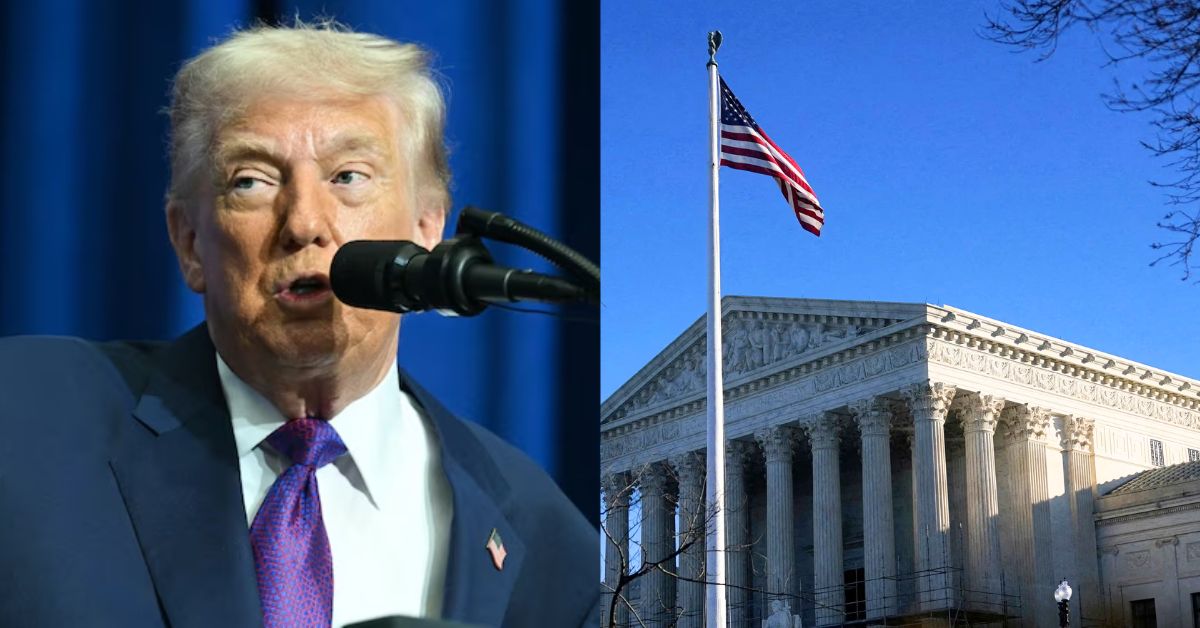

The Trump tariff strategy entered a new and uncertain phase this week after the Supreme Court issued a ruling that redefines how far presidential trade authority can extend under existing U.S. law.
Trump tariff strategy.
The decision does not eliminate tariffs outright. Instead, it narrows the legal pathways available to impose and maintain them. But in doing so, the ruling has injected fresh uncertainty into markets, global trade negotiations and domestic political debate at a sensitive moment for the American economy.
The case centered on whether executive powers had been stretched beyond what Congress intended when earlier trade statutes were enacted. In its opinion, the Supreme Court emphasized that while presidents have discretion in matters of national security and unfair trade practices, that discretion must remain tethered to clear statutory limits.
The ruling now forces policymakers to reconsider how the Trump tariff strategy can move forward without crossing constitutional boundaries.
The Supreme Court’s Decision and Its Legal Foundations
The Supreme Court’s majority opinion focused on procedural safeguards and statutory interpretation. Justices concluded that certain tariff actions exceeded the intended scope of emergency trade powers.
While the ruling does not dismantle the Trump tariff strategy, it restricts how broadly executive authority can be interpreted. The Court reaffirmed that Congress retains primary constitutional authority over trade policy. Presidents may act within delegated frameworks, but those frameworks cannot be expanded by administrative interpretation alone.
Legal analysts say the decision could influence future administrations as much as the present one. The Supreme Court signaled that emergency trade measures must be carefully justified, temporary in nature and grounded in specific statutory language.
The immediate consequence is a recalibration of policy. Agencies are reviewing ongoing tariff measures to ensure compliance. Some temporary duties may require new procedural reviews. Others could face additional legal challenges.
The Trump tariff strategy, once characterized by rapid and assertive executive action, now faces a more measured legal landscape.
How the Trump Tariff Strategy Was Built
To understand the implications of the ruling, it is essential to revisit how the Trump tariff strategy evolved.
From its inception, the policy framework aimed to rebalance trade relationships and reduce reliance on foreign imports in strategic industries. Tariffs were imposed on steel, aluminum, electronics and a range of consumer goods. Officials argued these measures would encourage domestic production and strengthen negotiating leverage.
Supporters described the Trump tariff strategy as a necessary correction to decades of trade imbalances. Critics countered that tariffs functioned as indirect taxes on American businesses and consumers.
At its height, the policy reshaped global supply chains. Companies diversified sourcing, renegotiated contracts and adjusted pricing models. The approach also altered diplomatic relationships, as allies and competitors alike responded with their own trade measures.
Now, with the Supreme Court limiting executive discretion, the Trump tariff strategy must operate within narrower legal boundaries.
Market Reaction and Investor Concerns
Financial markets responded cautiously to the Supreme Court ruling. Equity indices showed modest volatility as investors assessed potential ripple effects across manufacturing, technology and consumer sectors.
The uncertainty surrounding the Trump tariff strategy has heightened risk calculations for multinational corporations. Many companies depend on predictable regulatory frameworks to guide capital investment decisions.
Currency markets also reflected concern. A shift in trade policy can influence capital flows, exchange rates and commodity pricing. While there has been no systemic shock, analysts warn that prolonged uncertainty could dampen business confidence.
Executives in key industries have begun contingency planning. Some are exploring alternative sourcing arrangements. Others are awaiting further policy clarification before adjusting long-term strategies.
In the near term, the Trump tariff strategy remains intact in part. But the ruling introduces questions about durability and legal resilience.
Domestic Industry Implications
Manufacturers and industrial groups are closely monitoring developments. For sectors that benefited from protective tariffs, the ruling presents a mixed picture.
Steel producers, for example, have argued that tariffs shielded domestic capacity from subsidized imports. Automotive manufacturers, by contrast, have often criticized higher input costs.
The Trump tariff strategy has had uneven effects across industries. Some companies expanded domestic facilities. Others struggled with increased production expenses.
Economists note that tariffs can protect targeted sectors while simultaneously raising costs for downstream industries. The Supreme Court decision does not immediately dismantle these measures, but it could limit future expansions.
Labor unions have expressed concern that weakening the Trump tariff strategy could undermine job security in manufacturing regions. Business associations, meanwhile, are urging clarity and legislative engagement.
The broader economic impact will depend on how policymakers adjust to the ruling.
Global Diplomatic Repercussions
International reaction has been measured but watchful. Trading partners are evaluating how the Supreme Court decision may alter U.S. commitments and negotiation dynamics.
Several governments that previously entered tariff negotiations are reassessing their positions. Some officials believe the ruling could open the door to renewed dialogue. Others see it as a sign of institutional checks that complicate rapid policy shifts.
The Trump tariff strategy had become a defining feature of U.S. trade diplomacy. Its recalibration may influence talks on supply chain resilience, technology exports and industrial cooperation.
Global markets prize predictability. The Supreme Court’s involvement underscores that trade policy in the United States is subject to judicial review and constitutional constraints.
This dynamic may reassure some allies while introducing new complexities in ongoing negotiations.
Political Ramifications in Washington
The ruling arrives at a politically sensitive moment. Trade policy has long been a flashpoint in national debate.
Supporters of the Trump tariff strategy argue that it strengthened American leverage and revived key industries. They view the Supreme Court decision as a technical clarification rather than a repudiation.
Opponents see the ruling as a necessary reminder that executive authority has limits. They argue that Congress should reclaim a more active role in shaping trade legislation.
Lawmakers on both sides are discussing potential legislative responses. Some proposals would clarify statutory language to reinforce executive flexibility. Others would impose stricter oversight mechanisms.
The Trump tariff strategy now sits at the intersection of legal doctrine and electoral politics.
The Future of the Trump Tariff Strategy
Looking ahead, policymakers face several possible paths.
One scenario involves refining tariff mechanisms within the narrower boundaries outlined by the Supreme Court. Agencies could initiate more formal investigations before imposing duties, ensuring compliance with procedural requirements.
Another possibility is legislative reform. Congress may update trade statutes to either expand or limit executive authority. Such action would require bipartisan cooperation, a challenging prospect in the current political climate.
A third path could involve gradual de-escalation. Negotiated trade agreements might replace certain tariff measures, reducing economic friction while maintaining strategic objectives.
Regardless of the direction chosen, the Trump tariff strategy will likely remain a central feature of U.S. economic discourse.
Structural Economic Implications
Beyond immediate political and legal questions, the ruling raises broader structural considerations.
Supply chain diversification accelerated under the Trump tariff strategy. Companies began exploring nearshoring and regional partnerships to mitigate risk. These trends may continue regardless of legal constraints.
Trade deficits, meanwhile, reflect complex macroeconomic forces. While tariffs can shift trade flows, they do not automatically reduce overall imbalances. Currency values, domestic consumption patterns and global demand play critical roles.
The recalibration of the Trump tariff strategy may prompt deeper reflection on industrial policy. Policymakers are increasingly debating how to balance protectionism with global integration.
Judicial Oversight and Executive Power
The Supreme Court’s involvement underscores the constitutional architecture governing trade.
Historically, Congress delegated certain powers to the executive branch to enable swift responses to economic threats. Over time, interpretations of those delegations have expanded.
The ruling clarifies that statutory language must guide executive action. The Trump tariff strategy, therefore, must operate within explicitly defined boundaries.
Legal scholars suggest this decision could serve as precedent for future disputes involving regulatory authority beyond trade.
Broader Economic Outlook
The American economy remains resilient in many respects. Employment levels are stable, consumer spending has moderated but continues and corporate earnings show mixed signals.
Trade policy uncertainty, however, can influence long-term planning. Investors and businesses prefer clarity when making capital-intensive commitments.
If the Trump tariff strategy evolves through transparent legislative processes, markets may adapt smoothly. Prolonged legal battles, by contrast, could sustain volatility.
For now, most analysts expect incremental adjustments rather than abrupt reversals.
International Trade Law Context
The Trump tariff strategy has also intersected with multilateral trade frameworks. While domestic courts shape internal authority, international agreements influence diplomatic outcomes.
Some affected countries have previously pursued dispute settlement channels in global trade institutions. The Supreme Court ruling does not directly alter those proceedings, but it may influence negotiating posture.
Trade law remains a layered system in which domestic statutes, constitutional principles and international agreements interact.
A Defining Inflection Point
The Supreme Court’s decision marks a significant moment in the evolution of the Trump tariff strategy. It neither dismantles nor fully validates the approach. Instead, it narrows the lane in which policy can operate.
For industries, investors and foreign governments, the message is clear: U.S. trade authority is powerful but not unchecked.
Whether through legislative refinement, procedural adjustment or diplomatic recalibration, the Trump tariff strategy will continue to shape economic debate in 2026 and beyond.
As policymakers navigate the aftermath, the balance between economic leverage and constitutional constraint will define the next chapter of American trade policy.
The Trump tariff strategy now stands at a crossroads — constrained by judicial oversight yet still central to national economic discourse.