

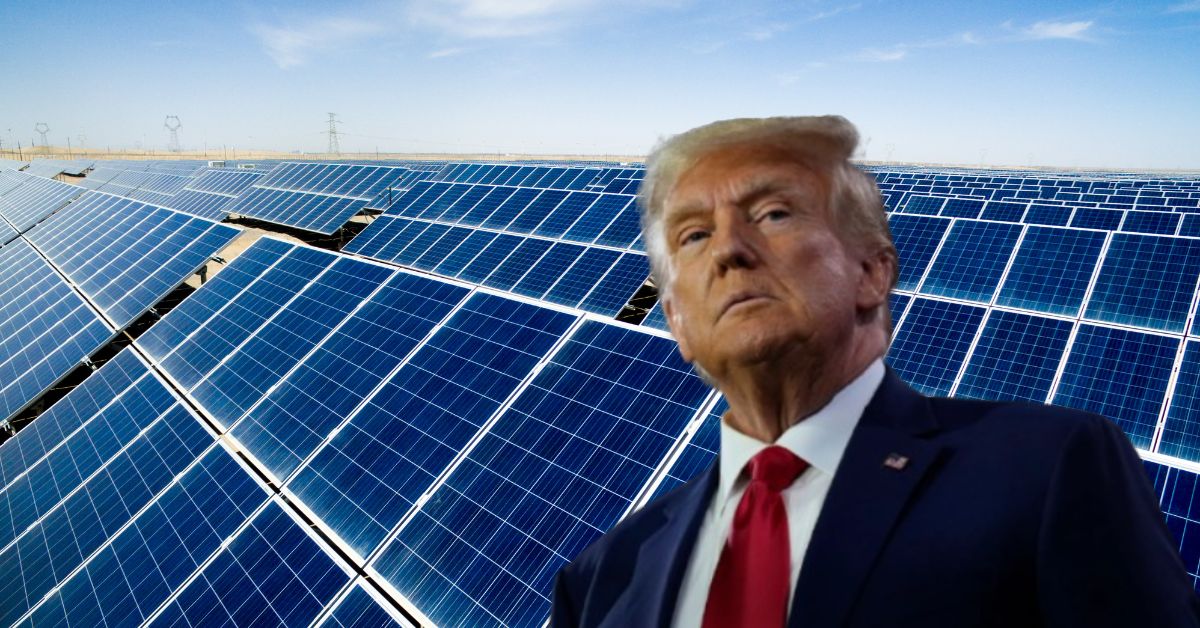

The latest escalation in global trade tensions has put renewable energy markets under renewed scrutiny, with Washington announcing a sharp increase in duties on imported solar equipment.
US solar tariffs on India
The move, which raises countervailing duties to 125.87%, represents one of the most aggressive trade actions taken against Indian solar exports in recent years. Officials argue that the decision is designed to counter alleged government subsidies and protect American manufacturers, while critics warn that it could slow clean energy deployment and strain diplomatic ties.
US solar tariffs on India and the Commerce ruling
The decision to raise US solar tariffs on India marks a turning point in the evolving trade relationship between the two countries. According to Commerce Department officials, investigators determined that Indian solar manufacturers benefited from subsidies that distorted pricing in the American market. As a result, the department imposed duties exceeding 125%, placing India among the highest penalized exporters in the sector.
The sharp increase in US solar tariffs on India comes at a time when the United States is attempting to accelerate domestic clean energy manufacturing under broader industrial policy initiatives. Lawmakers supporting the move say the duties are necessary to create a level playing field for American producers competing against lower-cost imports.
However, critics argue that US solar tariffs on India could complicate the administration’s renewable energy targets. Solar developers in the United States often rely on imported panels to meet cost expectations, particularly for large-scale utility projects. Sudden increases in import costs may lead to contract renegotiations and project delays.
Supporters of US solar tariffs on India say the measures send a clear signal that trade enforcement will remain a priority. They contend that domestic manufacturing investments cannot thrive if foreign competitors receive state-backed support that undercuts pricing structures.
The impact of US solar tariffs on India extends beyond manufacturers and policymakers. Investors, utilities, and project developers are now recalculating financial projections to account for higher equipment costs. Market analysts suggest that uncertainty around supply chains may linger until trade negotiations clarify long-term rules.
For Indian exporters, US solar tariffs on India create a major challenge in maintaining access to one of the world’s largest renewable energy markets. Industry representatives in New Delhi have described the decision as excessive, arguing that Indian manufacturers play a key role in supporting global decarbonization efforts.
Analysts warn that US solar tariffs on India may reshape supply chains in unexpected ways. Importers could shift sourcing to alternative markets not currently subject to similar duties, though such transitions require time and logistical planning. In the short term, volatility remains a dominant theme.
Meanwhile, domestic manufacturers view US solar tariffs on India as a protective buffer. Several American firms have expanded production capacity in anticipation of stronger enforcement actions. Executives say the duties provide breathing room to scale operations without facing underpriced imports.
The debate over US solar tariffs on India intensified after trade data revealed that Indian solar shipments to the United States had increased dramatically over the past two years. Officials cited this growth as evidence that subsidies were influencing competitive dynamics.
Lawmakers discussing US solar tariffs on India have emphasized national security considerations as well. They argue that strengthening domestic energy manufacturing reduces reliance on foreign supply chains, which became vulnerable during recent global disruptions.
Economists studying US solar tariffs on India suggest that while short-term price increases are likely, long-term outcomes will depend on how effectively domestic producers expand capacity. If American firms can meet demand efficiently, the tariffs may stabilize over time.
As projects reassess budgets, US solar tariffs on India are prompting developers to reconsider procurement timelines. Some utility-scale installations may delay equipment purchases in hopes that trade tensions ease or alternative suppliers emerge.
In global markets, US solar tariffs on India signal a broader willingness by Washington to pursue assertive trade remedies in clean technology sectors. Observers note that renewable energy supply chains are increasingly intertwined with geopolitical strategy.
Diplomatic channels indicate US solar tariffs on India could become a focal point in upcoming bilateral talks. Trade officials from both countries are expected to review the findings and explore whether negotiated adjustments are possible.
Trade groups say US solar tariffs on India will test the resilience of the broader economic relationship. While renewable energy represents only one segment of bilateral commerce, it carries symbolic importance in climate cooperation discussions.
Looking ahead, US solar tariffs on India may influence how other nations approach subsidy programs and export strategies. Governments across Asia and Europe are monitoring developments closely, aware that similar investigations could arise elsewhere.
Ultimately, US solar tariffs on India reflect the tension between industrial policy goals and global climate ambitions. Policymakers must balance domestic manufacturing priorities with the urgent need to expand renewable energy capacity worldwide.
Market Reaction and Industry Response
Financial markets responded swiftly to the announcement. Shares of several U.S.-based solar manufacturers rose following the confirmation of new duties, while companies reliant on imported panels saw more mixed reactions. Investors appeared to interpret the measures as supportive of domestic production, at least in the near term.
Developers, however, expressed caution. Large-scale solar installations often operate on thin margins, and sudden increases in equipment costs can ripple through entire project pipelines. Industry associations emphasized the importance of predictable policy frameworks to ensure continued growth.
Some executives argue that higher duties may encourage vertical integration within the United States. By building more domestic facilities to produce wafers, cells, and modules, companies could reduce exposure to volatile trade decisions. Yet such expansions require significant capital and long lead times.
Environmental advocates have also weighed in. While many support strengthening American manufacturing, they caution that higher prices could slow the pace of solar adoption at a critical moment in global climate efforts. Balancing trade enforcement with clean energy expansion remains a delicate task.
Impact on Renewable Energy Development
Solar energy has become one of the fastest-growing sources of electricity generation in the United States. Federal incentives and declining equipment costs have fueled widespread adoption across residential, commercial, and utility sectors.
Higher import duties introduce new variables into that equation. If project costs rise substantially, developers may seek additional financing or adjust timelines. Smaller installers could face particular strain if procurement expenses exceed expectations.
At the same time, domestic production incentives aim to offset these pressures. Federal legislation passed in recent years includes tax credits and grants designed to boost U.S.-based clean energy manufacturing. Proponents argue that tariffs complement these incentives by preventing market distortions.
Energy economists suggest that price impacts may vary by region and project scale. Utility-scale developments with long-term power purchase agreements could face renegotiation challenges, while residential installations may experience incremental price adjustments.
Diplomatic and Trade Implications
Beyond economic considerations, the trade action carries diplomatic weight. The United States and India maintain a strategic partnership spanning defense, technology, and climate cooperation. Trade disputes risk complicating that relationship.
Indian officials have indicated that they are reviewing the Commerce Department’s findings. While no immediate retaliatory measures have been announced, observers note that trade tensions can escalate if negotiations stall.
Historically, both countries have engaged in dispute resolution through established trade channels. Analysts expect consultations to continue, with the possibility of adjustments or clarifications depending on ongoing discussions.
What Comes Next
In the weeks ahead, industry stakeholders will monitor implementation details closely. Importers must adapt to revised duty rates, and customs procedures will reflect the updated determinations.
Domestic manufacturers are likely to accelerate expansion plans, particularly if they anticipate sustained policy support. Investors will assess whether increased production can offset higher equipment prices.
Policymakers, meanwhile, face the challenge of aligning trade enforcement with climate goals. The renewable energy transition depends on rapid deployment and stable supply chains. Finding equilibrium between these priorities will shape the next phase of the clean energy market.
Conclusion
The imposition of higher duties represents a defining moment in renewable energy trade policy. The decision has immediate implications for manufacturers, developers, and international relations.
As markets adjust and negotiations unfold, the broader impact will depend on how effectively stakeholders respond. Industrial growth, environmental ambition, and diplomatic cooperation are all intertwined in this evolving landscape.
While debates continue over strategy and fairness, the outcome of this policy shift will influence renewable energy supply chains for years to come.