

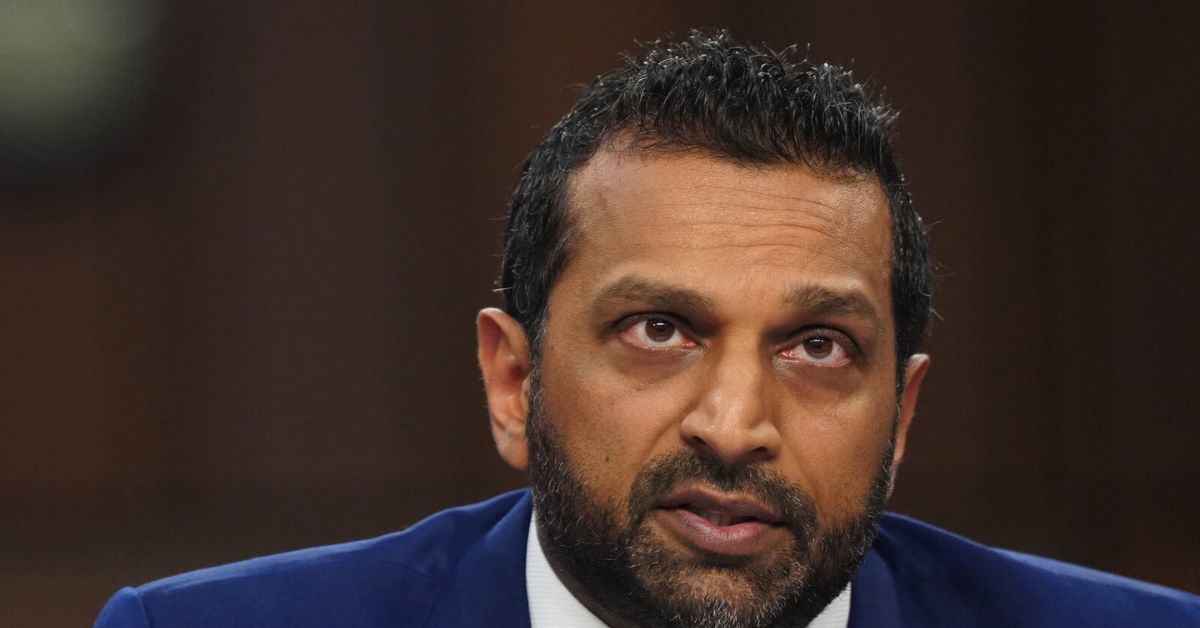

Kash Patel has dismissed at least 10 FBI employees who were reportedly connected to the federal investigation into former President Donald Trump’s handling of classified documents, according to multiple media reports.
Kash Patel fires FBI officials in what appears to be one of the most consequential personnel shakeups at the bureau in recent years.
The reported removals have intensified debate in Washington over institutional independence, executive authority, and the long-running classified documents case involving Trump.
Background of the Classified Documents Investigation
The controversy traces back to the classified documents investigation launched after government records were discovered at Trump’s Mar-a-Lago property following his first term in office.
Federal authorities examined whether sensitive national security materials had been improperly retained. The probe eventually led to indictments accusing Trump of unlawful retention of classified documents and obstruction of federal efforts to retrieve them.
The investigation was overseen by former Special Counsel Jack Smith, who also handled a separate case related to alleged interference in the 2020 election.
In this broader context, Kash Patel fires FBI officials who were reportedly involved in aspects of the documents investigation, a move that signals a significant shift in bureau leadership dynamics.
Why Kash Patel Fires FBI Officials Now
The timing of the decision has drawn scrutiny.
Media outlets including CBS News and CNN reported that the dismissed employees were linked to the investigative team that worked on the Trump documents case. Though the FBI has not officially confirmed the names or roles of those removed, multiple sources suggest they had responsibilities connected to investigative strategy or oversight.
Observers say the fact that Kash Patel fires FBI officials at this stage indicates lingering tensions over how the investigation was conducted.
Supporters argue that leadership accountability is essential within federal law enforcement. Critics contend that removing officials tied to politically sensitive investigations may raise concerns about institutional independence.
The debate underscores how the classified documents case continues to reverberate long after the formal proceedings were halted.
Subpoenas and the Phone Records Controversy
A central issue tied to the dismissals involves subpoenas issued during the investigation.
According to Reuters, the FBI previously subpoenaed phone records belonging to Kash Patel and White House chief of staff Susie Wiles while both were private citizens aligned with Trump.
The subpoenas reportedly occurred during the classified documents probe. Patel has sharply criticized the decision, alleging that the process lacked transparency and oversight.
In a statement to Reuters, Patel described the subpoenas as “deeply alarming,” claiming prior FBI leadership concealed aspects of the process.
The controversy surrounding these subpoenas appears to have influenced the recent action in which Kash Patel fires FBI officials connected to the case.
The Role of Special Counsel Jack Smith
Jack Smith’s appointment marked a significant chapter in federal oversight of Trump’s post-presidency conduct.
Smith secured indictments in 2023 related to the handling of classified documents. Prosecutors alleged that sensitive materials were unlawfully retained and that efforts to recover them were obstructed.
However, after Trump won the 2024 election, the Justice Department cited longstanding policy that prohibits prosecuting a sitting president. As a result, the cases were dropped.
Despite the cases being halted, the institutional impact of the investigation remains visible. The decision that Kash Patel fires FBI officials underscores how internal tensions tied to the probe continue to unfold.
Legal Context and Justice Department Policy
A key legal principle guiding the outcome of the documents case was the Justice Department’s policy against prosecuting a sitting president.
This policy, established decades ago, has shaped how federal prosecutors approach investigations involving presidential authority.
Though Smith indicated that proceedings might have resulted in convictions if they had continued, the policy effectively paused further prosecution after Trump’s election victory.
In that broader legal environment, the action where Kash Patel fires FBI officials adds another layer to the institutional aftermath.
Kash Patel’s Statement and Reaction
Patel has been vocal about his concerns regarding how the investigation was conducted.
He argued that previous bureau leadership used what he described as flimsy justifications to subpoena his personal phone records. Patel also accused officials of burying documentation in internal case files.
By publicly defending his decision after Kash Patel fires FBI officials, Patel positioned the move as a corrective measure aimed at restoring internal accountability.
The FBI has not released a formal statement detailing the rationale behind the personnel changes.
Internal Fallout Inside the FBI
The FBI has faced internal tensions in recent years amid politically charged investigations.
This is not the first time senior officials have raised concerns about leadership decisions. Earlier reports indicate that other bureau officials have filed lawsuits alleging wrongful termination tied to politically sensitive investigations.
The development that Kash Patel fires FBI officials is likely to intensify discussions within the bureau about operational independence and executive oversight.
Former FBI officials have long emphasized the importance of insulating investigative decisions from political pressure. At the same time, leadership changes are not uncommon when new administrations take office.
Political Implications in Washington
The decision that Kash Patel fires FBI officials carries clear political implications.
Democratic lawmakers have raised concerns that removing officials linked to investigations involving Trump could undermine confidence in federal law enforcement neutrality.
Republican lawmakers, meanwhile, argue that the classified documents investigation represented excessive or politically motivated enforcement actions.
The episode adds to broader debates about the balance between executive authority and the autonomy of federal investigative agencies.
Historical Context of Leadership Shakeups
Leadership changes at the FBI have historically followed transitions in political power.
From the Watergate era to post-9/11 reforms, internal restructuring has often accompanied periods of institutional stress.
However, the circumstances under which Kash Patel fires FBI officials stand out because of their direct connection to a high-profile investigation involving a former and now sitting president.
Such actions inevitably attract public scrutiny, particularly when they intersect with questions of legal accountability and constitutional boundaries.
Broader Implications for Institutional Independence
The FBI operates under the authority of the executive branch but is designed to function with investigative independence.
The action in which Kash Patel fires FBI officials has reignited conversations about how that balance should be maintained.
Legal scholars note that executive leadership retains authority over personnel decisions. Yet they also stress that perceptions of independence are critical to public trust.
Maintaining credibility in politically sensitive investigations is often as important as the legal outcomes themselves.
Public Response and Media Coverage
News organizations across the political spectrum have reported on the dismissals.
Public reaction has been divided. Supporters of Patel argue that the bureau requires structural reform. Critics warn that removing officials tied to a politically charged investigation risks sending a message about retaliation.
As coverage continues, the phrase Kash Patel fires FBI officials has become central to headlines and political commentary alike.
What Happens Next
It remains unclear whether further personnel changes will follow.
Congressional committees may seek additional clarification regarding the circumstances surrounding the subpoenas and subsequent dismissals.
The long-term institutional consequences of the decision that Kash Patel fires FBI officials will depend on whether additional documentation or oversight hearings emerge in the coming weeks.
For now, the development marks another chapter in the ongoing political and legal aftermath of the classified documents investigation.
Conclusion
The decision that Kash Patel fires FBI officials tied to the Trump documents probe represents a significant moment in federal law enforcement history.
While supporters view the move as necessary accountability, critics question its broader implications for institutional independence.
As Washington continues to grapple with the legacy of the classified documents investigation, the effects of these dismissals may shape the public’s trust in federal investigative agencies for years to come.
The political and legal reverberations from the episode in which Kash Patel fires FBI officials are likely far from over.