

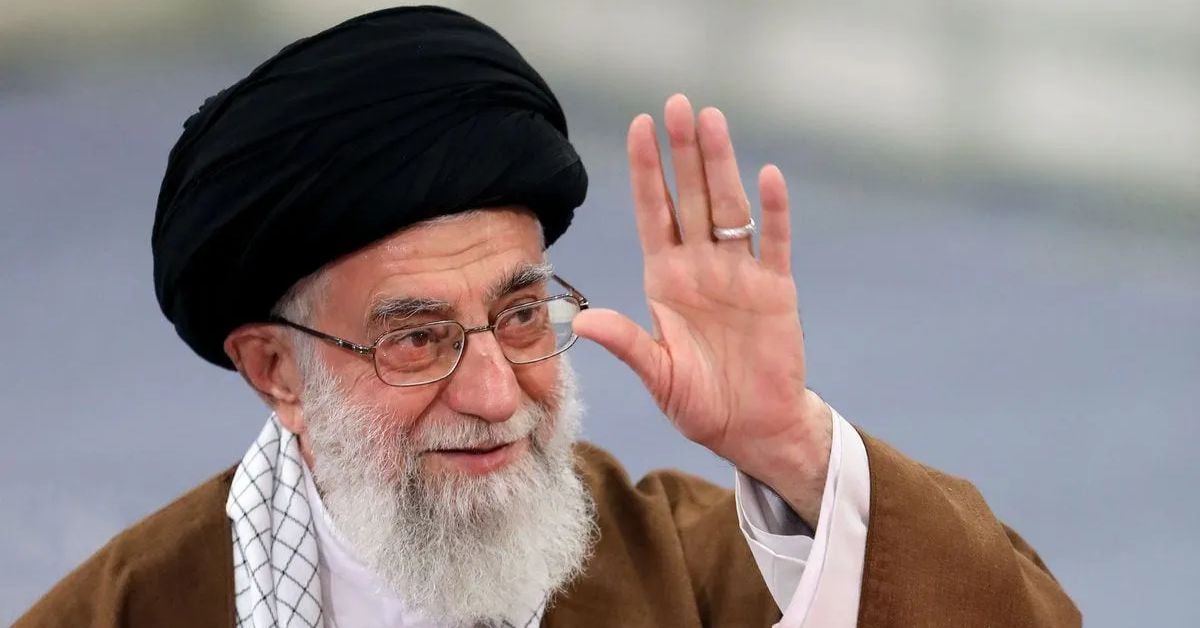

The Middle East entered one of its most volatile moments in decades after Iran’s state media confirmed that its Supreme Leader was killed during coordinated US-Israel Attacks Iran. The announcement sent shockwaves across the region, prompting immediate military retaliation, diplomatic alarm, and sharp reactions in global markets.
The reported death of Ayatollah Khamenei marks a historic turning point for Iran’s political system and for regional security dynamics. For more than three decades, he stood as the country’s highest authority, shaping defense policy, overseeing military command structures, and defining Iran’s strategic posture toward both Washington and Tel Aviv.
Officials in Tehran confirmed that the Supreme Leader was killed in strikes that targeted multiple military and security installations. The confirmation came hours after international reports suggested senior figures had been present at a strategic command site hit during US-Israel Attacks Iran.
Iran immediately declared a period of national mourning. Security forces were deployed throughout major cities, while state broadcasters aired continuous coverage emphasizing unity and resilience. The scale of the announcement underscored the gravity of the moment.
The Strategic Context Behind US-Israel Attacks Iran
The latest round of US-Israel Attacks Iran reportedly focused on missile infrastructure, air defense facilities, and command hubs linked to the Revolutionary Guard. Defense officials described the operation as preemptive and aimed at preventing what they characterized as imminent threats.
However, the confirmation that Ayatollah Khamenei was among those killed transformed the narrative dramatically. What may have begun as a military operation intended to degrade capabilities now appears to have removed the most powerful figure in Iran’s governing system.
Analysts say that the elimination of Ayatollah Khamenei represents more than a symbolic blow. As Supreme Leader, he exercised final authority over Iran’s armed forces, judiciary, and intelligence services. No major strategic decision occurred without his approval.
The removal of such a central authority introduces immediate uncertainty about command continuity and political succession.
Political Uncertainty After Ayatollah Khamenei
Iran’s constitution outlines a mechanism for replacing the Supreme Leader, assigning responsibility to the Assembly of Experts. Yet transitions in Iran have historically been controlled and carefully managed over time. The sudden death of Ayatollah Khamenei creates a vacuum that must be addressed under intense international pressure.
The Revolutionary Guard retains significant operational power. Some analysts believe its influence may expand further during the transition period. Others argue that senior clerical figures will move quickly to consolidate authority and maintain institutional stability.
Inside Iran, public messaging has focused on continuity. State officials stressed that the country’s institutions remain intact despite the loss of Ayatollah Khamenei. Still, uncertainty about succession introduces risk at a moment when tensions are already high.
The symbolic importance of Ayatollah Khamenei to Iran’s identity cannot be overstated. His leadership defined the country’s posture toward Western powers and shaped alliances across the region.
Regional Military Fallout
Within hours of the announcement, Iran launched drones and missile strikes toward Israeli territory and US military installations. Air defense systems intercepted many of the projectiles, but the exchange heightened fears of broader escalation.
US-Israel Attacks Iran have now triggered a cycle of retaliation that extends beyond a single confrontation. Neighboring countries increased air defense readiness, and several commercial flights were rerouted as precautionary measures.
Regional governments expressed concern that the death of Ayatollah Khamenei could push allied armed groups to intensify activity. Security analysts warn that multi-front tensions may continue unless diplomatic intervention occurs quickly.
Israeli officials stated that they remain prepared for further escalation. US officials echoed that message, emphasizing that additional responses would follow any sustained attacks.
Global Diplomatic Reaction
The international response was swift. European leaders called for restraint and urged all parties to prevent further escalation. Emergency consultations were scheduled at the United Nations as diplomats assessed potential next steps.
The death of Ayatollah Khamenei during US-Israel Attacks Iran represents one of the most consequential geopolitical events in recent history. Major powers are now balancing condemnation, strategic positioning, and calls for de-escalation.
Russia and China voiced concern about sovereignty and regional stability. Several Asian governments warned about the impact on global energy markets. Behind closed doors, diplomatic channels remain active.
The situation remains fluid, and backchannel communications are reportedly ongoing.
Economic Shockwaves
Energy markets reacted immediately to reports involving Ayatollah Khamenei. Oil prices climbed sharply amid concerns about supply disruptions in critical shipping corridors.
Traders pointed to heightened uncertainty following US-Israel Attacks Iran as a key factor driving volatility. Financial markets shifted toward safer assets, reflecting investor caution.
Economists warn that prolonged instability could have ripple effects across global supply chains. Even the perception of sustained conflict can influence commodity pricing and inflation expectations.
The broader economic consequences will depend on whether military exchanges remain contained or expand further.
The Broader Implications
The reported killing of Ayatollah Khamenei represents a defining moment for Iran’s modern history. His leadership spanned decades of sanctions, diplomatic negotiations, and regional conflict.
The question now is whether US-Israel Attacks Iran will remain limited to strategic military objectives or evolve into sustained confrontation. Much depends on how Iran’s leadership transition unfolds.
If the succession process stabilizes quickly, there may be room for diplomatic engagement. If internal competition intensifies, the region could face prolonged uncertainty.
Ayatollah Khamenei’s influence shaped Iran’s foreign policy doctrine. His absence introduces unpredictability into that doctrine at a time of heightened tension.
Military forces across the region remain on alert. Diplomatic teams are working urgently to contain escalation. Markets continue to react to each development.
The death of Ayatollah Khamenei during US-Israel Attacks Iran has fundamentally altered the strategic landscape. Whether it becomes a catalyst for broader war or a turning point toward negotiation remains uncertain.
For now, governments worldwide are watching closely as events unfold in one of the most critical geopolitical moments in recent decades.