

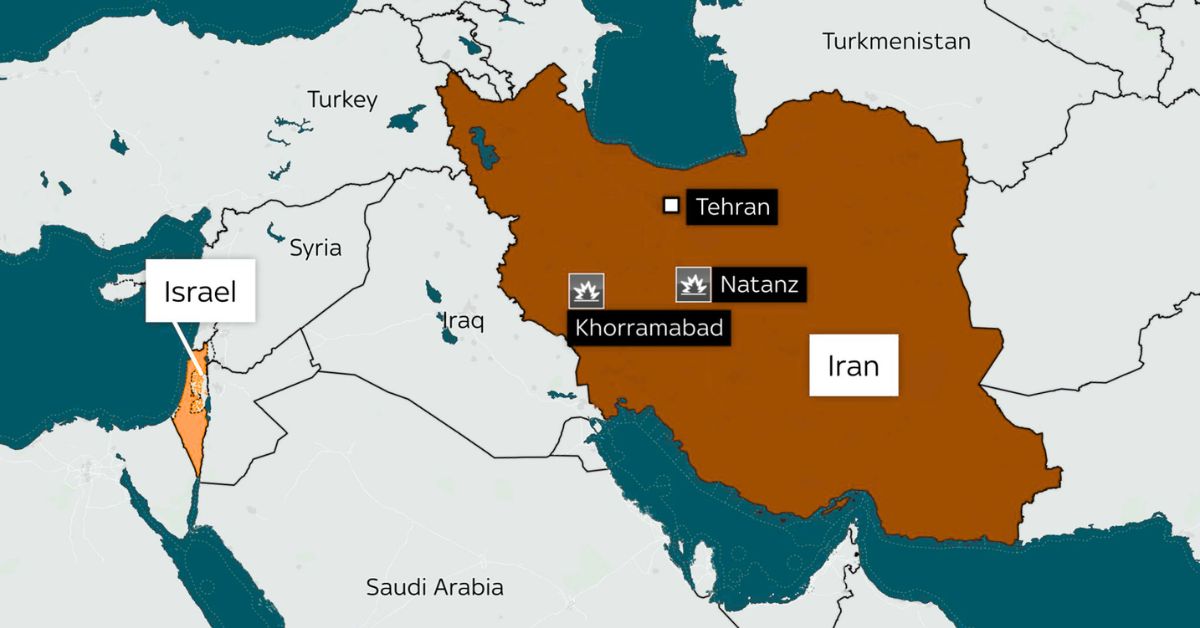

The Iran conflict has entered a tense and uncertain phase as military strikes, geopolitical tensions, and global economic reactions continue to unfold across the Middle East. Governments and financial markets around the world are closely watching developments as the confrontation grows more complex and the risk of wider instability increases.
Officials in Washington say the opening phase of military operations targeting the Middle Eastern nation resembled the “shock and awe” strategy used during the early stages of the Iraq war. According to defense officials, the goal of the initial campaign was to disrupt strategic capabilities and limit the country’s ability to coordinate retaliatory actions.
As the crisis evolves, investors, diplomats, and military analysts are trying to assess whether the confrontation could expand into a broader regional conflict or remain limited in scope. The situation has already triggered reactions across energy markets and global financial systems.
Military Campaign and Strategic Objectives
The Iran conflict escalated sharply after coordinated military strikes targeted key infrastructure believed to support the country’s defense network. Military officials say the operations were designed to weaken command structures, missile launch facilities, and logistical networks linked to the nation’s armed forces.
Defense analysts say the scale and coordination of the early attacks suggest a carefully planned strategy aimed at establishing immediate operational advantage. By striking critical military infrastructure early in the campaign, planners hoped to reduce the country’s ability to organize sustained retaliation.
Officials familiar with the military planning say the first phase of operations included a series of high-precision strikes targeting air defense systems and naval assets. The goal was to limit the regional power’s ability to disrupt international shipping routes or threaten nearby military installations.
Security experts caution that any confrontation involving such a strategically positioned nation carries significant risks. The country maintains strong regional relationships and possesses substantial missile capabilities that could influence the trajectory of the crisis.
Analysts also say that the scale of the campaign reflects broader concerns about regional security and the long-term balance of power in the Middle East.
Global Energy Markets React
The confrontation has already had a significant effect on global energy markets, particularly because of the country’s location near critical oil transport routes.
Energy traders reacted quickly as tensions increased around the Persian Gulf, where a large portion of the world’s oil supply passes through narrow maritime corridors. Any disruption to these routes could have immediate consequences for global fuel prices.
The Iran conflict has raised fears that instability could threaten tanker traffic through the Strait of Hormuz, one of the world’s most important oil shipping lanes. A disruption in that corridor could send shockwaves through energy markets and increase costs for consumers worldwide.
Analysts say energy prices tend to respond rapidly to geopolitical uncertainty, especially when the crisis involves a major regional player with influence over strategic waterways.
Several oil-producing countries in the region have already increased security measures around key infrastructure, while international shipping companies are reviewing routes to minimize potential risk.
Financial Market Volatility
Global financial markets reacted with caution as news of the escalating confrontation spread. Several Asian markets experienced declines as investors weighed the potential economic consequences of prolonged instability in the Middle East.
Financial analysts say geopolitical tensions often trigger volatility because investors tend to move funds toward safer assets during uncertain periods. The unfolding Iran conflict has increased concerns about supply chains, energy costs, and global trade flows.
Currency markets also reflected the uncertainty, with investors closely monitoring developments in the region. Economists say prolonged geopolitical tension can influence economic confidence and investment decisions across multiple industries.
Despite early declines in some markets, analysts note that global financial systems have become more resilient to geopolitical shocks in recent years. Investors are watching carefully to determine whether the situation will stabilize or escalate further.
Market strategists say energy-related industries could see increased volatility if tensions continue to rise.
Regional Security Concerns
The Middle East has long been one of the most strategically sensitive regions in global politics, and the Iran conflict has intensified concerns about broader instability.
Security experts warn that regional alliances and political tensions could complicate efforts to contain the confrontation. Several neighboring countries are closely monitoring the situation, particularly because of potential spillover effects on border security and economic stability.
Military analysts say the country maintains a network of relationships with regional actors that could influence the direction of the conflict. These alliances may play an important role in shaping how the situation evolves.
Regional governments have increased military readiness in response to the crisis, while diplomatic channels remain active in an effort to prevent further escalation.
Observers say the situation underscores the fragile security balance that has existed across the Middle East for decades.
Humanitarian Impact
Humanitarian organizations have raised serious concerns about the potential civilian impact of military operations inside the country.
Aid groups say infrastructure damage could disrupt access to essential services, including healthcare, transportation, and energy supplies. The humanitarian implications of the Iran conflict remain difficult to measure because the situation is evolving rapidly.
Relief agencies have urged all parties involved in the confrontation to prioritize civilian protection and maintain access for humanitarian assistance.
Human rights organizations monitoring the situation warn that prolonged military activity could lead to displacement and long-term economic hardship for communities across the region.
The international community is closely monitoring reports from the ground as the crisis continues to unfold.
Diplomatic Responses
Governments around the world have reacted cautiously to the unfolding confrontation. Several countries have called for diplomatic engagement and restraint, emphasizing the importance of preventing further escalation.
The Iran conflict has sparked debates within international political circles about how best to manage regional tensions while maintaining global security.
Some diplomatic leaders have expressed support for efforts aimed at limiting military capabilities, while others have urged immediate negotiations to reduce tensions.
Foreign policy experts say diplomatic communication will be critical in determining whether the situation stabilizes or expands.
International organizations are also encouraging dialogue among regional actors in an effort to reduce the risk of miscalculation.
Military Deployments
In response to rising tensions, several countries have increased military presence across strategic areas in the Middle East.
Naval forces have moved closer to important shipping routes in order to protect commercial traffic and maintain maritime security.
The Iran conflict has prompted additional surveillance operations designed to monitor developments in the region.
Military planners say these deployments are intended primarily as deterrence measures rather than direct participation in combat operations.
Defense analysts believe the increased military presence may help reduce the risk of further escalation by reinforcing security around key infrastructure and trade routes.
Economic Implications
Economists say the confrontation could have lasting consequences for global economic stability if tensions persist.
Energy prices remain particularly sensitive to geopolitical developments, and the Iran conflict has introduced new uncertainty into an already fragile global economy.
Rising transportation costs and supply chain disruptions could also influence inflation levels in several countries.
Financial institutions are monitoring the situation closely as governments consider potential responses to economic risks.
Analysts say the long-term economic impact will depend largely on whether the crisis expands or gradually stabilizes through diplomatic efforts.
Future Outlook of the Iran Conflict
The future of the Iran conflict remains uncertain as military developments and diplomatic efforts continue to unfold.
Political analysts say several factors will shape the next phase of the crisis, including regional alliances, international diplomacy, and economic pressures.
While some experts believe the confrontation may eventually move toward negotiations, others warn that tensions could remain elevated for an extended period.
The global community continues to monitor the situation closely as leaders search for ways to prevent the crisis from escalating further.
For now, the evolving Iran conflict represents one of the most significant geopolitical challenges facing the international community.