

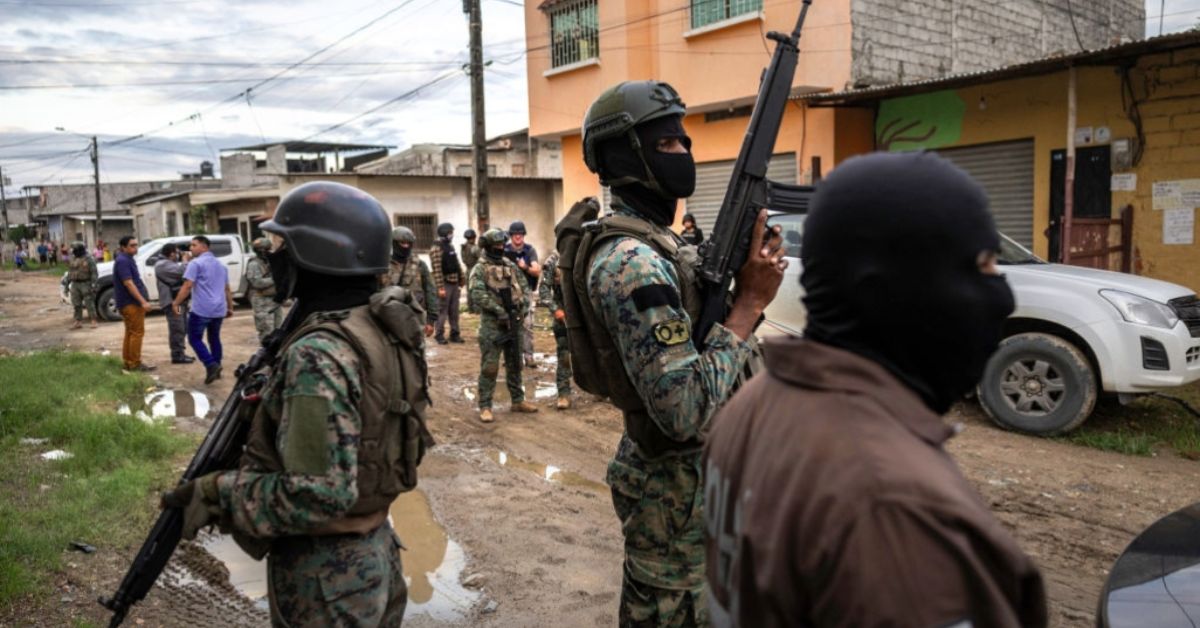

The US Military is expanding its cooperation with Ecuadorian security forces as part of a growing regional effort to disrupt powerful drug trafficking organizations operating across Latin America. Officials from both governments confirmed that coordinated operations are now underway, focusing on intelligence sharing, strategic surveillance, and targeted actions aimed at dismantling criminal networks linked to narcotics trafficking.
Authorities say the initiative reflects a broader shift in security policy across the region, where governments are increasingly working together to combat organized crime that stretches across borders. The expanding role of the US Military in Ecuador signals the seriousness of the challenge facing authorities as transnational drug networks continue to grow in influence.
While operational details remain limited for security reasons, officials say the cooperation includes joint planning, intelligence coordination, and strategic assistance designed to weaken criminal groups responsible for trafficking large quantities of narcotics into global markets.
Expanding Cooperation Between Ecuador and the US Military
The expanding partnership between Ecuador and the US Military reflects a growing concern among regional governments about the spread of organized crime linked to international drug trafficking.
Officials say the joint effort is designed to strengthen Ecuador’s ability to track criminal networks that move narcotics across continents through complex transportation routes and financial channels. By working closely with Ecuadorian authorities, the US Military is helping provide intelligence analysis, logistical support, and strategic coordination aimed at dismantling cartel operations.
Security experts say such partnerships are becoming increasingly important because drug trafficking groups are no longer confined to individual countries. Instead, they operate across international borders, often using advanced technology, financial networks, and global shipping infrastructure.
The presence of the US Military in the operation underscores the level of concern among policymakers who view the expansion of these criminal networks as a growing threat to regional stability.
Officials in Washington and Quito both emphasize that the partnership focuses on supporting Ecuador’s law enforcement and defense institutions while strengthening the country’s ability to disrupt illegal trafficking networks.
Why Ecuador Has Become a Strategic Drug Trafficking Route
Ecuador’s geographical location has made it an increasingly important hub in the global drug trade. Situated between Colombia and Peru two of the world’s largest producers of cocaine the country has become a major transit point for narcotics destined for North America, Europe, and other international markets.
Authorities say traffickers often exploit Ecuador’s shipping infrastructure to conceal drugs within legitimate cargo shipments. As international trade flows through the country’s ports, criminal organizations use sophisticated methods to move narcotics undetected.
In response to these growing challenges, Ecuador has turned to international partnerships, including cooperation with the US Military, to improve intelligence gathering and strengthen enforcement operations.
Security analysts say the involvement of the US Military provides additional resources that can help identify trafficking routes, monitor criminal networks, and coordinate large-scale enforcement strategies.
The strategic importance of Ecuador in global drug trafficking networks has made it a central focus in the broader fight against organized crime.
Intelligence Operations Target Narco Networks
One of the most important aspects of the joint initiative is intelligence coordination between Ecuadorian forces and the US Military.
Officials say intelligence teams are working to analyze data related to criminal networks, including communication patterns, financial transactions, and transportation routes used by trafficking groups. By studying these patterns, investigators aim to identify leadership structures within the organizations and dismantle them systematically.
Experts say intelligence-driven operations have become a cornerstone of modern counter-narcotics strategy. Instead of focusing solely on drug seizures, authorities now aim to disrupt entire networks, targeting supply chains and logistical systems.
The US Military is believed to play a key role in providing analytical support and technological resources that enhance the effectiveness of these intelligence efforts.
Such operations often involve extensive collaboration between military analysts, law enforcement agencies, and international partners working to track criminal activity across multiple jurisdictions.
Security Challenges Facing Ecuador
Ecuador has experienced a dramatic increase in violence in recent years as criminal organizations battle for control of lucrative trafficking routes.
Government officials say gangs linked to international cartels have expanded their influence in several regions of the country. These groups often engage in violent confrontations as they compete for control of transportation corridors used to move narcotics.
In response, Ecuador has strengthened its security strategy by working with international partners, including the US Military, to enhance intelligence sharing and operational planning.
Authorities believe that increased cooperation will help reduce the influence of organized crime groups that have been responsible for rising levels of violence in parts of the country.
The government has also implemented a range of new security policies aimed at improving coordination between military forces, law enforcement agencies, and international allies.
Regional Impact of the US Military Counter-Narcotics Effort
The involvement of the US Military in Ecuador reflects a broader regional strategy aimed at combating drug trafficking networks throughout Latin America.
Officials say the effort is part of a wider initiative that includes intelligence partnerships, maritime patrol operations, and joint training programs designed to strengthen counter-narcotics capabilities across the region.
Security experts say such cooperation is essential because drug trafficking networks operate on a transnational scale, often moving narcotics through multiple countries before reaching their final destinations.
By working with regional partners, the US Military helps improve coordination between governments that share the goal of disrupting organized crime.
The strategy focuses on building long-term capabilities within partner nations so they can more effectively combat trafficking networks independently.
Cartel Networks and the Growing Drug Economy
Drug trafficking organizations have evolved into highly sophisticated enterprises that operate across global markets.
These groups often rely on advanced logistics systems, encrypted communication tools, and complex financial structures to move narcotics around the world.
Authorities say the US Military is assisting Ecuador in identifying these networks and understanding how they operate.
By analyzing financial transactions and communication systems linked to criminal groups, investigators hope to weaken the structures that allow trafficking organizations to function.
Experts say dismantling cartel networks requires a coordinated approach involving intelligence agencies, financial investigators, and law enforcement authorities working together across borders.
Strategic Importance of the US Military in Latin America
The presence of the US Military in regional security initiatives has long been part of broader efforts to combat narcotics trafficking and organized crime.
Through partnerships with local governments, the US Military provides training, intelligence support, and technological resources that help improve the effectiveness of enforcement operations.
In Ecuador’s case, officials say cooperation with the US Military strengthens the country’s ability to monitor trafficking routes and disrupt criminal activity.
Such partnerships also allow for improved communication between governments that share intelligence about transnational crime.
Security experts say these collaborative efforts are critical for addressing threats that extend beyond national borders.
Ecuador’s Escalating Campaign Against Organized Crime
Ecuador’s government has recently intensified its campaign against organized crime, declaring a tougher stance against criminal groups involved in drug trafficking.
Officials say the country is implementing a comprehensive security strategy that includes stronger enforcement measures, international cooperation, and intelligence coordination.
The role of the US Military in supporting these efforts highlights the seriousness of the threat posed by trafficking networks.
Authorities believe that expanding cooperation will help reduce the influence of criminal organizations that have contributed to rising violence in recent years.
Government leaders say the partnership with the US Military represents an important step toward restoring security and stability in affected regions.
Global Implications of the Anti-Trafficking Operation
The fight against drug trafficking in Ecuador has implications far beyond the country’s borders.
International authorities say narcotics moved through Ecuador often end up in markets across North America and Europe, making the country a key link in the global drug trade.
By working with Ecuador, the US Military hopes to disrupt these trafficking routes and reduce the flow of narcotics into international markets.
Experts say such operations can have a significant impact on organized crime networks that rely on global distribution systems.
The success of the operation may influence future strategies used by governments to combat transnational criminal organizations.
Future Direction of the US Military Mission in Ecuador
While officials have released limited details about the operation, analysts believe the role of the US Military in Ecuador could expand in the coming months.
Future phases of the mission may include increased intelligence cooperation, additional joint operations, and expanded monitoring of maritime trafficking routes.
Authorities say the ultimate goal is to weaken criminal organizations responsible for coordinating large-scale narcotics shipments.
If successful, the collaboration between Ecuador and the US Military could significantly reduce the influence of drug trafficking networks across the region.
Officials from both countries emphasize that long-term cooperation will remain essential in the ongoing fight against organized crime.