


The Trump Iran war has quickly become one of the most debated geopolitical conflicts in recent years, as the United States launched military strikes against Iran under an operation known as Operation Epic Fury.
In the days following the announcement of the campaign, the administration has offered several explanations for the decision to initiate military action. Some officials have pointed to concerns about Iran’s nuclear ambitions, while others have emphasized missile threats, regional instability, and the protection of U.S. forces in the Middle East.
The shifting explanations have fueled widespread debate among lawmakers, international observers, and policy experts who are trying to understand the long-term objectives of the military campaign. While the administration maintains that the operation is necessary to prevent future threats, critics argue that the changing justifications reveal uncertainty about the strategic goals of the conflict.
Because of the evolving explanations and the scale of the operation, the Trump Iran war has become a central issue in global politics and diplomacy.
Operation Epic Fury and the Beginning of the Conflict
The Trump Iran war formally began when the United States launched coordinated air and missile strikes targeting Iranian military infrastructure. According to administration officials, the operation focused on missile facilities, command centers, and locations believed to be connected to Iran’s military programs.
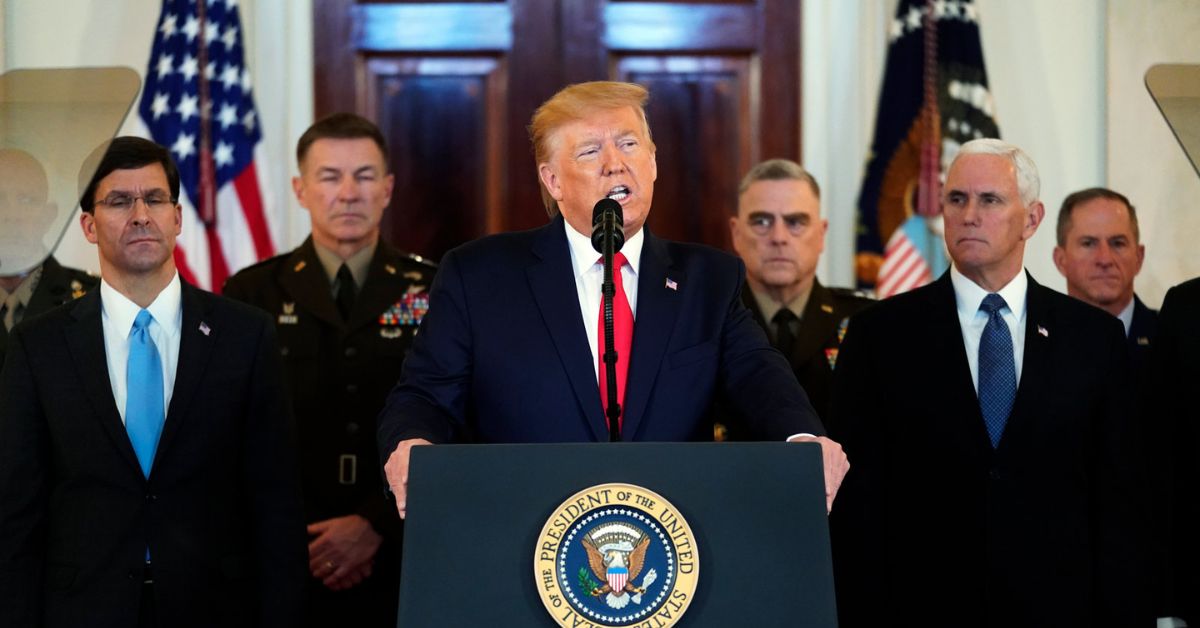
The announcement was made by President Donald Trump in a video address shared through his official social media channels. During the address, Trump framed the strikes as a defensive action designed to prevent future threats against American interests and allies.
Officials described Operation Epic Fury as a targeted mission rather than a prolonged invasion. However, the scale of the initial strikes and the immediate escalation of tensions across the region quickly transformed the operation into a major international crisis.
Military analysts say the operation represents one of the most significant U.S. military actions in the Middle East in recent years.
Trump Iran War Messaging in the First Days
During the early days of the Trump Iran war, several different explanations were presented to justify the decision to launch the strikes.
In initial remarks, Trump described the operation as a response to what he called an imminent nuclear threat. He argued that Iran’s nuclear ambitions posed a direct danger to the United States and its allies.
Soon afterward, administration officials expanded on that reasoning. Some officials highlighted Iran’s missile development program, which they said had been growing rapidly and could threaten American bases in the region.
Others emphasized Iran’s role in supporting militant groups across the Middle East, suggesting that weakening Iran’s military infrastructure could reduce instability in the region.
The different explanations created a complex narrative about the motivations behind the Trump Iran war.
Early Statements from the White House
White House officials initially focused on national security concerns when explaining the decision to launch the strikes.
In public briefings, administration representatives said intelligence assessments indicated that Iran was increasing military activity that could threaten U.S. forces stationed in the Middle East.
Officials also stated that diplomatic channels had been explored before the military action was authorized. According to the administration, negotiations and warnings had failed to reduce tensions or change Iran’s strategic behavior.
As a result, the United States decided to move forward with a military response designed to weaken Iran’s capabilities and deter future aggression.
These explanations became the foundation of the administration’s narrative during the early phase of the Trump Iran war.
Military and Strategic Objectives
As the operation progressed, Pentagon officials began outlining the strategic goals of the military campaign.
According to defense officials, the main objective was to degrade Iran’s missile infrastructure and prevent the country from developing weapons that could threaten regional security.
Military planners emphasized that the operation was designed to focus on specific targets rather than civilian infrastructure. Officials repeatedly stated that the goal was not widespread destruction but rather the disruption of military capabilities.
At the same time, defense leaders acknowledged that the conflict could extend beyond the initial strikes if Iran chose to respond with retaliation.
This uncertainty about the length and scope of the Trump Iran war has become one of the most closely watched aspects of the conflict.
Legal Arguments Presented to the International Community
As the conflict unfolded, U.S. officials also sought to present a legal justification for the military action.
Representatives of the United States argued that the strikes were consistent with the principle of self-defense under international law. According to the administration, Iran’s military programs and regional activities posed a direct threat that required immediate action.
Officials pointed to Article 51 of the United Nations Charter, which allows nations to defend themselves against threats or attacks.
The administration maintained that the operation was a defensive response rather than an act of aggression.
However, some international observers questioned whether the legal argument was sufficient to justify the scale of the military action associated with the Trump Iran war.
Differing Interpretations Inside the Administration
One of the most notable aspects of the Trump Iran war has been the variety of explanations offered by different officials within the administration.
Some leaders have emphasized security concerns related to nuclear weapons and missile development. Others have framed the conflict as part of a broader strategy to reshape the balance of power in the Middle East.
At times, the statements from different officials have appeared to contradict each other.
For example, some officials suggested that the operation was intended to prevent future attacks, while others hinted that the campaign could weaken Iran’s leadership or influence internal political changes.
These differences have contributed to uncertainty about the long-term objectives of the Trump Iran war.
Regional Security Concerns in the Middle East
The military action has also intensified concerns about regional stability.
Countries across the Middle East are closely monitoring the conflict because Iran plays a central role in regional politics and security.
Several governments have expressed concern that the conflict could trigger retaliatory actions or broader military escalation.
Analysts warn that even limited strikes could lead to wider confrontations if multiple countries become involved.
Because of these risks, diplomatic efforts have continued alongside the military operations connected to the Trump Iran war.
Political Reactions in the United States
Within the United States, the conflict has generated significant political debate.
Some lawmakers support the administration’s decision, arguing that Iran’s military programs represent a long-term threat that must be addressed.
Others have questioned whether Congress should have played a greater role in authorizing the military action.
The debate reflects broader disagreements about how the United States should approach security challenges in the Middle East.
Public opinion has also been divided, with some Americans supporting the operation while others express concern about the possibility of a prolonged conflict.
The Trump Iran war has therefore become both a foreign policy issue and a domestic political debate.
Global Diplomatic Response
International reactions to the conflict have varied widely.
Some countries have called for restraint and diplomatic dialogue, warning that military escalation could destabilize the region.
Others have expressed support for the United States, emphasizing concerns about Iran’s military activities and regional influence.
Diplomatic discussions are continuing in several international forums as governments attempt to prevent the situation from escalating further.
The global response demonstrates how the Trump Iran war has quickly evolved into a major international issue with far-reaching implications.
The Future of the Conflict
The long-term outcome of the Trump Iran war remains uncertain.
Military analysts believe that the next phase of the conflict will depend largely on Iran’s response to the initial strikes. If Iran chooses to retaliate, the situation could escalate rapidly.
At the same time, diplomatic channels remain open, and some officials believe that negotiations could eventually reduce tensions.
For now, the administration maintains that the operation is focused on preventing threats and protecting American interests.
However, the evolving explanations for the conflict suggest that the strategic narrative surrounding the Trump Iran war may continue to change as the situation develops.