

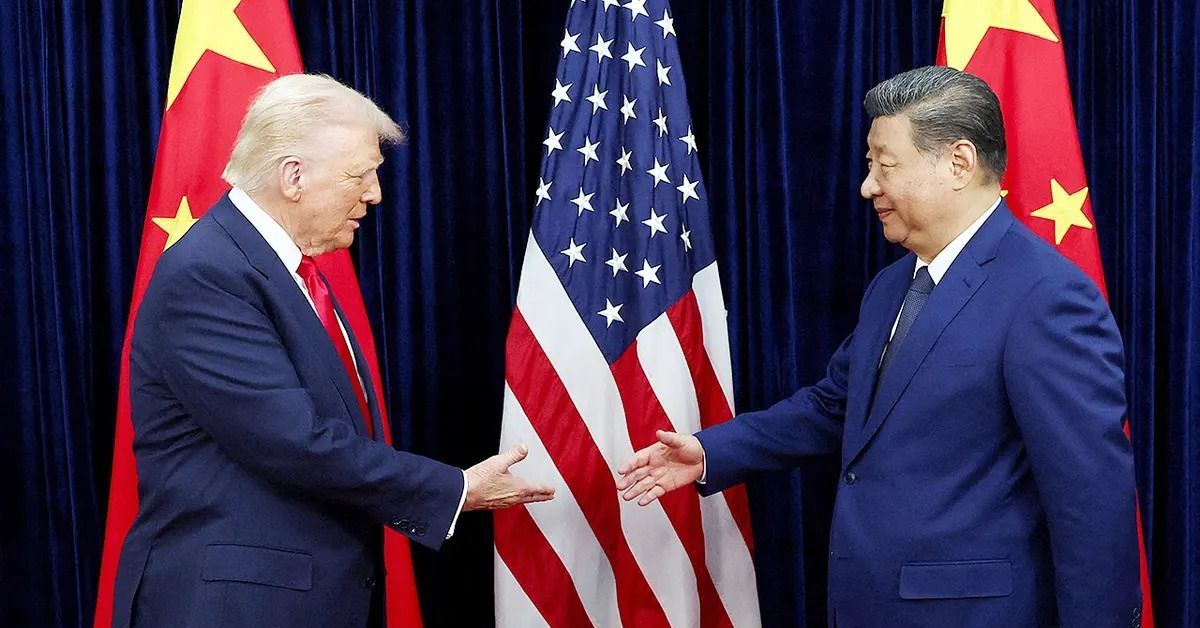

The idea that the United States and China could jointly shape global governance has once again sparked debate in international diplomacy. The concept, often described as a “G2” framework, suggests that the two largest economies could work together to steer the direction of world affairs.
China has responded cautiously to the idea, signaling that global leadership should involve a wider group of nations rather than being dominated by only two powers.
The discussion resurfaced after comments by U.S. President Donald Trump referring to high-level talks between Washington and Beijing as a potential “G2” moment. While the remark appeared to recognize China’s growing influence in international affairs, officials in Beijing have been quick to emphasize that global governance cannot be defined by only two countries.
Diplomats and analysts say the renewed conversation highlights broader tensions about how the international system will evolve in the coming decades.
What the “G2” Concept Means in Global Politics
The term “G2” refers to a hypothetical global leadership structure where the United States and China coordinate policy decisions that shape international economic and political systems.
Supporters of the concept argue that cooperation between the world’s two largest economies could help address major challenges such as climate change, trade stability, and geopolitical conflicts.
However, critics say such a framework risks sidelining other nations and weakening international institutions that were designed to ensure broad participation in global decision-making.
China has historically been cautious about frameworks that concentrate power in a small group of countries. Officials frequently emphasize that global stability requires inclusive governance involving both developed and developing nations.
The debate around the G2 idea therefore reflects deeper questions about how international power is distributed and how emerging economies will participate in shaping global rules.
China Responds to the Two-Power Proposal
China’s foreign policy leadership has repeatedly stated that global governance must include the voices of many nations rather than focusing on a single dominant partnership.
During a recent press conference in Beijing, the country’s foreign minister addressed the discussion directly. He acknowledged that both Washington and Beijing carry significant influence in the international system, but stressed that the world is far more complex than a two-country leadership model.
China has argued that global cooperation should be based on mutual respect and multilateral participation.
Officials in Beijing maintain that international challenges—from economic recovery to security issues—require contributions from a wide range of countries and organizations.
The response from China reflects a broader diplomatic philosophy that emphasizes balance in global affairs rather than centralized leadership.
The Historical Roots of the G2 Idea
The notion of a U.S.–China leadership partnership first gained attention in policy circles nearly two decades ago.
Economists and strategists suggested that because the United States and China accounted for such a large share of global economic output, closer coordination between the two powers could stabilize financial systems and improve global governance.
China was initially cautious about the proposal, concerned that it might imply acceptance of a power structure dominated by only a few countries.
Over time, the relationship between Washington and Beijing has grown more complicated. Trade tensions, technological competition, and security concerns have made sustained strategic coordination more difficult.
Despite those challenges, the economic ties between the two nations remain among the most significant bilateral relationships in the world.
Trump’s Remarks Revive Discussion of Global Leadership
Recent comments from U.S. President Donald Trump brought the concept back into the spotlight.
Trump referred to discussions with Chinese President Xi Jinping as representing a “G2-style” moment in diplomacy. The remark appeared to suggest that the two nations could play a leading role in shaping the direction of global policy.
Analysts say the statement may reflect recognition of China’s expanding economic and geopolitical influence.
At the same time, the remark has triggered debate among policymakers and diplomats about whether such a framework would benefit the international community.
China responded by reiterating that international leadership should not be limited to two countries.
China’s Vision of a Multipolar World
China has consistently promoted the idea of a multipolar international system. In such a model, power is distributed among several influential countries rather than concentrated in a single dominant alliance.
Officials in Beijing argue that a multipolar structure encourages cooperation, reduces the risk of confrontation, and gives emerging economies greater opportunities to participate in shaping global rules.
China has framed its diplomatic strategy around partnerships with multiple regions, including Asia, Africa, Europe, and Latin America.
Supporters of this approach say it reflects the realities of a rapidly changing world where economic growth and political influence are spreading across multiple continents.
Concerns Among International Partners
The renewed debate over a potential G2 framework has also drawn attention from countries that rely on international institutions for representation.
Allies of the United States and regional partners across Europe and Asia have expressed concern that a two-power leadership structure could reduce the influence of smaller nations.
Many policymakers believe that international stability depends on institutions where decisions are made collectively rather than through bilateral arrangements.
China has echoed similar concerns, arguing that global governance should be guided by inclusive frameworks.
Diplomats say maintaining confidence in institutions such as the United Nations and the G20 will remain essential for long-term global stability.
Strategic Competition and Economic Interdependence
Despite political disagreements, the United States and China remain deeply connected through economic and technological relationships.
Trade between the two countries continues to represent one of the largest economic exchanges in the world.
China plays a central role in global manufacturing supply chains, while American companies remain major investors and innovators in advanced technology sectors.
This combination of competition and interdependence has defined the relationship between the two countries for more than a decade.
Analysts note that cooperation between Washington and Beijing can influence global markets, energy security, and technological development.
Why China Rejects the G2 Framework
China’s resistance to the G2 concept stems from several factors.
First, the government has consistently emphasized the importance of multilateral diplomacy. Accepting a two-country leadership model could contradict that position.
Second, China has sought to present itself as a partner to developing nations and emerging economies.
Officials argue that concentrating power among a few major states could undermine the interests of smaller countries.
Finally, Beijing has also been cautious about appearing to challenge the global balance of power directly.
By rejecting the G2 label, China signals that it supports a more inclusive approach to international governance.
Implications for Global Institutions
The debate around the G2 concept has broader implications for international organizations.
Institutions such as the United Nations, the World Trade Organization, and the International Monetary Fund rely on cooperation among many member states.
China has repeatedly emphasized that these organizations remain central to maintaining global stability.
Experts say that if major powers begin making decisions outside multilateral structures, it could weaken the legitimacy of existing institutions.
China therefore continues to frame its diplomatic messaging around cooperation and shared responsibility.
Diplomacy Between Washington and Beijing
Despite disagreements over governance models, diplomatic engagement between the United States and China continues.
Leaders from both countries are expected to meet multiple times during the coming year.
These meetings are likely to address trade relations, regional security concerns, and broader economic cooperation.
China has indicated that stable relations with the United States remain a priority.
Officials have emphasized that dialogue and communication are essential to preventing misunderstandings between the two countries.
Regional Conflicts and Global Stability
International crises also shape the relationship between the United States and China.
Conflicts in the Middle East and tensions in several strategic regions have increased the importance of diplomatic coordination between major powers.
China has called for diplomatic solutions to ongoing conflicts, emphasizing that prolonged instability threatens global economic recovery.
Officials argue that peaceful negotiations remain the most effective path toward long-term stability.
The Future of Global Leadership
The renewed discussion about a potential G2 framework highlights a larger question: how will global leadership evolve in the decades ahead?
China continues to promote a system in which multiple countries contribute to shaping international rules and institutions.
Analysts say the future international order will likely involve complex cooperation between established powers and emerging economies.
While strategic competition between the United States and China is expected to continue, both nations remain central to global economic and diplomatic networks.
For now, Beijing’s response suggests that China does not support a world defined by two dominant powers.
Instead, the country is advocating for a broader approach to global governance one that reflects the diversity of nations participating in the international system.