

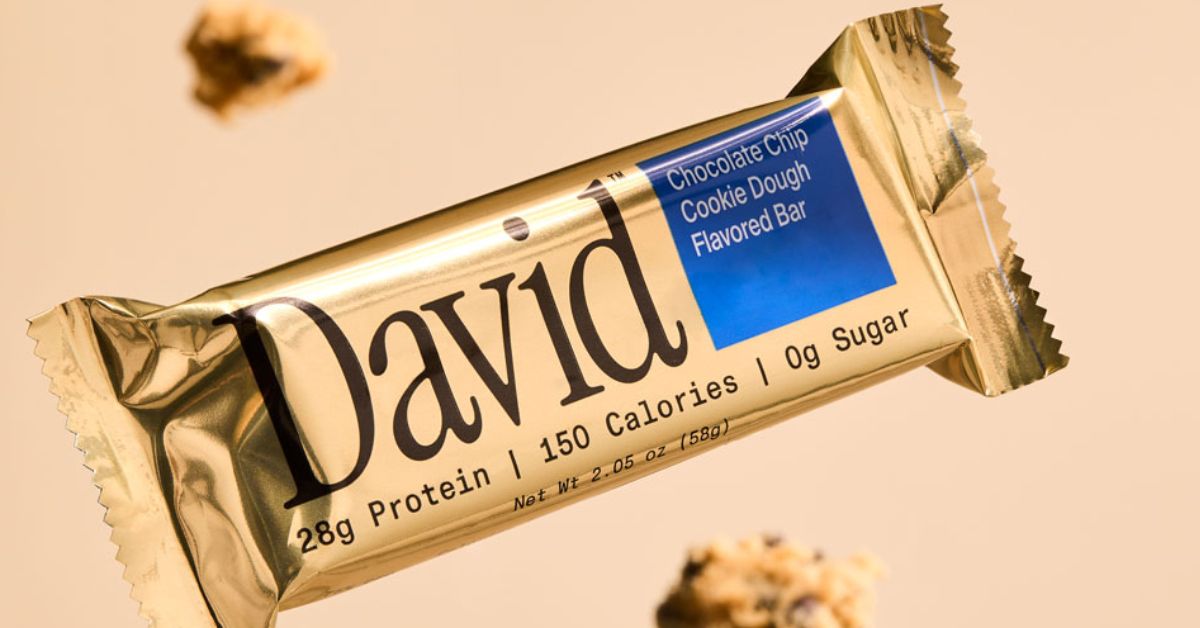

A rapidly growing nutrition brand has found itself at the center of a legal dispute that is attracting attention across the food industry. The controversy surrounding the David protein bar began after a class-action lawsuit accused the company of significantly undercounting calories and fat in its widely marketed protein bars.
The lawsuit has sparked debate not only about the accuracy of nutrition labeling but also about how modern food science measures calories when alternative ingredients are used.
As the case continues to develop, the founder of the company has strongly rejected the allegations and defended the product’s formulation, arguing that the claims misunderstand how certain ingredients function inside the human body.
The dispute highlights the growing complexity of nutrition labeling as food companies experiment with innovative ingredients designed to reduce calories while maintaining flavor and texture.
How the David Protein Bar Lawsuit Began
The controversy began when a lawsuit was filed earlier this year accusing the company behind the David protein bar of misleading consumers through inaccurate nutrition labels.
According to the complaint, the protein bars allegedly contain significantly more fat and calories than the numbers displayed on their packaging. Plaintiffs claim that independent testing found the bars contained far more fat than advertised and significantly higher caloric values.
The lawsuit specifically points to discrepancies between the product’s label and laboratory results cited by the plaintiffs. The nutrition label reportedly lists 150 calories and only 2 grams of fat per serving.
However, tests referenced in the lawsuit allegedly found calorie counts closer to 268 to 275 calories, along with fat levels ranging between 11 and 13.5 grams.
The plaintiffs argue that this difference could violate federal food labeling standards, which require that the nutrient values listed on packaging remain within a certain tolerance of actual measurements.
If proven true, the lawsuit claims consumers may have purchased the David protein bar believing it was a lower-calorie product than it actually is.
Founder Rejects Allegations in David Protein Bar Controversy
Peter Rahal, the founder of the company producing the David protein bar, has responded publicly to the lawsuit and dismissed the accusations as misleading.
Rahal stated that the lawsuit relies on outdated testing methods that do not accurately measure calories for foods containing nontraditional ingredients.
According to him, the issue is not with the product itself but with how certain laboratories measure caloric energy.
He explained that some testing techniques calculate total energy by burning a food sample to determine the maximum theoretical calories contained in the product. While this method works well for traditional foods, Rahal argues that it does not accurately reflect how certain ingredients are metabolized by the body.
In the case of the David protein bar, Rahal said the formula uses a specialized ingredient that behaves differently during digestion.
As a result, he maintains that the label accurately reflects the calories that consumers actually absorb rather than the theoretical energy measured in laboratory combustion tests.
Ingredient at the Center of the David Protein Bar Debate
At the heart of the dispute is an ingredient known as esterified propoxylated glycerol, often abbreviated as EPG.
This ingredient functions as a fat substitute that provides a similar texture and mouthfeel to traditional fats while contributing far fewer calories.
According to the company behind the David protein bar, EPG passes through the body without being fully digested, meaning that it does not contribute the same caloric impact as conventional fat.
Because of this property, products containing the ingredient may appear to contain fewer calories than foods made with standard fats.
Supporters of the ingredient say it represents an innovative way to reduce calorie intake without sacrificing taste or satisfaction.
Critics, however, argue that consumers may find the labeling confusing because the ingredient behaves differently than traditional fats.
The lawsuit surrounding the David protein bar has brought renewed attention to this debate and raised broader questions about how emerging food technologies should be measured and labeled.
Nutrition Experts Weigh In on the David Protein Bar Issue
The legal dispute has also caught the attention of nutrition experts who say the situation illustrates the growing complexity of food labeling.
Many modern products now use alternative ingredients designed to reduce calories, sugar, or fat while preserving flavor and texture.
Some experts say ingredients like EPG can make nutrition labels more difficult for consumers to interpret.
While the ingredient itself is not new, its use in consumer food products has expanded in recent years.
Registered dietitians note that these types of ingredients are often designed to provide the taste of fat without delivering the same metabolic energy.
In the case of the David protein bar, the difference between laboratory calorie measurements and actual digestible calories may be central to the dispute.
Experts say the case could ultimately help clarify how regulators and companies should measure and disclose calorie values for foods containing similar ingredients.
The Rise of the David Protein Bar Brand
The company behind the David protein bar has experienced rapid growth since its launch, fueled largely by the surging demand for high-protein foods.
Across the food industry, consumers have increasingly turned toward protein-rich snacks, drinks, and desserts as part of broader health and fitness trends.
Protein bars in particular have become a staple for people seeking convenient sources of nutrition.
The David protein bar quickly gained attention among wellness communities and fitness influencers, many of whom praised the product for combining high protein content with relatively low calorie counts.
The brand’s marketing strategy emphasized both performance nutrition and weight management, positioning the bars as a solution for people seeking healthier snack options.
This rapid growth helped propel the company into the spotlight, but it also increased scrutiny as the brand became more widely known.
The lawsuit now confronting the company is one of the first major legal challenges facing the young brand.
Why the David Protein Bar Lawsuit Matters for the Food Industry
Beyond the immediate dispute, the lawsuit involving the David protein bar could have broader implications for how nutrition labels are evaluated across the food industry.
As food companies increasingly experiment with alternative ingredients, the gap between traditional calorie measurement techniques and actual metabolic energy may become more significant.
Regulators and scientists may need to consider whether existing testing standards accurately reflect the nutritional impact of modern food formulations.
If the court ultimately sides with the plaintiffs, companies using similar ingredients could face increased scrutiny and pressure to revise labeling practices.
On the other hand, if the company successfully defends the David protein bar, it may reinforce the use of digestible calorie calculations rather than laboratory combustion methods.
Either outcome could influence how future food products are tested, labeled, and marketed.
Consumer Trust and Transparency
For consumers, the controversy surrounding the David protein bar highlights the importance of transparency in nutrition labeling.
Many shoppers rely on calorie counts and macronutrient information when choosing foods that align with their health goals.
Even small differences in calorie values can influence purchasing decisions, especially for individuals carefully tracking daily intake.
At the same time, experts note that nutrition science is evolving, and modern food products often contain ingredients that behave differently from traditional ones.
As companies innovate, communicating clearly about how ingredients work may become just as important as the numbers listed on a nutrition label.
The debate sparked by the David protein bar lawsuit reflects this tension between scientific innovation and consumer understanding.
What Happens Next in the David Protein Bar Case
The lawsuit remains ongoing, and legal experts say the case could take months or even years to resolve.
During that time, both sides are expected to present evidence regarding the testing methods used to measure calories and fat content in the David protein bar.
If the dispute proceeds to trial, the case may involve expert testimony from food scientists, nutrition researchers, and regulatory specialists.
Such testimony could help determine whether the labeling approach used by the company aligns with federal guidelines.
For now, the company continues to stand by its product and maintain that its labeling practices accurately reflect the nutritional impact of its ingredients.
Regardless of the final outcome, the lawsuit has already ignited a wider conversation about how modern foods should be measured and understood.
As innovation continues to reshape the food industry, cases like the one involving the David protein bar may become increasingly common.