

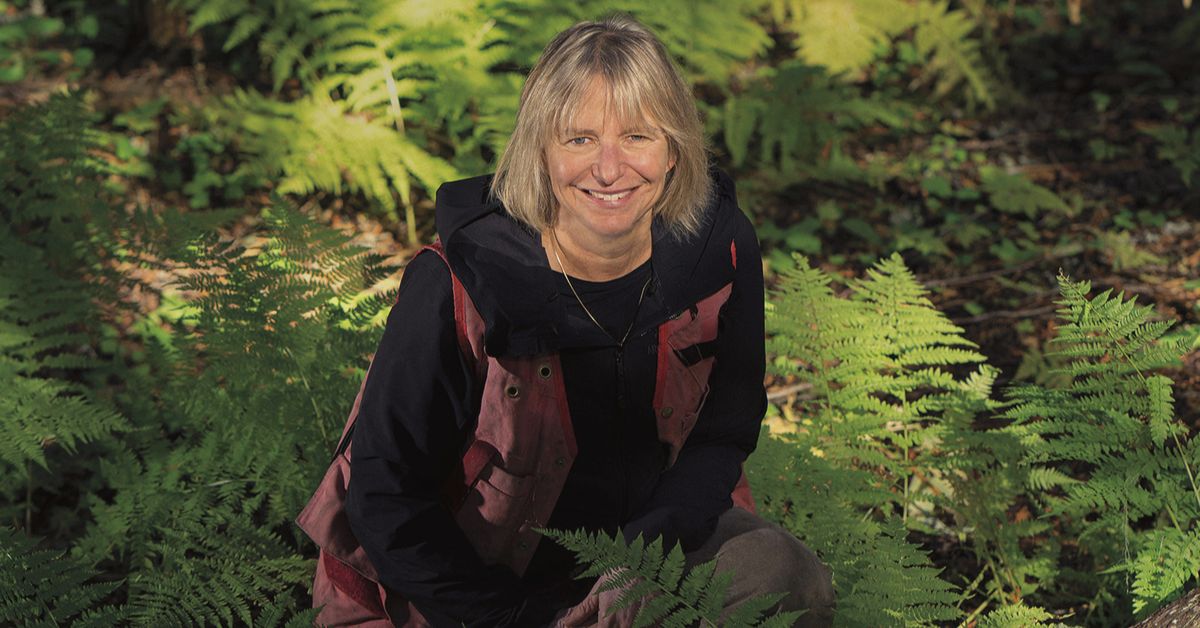

Ecologist Suzanne Simard has spent decades studying forests and the complex systems that sustain them. Her research has helped popularize a controversial idea: that trees communicate and cooperate through underground networks of fungi linking their roots. This concept, widely known as the “wood wide web,” has fascinated the public while also drawing sharp criticism from parts of the scientific community.
Suzanne Simard says the debate surrounding her work reflects a deeper conversation about how forests function and how science should interpret ecological relationships. Her findings challenge traditional views that emphasize competition between trees and instead highlight cooperation within forest ecosystems.
The Origins of the Wood Wide Web Concept
The idea that forests operate as interconnected systems did not emerge overnight. Suzanne Simard began investigating underground fungal networks in the 1990s while studying how trees exchange nutrients and signals below the forest floor.
Her early experiments revealed that fungi known as mycorrhizae attach to tree roots and form extensive networks underground. These fungal threads can link multiple plants together, creating pathways through which nutrients and chemical signals may travel.
In controlled studies, Suzanne Simard observed carbon molecules moving from one tree to another through these fungal pathways. The experiments suggested that trees might share resources, especially when some individuals are stressed or shaded.
These findings laid the foundation for what later became widely known as the “wood wide web,” a term used to describe the potential communication network connecting forest plants.
Suzanne Simard and the Science Behind Forest Networks
Much of the attention surrounding Suzanne Simard stems from her interpretation of how these fungal networks function in real ecosystems. Her research proposes that forests behave less like competitive battlegrounds and more like cooperative communities.
According to Suzanne Simard, large older trees may play a central role in these networks. Sometimes referred to as “mother trees,” they may supply nutrients to younger seedlings through fungal connections, helping them survive during early growth.
This theory suggests forests operate as integrated systems where trees influence each other’s survival. Rather than existing as isolated individuals competing for sunlight and nutrients, they may be linked through biological pathways beneath the soil.
While fungal networks themselves are widely accepted in ecology, Suzanne Simard argues that their ecological importance may be far greater than previously recognized.
How Underground Fungal Networks Connect Trees
To understand the idea behind the wood wide web, it helps to examine how mycorrhizal fungi interact with plant roots.
Fungi extend thread-like structures called hyphae through the soil. These structures absorb water and nutrients such as nitrogen and phosphorus, which they exchange with trees in return for carbon produced through photosynthesis.
When these fungal threads link multiple trees, they can create vast underground systems spanning entire forest areas. Suzanne Simard believes these systems allow trees to transfer resources and chemical signals across species boundaries.
Experiments conducted by Suzanne Simard demonstrated that carbon could move from birch trees to neighboring fir trees under certain conditions. This transfer appeared to occur through shared fungal networks.
The results suggested that cooperation between trees might help forests maintain stability and resilience during environmental stress.
Why the Theory Sparked Scientific Debate
Despite growing public interest in the concept, Suzanne Simard’s interpretation of forest networks has generated significant debate within scientific circles.
Some researchers argue that the presence of fungal connections does not necessarily prove intentional cooperation between trees. Critics say nutrient transfers could occur passively rather than as deliberate resource sharing.
Others believe the wood wide web concept may oversimplify the complexity of forest ecosystems. Forests contain many competing processes, including competition for sunlight, water, and nutrients.
These scientists caution that portraying forests primarily as cooperative communities could overlook the importance of competition in shaping ecosystems.
Suzanne Simard acknowledges that competition exists but maintains that cooperation is also an essential part of forest ecology.
Support and Criticism Within the Research Community
The scientific response to Suzanne Simard has been mixed. While some ecologists remain skeptical about the scale of forest cooperation she describes, others believe her work has opened valuable new research directions.
Many researchers agree that fungal networks play an important role in forest ecosystems, even if their exact functions are still being studied.
Supporters say Suzanne Simard helped bring attention to ecological processes that had previously been overlooked. Her work encouraged new experiments examining how trees and fungi interact.
Critics, however, argue that popular discussions of the wood wide web sometimes exaggerate the evidence available. They worry that public interpretations may portray forests in overly simplified or romanticized ways.
Despite these disagreements, Suzanne Simard remains one of the most influential figures in modern forest ecology.
The Cultural Impact of the Wood Wide Web Idea
Beyond academic debate, the wood wide web concept has captured the imagination of millions of people worldwide.
Public interest in Suzanne Simard grew dramatically after a widely viewed lecture explaining how trees might communicate through underground networks. The talk helped bring forest ecology into mainstream conversation.
Books exploring plant communication and fungal biology soon followed. Several popular science works have drawn inspiration from Suzanne Simard’s research, exploring how ecosystems may function as interconnected systems.
The concept has also influenced environmental storytelling, documentaries, and literature focused on the hidden relationships within forests.
For many readers and viewers, the idea that trees cooperate resonates with broader concerns about environmental protection and ecological balance.
Climate Change and the Future of Forest Ecosystems
While scientific debate continues, Suzanne Simard emphasizes that her research is closely tied to real-world environmental challenges.
Forests around the world are experiencing increasing stress from climate change, including drought, rising temperatures, and more frequent wildfires.
Suzanne Simard believes understanding underground ecological networks could help scientists better predict how forests respond to these pressures.
If trees are linked through fungal systems that distribute resources, these networks might help forests survive environmental stress. However, climate disruptions could also damage these delicate underground systems.
Researchers studying forest resilience increasingly examine how mycorrhizal fungi influence ecosystem stability.
Suzanne Simard argues that protecting forest biodiversity including fungal communities may be crucial for maintaining healthy ecosystems in a changing climate.
Suzanne Simard’s Continued Research and New Book
Despite criticism and scientific disagreements, Suzanne Simard continues to expand her research into forest ecology.
Her recent work focuses on long-term forest monitoring and the role of older trees in maintaining ecosystem health. She has also explored how forest management practices may affect underground fungal networks.
Through field research and collaboration with other scientists, Suzanne Simard aims to deepen understanding of how forests respond to environmental stress and human activity.
She has also written extensively about the personal journey behind her research, including the challenges of pursuing ideas that challenge established scientific frameworks.
Her latest book explores the emotional and scientific aspects of studying forests, reflecting on decades of fieldwork and ecological discovery.
The Broader Implications for Ecology and Conservation
The debate surrounding Suzanne Simard highlights a larger issue in ecological science: how to interpret complex natural systems.
Ecosystems often contain multiple processes operating simultaneously, including cooperation, competition, and adaptation. Understanding how these processes interact remains one of ecology’s greatest challenges.
Suzanne Simard’s work has encouraged scientists to look more closely at underground ecosystems that were once difficult to study.
Advances in genetic analysis and soil ecology are now allowing researchers to map fungal networks in greater detail. These tools may help clarify how resources move through forests and how plants interact below ground.
Regardless of whether all aspects of the wood wide web theory are confirmed, many scientists believe the research has already expanded understanding of forest ecology.
Suzanne Simard maintains that questioning traditional assumptions is essential for scientific progress.
As forests face increasing environmental pressures, understanding how ecosystems function beneath the surface may become more important than ever.