

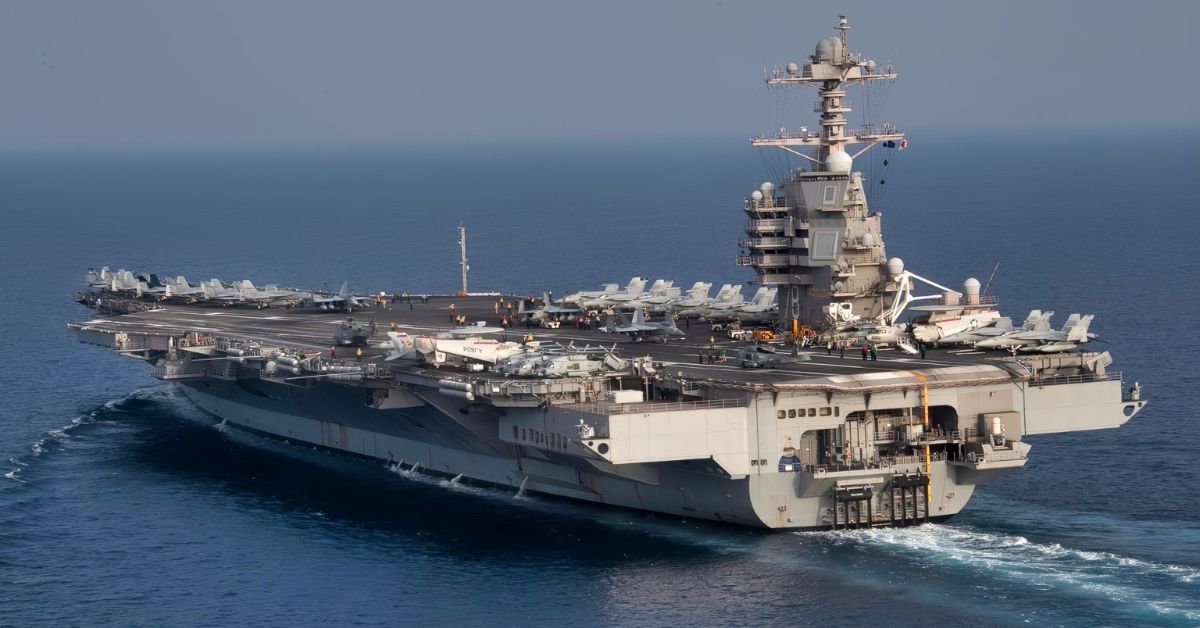

The situation surrounding the USS Gerald R Ford has intensified after a series of onboard incidents forced the U.S. Navy to initiate urgent repair plans during an already demanding deployment.
The world’s largest and most advanced aircraft carrier has been operating in a high-pressure environment in the Red Sea, supporting ongoing military operations. However, a combination of fire damage, system failures, and prolonged deployment stress has brought renewed scrutiny to its operational condition.
Shortly after reports of a fire onboard surfaced, naval officials confirmed that the vessel would move toward Crete to undergo maintenance. The decision reflects growing concerns not only about physical damage but also about the long-term sustainability of extended naval missions involving cutting-edge warships.
USS Gerald R Ford Repairs After Onboard Fire
The USS Gerald R Ford experienced a significant onboard fire that began in the ship’s laundry section, quickly escalating into a major operational challenge. Fires at sea are among the most dangerous emergencies naval crews can face, and the scale of this incident required immediate and coordinated response efforts.
Sailors worked for several hours to contain the flames, navigating smoke-filled compartments and complex onboard systems. Nearly 200 personnel were treated for smoke inhalation, and one sailor required evacuation for additional medical care. While no fatalities were reported, the incident had a notable impact on crew safety and daily operations.
The fire also damaged approximately 100 sleeping berths, displacing sailors and disrupting routine living arrangements. On a ship housing thousands of crew members, even localized damage can ripple across multiple departments, affecting scheduling, rest cycles, and overall readiness.
Officials later confirmed that critical propulsion systems remained unaffected, allowing the carrier to continue operating temporarily. However, the damage reinforced the urgent need for USS Gerald R Ford repairs to prevent further risks.
System Failures Add Pressure to USS Gerald R Ford
Beyond the fire, ongoing system failures have compounded the challenges facing the USS Gerald R Ford. Reports have highlighted recurring issues with onboard sanitation systems, which have led to repeated disruptions in basic facilities.
Crew members have described long wait times for restrooms and frequent maintenance requirements to address blockages. While such problems may seem minor in isolation, they can significantly affect morale during extended deployments.
The complexity of the carrier’s advanced systems also plays a role. As one of the most technologically sophisticated warships ever constructed, the USS Gerald R Ford integrates next-generation components designed to improve efficiency and combat capability. However, these innovations can also introduce maintenance challenges, especially under continuous operational stress.
Technical teams onboard have been working to address these issues, but the accumulation of system failures has highlighted the importance of comprehensive maintenance during USS Gerald R Ford repairs.
Extended Deployment Raises Concerns
The USS Gerald R Ford has been deployed for nearly nine months, a duration that has placed considerable strain on both equipment and personnel. Extended deployments are not uncommon in modern naval operations, but they require careful balance to maintain effectiveness.
Sailors onboard have been operating under sustained pressure, often without extended downtime. Over time, such conditions can lead to fatigue, reduced performance, and increased risk of incidents.
The recent fire and system issues have intensified concerns about how prolonged deployments impact even the most advanced naval platforms. Analysts note that operational tempo must be matched with maintenance cycles to ensure long-term readiness.
The upcoming USS Gerald R Ford repairs are therefore not only about addressing immediate damage but also about evaluating the broader impact of extended missions on the carrier’s systems and crew.
Strategic Importance of USS Gerald R Ford
The USS Gerald R Ford plays a critical role in U.S. naval strategy, serving as a centerpiece for power projection and regional stability. Equipped with more than 75 aircraft, including advanced fighter jets, the carrier enables rapid response to emerging threats.
Its presence in the Red Sea has been particularly significant, supporting operations aimed at maintaining security in a volatile region. The carrier’s capabilities allow it to conduct airstrikes, surveillance, and logistical support, making it a key asset in ongoing missions.
However, the need for USS Gerald R Ford repairs introduces a temporary gap in operational capacity. To address this, the Navy is reportedly preparing to deploy another carrier to maintain continuous presence.
This transition underscores the importance of redundancy in military planning, ensuring that critical operations continue even when primary assets require maintenance.
Crew Morale and Living Conditions
The challenges faced by the USS Gerald R Ford have had a direct impact on crew morale. Living conditions onboard have been affected not only by the fire damage but also by ongoing system disruptions.
For sailors spending months at sea, access to reliable facilities and comfortable living spaces is essential. The loss of sleeping berths and repeated sanitation issues have added to the stress of an already demanding environment.
Leadership within the Navy has emphasized the importance of supporting crew well-being during this period. Addressing morale is a key component of USS Gerald R Ford repairs, as the effectiveness of any naval operation depends heavily on the readiness and resilience of its personnel.
Efforts to restore normal living conditions are expected to be a priority during maintenance, alongside technical repairs.
Maintenance in Crete and What It Means
The decision to move the USS Gerald R Ford to Crete for repairs reflects the urgency of the situation. The location provides access to facilities capable of handling complex maintenance requirements for large naval vessels.
During the repair process, engineers and technicians will conduct a thorough assessment of the ship’s systems. This includes structural inspections, mechanical evaluations, and testing of onboard technologies to identify any underlying issues.
The USS Gerald R Ford repairs are expected to address both visible damage from the fire and less apparent system vulnerabilities. This comprehensive approach is essential to ensure that the carrier can safely resume operations.
The maintenance period also offers an opportunity to implement improvements based on lessons learned during deployment, potentially enhancing future performance.
Challenges of Advanced Naval Technology
The USS Gerald R Ford represents a new generation of aircraft carriers, incorporating advanced technologies designed to improve efficiency and combat capability. Features such as electromagnetic aircraft launch systems and advanced radar systems set it apart from previous carriers.
However, these innovations also bring challenges. New technologies often require extensive testing and refinement, particularly in real-world operational environments. The issues encountered during this deployment highlight the complexities of integrating cutting-edge systems into active service.
The USS Gerald R Ford repairs process will likely include adjustments and updates to these systems, ensuring they function reliably under demanding conditions.
This experience may also inform future development of naval technologies, helping to balance innovation with practicality.
Financial and Operational Implications
With a construction cost estimated at around $13 billion, the USS Gerald R Ford represents a significant investment. Ensuring its reliability is crucial not only for operational effectiveness but also for maintaining confidence in large-scale defense spending.
The need for repairs during deployment raises questions about cost efficiency and long-term maintenance strategies. Analysts emphasize that regular maintenance and timely upgrades are essential to protect such investments.
From an operational perspective, the temporary withdrawal of the carrier requires careful coordination to avoid disruptions. The deployment of replacement assets ensures continuity, but it also highlights the importance of maintaining a robust fleet capable of adapting to unexpected challenges.
The USS Gerald R Ford repairs effort is therefore both a technical and strategic undertaking, with implications extending beyond the ship itself.
Political and Strategic Reactions
The situation has drawn attention from policymakers, who have raised concerns about the handling of extended deployments and maintenance planning. Some officials argue that operational demands must be balanced with the need to maintain equipment and support personnel.
There is also broader discussion about the sustainability of current naval strategies, particularly in high-pressure regions. The lessons learned from the USS Gerald R Ford may influence future decisions regarding deployment durations and maintenance cycles.
At the same time, military leaders have emphasized that challenges are an inherent part of operating advanced systems. They stress that the ability to respond effectively to such situations demonstrates the resilience of naval operations.
The USS Gerald R Ford repairs process will likely play a key role in shaping these discussions, providing valuable insights into managing modern naval assets.
Looking Ahead
As the USS Gerald R Ford undergoes repairs, attention will remain focused on how quickly and effectively the issues are resolved. The outcome will have implications for both current operations and future planning.
Restoring the carrier to full readiness is a priority, ensuring it can continue to fulfill its strategic role. The experience gained during this period may also lead to improvements in maintenance practices and operational strategies.
For the crew, the repairs represent an opportunity to recover from the challenges of deployment and return to normal conditions. For the Navy, it is a chance to reinforce the reliability of one of its most advanced assets.