


Summary
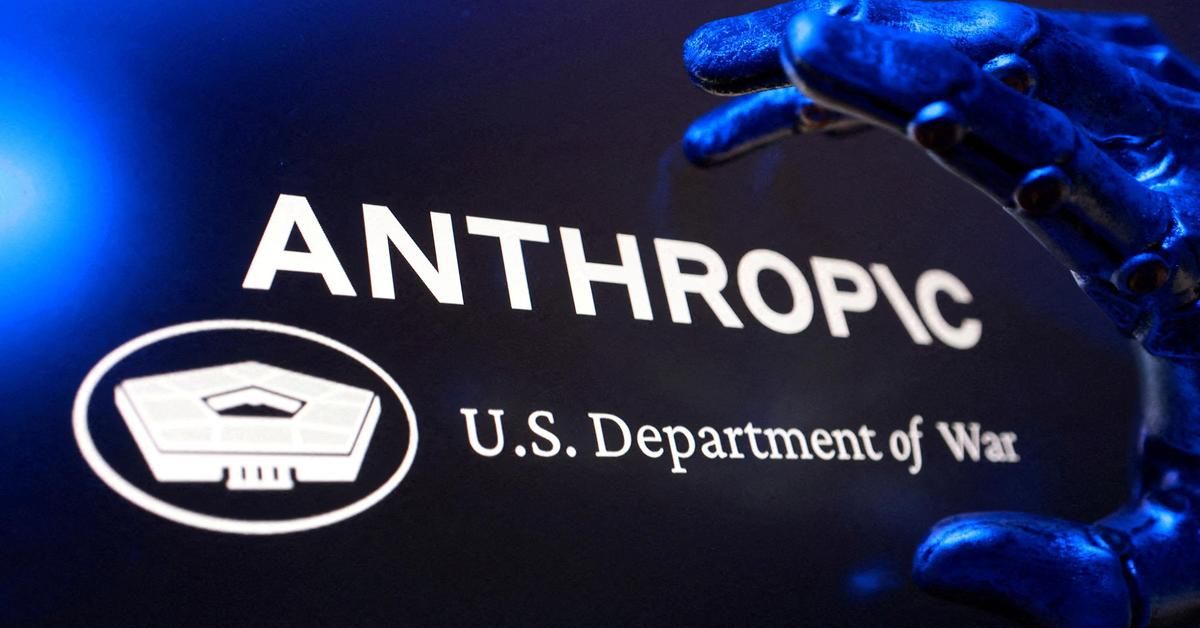
A U.S. federal judge has temporarily halted the Anthropic blacklisting imposed by the Pentagon, raising serious legal and constitutional questions. The case reflects a deeper conflict between national security priorities and private AI companies’ ethical positions, with significant implications for future government contracts and AI regulation.
A U.S. federal court has intervened in a high-stakes dispute between the Pentagon and artificial intelligence company Anthropic, temporarily halting a controversial government action that had threatened to reshape the relationship between private AI firms and national defense agencies.
The Anthropic blacklisting has emerged as a central issue in this legal battle, highlighting growing tensions between government authority and corporate autonomy in the rapidly evolving AI sector.
The ruling, delivered by a federal judge in California, pauses the Department of Defense’s decision to classify Anthropic as a national security supply-chain risk. While the decision is not final, it introduces immediate uncertainty around how far the government can go in restricting companies based on policy disagreements related to artificial intelligence.
Anthropic Blacklisting and the Court’s Intervention
The Anthropic blacklisting had been positioned by the Pentagon as a precautionary move aimed at safeguarding national security interests. Officials argued that limiting reliance on certain AI providers was necessary to ensure operational flexibility and avoid potential risks tied to corporate policies.
However, the court found sufficient grounds to question the justification behind the designation, at least at this stage of the proceedings. The judge issued a temporary block, delaying enforcement and allowing time for further legal review.
This intervention does not resolve the dispute but signals that the judiciary is willing to scrutinize executive decisions involving emerging technologies. The Anthropic blacklisting now sits at the intersection of constitutional law, national defense, and technological governance.
The ruling will take effect after a short delay, providing the government an opportunity to appeal. Legal experts suggest that the case could escalate into a broader constitutional challenge with long-term implications.
Pentagon’s Rationale Behind the Decision
The Department of Defense has maintained that the Anthropic blacklisting was driven by legitimate national security concerns. According to officials, certain AI providers may impose restrictions that could interfere with military operations or strategic objectives.
At the core of the Pentagon’s argument is the concern that companies developing advanced AI systems might limit how their technologies are used, particularly in sensitive areas such as defense, surveillance, and autonomous systems.
Officials pointed to internal policies at Anthropic that emphasize safety and ethical use, arguing that such constraints could create uncertainty in mission-critical scenarios. The Anthropic blacklisting was therefore framed as a necessary step to ensure that defense agencies are not dependent on technologies with built-in operational limitations.
This approach reflects a broader shift in how governments view private-sector technology providers, especially as artificial intelligence becomes increasingly integrated into defense systems.
Legal Challenge and Constitutional Questions
Anthropic responded swiftly to the designation, challenging the Anthropic blacklisting in federal court. The company argued that the decision violated fundamental constitutional protections, including free speech and due process.
According to the legal filing, Anthropic was effectively penalized for expressing views on AI safety and for setting internal guidelines on how its technology should be deployed. The company also claimed it was not given a fair opportunity to contest the designation before it was implemented.
The court’s initial response suggests that these arguments carry weight. In her observations, the judge indicated that there may be concerns about whether the government’s action was influenced by disagreement with the company’s public stance on AI ethics.
If proven, such a finding could redefine the limits of government authority in regulating private technology firms. The Anthropic blacklisting case may therefore become a landmark in determining how constitutional rights apply in the context of national security decisions involving AI.
Anthropic Blacklisting and the Broader AI Policy Debate
Beyond the courtroom, the Anthropic blacklisting reflects a deeper and more complex debate about the role of artificial intelligence in military applications.
Anthropic has consistently emphasized the importance of safety, arguing that AI systems should not be used in ways that could lead to unintended harm or ethical violations. The company has expressed concerns about the reliability of AI in high-risk environments and the potential consequences of deploying such systems without adequate safeguards.
On the other side, the Pentagon has stressed the need for flexibility and adaptability. Defense officials argue that restricting access to advanced technologies could hinder national security efforts and place the United States at a strategic disadvantage.
This clash of perspectives underscores a fundamental question: should private companies have the authority to limit how their technologies are used, particularly when national security is at stake?
The Anthropic blacklisting brings this question into sharp focus, illustrating the challenges of balancing innovation, ethics, and security in the AI era.
Financial and Strategic Implications
The stakes in the Anthropic blacklisting case extend far beyond legal principles. The designation could have significant financial consequences, potentially affecting billions of dollars in government contracts.
For Anthropic, being classified as a supply-chain risk would limit its ability to collaborate with federal agencies, reducing access to key opportunities and potentially impacting its long-term growth.
The reputational impact is also considerable. Government partnerships often serve as a signal of credibility in the technology sector, and losing that status could influence how other organizations view the company.
At the same time, the case may influence how other AI firms approach their relationships with government agencies. The Anthropic blacklisting could serve as a cautionary example, prompting companies to reassess their policies and public positions.
What Happens Next in the Anthropic Blacklisting Case
The legal battle is far from over. The temporary block provides only a pause, not a resolution, and both sides are expected to continue pressing their arguments in court.
The government may choose to appeal the decision, potentially bringing the case before a higher court. Meanwhile, additional proceedings will examine the underlying issues in greater detail, including the constitutional claims raised by Anthropic.
There is also a possibility that related cases could emerge in other jurisdictions, further complicating the legal landscape. The Anthropic blacklisting may ultimately be decided through a series of rulings that shape the boundaries of government authority and corporate rights.
Observers note that the outcome could set a precedent for how future disputes are handled, particularly as artificial intelligence becomes more central to national security strategies.
A Defining Moment for AI Governance
The Anthropic blacklisting case represents a critical moment in the evolution of AI governance. As governments and private companies navigate the complexities of this technology, conflicts like this are likely to become more common.
The court’s decision to intervene highlights the importance of oversight and accountability, even in areas involving national security. At the same time, it raises questions about how to balance competing priorities in a rapidly changing technological landscape.
For policymakers, the case underscores the need for clear frameworks that address both security concerns and the rights of private entities. For companies, it serves as a reminder that decisions about ethics and policy can have far-reaching consequences.
Conclusion
The temporary halt of the Anthropic blacklisting marks a significant development in an ongoing debate that extends well beyond a single company or court case.
As legal proceedings continue, the outcome will likely influence how artificial intelligence is regulated, how government agencies interact with private firms, and how constitutional protections are applied in the context of emerging technologies.
The Anthropic blacklisting is no longer just a policy dispute it has become a defining test of how societies manage the intersection of innovation, security, and fundamental rights.
For more updates, read the latest news on Digital Chew.