

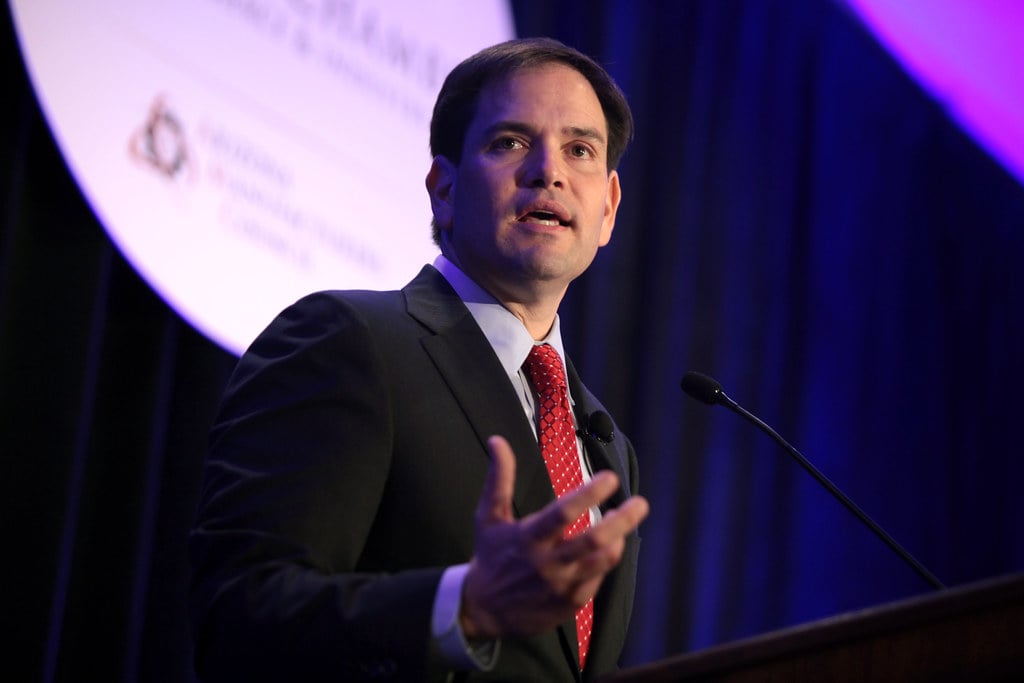

Key takeaways:
• Marco Rubio once stood on his own but now follows Trump’s lead.
• He backed a U.S. invasion of Venezuela without clear legal or congressional support.
• Diplomats and experts have been sidelined under his watch.
• Rubio traded real diplomacy for threats and TV sound bites.
• His loyalty to Trump shrank his independence and reputation.
Marco Rubio’s Unquenchable Thirst
Marco Rubio rose quickly in national politics. At first, he appeared polished and thoughtful. He led the Senate Intelligence Committee and even won praise from some Democrats. Yet a shaky reach for water during a 2013 speech cast him as needy and nervous. Back then, Rubio seemed thirsty for power. A decade later, he still parches for influence—but now he guzzles from Donald Trump’s firehose.
From Klieg Lights to Firehose
When Rubio gave the GOP response to President Obama’s State of the Union, a camera caught him shaking. He lifted a bottle of water with a trembling hand. The moment became a viral joke. People saw a young senator fighting nerves on live TV. Symbolically, he looked like someone starved for respect. However, he was also seen as independent. He spoke his own mind—even if it cost him grace on air.
Fast forward to today. Marco Rubio serves as Secretary of State and National Security Advisor. Yet he follows Trump’s orders without question. While he once praised strong diplomacy as America’s first defense, he now treats diplomacy like a weak link. He sides with blunt threats over careful negotiations. He pushes cable-news talking points instead of nuanced policy. In other words, he swapped his own voice for someone else’s script.
Marco Rubio’s Lost Independence
Under Rubio’s leadership, career diplomats have been pushed aside. Experts with years of regional experience no longer shape decisions. In their place stand loyalists who echo Trump’s slogans. Longstanding aid programs, such as those fighting global disease or supporting democracy, have been drained. Consequently, America’s soft-power tools remain idle.
Moreover, Rubio once warned against military action in Venezuela. In 2019, he said he did not know anyone calling for an invasion. Today he stands behind a raid that violated international rules. The White House bypassed Congress and blindsided allies. Yet Rubio defended every move. He even claimed oil companies would rush in to rebuild Venezuela. That claim met confusion and resistance. Oil firms have no desire to risk staff in a hot conflict zone. Rubio’s promise sounded hollow.
The Venezuela Misstep
Last Saturday at Mar-a-Lago, Rubio stood before cameras to explain the U.S. invasion of Venezuela. President Nicolás Maduro’s government was targeted, and agents kidnapped him overseas. Rubio tried to sound statesmanlike. Instead, he appeared small beside a slouched, sleepy Trump. He pounded out half-baked points while Trump loomed behind him.
On Sunday, Rubio appeared on Face the Nation. He tied himself in knots over why the U.S. invaded and what comes next. He mixed threats with vague promises. He spun words until his message made little sense. Meanwhile, Venezuela’s regime stayed in power. Allies felt betrayed, and enemies grew bolder. Above all, the U.S. risked its credibility.
Trading Diplomacy for Threats
Marco Rubio once argued that diplomacy can prevent war. Yet today he treats it as a weakness to be dumped. He swapped careful talks for fiery rhetoric. He replaced experts with yes-men. He turned steady alliances into unstable stunts. As a result, America’s global standing erodes.
First, sidelining diplomats means losing vital knowledge. Field officers know local culture, political ties, and history. They can defuse tensions before they boil over. Second, purging programs like global health aid weakens U.S. soft power. People around the world see America as uninterested in their well-being. They view us only through the lens of force.
Chasing Trump’s Favor
More than anything, Marco Rubio now seeks Trump’s approval. He shouts Trump’s praises at every chance. He echoes Trump’s threats in his own voice. He contradicts Trump only to sync with his next shift. If Trump slurs out a line, Rubio stammers a sanitized version. If Trump bragged about solving a crisis, Rubio backs the claim without proof.
In this new role, Rubio competes with other acolytes. He aims to outrank Pete Hegseth, Kristi Noem, Stephen Miller, and Kash Patel in devotion. But his eagerness often makes him look like a court jester. His words feel rushed, rehearsed, and hollow. Worse, he risks his own future by tying it so closely to Trump’s.
Big Dreams, Small Man
Once, people hoped Rubio would become a unifying leader for his party. He spoke Spanish, framed immigration as a chance, and offered moderate stances. Now he has buried moderation. He cheerleads extreme immigration policies and hardline military actions. He betrayed his own brand to please one man.
Rubio’s shift from critical skeptic to loyal soldier shocks many who once trusted him. It reflects a man who would rather shrink than stand firm. That video of him gulping water remains a fitting metaphor. Today he chugs Trump’s “poisonous Kool-Aid” with equal gusto. He may dream of the 2028 nomination, but he has traded much more than his independence. He lost his dignity.
What’s Next?
For now, Rubio remains in the spotlight whenever Trump needs foreign policy relief. Yet the Venezuela operation will be judged harshly over time. Allies will ask why they were not consulted. Adversaries will test U.S. limits again. Meanwhile, the American people will wonder if their leaders respect the law.
If Marco Rubio hopes to rebuild his own standing, he needs a course correction. He must regain his independent judgment. He must restore respect for diplomatic experts. He must face facts on the ground rather than spin words on camera. Otherwise, he will stay trapped under Trump’s shadow.
FAQs
Why was Marco Rubio’s water moment in 2013 so famous?
A shaky moment on live TV made him look nervous and caught attention. It became a metaphor for his early thirst for influence.
How did Marco Rubio support the U.S. invasion of Venezuela?
He backed a covert raid that seized President Maduro. He defended it despite legal and diplomatic concerns.
What happened to U.S. diplomats under Rubio’s watch?
Career diplomats were sidelined or purged, and long-standing aid programs faced deep cuts.
Can Marco Rubio regain his independence?
He could by listening to experts, supporting diplomacy, and resisting the urge to echo one leader’s every word.