

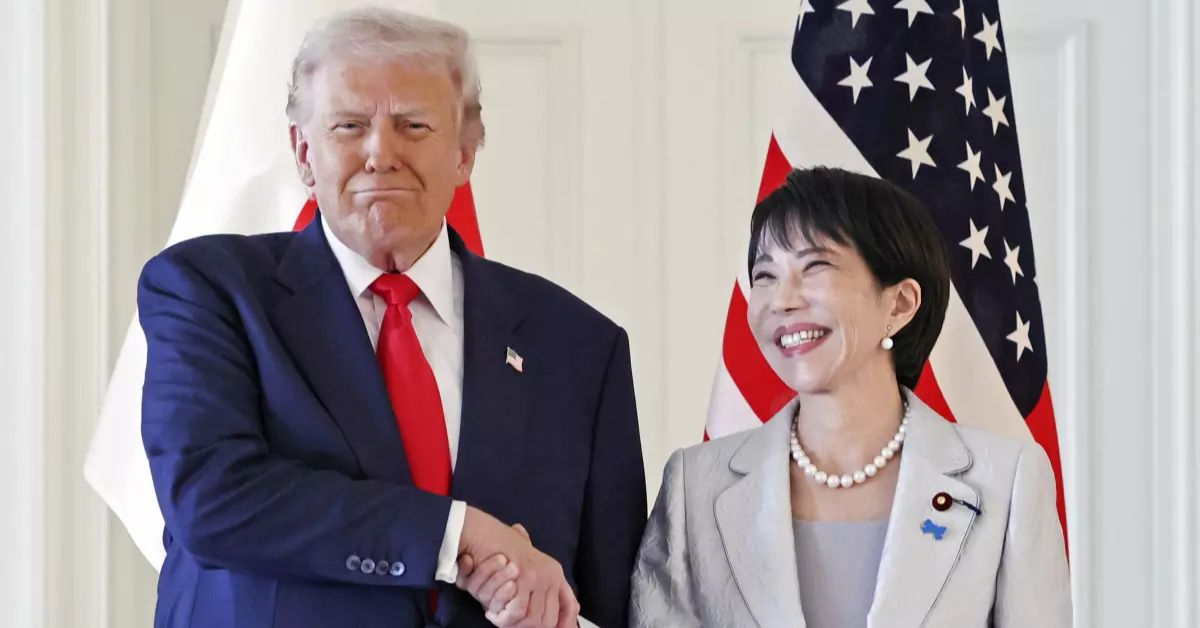

Global economic alliances are entering a period of structural transformation, and the latest US-japan energy agreement reflects that shift with unusual clarity.
The newly announced $36 billion investment package spans oil infrastructure, natural gas facilities, and critical minerals processing. It represents one of the most substantial bilateral industrial commitments in recent years.
Officials in Washington and Tokyo described the initiative as a long-term framework aimed at reinforcing economic resilience. Rather than focusing on short-term market volatility, the agreement centers on industrial capacity and supply chain stability.
The scale of the partnership immediately drew attention from financial markets and geopolitical analysts.
Strategic Background of the Agreement
The US-japan partnership emerges at a time when supply chains remain under pressure and energy security has become central to policy debates.
Both governments have increasingly emphasized diversification in response to recent disruptions. Concentrated production hubs and export bottlenecks have exposed vulnerabilities in global trade systems.
This framework is intended to address those weaknesses by strengthening domestic production and allied coordination.
The announcement avoided confrontational rhetoric, yet the broader geopolitical backdrop remains evident.
Energy Infrastructure Expansion
A major component of the US-japan initiative involves development of a large natural gas power facility in Ohio.
Energy analysts argue that expanding gas-fired capacity enhances grid reliability, particularly during peak demand cycles. While renewable energy continues to expand, natural gas remains a stabilizing transitional resource.
The investment also includes modernization of transmission systems and upgrades designed to increase operational efficiency.
Supporters describe the project as a cornerstone of long-term electricity security.
Export Capacity and Market Influence
Another critical pillar of the agreement is expansion of crude export capacity through a deepwater facility along the Texas coast.
Expanded export infrastructure can significantly influence pricing flexibility and supply response in global markets.
The US-japan alignment in this area signals shared interest in maintaining stable energy flows to allied economies.
Market observers note that export capacity is not merely commercial; it also serves diplomatic and strategic functions.
Industrial Minerals and Semiconductor Security
Beyond hydrocarbons, the partnership prioritizes processing capacity for advanced industrial materials.
Synthetic industrial diamonds and other precision inputs form part of the initiative. These materials are essential to semiconductor wafer production and aerospace manufacturing.
The US-japan industrial cooperation is designed to reduce dependency on concentrated external suppliers.
By strengthening allied production networks, policymakers hope to mitigate future supply disruptions.
Trade and Tariff Foundations
The investment agreement builds upon broader economic negotiations that included tariff adjustments and reciprocal commitments.
Leaders emphasized that the framework reflects long-term structural alignment rather than temporary concessions.
The US-japan cooperation illustrates how trade policy is increasingly integrated with industrial strategy.
Economists remain divided on the long-term effects of tariff leverage, but both governments argue that the agreement promotes resilience.
Geopolitical Context
Although the announcement avoided naming specific countries, the global strategic environment is clearly shaping policy decisions.
Supply chain concentration in select regions has prompted renewed emphasis on diversification.
The US-japan framework reflects an effort to strengthen alliances without escalating tensions.
Diplomatic analysts suggest that similar industrial alignments may emerge among other major economies.
Implementation and Regulatory Oversight
Large infrastructure projects require extensive environmental assessments and regulatory approvals.
Investors are closely monitoring development timelines. Execution will ultimately determine credibility.
The US-japan initiative includes phased implementation schedules intended to manage financial and operational risk.
Regulatory clarity remains central to long-term market confidence.
Long-Term Economic Impact
Economists argue that infrastructure and industrial material investments can generate multi-decade economic returns.
The partnership may stimulate employment growth, technological innovation, and enhanced export capacity.
Energy reliability strengthens manufacturing competitiveness, which in turn reinforces trade positioning.
The US-japan agreement underscores the growing recognition that economic security is closely tied to national security.
A Broader Structural Shift
The collaboration illustrates how bilateral relationships are evolving beyond traditional trade deals.
Industrial strategy now encompasses energy production, advanced materials processing, and supply chain protection.
The US-japan framework represents a coordinated approach to long-term resilience rather than reactive policy.
Conclusion
The $36 billion initiative marks a significant milestone in bilateral economic coordination.
Rather than focusing on immediate market fluctuations, the agreement prioritizes structural capacity and strategic alignment.
As global competition intensifies around energy security and advanced manufacturing, the US-japan partnership may serve as a model for future industrial cooperation.
Energy, trade, and technology policy are increasingly interconnected. This framework reflects that reality with unusual clarity.