

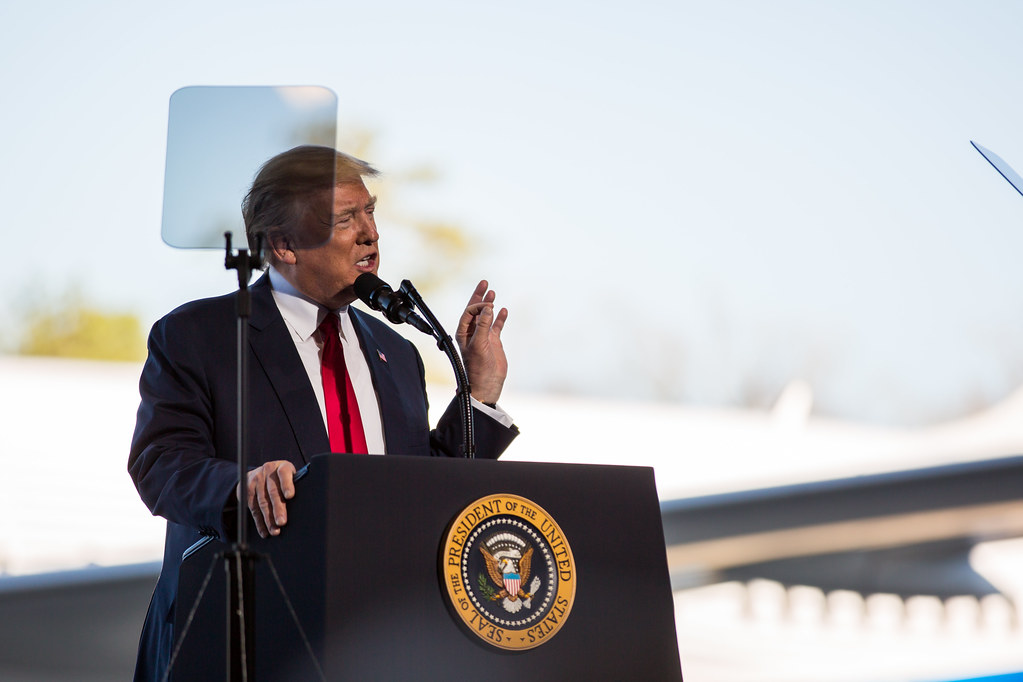

The Trump State of the Union address this year unfolded against one of the most politically charged backdrops in recent memory. Delivered before a joint session of Congress, the speech combined celebration, confrontation, and campaign-style messaging as President Donald Trump framed his return to office as a defining chapter in modern American politics. From economic recovery claims to renewed immigration enforcement promises, the Trump State of the Union served both as a report to lawmakers and as a message aimed directly at voters ahead of critical midterm elections.
Speaking to a chamber marked by visible partisan divides, the president declared that his administration had engineered what he described as a historic turnaround. He credited his policies with restoring economic confidence, strengthening border security, and reasserting what he called American leadership on the global stage. Supporters applauded frequently, while many Democratic lawmakers remained seated, signaling the continued polarization shaping Washington.
Political Climate Surrounding the Trump State of the Union
The Trump State of the Union came at a moment of heightened political intensity. Control of Congress hangs in the balance, and both parties view the coming elections as pivotal. For Republicans, the address was an opportunity to consolidate support and energize their base. For Democrats, it highlighted deep disagreements over economic policy, immigration enforcement, and executive authority.
Several Democratic lawmakers chose to boycott the speech entirely, describing it as political theater rather than a genuine policy address. Others attended but refrained from applauding key proposals. The boycott underscored ongoing friction between the White House and opposition leaders, reflecting broader ideological divides that have defined national politics in recent years.
Despite visible dissent, the president leaned into confrontation rather than seeking bipartisan outreach. Observers noted that the tone of the Trump State of the Union was less conciliatory than traditional addresses and more aligned with campaign-style messaging designed to mobilize loyal supporters.
Economic Claims and Counterarguments
A central theme of the Trump State of the Union was economic recovery. The president argued that his administration inherited economic instability and rising costs but had implemented policies aimed at reversing inflationary pressures and restoring domestic manufacturing strength. He highlighted job creation figures, domestic energy expansion, and regulatory rollbacks as evidence of progress.
According to the administration’s narrative, economic indicators show renewed business confidence and steady employment growth. The president emphasized tax policy changes and incentives designed to encourage investment within U.S. borders. He also pointed to infrastructure projects and energy initiatives as proof of long-term planning.
However, critics maintain that cost-of-living concerns persist for many households. While certain employment indicators have stabilized, debates continue over wage growth, housing affordability, and consumer prices. Independent analysts note that economic data presents a mixed picture, with some sectors showing resilience while others face ongoing challenges.
The Trump State of the Union therefore became not just a presentation of statistics but a battle over interpretation. Supporters view the administration’s economic record as proof of decisive leadership. Opponents argue that economic stability remains fragile and uneven.
Immigration Enforcement and National Security
Immigration policy once again took center stage during the Trump State of the Union. The president reiterated commitments to stricter border enforcement, expanded surveillance measures, and stronger penalties for unlawful crossings. He framed immigration control as essential to both national security and economic fairness.
In recent months, enforcement operations in major cities have generated controversy. Civil rights groups and advocacy organizations have raised concerns about enforcement tactics and due process protections. The administration, however, maintains that these measures are necessary to uphold federal law and deter illegal activity.
During the Trump State of the Union, the president described border security as a defining priority of his administration. He emphasized funding for physical barriers, technology upgrades, and expanded personnel. Supporters argue that firm enforcement policies reduce crime and protect domestic workers. Critics counter that immigration reform requires comprehensive legislative solutions rather than executive-focused crackdowns.
The debate reflects broader national tensions over migration, labor markets, and humanitarian obligations. As midterm elections approach, immigration remains one of the most polarizing issues in American politics.
Foreign Policy and Global Standing
Beyond domestic concerns, the Trump State of the Union addressed international affairs. The president asserted that his administration has strengthened alliances while demanding greater accountability from global partners. He emphasized negotiations focused on trade fairness and defense burden-sharing.
Supporters argue that this approach reflects a pragmatic recalibration of global engagement. They contend that prioritizing domestic interests while renegotiating trade agreements enhances long-term competitiveness. Critics caution that abrupt shifts in diplomatic tone can strain alliances and create uncertainty in global markets.
The president also referenced geopolitical tensions and ongoing diplomatic efforts, presenting his administration as both assertive and strategic. While specific policy details were limited, the message emphasized strength and sovereignty as guiding principles.
Legislative Agenda and Policy Priorities
The Trump State of the Union also served as a roadmap for the coming legislative session. The president outlined goals including expanded energy production, tax adjustments, regulatory reform, and additional law enforcement funding. He urged Congress to act swiftly on measures aligned with his policy platform.
However, with Congress closely divided, legislative success remains uncertain. If opposition lawmakers regain control of either chamber, negotiations could become more complex. Political analysts note that the effectiveness of the administration’s agenda may depend heavily on electoral outcomes.
Observers describe the address as strategic positioning. Rather than focusing on bipartisan compromise, the speech emphasized clear contrasts between competing visions for the country. This approach suggests the administration views political clarity as more advantageous than consensus-building.
Public Opinion and Electoral Strategy
Polling ahead of the Trump State of the Union indicates mixed public sentiment. While core supporters remain highly engaged, broader approval ratings fluctuate depending on economic perceptions and policy controversies. Political strategists from both parties view the speech as a critical moment to influence undecided voters.
For Republicans, energizing turnout is essential to maintaining legislative momentum. For Democrats, highlighting policy disagreements and mobilizing opposition voters is equally vital. The speech therefore functioned not only as a constitutional requirement but also as a campaign event in all but name.
The president’s delivery combined assertive rhetoric with celebratory framing. Applause from allies contrasted sharply with visible disapproval from opponents, symbolizing the polarized atmosphere shaping the political landscape.
Historical Context of the Trump State of the Union
State of the Union addresses traditionally aim to outline national priorities while projecting unity. Historically, presidents have used the platform to propose reforms, rally legislative support, and frame their leadership legacy. In recent decades, however, these speeches have increasingly reflected partisan divisions.
The Trump State of the Union fits within this evolving tradition. Rather than emphasizing bipartisan cooperation, it underscored ideological distinctions. Analysts note that modern media dynamics amplify these contrasts, transforming policy speeches into headline-driven events.
Compared to previous addresses, this speech leaned heavily on campaign-style themes. The focus on economic strength, border enforcement, and national pride aligns closely with the president’s broader political brand. Whether this approach broadens appeal or reinforces polarization remains a subject of debate.
Media Coverage and Public Reaction
Media coverage of the Trump State of the Union has varied significantly across outlets. Supportive commentators highlighted economic statistics and national security priorities. Critical voices focused on policy controversies and partisan tone. Social media reactions reflected similarly sharp divisions.
Public reaction often depends on preexisting political alignment. Supporters describe the address as confident and forward-looking. Opponents argue that it lacked detailed solutions and heightened partisan rhetoric. Independent voters appear to weigh both economic data and leadership style in forming opinions.
The speech generated extensive discussion about governance, accountability, and political messaging. As election season intensifies, narratives shaped by the address may influence campaign strategies nationwide.
What Happens Next
Following the Trump State of the Union, attention shifts to legislative negotiations and campaign developments. Lawmakers will debate budget proposals, immigration measures, and regulatory initiatives introduced or referenced during the speech. Political strategists will analyze voter reactions and adjust messaging accordingly.
If economic indicators strengthen and legislative proposals advance, the administration may claim momentum. Conversely, setbacks in Congress or unexpected economic challenges could complicate the president’s agenda. The coming months will likely test both political strategy and policy execution.
The Trump State of the Union therefore represents more than a single evening event. It marks a turning point in an evolving political cycle defined by high stakes and intense scrutiny. As voters prepare to cast ballots, the themes articulated during the address will continue shaping national debate.