

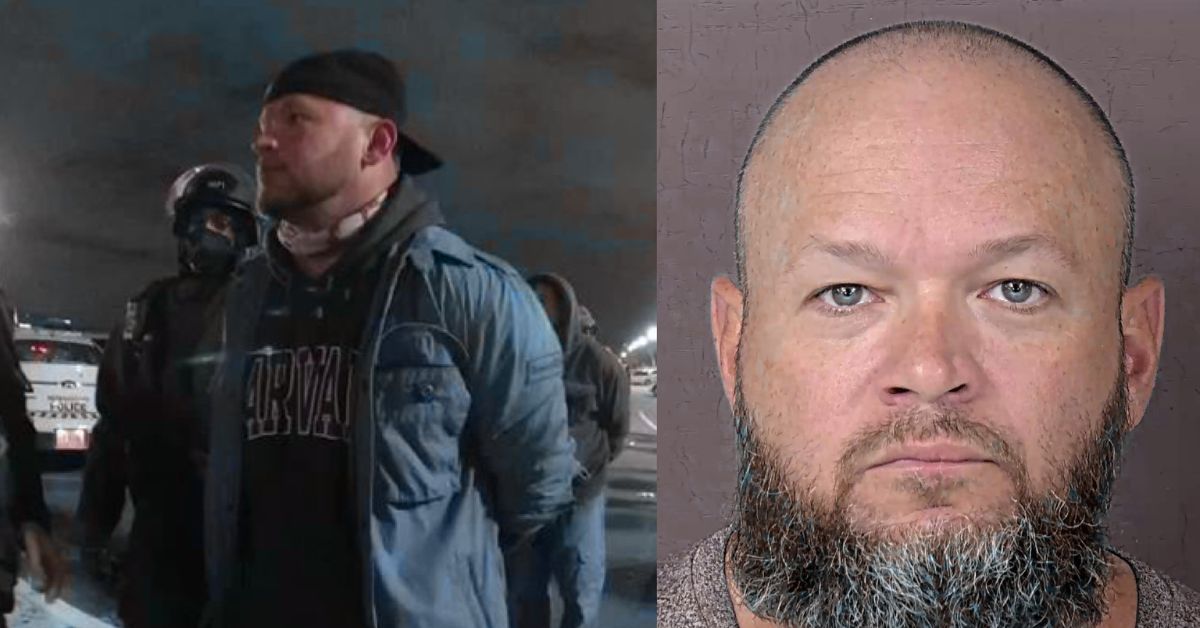

A Florida man who previously faced federal charges connected to the January 6 attack on the U.S. Capitol has now been sentenced to life in prison in a separate criminal case involving child abuse.
The case involving Andrew Paul Johnson has drawn national attention because of the unusual sequence of legal events surrounding him. Johnson had earlier pleaded guilty to charges related to the Capitol riot before later becoming the subject of a criminal investigation in Florida involving allegations of abuse against minors.
A court in Hernando County ultimately found Johnson guilty of multiple charges tied to child molestation and the transmission of harmful material to a minor. The judge overseeing the case ordered that he serve a life sentence.
The sentencing marks the conclusion of a case that investigators say began with a report from a victim and later developed into a detailed criminal investigation involving digital evidence and witness testimony.
The Andrew Paul Johnson Investigation in Florida
The criminal investigation that ultimately led to the conviction of Andrew Paul Johnson began in July 2025 when authorities in Hernando County received a report alleging inappropriate conduct involving a minor.
Sheriff’s deputies launched an investigation after the victim came forward with allegations that Johnson had communicated with them online and later engaged in behavior prosecutors described as abusive.
According to investigators, the alleged misconduct began months earlier and involved conversations that took place through online messaging platforms. Detectives said that during the course of the investigation they obtained electronic records that supported the claims made by the victim.
Law enforcement officials interviewed the victim and reviewed communication records as part of the investigation.
Authorities later said that several conversations occurred through the messaging platform Discord, where Johnson allegedly exchanged messages with a minor.
Investigators claimed those conversations included explicit content and requests that prosecutors argued were inappropriate and illegal.
The evidence gathered during the investigation led prosecutors to file several felony charges against Johnson.
Background of the Case
Before the Florida criminal investigation began, Andrew Paul Johnson had already appeared in federal court for his involvement in the January 6 attack on the U.S. Capitol.
Federal prosecutors said Johnson joined a crowd that moved from a rally near the White House toward the Capitol building during the certification of the presidential election results.
According to court records, Johnson carried a bullhorn as part of the crowd and entered the Capitol building through a broken office window.
Prosecutors said he shouted toward police officers during the confrontation inside the building.
Although many defendants faced serious felony charges related to the riot, Johnson ultimately pleaded guilty to misdemeanor offenses.
His case was considered one of the less severe prosecutions connected to the events of January 6.
However, the later allegations in Florida would ultimately overshadow the earlier case.
Court Proceedings and Verdict
The trial involving Andrew Paul Johnson was held in Hernando County Circuit Court and included testimony from investigators, forensic specialists, and the victim.
During the proceedings, prosecutors described the evidence they had collected during the investigation.
Johnson faced three major charges during the trial:
Two counts of lewd or lascivious molestation involving a child.
One count of electronically transmitting harmful material to a minor.
Prosecutors argued that the evidence clearly demonstrated that Johnson had violated Florida law.
The defense challenged some aspects of the investigation but was unable to persuade the jury.
After reviewing the evidence and hearing testimony from witnesses, jurors found Johnson guilty on all counts.
Following the verdict, Circuit Judge Stephen Toner issued the sentence.
The judge ruled that the seriousness of the crimes justified the maximum penalty under Florida law.
As a result, Andrew Paul Johnson was sentenced to life in prison.
Digital Evidence Presented During Trial
One of the central pieces of the prosecution’s case involved digital communication records.
Investigators testified that Andrew Paul Johnson had exchanged messages with one of the victims through online platforms.
Authorities said they recovered conversations that included explicit language and instructions encouraging the victim to move communications to more private channels.
Prosecutors also told the court that Johnson allegedly suggested deleting earlier messages.
Digital forensic experts explained how investigators were able to retrieve and authenticate the communications.
They testified that the recovered messages matched statements given by the victim during interviews.
Prosecutors argued that the digital evidence supported the broader allegations and helped establish a timeline of events.
The jury ultimately agreed that the evidence supported the charges.
Previous Capitol Riot Case
Before the Florida case, Andrew Paul Johnson had been prosecuted in federal court for his role in the January 6 attack.
Federal investigators said Johnson joined a crowd that marched from the “Stop the Steal” rally near the White House toward the Capitol building.
Court documents state that Johnson entered the Capitol building after a window had been broken.
According to prosecutors, he used a bullhorn and shouted toward law enforcement officers during the confrontation.
Johnson later pleaded guilty to four misdemeanor charges related to the riot.
In August 2024, Chief U.S. District Judge James Boasberg sentenced Johnson to one year in prison.
At one point Johnson attempted to withdraw his guilty plea.
He argued that he had been pressured into accepting the plea agreement.
However, the judge rejected that request, ruling that the plea had been entered voluntarily.
Clemency and Federal Sentencing History
Johnson’s federal sentence later became part of a broader political decision involving clemency for individuals connected to the Capitol riot.
During a later clemency order issued by President Donald Trump, thousands of defendants associated with the January 6 cases received pardons or sentence commutations.
Andrew Paul Johnson was among the individuals who received clemency under that action.
The clemency effectively ended Johnson’s federal sentence connected to the riot.
However, the criminal investigation in Florida had already begun at that time.
Legal experts note that presidential pardons apply only to federal crimes.
Because the Florida charges were filed under state law, the clemency order had no impact on the prosecution.
Prosecutors Describe the Evidence
Following the conviction, prosecutors described the case as a result of detailed investigative work.
Officials from the office of Fifth Judicial Circuit State Attorney Bill Gladson said the conviction reflected the strength of the evidence presented during the trial.
Prosecutors said the investigation involved interviews, digital forensic analysis, and coordination between multiple law-enforcement agencies.
Authorities also praised the victim for cooperating with investigators.
Officials emphasized that cases involving abuse often depend heavily on the courage of victims who come forward.
The sentencing of Andrew Paul Johnson was described as a significant step toward justice for those affected.
Public Reaction to the Sentencing
The life sentence handed down to Andrew Paul Johnson has generated significant public discussion because of his earlier connection to the Capitol riot.
Some observers noted that the Florida charges were unrelated to Johnson’s earlier political case.
Legal analysts said the sentencing demonstrates how separate investigations can lead to independent criminal prosecutions.
Others pointed out that the case highlights the broader legal consequences that can follow when individuals face multiple criminal allegations.
Regardless of the earlier federal case, the Florida court focused solely on the evidence related to the abuse charges.
Broader Context of Post-Riot Legal Cases
The case involving Andrew Paul Johnson also reflects the broader legal landscape following the January 6 attack.
More than a thousand individuals across the United States were investigated for their role in the riot.
While many cases were resolved through plea agreements or short prison sentences, some defendants have later faced unrelated criminal charges.
Legal experts say those cases often attract additional public attention because of the earlier political controversy.
In Johnson’s situation, the Florida charges were investigated independently by local authorities.
The state prosecution was separate from the earlier federal case and relied on evidence gathered by the Hernando County Sheriff’s Office.
Support Resources for Victims
Authorities and advocacy groups encourage individuals who may be experiencing abuse to seek assistance.
Several organizations provide confidential support services and resources.
In the United States, the Childhelp National Child Abuse Hotline offers support to individuals seeking help or information about abuse.
Other countries maintain similar services that provide assistance for victims and families.
Advocacy organizations say reporting abuse is often the first step toward protecting victims and ensuring accountability for those responsible.