

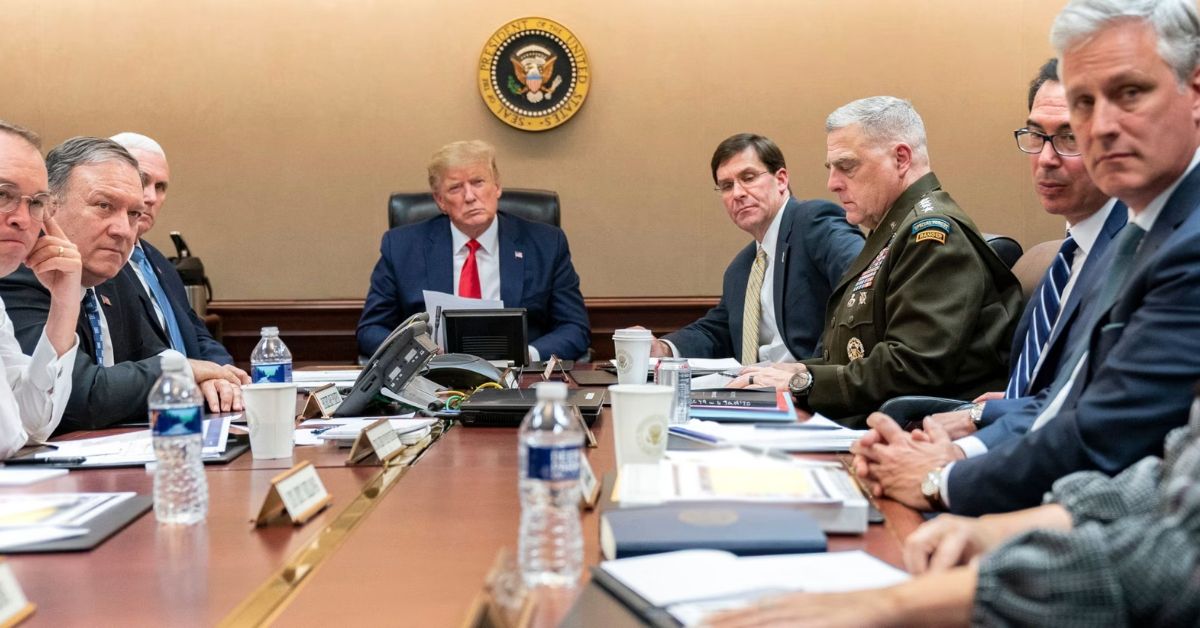

The White House is confronting growing internal debate as senior advisers weigh competing strategies for handling the ongoing Iran war. Officials across the administration are carefully examining military progress, economic risks, and political consequences as President Donald Trump evaluates the next phase of the conflict.
According to people familiar with the discussions, divisions have emerged among senior officials inside the White House over how quickly the United States should move toward ending the war. While some advisers believe the administration should begin preparing a clear conclusion to the conflict, others argue that sustained pressure on Iran remains necessary to protect long-term strategic interests.
The debate inside the White House reflects the difficulty of balancing military objectives with domestic economic stability and political expectations.
Internal Debate Within the Administration
Inside the White House, senior officials have been meeting frequently to assess how the conflict with Iran should evolve in the coming weeks. These meetings bring together national security advisers, economic officials, and political strategists who each present different perspectives on the war.
Military leaders provide updates on operational developments, while economic advisers focus on potential consequences for global energy markets. Political officials meanwhile evaluate public sentiment and domestic political implications.
The discussions illustrate how the White House must navigate multiple competing priorities as it manages one of the most significant foreign policy challenges facing the administration.
Some officials believe the administration should signal that the war is approaching a conclusion, emphasizing recent military achievements and diplomatic progress.
Others caution that declaring success too soon could weaken the administration’s negotiating position.
White House Iran War Strategy Discussion
At the center of the debate is what officials describe as the evolving White House Iran war strategy.
Several advisers argue that the administration has already achieved key objectives through recent military operations and diplomatic pressure. From this perspective, the White House could highlight these accomplishments while gradually reducing military activity.
Supporters of this approach believe such messaging could reassure international partners and financial markets that the conflict will not develop into a prolonged war.
However, another group of officials within the White House believes sustained pressure remains essential.
They argue that Iran’s military capabilities and regional networks remain significant, and ending the campaign prematurely could allow Tehran to rebuild its strength.
The administration therefore faces a difficult choice between consolidating current gains or continuing operations to weaken Iran further.
Economic Concerns Shaping Policy
Economic advisers have become increasingly influential in the internal White House debate.
Officials responsible for monitoring financial markets warn that instability in the Middle East could have far-reaching consequences for global energy supplies.
The Persian Gulf remains one of the world’s most important oil transit routes, and disruptions in the region could push prices significantly higher.
These concerns have prompted several economic officials to urge the White House to consider the broader financial impact of a prolonged conflict.
Energy analysts have already observed fluctuations in oil prices linked to developments in the war.
If instability continues, gasoline prices in the United States could rise sharply, potentially affecting consumer confidence and economic growth.
Because of these risks, economic advisers are urging the White House to carefully weigh the market consequences of its decisions.
Political Pressure Surrounding the Conflict
Political considerations also play a central role in the administration’s strategy.
Within the president’s political coalition, opinions about the war vary widely.
Some supporters believe the conflict demonstrates strong leadership and national security resolve.
Others worry that the United States could become involved in another long-term military engagement in the Middle East.
Political advisers within the White House are therefore closely monitoring public opinion and polling data.
They are also evaluating how the conflict might influence upcoming elections and broader political dynamics.
Balancing these concerns has become an important part of the administration’s decision-making process.
Security Advisers Push for Continued Pressure
Within national security circles, several officials believe the White House should maintain a firm stance toward Iran.
These advisers argue that sustained military pressure remains necessary to weaken Iran’s ability to threaten regional stability.
They also believe continued operations could deter future attacks on U.S. interests and allies.
Supporters of this strategy say the White House must demonstrate resolve to maintain credibility on the global stage.
Recent retaliatory actions by Iran have strengthened the argument among these officials that further military pressure may still be required.
The administration therefore continues to evaluate whether current operations have achieved sufficient strategic impact.
Global Oil Markets React to Developments
Energy markets around the world are closely watching signals coming from Washington.
Investors often react quickly to statements from the administration about the conflict.
Even subtle changes in messaging can influence expectations about oil supply and regional stability.
Because of this sensitivity, officials understand that statements from the White House can have immediate consequences for global financial markets.
Analysts say the uncertainty surrounding the war has contributed to fluctuations in oil prices over the past several weeks.
Market participants are attempting to anticipate how the White House might adjust its strategy as the conflict continues.
Searching for a Credible Exit Strategy
As discussions continue, policymakers are examining potential paths toward ending the war.
Some advisers believe the White House could declare success by highlighting damage inflicted on military infrastructure and strategic assets.
These achievements could be presented as evidence that the administration’s objectives have been achieved.
However, other officials caution that any exit strategy must ensure long-term stability in the region.
The White House therefore faces the challenge of defining victory in a conflict where outcomes may not be immediately clear.
Regional Instability Spreads
The broader Middle East has experienced increased tension since the war began.
Several governments across the region are adjusting their security policies in response to the evolving situation.
These developments have added further complexity to the policy calculations being made inside the White House.
Diplomatic channels remain active as international leaders attempt to prevent additional escalation.
Regional governments are also closely watching signals from Washington as they determine their own responses.
Balancing National Security Priorities
Throughout the conflict, the administration has attempted to balance multiple national security priorities.
Military leaders emphasize operational success and strategic deterrence.
Economic officials focus on protecting global market stability.
Political advisers evaluate domestic implications and public opinion.
The White House must integrate these perspectives into a unified strategy that protects both national security and economic interests.
Uncertainty Surrounding the Conflict
Despite ongoing discussions, the final outcome of the war remains uncertain.
Officials continue to monitor intelligence updates, military developments, and diplomatic efforts.
President Trump is expected to make the final decision on how and when the conflict should conclude.
For now, the White House remains engaged in careful deliberation as leaders evaluate the next steps in a conflict that continues to shape international politics.