

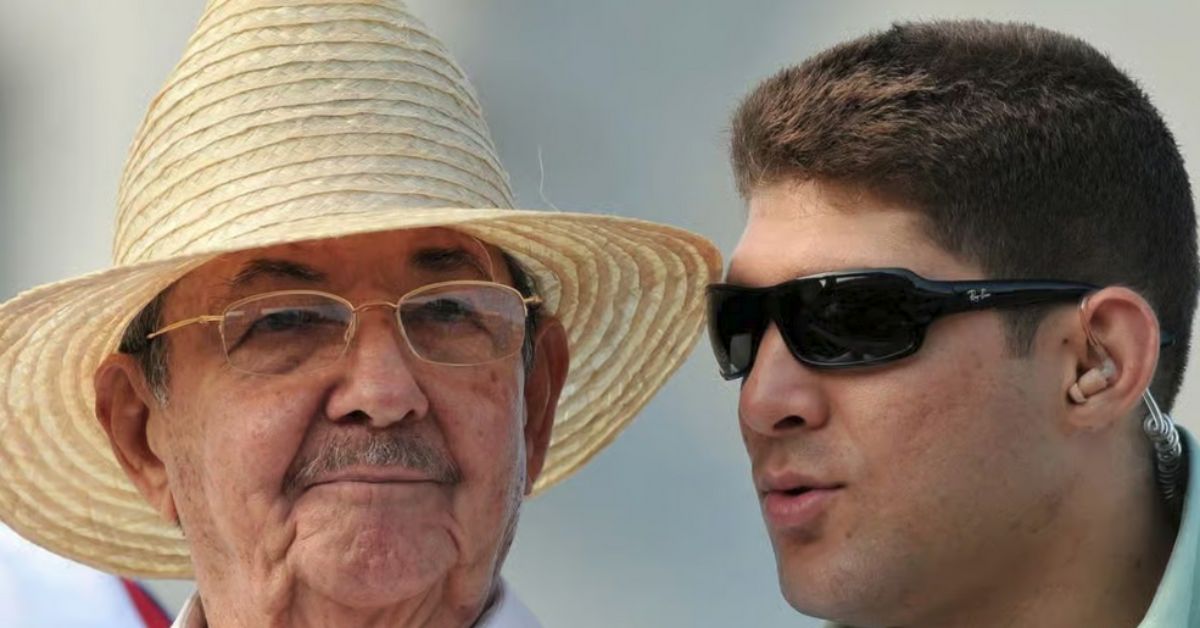

Cuba is entering a period of uncertainty as economic hardship, political pressure, and international scrutiny converge at a sensitive moment for the island’s leadership. In the middle of this environment, Raúl Guillermo Rodríguez Castro has suddenly become a visible presence within Cuba’s political landscape.
Raúl Guillermo Rodríguez Castro, widely known in Cuba as “Raulito,” appeared publicly alongside President Miguel Díaz-Canel during recent government meetings and official events. The appearance has sparked widespread discussion among analysts and observers about whether the Cuban leadership structure could be entering a new phase.
For decades, Cuba’s political system has operated within a tightly controlled framework shaped by the Communist Party and the influence of the Castro family. While Raúl Castro stepped down from the presidency years ago, the family’s influence within state institutions and the military establishment remains deeply embedded. The growing visibility of Raúl Guillermo Rodríguez Castro has therefore attracted attention both inside and outside the country.
His sudden presence comes at a time when Cuba is struggling with a combination of economic crisis, declining tourism revenues, energy shortages, and social frustration among citizens facing rising costs of living.
Cuba Faces Mounting Economic Pressures
Cuba’s economy has been under severe pressure in recent years. Shortages of fuel, food, and basic consumer goods have become increasingly common across the island. Long lines outside grocery stores and frequent power outages have disrupted daily life for millions of Cubans.
The government has acknowledged that the country is experiencing one of its most difficult economic periods since the collapse of the Soviet Union in the early 1990s. At that time, Cuba faced a prolonged economic contraction after losing its primary financial and trade partner.
Today’s crisis is shaped by multiple factors, including reduced foreign investment, declining tourism, and the continuing impact of international sanctions. The economic difficulties have created an atmosphere of uncertainty that has increased attention on the country’s leadership and decision-making process.
Against this backdrop, the emergence of Raúl Guillermo Rodríguez Castro in recent public events has intensified speculation about the evolving balance of power within Cuba’s political system.
Raúl Guillermo Rodríguez Castro Steps Into Public View
The recent appearances of Raúl Guillermo Rodríguez Castro alongside senior government officials have drawn attention from political observers and international analysts. For years he remained largely outside the public spotlight, even though his family connections placed him close to the center of Cuba’s political establishment.
Photographs and video footage from government meetings show Raúl Guillermo Rodríguez Castro attending high-level discussions involving members of the Communist Party leadership and the Council of Ministers. In a political system where public appearances often signal institutional influence, such moments rarely go unnoticed.
Observers note that Raúl Guillermo Rodríguez Castro had previously been associated with security operations and internal government networks rather than political decision-making roles. His presence at public policy discussions has therefore prompted questions about whether his responsibilities are expanding.
While the Cuban government has not formally announced any new position for him, analysts say that increased visibility often reflects a gradual transition within leadership circles.
The Political Legacy Behind the Castro Family
The Castro family has played a defining role in Cuba’s political life for more than six decades. Fidel Castro led the country after the Cuban Revolution of 1959, establishing a socialist government that would shape the island’s institutions and international relationships.
After Fidel Castro stepped down from leadership due to health concerns, his brother Raúl Castro assumed the presidency and introduced a series of limited economic reforms. Those changes included small openings for private businesses and adjustments to the country’s economic structure.
Even after leaving the presidency, Raúl Castro remained influential within the Communist Party and the military establishment. Many senior officials currently serving in government positions rose through institutions that developed under his leadership.
Because of this legacy, the appearance of Raúl Guillermo Rodríguez Castro has drawn interest from those who see the Castro family as continuing to shape the country’s internal political dynamics.
Growing Attention Around Raúl Guillermo Rodríguez Castro
The attention surrounding Raúl Guillermo Rodríguez Castro has expanded rapidly since his recent public appearances. Within Cuba’s political system, new figures rarely emerge without careful preparation, and analysts believe the situation deserves close observation.
Raúl Guillermo Rodríguez Castro is the grandson of Raúl Castro and the son of Débora Castro Espín. His late father, Luis Alberto Rodríguez López-Calleja, once headed GAESA, the military-controlled conglomerate that manages significant portions of Cuba’s economy.
That organization oversees sectors including tourism infrastructure, retail networks, and logistics operations. The role of GAESA within the Cuban economy has made its leadership positions among the most powerful in the country.
Because of this family background, Raúl Guillermo Rodríguez Castro is often viewed as part of the inner circle of Cuba’s military and economic institutions.
Economic Hardship Across the Island
The economic challenges currently affecting Cuba have reshaped everyday life across the country. Many households face difficulty obtaining essential goods, and inflation has reduced purchasing power for workers and pensioners.
Government officials have acknowledged the seriousness of the situation while also pointing to external factors that they say contribute to the economic pressure. These include restrictions on trade and financial transactions that limit Cuba’s ability to access international markets.
Citizens have expressed frustration over shortages and rising costs, leading to calls for reforms that could stabilize the economy. As the situation evolves, the actions of political leaders will likely influence how the country navigates these challenges.
In this context, the emergence of Raúl Guillermo Rodríguez Castro has become part of the broader discussion about who might shape the next phase of Cuba’s economic and political strategy.
Energy Shortages and Power Outages
One of the most visible consequences of Cuba’s economic difficulties has been a series of energy shortages affecting communities across the island. Power outages have disrupted transportation, hospital operations, and manufacturing.
Electricity generation depends heavily on imported fuel, and fluctuations in supply have strained the national grid. When deliveries decline, the government often introduces scheduled outages to balance demand.
These blackouts have become a regular feature in some regions, creating further frustration among residents who are already dealing with shortages of food and medicine.
The economic pressure linked to these energy issues has increased scrutiny of leadership decisions, adding to the attention surrounding figures such as Raúl Guillermo Rodríguez Castro.
Tourism Decline and Financial Strain
Tourism once served as one of Cuba’s most important sources of revenue. Visitors from Europe, Canada, and Latin America contributed significantly to the country’s economy through hotel stays, transportation, and cultural tourism.
However, international travel patterns have shifted in recent years. The pandemic disrupted global tourism flows, and Cuba’s recovery has been slower than many neighboring destinations.
Reduced visitor numbers have affected hotels, restaurants, and transportation services, limiting the government’s ability to generate foreign currency.
The decline in tourism revenue has further complicated efforts to stabilize the economy, creating conditions that make leadership decisions especially important.
The Military and Economic Power Structure
Cuba’s military institutions have long played a central role in managing major sectors of the economy. Over time, military-linked organizations developed extensive networks overseeing infrastructure projects, shipping operations, and hospitality businesses.
The connection between military institutions and economic management means that individuals with ties to these networks often hold significant influence within the political system.
Because the family of Raúl Guillermo Rodríguez Castro has historically been connected to these structures, his presence within leadership circles has attracted interest from analysts studying the balance of power in Cuba.
Some experts believe that understanding the role of institutions like GAESA is essential for interpreting the significance of Raúl Guillermo Rodríguez Castro’s rising visibility.
Raúl Guillermo Rodríguez Castro and Cuba’s Security Network
Before entering the public spotlight, Raúl Guillermo Rodríguez Castro reportedly worked within the security environment surrounding senior government officials. Security roles in Cuba often involve close coordination with military leadership and internal intelligence networks.
Such responsibilities can place individuals in positions where they interact with top political figures and participate in high-level decision-making discussions.
Analysts say that this background could explain why Raúl Guillermo Rodríguez Castro appears comfortable operating within senior government settings despite previously avoiding public political roles.
The experience gained through security responsibilities may also provide insight into how leadership institutions function behind the scenes.
Generational Questions in Cuban Leadership
Cuba’s leadership has gradually shifted toward a younger generation since the departure of Fidel and Raúl Castro from formal government positions. President Miguel Díaz-Canel represents a new generation of leaders who did not participate directly in the revolutionary period.
Even so, historical connections remain influential in shaping political relationships and institutional trust.
The emergence of Raúl Guillermo Rodríguez Castro has therefore raised questions about whether a new generation connected to the Castro family could continue to influence political decision-making.
Some analysts believe his presence may represent continuity with existing power structures, while others see it as part of a broader transition within the leadership.
Washington’s Interest in Cuba’s Political Direction
The United States continues to monitor developments within Cuba closely. Relations between the two countries have been shaped by decades of political tension and economic sanctions.
Washington has repeatedly called for economic reforms and political changes within Cuba. At the same time, diplomatic contacts between the two countries have fluctuated depending on broader geopolitical conditions.
Observers say that any shift within Cuba’s leadership structure would likely attract attention from policymakers in Washington.
As the situation evolves, the role of figures like Raúl Guillermo Rodríguez Castro could become part of the broader conversation about the future of relations between the two nations.
Possible Paths for Cuba’s Future
Cuba now faces several possible paths as it attempts to navigate its economic and political challenges. Some analysts believe the government may pursue additional economic reforms designed to attract investment and stabilize the economy.
Others argue that political stability will remain the priority, with gradual adjustments rather than rapid transformation.
The presence of Raúl Guillermo Rodríguez Castro within the leadership environment could signal that new voices are participating in discussions about how to manage the country’s future.
Whether those discussions lead to structural changes remains uncertain, but the developments have already sparked significant interest among political observers.
Conclusion
Cuba stands at a critical moment as it confronts economic hardship, energy shortages, and growing public frustration. In this context, the emergence of Raúl Guillermo Rodríguez Castro has become a subject of significant attention both inside the country and internationally.
While his exact role remains unclear, his public appearances alongside senior government officials suggest that he may be gaining greater influence within the political system.
The coming months will likely determine whether Raúl Guillermo Rodríguez Castro becomes a more prominent figure in shaping Cuba’s direction or continues to operate within the background of the country’s leadership networks.
For now, his rising visibility highlights the uncertainty surrounding Cuba’s political future and the possibility that a new chapter in the island’s leadership story may be beginning.