


Breakthrough in Machine Learning with Living Brain Cells
In a groundbreaking development, researchers have successfully utilized living brain cells to enhance machine learning computations. This innovative approach could revolutionize the field of artificial intelligence, offering a new dimension to computational technologies.
The Intersection of Biology and Technology
Machine learning, a subset of artificial intelligence, traditionally relies on software algorithms to process data and learn from it. However, the integration of biological brain cells into these systems represents a significant leap forward. By leveraging the natural computational power of neurons, researchers aim to create systems that are not only more efficient but also capable of handling more complex tasks.
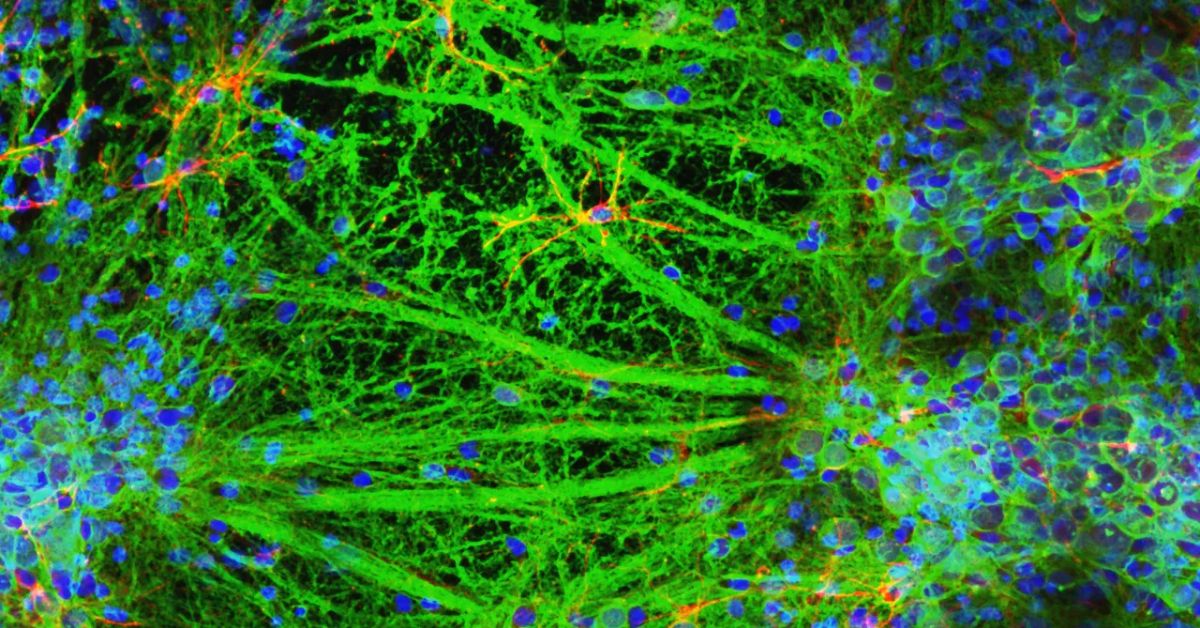
Living brain cells, cultured in laboratory settings, exhibit unique properties that make them suitable for machine learning tasks. These cells can form networks that mimic the neural structures found in biological brains, allowing for more nuanced data processing and decision-making capabilities.
Potential Implications and Applications
The implications of this research are vast and varied. For one, it could lead to the development of more advanced AI systems that can better replicate human cognitive processes. This would be particularly beneficial in fields such as autonomous vehicles, where decision-making and adaptability are crucial.
Furthermore, this technology could have significant applications in medical research. By understanding how living brain cells interact with machine learning algorithms, scientists may gain insights into neurological diseases and develop new treatment methods. This approach could also pave the way for more personalized medicine, tailoring treatments to the individual needs of patients based on their unique neural profiles.
- Enhanced AI systems with biological components
- Improved understanding of neurological diseases
- Potential for personalized medical treatments
Challenges and Ethical Considerations
While the potential benefits are exciting, this research also raises several ethical and practical challenges. The use of living brain cells in technology blurs the line between biology and machines, prompting questions about consent, ownership, and the potential for misuse.
Moreover, there are technical hurdles to overcome. Cultivating brain cells in a laboratory setting and ensuring their stability and longevity in computational systems is a complex task. Researchers must also address the scalability of this technology, ensuring that it can be applied to larger systems without losing efficacy.
Looking to the Future
As this research progresses, it will be crucial for scientists, ethicists, and policymakers to work together to address these challenges. Establishing guidelines and regulations will be essential to ensure that this technology is used responsibly and ethically.
With its potential to transform machine learning and artificial intelligence, the integration of living brain cells into computational systems is a development worth watching. As we continue to explore the boundaries of what technology can achieve, this breakthrough serves as a reminder of the endless possibilities at the intersection of biology and technology.
For more information, you can read the original article.
Analysts say living brain cells now sits at the center of a broader shift, with consequences that could extend beyond the immediate headline and shape decisions in the coming weeks. They note that early signals often appear in policy language and market behavior before they are reflected in official summaries, which is why context matters as much as the headline itself.
Reporting around living brain cells has also highlighted how quickly circumstances can change, making context and verified updates essential for readers trying to separate signal from noise. The most reliable coverage connects each new update to the timeline of prior events so audiences can understand what is genuinely new and what is part of a longer trend.
The latest developments connected to living brain cells have reopened questions about strategy, risk, and timing, particularly for stakeholders who need clearer signals before making their next move. In practical terms, that means watching both official statements and real-world indicators to understand whether the current direction is likely to hold.
In recent coverage, living brain cells has become a reference point for wider discussions about accountability, communication, and how institutions respond under pressure. Observers say this broader lens is important because the immediate event is often only one part of a larger sequence of decisions.
Beyond the immediate updates, living brain cells is drawing attention because it links short-term events to longer-term structural trends that are still unfolding. Readers following the story closely are paying particular attention to what changes in response and what remains unresolved after each update.
As the story evolves, reporting on living brain cells is expected to focus increasingly on measurable impacts, official follow-through, and whether early assumptions hold up. That evidence-based framing helps audiences evaluate momentum without overreacting to isolated developments.
Taken together, these updates show why living brain cells matters now and why the next round of confirmed information will be critical to understanding the full impact. Analysts caution that the most meaningful shifts may appear gradually, making sustained coverage more useful than one-off snapshots.
Readers looking for practical clarity can treat living brain cells as a developing story, where each official update adds context to what may happen next. Following that progression over time gives a clearer picture of direction, risk, and likely outcomes.
Quick Summary
- In a groundbreaking development, researchers have successfully utilized living brain cells to enhance machine learning computations.
- Machine learning, a subset of artificial intelligence, traditionally relies on software algorithms to process data and learn from it.
- Living brain cells, cultured in laboratory settings, exhibit unique properties that make them suitable for machine learning tasks.
- The implications of this research are vast and varied.
What Comes Next
What happens next with living brain cells will likely depend on upcoming decisions, official statements, and how fast new information is confirmed.
For now, the most reliable approach is to follow verified updates closely and focus on the signals that could shape the next phase of this story.