

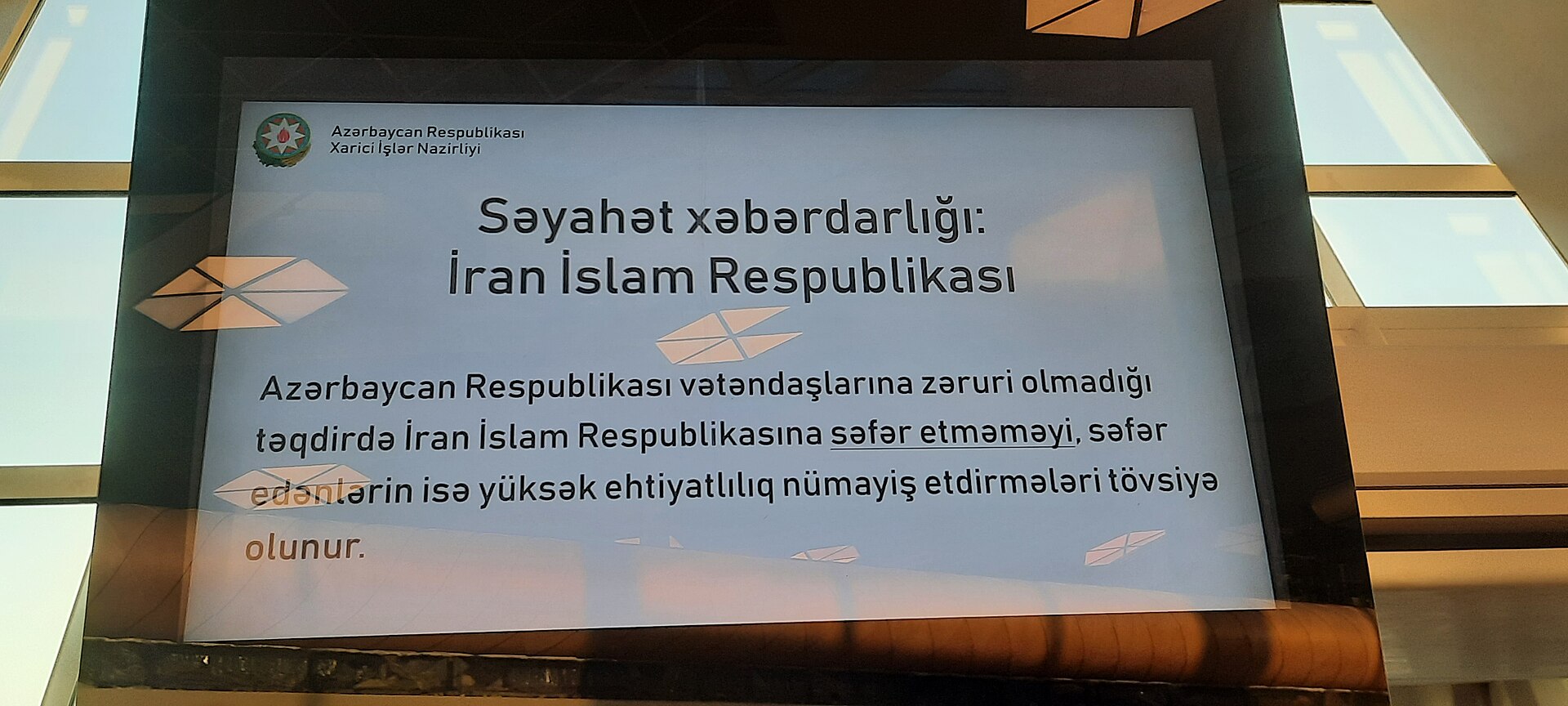

Quick Summary: Azerbaijan Travel Advisory 2026 USA Warning on Azerbaijan Safety Risks and Tourism Impact
- The U.S. State Department issued a Level 3 warning for Azerbaijan, urging travelers to reconsider their plans due to heightened risks.
- Specific areas, including borders with Iran and Armenia, are under Level 4 advisories, citing increased danger from mines and conflict.
- Recent hostilities between the U.S. and Iran and a drone strike on Nakhchivan International Airport have intensified regional security concerns.
- The advisory highlights potential terrorist threats to public spaces, emphasizing a broader risk beyond border areas.
- Travelers are advised to prepare for emergencies without relying on U.S. government assistance due to limited support in high-risk zones.
Source: Read original article
The latest U.S. travel advisory for Azerbaijan isn’t just a routine update; it’s a stark reminder of the region’s volatile geopolitical landscape. The State Department’s Level 3 warning urges travelers to reconsider plans, spotlighting the escalating risks tied to recent U.S.-Iran hostilities and a drone strike on Nakhchivan International Airport. Azerbaijan Travel is at the center of this development.
While Azerbaijan has long been fraught with mine and frontier risks, the advisory adds layers of concern with terrorism threats and flight disruptions. This isn’t just about avoiding remote borders; it’s about navigating a region where safety is increasingly uncertain. The advisory’s mention of potential terrorist targets in everyday locations like airports and markets underscores the gravity of the situation.
The U.S. and U.K. governments have both issued detailed warnings, with the U.S. explicitly stating that it cannot provide immediate emergency assistance in certain high-risk areas. This advisory isn’t just for tourists; it’s a critical notice for anyone considering travel to or through Azerbaijan, emphasizing the need for self-reliance in emergencies.
As tensions in the region continue to simmer, the advisory serves as a crucial guide for travelers and businesses alike. It’s a call to stay informed and prepared, as the situation could evolve rapidly, affecting travel plans and safety protocols.
The most striking specific detail in the latest official language is the State Department’s reference to “an ongoing threat of drone and missile attacks from Iran” after February 28, 2026, and its direct mention that “There was a March 5, 2026, drone strike on Nakhchivan International Airport. The core of the story is the State Department’s current Level 3 warning for Azerbaijan: “Reconsider Travel,” with narrower Level 4 “Do not travel” zones at the southern border with Iran, the Armenia border, and a long list of mine-affected territories including Aghdam, Fuzuli, Jabrayil, Kalbajar, Khankendi, Khojaly, Khojavend, Lachın, Shusha, and Zangilan.
London says British help is “extremely limited” in the areas where it advises against travel, and it narrows one danger zone to within 5 kilometers of the Armenia border while separately listing 12 southwestern districts affected by mines or unexploded ordnance. Azerbaijan has long carried mine and frontier risks, but the latest wording layers in terrorism concerns, active drone-strike precedent, and flight disruption linked to a regional conflict that began on February 28, 2026.
-Iran hostilities and a March 5 drone strike on Nakhchivan International Airport, turning what might have looked like a routine caution into a warning about an active regional security spillover. The advisory explicitly says, “There was no change to the advisory level or risk indicators.
” That line gives the advisory a much harder edge than a generic tourism warning because it points to a recent, named aviation-related attack and concrete disruption to transport, not just theoretical instability. government is “unable to provide immediate emergency assistance” there.
What makes the story more than a recycled border warning is the combination of old and new hazards in one advisory cycle. government help” and expect more updates if the regional security picture worsens.
State Department issued a Level 3 warning for Azerbaijan, urging travelers to reconsider their plans due to heightened risks. The core of the story is the State Department’s current Level 3 warning for Azerbaijan: “Reconsider Travel,” with narrower Level 4 “Do not travel” zones at the southern border with Iran, the Armenia border, and a long list of mine-affected territories including Aghdam, Fuzuli, Jabrayil, Kalbajar, Khankendi, Khojaly, Khojavend, Lachın, Shusha, and Zangilan.
Azerbaijan has long carried mine and frontier risks, but the latest wording layers in terrorism concerns, active drone-strike precedent, and flight disruption linked to a regional conflict that began on February 28, 2026. Specific areas, including borders with Iran and Armenia, are under Level 4 advisories, citing increased danger from mines and conflict.
government assistance due to limited support in high-risk zones. The advisory explicitly says, “There was no change to the advisory level or risk indicators.
government is “unable to provide immediate emergency assistance” there. government help” and expect more updates if the regional security picture worsens.
The scale and speed of this development has caught many observers off guard. Each new update adds another dimension to a story that is still unfolding, and the full picture will only become clear as more verified details emerge from the people and institutions directly involved.
Analysts who have tracked this issue closely say the current moment represents a genuine turning point. The decisions made in the coming weeks are expected to set the direction for months ahead, with ripple effects likely to extend well beyond the immediate actors in the story.
For those directly affected, the practical impact is already visible. People navigating this fast-changing situation are dealing with real consequences while new information continues to reshape what is known and what remains open to interpretation.
Historical parallels offer some context, though experts caution against drawing too close a comparison. Similar situations have played out before, but the specific combination of pressures, personalities, and timing here makes this moment distinct in ways that matter for how it ultimately resolves.
The political and economic dimensions of this story are deeply intertwined. What appears as a single event on the surface is in practice the convergence of multiple pressures that have been building quietly over a longer period than most public reporting has captured.