

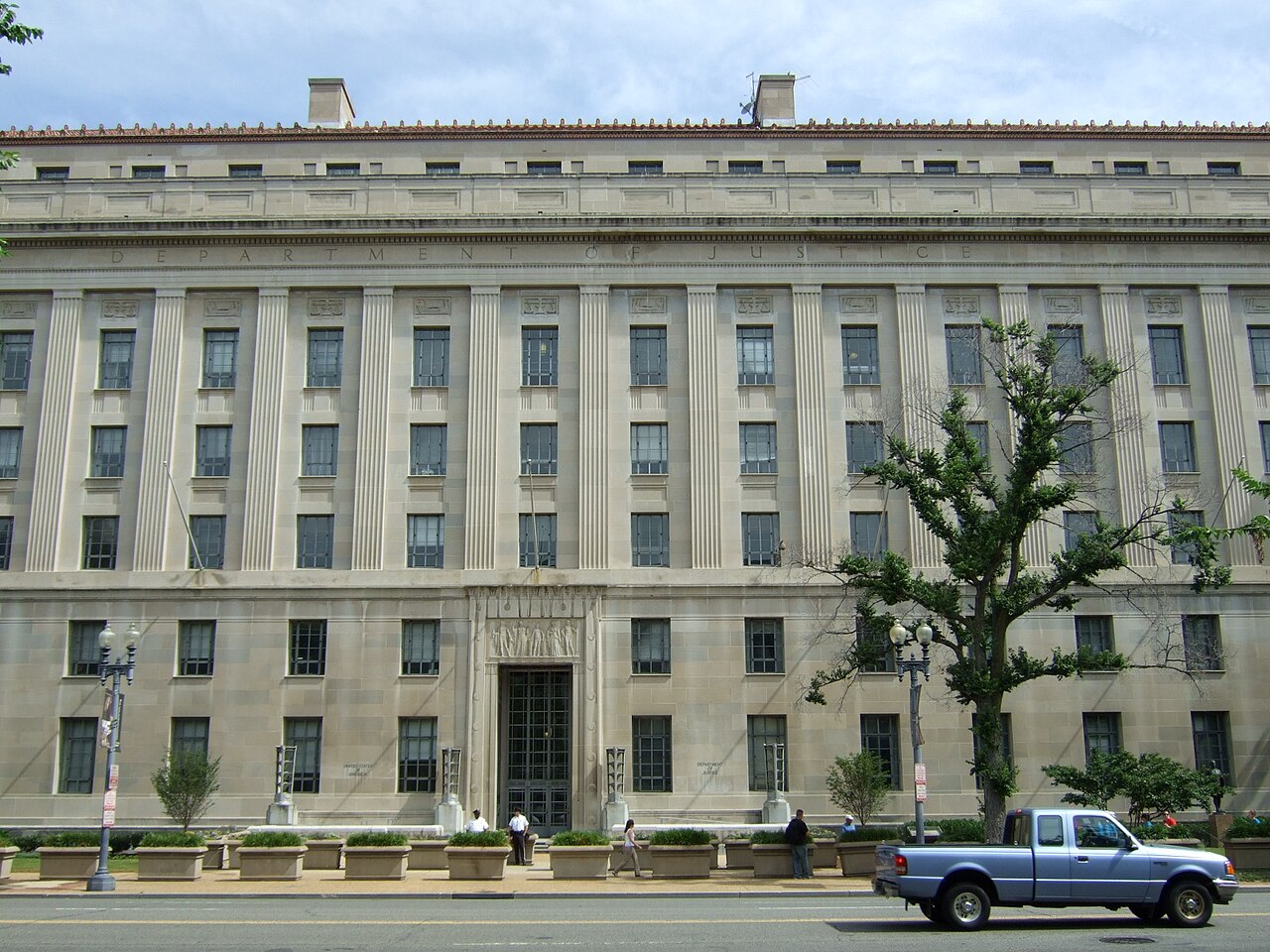

Quick Summary: Justice Department Announced $1.7 Billion Fund to Compensate Victims
- The Justice Department announced a $1.7 billion fund to compensate those it claims were victims of Biden-era ‘lawfare.’.
- The fund’s creation follows Trump dropping a $10 billion IRS lawsuit, moving forward without judicial review.
- Democrats filed court challenges, labeling the fund an abuse of taxpayer money and presidential power.
- The fund will be managed by a commission appointed by the Attorney General, with oversight concerns raised.
- The fund’s potential beneficiaries include individuals charged in the January 6 Capitol attack.
Source: Read original article
The Justice Department’s decision to establish a $1.7 billion ‘Anti-Weaponization Fund’ has ignited a fierce political battle, raising questions about its true purpose. Announced shortly after former President Trump dropped his $10 billion IRS lawsuit, the fund is designed to compensate those allegedly targeted for political reasons during the Biden administration.
This fund, drawn from the federal Judgment Fund, is a permanent appropriation typically used for court judgments and settlements. The announcement has sparked a backlash, with 93 House Democrats filing court challenges, arguing that the fund represents an abuse of taxpayer money and presidential power. Critics, including Rep. Jamie Raskin, have labeled it a ‘slush fund’ for Trump allies.
The fund’s oversight is under scrutiny, as it will operate through executive branch control rather than open court enforcement. The commission managing the fund is appointed by the Attorney General, with Trump retaining the right to remove members. The potential beneficiaries could include individuals involved in the January 6 Capitol attack, adding fuel to the controversy.
As the story unfolds, the Justice Department faces mounting pressure from Congress and the public. The unresolved question remains whether this fund is a legitimate compensation mechanism or a political payout operation. The next developments will likely be driven by congressional hearings and potential legal challenges.
776 billion “Anti-Weaponization Fund” to compensate people it says were victims of Biden-era “lawfare,” after Trump abruptly dropped his $10 billion IRS lawsuit, and the biggest immediate development is that the deal appears to be moving forward without judicial review because the federal judge said she was “stripped of jurisdiction” once the case was dismissed. The core of the deal, announced Monday, May 18, 2026, is unusually specific and unusually broad: the DOJ says the fund will hear claims from people who believe they were “wrongly targeted” for political reasons, with the money drawn from the federal Judgment Fund, a permanent appropriation normally used to pay court judgments and settlements.
” ABC reported that the fund will be run by a five-person commission appointed by the attorney general, with Trump retaining the right to remove members, and that it is scheduled to shut down on December 15, 2028, with any leftover money reverting to the government. Trump himself is not eligible for direct payments under the settlement, according to ABC, but he also agreed to drop not only the IRS suit but two additional civil claims totaling $230 million tied to the Mar-a-Lago search and the Russia investigation, widening the scope of what he gave up in exchange for the fund.
AP reported that Democrats and watchdog groups immediately denounced the arrangement as “corrupt” and unconstitutional, while a group of 93 House Democrats filed an amicus brief accusing Trump and the government of using “collusive litigation” to engineer an illegal settlement. On Monday, May 18, Trump’s lawyers formally moved to dismiss the $10 billion suit, Judge Williams closed the case the same day, and the DOJ publicly announced the fund within hours.
Earlier ABC reporting said the claims process could extend to “the nearly 1,600 individuals charged in connection with the Jan. ABC reported the attorney general will receive quarterly updates on how much money has been awarded, and the DOJ says the fund can be audited, but critics note that Judge Kathleen Williams said there is no “settlement of record” on the court docket, leaving no active case through which she could supervise the arrangement.
Also on May 18, 93 House Democrats moved to challenge the arrangement in court filings, arguing it was an abuse of taxpayer money and presidential power. AP also noted that Blanche is expected to face questions about the fund on Tuesday, May 19, when he testifies on Capitol Hill about the Justice Department budget.
Announced shortly after former President Trump dropped his $10 billion IRS lawsuit, the fund is designed to compensate those allegedly targeted for political reasons during the Biden administration. 776 billion “Anti-Weaponization Fund” to compensate people it says were victims of Biden-era “lawfare,” after Trump abruptly dropped his $10 billion IRS lawsuit, and the biggest immediate development is that the deal appears to be moving forward without judicial review because the federal judge said she was “stripped of jurisdiction” once the case was dismissed.
The fund’s creation follows Trump dropping a $10 billion IRS lawsuit, moving forward without judicial review. The core of the deal, announced Monday, May 18, 2026, is unusually specific and unusually broad: the DOJ says the fund will hear claims from people who believe they were “wrongly targeted” for political reasons, with the money drawn from the federal Judgment Fund, a permanent appropriation normally used to pay court judgments and settlements.
On Monday, May 18, Trump’s lawyers formally moved to dismiss the $10 billion suit, Judge Williams closed the case the same day, and the DOJ publicly announced the fund within hours. 7 billion ‘Anti-Weaponization Fund’ has ignited a fierce political battle, raising questions about its true purpose.
The fund’s potential beneficiaries include individuals charged in the January 6 Capitol attack. The announcement has sparked a backlash, with 93 House Democrats filing court challenges, arguing that the fund represents an abuse of taxpayer money and presidential power.
Also on May 18, 93 House Democrats moved to challenge the arrangement in court filings, arguing it was an abuse of taxpayer money and presidential power. Democrats filed court challenges, labeling the fund an abuse of taxpayer money and presidential power.
The scale and speed of this development has caught many observers off guard. Each new update adds another dimension to a story that is still unfolding, and the full picture will only become clear as more verified details emerge from the people and institutions directly involved.
Analysts who have tracked this issue closely say the current moment represents a genuine turning point. The decisions made in the coming weeks are expected to set the direction for months ahead, with ripple effects likely to extend well beyond the immediate actors in the story.
For those directly affected, the practical impact is already visible. People navigating this fast-changing situation are dealing with real consequences while new information continues to reshape what is known and what remains open to interpretation.
Historical parallels offer some context, though experts caution against drawing too close a comparison. Similar situations have played out before, but the specific combination of pressures, personalities, and timing here makes this moment distinct in ways that matter for how it ultimately resolves.
The political and economic dimensions of this story are deeply intertwined. What appears as a single event on the surface is in practice the convergence of multiple pressures that have been building quietly over a longer period than most public reporting has captured.