61.7 F
San Francisco
Thursday, June 25, 2026
Home Blog Page 1261

President Trump Urges Jordan’s King Abdullah II to Accept Gaza Refugees

Key Takeaways:

– President Trump held a meeting with Jordan’s King Abdullah II to advocate for the acceptance of refugees from Gaza.
– The meeting is part of Trump’s strategy to increase pressure on Arab countries to take in more refugees.
– The conversation between President Trump and King Abdullah II has significant implications for the ongoing crisis in Gaza.

Trump’s Meeting with King Abdullah II

President Trump welcomed Jordan’s King Abdullah II to the White House on Tuesday. The crucial meeting aimed to escalate pressure on the Jordanian monarch to accept refugees from Gaza. This step is part of Trump’s continuing push to enlist Arab nations in the effort to tackle the ongoing refugee crisis in the region.

Pressure on Arab Nations

Making good on his promise to address the refugee crisis in the Middle East, President Trump has turned his attention towards Jordan, asking it to shoulder more of the burden. He views this as an integral part of regional peace and stability, given Jordan’s influential position in the Arab world.

Understanding the Gaza Crisis

The ongoing issue in Gaza has led to a surge of refugees seeking asylum from the political and humanitarian crisis. The densely populated enclave has witnessed a significant escalation of violence, making the situation increasingly dire for its inhabitants. President Trump, recognizing the gravity of the situation, is calling on Arab nations, including Jordan, to play a bigger role in providing refuge.

Implications of the Meeting

In their meeting, Trump and King Abdullah II, an influential figure in Middle Eastern geopolitics, primarily discussed the imperative of helping these refugees. While the Jordanian monarch has not given a formal response as yet, the direction of this conversation implies a significant potential shift in the Arab world’s role in addressing the refugee crisis.

Trump’s Strategy for the Middle East

Trump’s meeting with King Abdullah II is part of a broader strategy aimed at bringing Arab nations into the effort to tackle the refugee issue. Over the years, the United States has been increasingly urging Middle Eastern countries to handle conflicts in their region, with the Gaza refugee crisis formed a vital part of this discussion.

In this context, the Trump administration perceives the acceptance of more refugees by Jordan as part of a larger solution to the crisis. This strategy, while ambitious, underscores the administration’s belief in the potential of Arab unity to bring a lasting solution to the Gaza crisis.

Role of Jordan in Refugee Acceptance

Jordan, bordering several conflict-ridden countries, often plays a key role in refugee acceptance. However, the aftermath of the Syrian crisis already places a hefty burden on the nation, making the situation delicate for Jordan.

Though yet to offer a formal response, King Abdullah II is expected to carefully consider Trump’s proposition, keeping in mind not just the implications for his own country, but also the larger impact on the region.

Concluding Thoughts

With the increasing pressure on Arab nations to play a more significant role in tackling the refugee crisis, Trump’s meeting with King Abdullah II could mark an important turning point. The outcome of these conversations will have a profound impact on the strategic alignment of Middle Eastern countries regarding the Gaza crisis.

While it remains to be seen how Jordan will respond, it’s clear that this discussion underscores the high stakes at play. As President Trump advocates for a larger humanitarian response from the Arab world, the reverberations of this meeting could influence the future of Gaza and indeed the wider region.
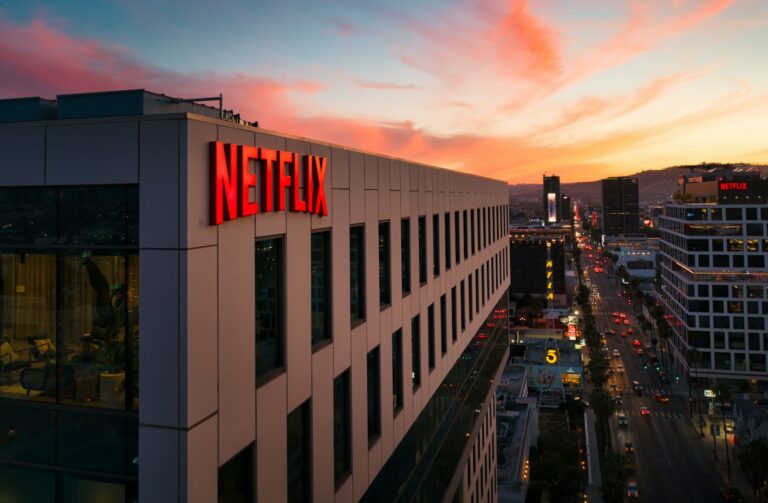

Exciting Highlights Revealed as ‘Formula 1: Drive to Survive’ Season 7 Hits Netflix on March 7

Key Takeaways:

– Netflix will release the seventh installment of ‘Formula 1: Drive To Survive’ on March 7, 2025
– The new season revisits the competitive 2024 Grand Prix, highlighting Max Verstappen’s victory and McLaren’s achievement
– The series also reviews Lewis Hamilton’s final season at Mercedes and his transition to Ferrari in 2025

‘Formula 1: Drive to Survive’ Returns

Netflix’s docuseries ‘Formula 1: Drive To Survive’ is set to return for its seventh season on March 7, 2025. The release is perfectly timed to give viewers ample opportunity to catch up on last year’s thrilling races just before the start of the new season.

A Close Look at 2024 Formula 1 Season

This release should be an intriguing watch for fans, as the 2024 season came with numerous surprising turns. With relatively minimal changes in the rules and driver lineups, the forecast was for Red Bull to continue its dominance. The spotlight was firmly fixed on Max Verstappen, with prognoses looking towards his fourth title.

However, Verstappen, Red Bull’s star driver, didn’t have as smooth a run as expected. Although he cinched the Drivers’ Championship at the Las Vegas Grand Prix in 2024, it wasn’t a walk in the park for him. He dealt with fierce competition, primarily from McLaren’s talented driver, Lando Norris.

Facing Challenges

The 2024 season saw Verstappen win nine races — a noticeable dip from the 19 wins had by the Dutch driver back in 2019. This inconsistency in performance is attributed to Red Bull’s mid-season loss of pace, combined with mediocre performance from Sergio Perez, the team’s other driver. These issues paved the way for McLaren to outshine Red Bull and clinch the Constructors’ championship, marking its first victory in this category since 1998.

A Fond Farewell and New Beginnings

Further adding drama to the 2024 season was the farewell to several revered drivers, including the fan-favorite, Daniel Ricciardo. This season also marked Lewis Hamilton’s last with Mercedes, the team he had formerly dominated F1 with. Despite a challenging final season that had few major wins, Hamilton’s victory at the 2024 British Grand Prix stood out as an emotional highlight.

New Horizons in Upcoming Seasons

Looking ahead, there are exciting shifts in the landscape for the 2025 season. It flaunts Hamilton’s move to Ferrari and the arrival of several new drivers on the grid. F1 management has previously stated that ‘Drive To Survive’ needs to prove its value to justify continuation. But with its exclusive behind-the-scenes view of an F1 season filled with so many memorable peaks and troughs, one has to see the inherent value it provides.

Fans of the sport will appreciate how ‘Formula 1: Drive To Survive’ encapsulates the essence of the thrilling world of Grand Prix. From the highs of victory to the lows of defeat, the series gives viewers an exclusive look into the happenings behind the glamorous world of F1. Get ready to buckle up and relive the 2024 season with ‘Formula 1: Drive To Survive’ Season 7 arriving on Netflix on March 7, 2025.

Majestic Schnauzer Monty Scoops “Best in Show” Crown at 149th Westminster Dog Show

Key Takeaways:

– Monty the giant Schnauzer wins prestigious Best in Show at 149th Westminster Kennel Club Dog Show.
– Bourbon the whippet bags runner-up position for the third time.
– Monty breaks records by winning his breed group three times consecutively.
– The Westminster dog show hosted about 2,500 competing canines.
– There were seven group categories, with group winners progressing to the Best in Show competition.

Breaking Canine News: Monty Rises to the Top

A total of around 2,500 dogs across varying breeds and sizes competed at the 149th Westminster Kennel Club dog show on Tuesday night. Monty, a majestic giant Schnauzer, was the star of the event, bagging the coveted Best in Show title at Madison Square Garden in New York City.

The Paw-Fect Contestants

The event saw four finalists chosen on Monday: Neal, a charming bichon frisé, Bourbon the whippet, who was already a double runner-up, Comet, a shih tzu who was a previous finalist and Mercedes, a German shepherd who came second in the last year.

The next day, judges selected three additional participants: Freddie, an English springer spaniel, Monty, the giant Schnauzer who won his breed group for the third consecutive year, and Archer, a Skye terrier who predictably emerged victorious from the terrier group.

No Bones About It: Monty is the Winner

Ultimately, Monty stood head and shoulders above the rest, besting the other six finalists to capture the coveted Best in Show. Monty’s win is especially notable as it’s the third consecutive time to win his group, a testament to his consistent performance.

As the tail wagged on, Bourbon, the ever-competitive whippet, landed the Reserve Best in Show title, continuing a streak by securing the position for the third time. Notably, Bourbon was brought back from retirement specifically to compete in this year’s event.

There was no cash prize, but winners received a trophy, ribbons, and boasting rights, not to mention a significant boost in their pedigree credentials. The dogs were judged based on how closely they exemplified the ideal characteristics of their breed.

An Array of Talented Contestants

The dog show recognized talents across categories including hound, toy, non-sporting, herding, sporting, working, and terrier categories. Each group winner proceeded to compete for the ultimate Best in Show competition.

The agility prize went to Vanish, a swift border collie, while the obedience category saw Willie, an Australian shepherd, achieving a fetching win.

More than Just Show Dogs

Westminster isn’t just about the competition. Each participant, despite their titled champion statuses, are just as much beloved as household pets. Aside from participating in the show circuit, many of the dogs perform essential roles in search-and-rescue operations, therapy work, and other valuable canine jobs.

“A good German shepherd is an all-purpose dog,” said Sheree Moses Combs, co-breeder and co-owner of Wardensville, West Virginia. Her dogs have even served as service dogs for wounded veterans.

In all, the Westminster Dog Show wasn’t just a beauty contest but a celebration of the loving companionship, working relationships, and stunning diversity found in the world of dogs. The 149th year of this friendly canine competition was a roaring success, proving once again why dogs are affectionately dubbed as man’s best friend.

So, as we look forward to the 150th anniversary of the Westminster Dog Show, let’s remember to celebrate and appreciate all the wonderful dogs worldwide, irrespective of their breed, size, or awards won. Here’s to our furry friends who comfort, protect, and love us unconditionally.

JLR Pumps $80 Million into Expanding Luxury Paint Options and Sustainability Measures

Key Takeaways:

– JLR invests nearly £65 million, equivalent to over $80 million, in advanced paint facilities to expand customization options.
– New facilities in Slovakia and England will allow a boost of 17,000 additional custom paint orders annually.
– Beyond expanding personalization, the initiative also aims at making the paint process more sustainable.
– The new paint facilities are set to significantly reduce CO2 emissions, contributing to JLR’s sustainability goals.

JLR: A Pioneer in Customization and Sustainable Practices

Luxury car manufacturer Jaguar Land Rover (JLR) is set to expend over $80 million for the establishment of state-of-the-art paint facilities. This investment is aimed towards broadening the spectrum of personalization options for its customers whilst ensuring that the paint process becomes more eco-friendly.

As JLR continues to push boundaries in offering superior customization options, this initiative will also result in the increase of the company’s custom paint orders. The new facilities will be situated in England and Slovakia, with a capacity increment for custom paint orders reaching a staggering 17,000 annually. Beyond offering customization for the popular Range Rover, JLR is also looking to extend this service to other models in its portfolio.

Stepping Up on Sustainability

Alongside offering a multitude of options for car buyers, this venture also seeks to curb environmental damage. The new paint shop at the Nitra plant located in Slovakia is designed to offer unlimited color options for the Land Rover Defender and Discovery lines.

These facilities, anticipated to become operational by 2026, will be armed with electric curing ovens that would sidestep around 551 tons of CO2 emissions per annum. The addition of a heat exchanger in the assembly plant will further contribute to avoiding about 2,250 tons of CO2 emissions every year.

Enhanced Performance with Special Vehicle Operations

Castle Bromwich, England, is set to witness an upgrade of the Special Vehicle Operations (SVO) facilities by 2025. These facilities will include new paint booths that are designed to reduce the consumption of energy and water significantly.

Besides these environmental benefits, the new SVO facilities will use the same fully automated spray robots that are employed in high-volume facilities. This strategic move is expected to decrease paint waste by a remarkable 30%.

Profitability through Custom Paint Jobs

The hefty investment in these upgrades also proves to be a wise business strategy for JLR. Since paint shops transfer a significant fraction of CO2 into the environment – they account for 80% of emissions during car manufacturing – these upgrades will help JLR shake off its carbon footprint.

Moreover, these enhancements will pave the way for jobs that yield high profits – custom paint jobs. There’s an exponential demand for this service, especially for Range Rover’s SV line. For these models, customers can choose a color of their choice resulting in an additional cost of about $87,000.

Witnessing the success of JLR, other luxury car brands too have begun accentuating their personalization options. Examples include Mercedes-Benz expanding its renowned “Manufaktur” personalization program, Rolls-Royce broadening its factory for manufacturing tailor-made luxury vehicles and Bentley stressing on the increasing demand for its bespoke “Mulliner” personalization package.

This $80 million investment stake by JLR is a testament to the brand’s commitment to not only emphasize on personalization and customer satisfaction but also to contribute towards creating a sustainable environment.

Men Admit to 2003 French Murder After Two Decades on the Run

0

Key Takeaways:

– Christian Rad and Vasile Ostas admitted their involvement in the 2003 murder of Philippe Charuel.
– The two fugitives hid under false identities in Catalonia, Spain for almost 22 years.
– Previously sentenced in their absence, both admitted to their violent actions in court.
– The verdict is expected this Friday.

Two men have confessed to a brutal murder committed in 2003 in France, appearing in front of the court, following more than two decades on the run.

The Confessions

Christian Rad and Vasile Ostas both admitted murdering salesman Philippe Charuel. His lifeless body was found in a ditch next to a road in eastern France’s Gondreville in February 2003. On the fateful night of February 19, as he was leaving a bar near Nancy’s train station, he reportedly disturbed two young prostitutes. The men, Rad and Ostas, then forced him into a black BMW.

Hiding Since the Crime

After nearly twenty-two years in hiding, Spanish police arrested both men near Barcelona in August 2023. Living under false identities in Catalonia, Rad had become a father and was employed as a concierge in a luxury hotel. Ostas had found work as a security guard. Both had previous involvement in illegal prostitution activities.

Awaiting the Verdict

The lawyer for Ostas, Eléonore Dupleix, reported that her client has yet to face charges. According to her, the truth about the men’s confessions will emerge at the hearing. Meanwhile, in 2011, both men had already received harsh sentences in absentia: 30 years for Rad and 26 years for Ostas.

Regret and Admission

Ostas, a 52-year-old Romanian national, showed remorse when he confessed to the murder. In court, he apologize to the victim’s family and French society, stating that, while he struck the victim, he did not wish for Charuel’s death. Rad, Ostas’ 40-year-old nephew, made similar confessions, admitting he struck Charuel in the presence of the two women and his uncle. Both men insist they meant for Charuel, a nightclub frequenting divorced father without a past criminal record, no fatal harm.

State of the Victim

Charuel’s body was discovered with numerous injuries. The presiding judge, Therese Diligent, shared the horrific details of his state: 20 injuries to his abdomen, several broken ribs, and “numerous wounds and injuries” on the face, including a fractured jaw and missing teeth.

The court expects to deliver the verdict on Friday. While they await the outcome, both men express regret for their violent actions in 2003. With their confessions admitted into evidence, it seems likely the court will reach a conclusion rooted in justice for the deceased Philippe Charuel.

HOPE FOR JUSTICE

Looking ahead, the victims family, the French society, and all involved parties eagerly anticipate Friday’s verdict. The confessions represent a significant progression in the case, offering hope for justice after two long decades. Similarly, it signifies closure for a case that sent shockwaves through the small community of Gondreville and beyond. Following years of uncertainty, the anticipated verdict promises a chapter’s end for one of France’s most high-profile murder cases over the past two decades.

Ethereum Striving to Overcome $2,700 Resistance: Will Bulls Score Victory?

Key Takeaways:

– After a fresh decline, Ethereum is now attempting to recover from the $2,500 zone.
– For upward momentum, Ethereum needs to clear the $2,740 resistance zone.
– Potential future gains might rise Ethereum to the $3,000 resistance zone or possibly to $3,050.
– If Ethereum fails to overcome the $2,700 mark, it might trigger another decline.
– Despite making efforts to rally above $2,600, Ethereum is trading below $2,700 and the 100-hourly Simple Moving Average.

Hitting the Resistance

Ethereum, one of the key market players in cryptocurrency, has faced a fresh decline after it hit the $2,700 roadblock. Having tried and failed to clear the $2,920 resistance like Bitcoin, Ethereum dove below the $2,800 and $2,700 support levels. This plunge moved Ethereum into what can be classified as a short-term bearish zone.

After a severe dip that tested the 50% Fib retracement level of the upward wave commencing from the low $2,125 swing to the current $2,922 high, the bulls found their footing near the $2,525 zone. Now, with a renewed move upwards from the $2,600 zone, Ethereum is trying hard to regain lost ground.

Athwart the Bearish Trend

As the situation currently stands, Ethereum is yet to regain the $2,700 mark and especially to conquer the 100-hourly Simple Moving Average. This plight is further complicated by a bearish trend line with a $2,700 resistance on the ETH/USD hourly chart.

When Ethereum attempts to rally its way upwards, it appears to stumble near the $2,700 mark. The first considerable resistance is near the $2,740 level, making it a crucial stopping point before a final bout with the significant resistance forming near the $2,850 to $2,910 zones.

Should Ethereum manage to clear this last hurdle of $2,910, it might take off toward the $2,950 resistance. The optimistic view is that an upside break above the $2,950 might call for more gains, possibly leading Ethereum toward the $3,000 resistance zone or even the $3,050 mark in the near term.

Facing Another Downslide?

However, as we’ve observed, predicting Ethereum’s trajectory is a challenging endeavor. If it fails to get over the $2,700 resistance again, Ethereum risks entering a new phase of decline. The first support on the downside comes in near the $2,600 level, with the primary backup resting near the $2,525 zone.

A more significant drop below the $2,525 support might push Ethereum toward the $2,440 support, or it might even hit the 61.8% Fib retracement level of the upward wave started from the $2,125 swing low to the $2,922 high. Any further losses might create headwinds for Ethereum, possibly torpedoing its price to the near-term support level of $2,350. The next critical support rests at $2,240.

As Things Stand Now

The MACD for ETH/USD indicates a loss of momentum in the bearish zone, while the RSI displays a position above the 50 zone, painting a more optimistic picture. While the crypto market remains notoriously unpredictable, Ethereum currently appears lodged between bulls and bears, with the critical pivot points at $2,525 and $2,700, respectively. As the Ethereum saga continues, traders and investors keep a keen eye on these markers, anticipating the next move.

Conclusion

The Ethereum market sees an intense tug of war as the Ethereum price strives to regain its footing over the $2,700 resistance mark. As the bulls and bears vie for control, Ethereum faces significant headwinds. However, the final victory remains uncertain, keeping the global crypto community on their toes.

White House Terminates USAID Inspector General: Impact on Unspent Billions

0

Key Takeaways:

– Inspector General Paul Martin of the U.S. Agency for International Development (USAID) is fired by The White House.
– The dismissal occurred the day after Martin’s office emphasized the difficulty in monitoring $8.2 billion in unspent humanitarian funds due to USAID’s dismantling.
– The White House has not given any reason for Martin’s abrupt departure.

The Untimely Dismissal of a Crucial Overseer

In a move that has shocked many, the White House has dismissed Inspector General Paul Martin. Martin, until recently, held an essential position at the U.S. Agency for International Development (USAID). The unexpected shake-up comes at a pivotal time when Martin’s office had raised critical concerns over the administration’s actions.

What Sparks the Fire?

Just a day prior to the sacking, Martin’s office had issued an alert regarding the possible mismanagement of significant humanitarian funds. A massive $8.2 billion in unspent funds, meant for humanitarian aid, was becoming near impossible to track due to the administration’s measures. This was attributed to the disassembly of USAID, carefully undertaken by the current administration.

However, alarmingly, explanations for Martin’s abrupt dismissal are currently nonexistent. The White House, to this hour, has chosen not to justify this sudden action. This lack of an official statement has increased concerns and speculation regarding this reshuffling in the ranks.

The Importance of Transparency

The absence of a proper oversight mechanism in such a crucial agency may lead to severe consequences. For an organization like USAID, an inspector general’s role cannot be downplayed. Their duty is to keep the organization in check, to safeguard the people’s interest and ensure that the generous humanitarian funds are directed rightfully. Their presence signifies transparency, efficiency, and accountability – essential pillars for any organization, particularly for one dealing with humanitarian crises.

Inspector General Paul Martin’s dismissal, therefore, prompts serious apprehensions. Without proper scrutiny of these unspent funds, their exact utilization remains under a dark shroud. More importantly, the lack of an inspector general leaves a gaping hole in the system – one that could be an open invitation to mismanagement and corruption. It’s essential to understand that such unmonitored funds could be easily directed towards unwarranted usages, defeating their initial humanitarian purpose.

Current Climate & The Potential Implication

In these times of varying global crises, from escalating wars to recurring natural disasters, humanitarian aid is more critical than ever. Such funds are lifelines for millions around the world who may otherwise face insurmountable hardships. Thus, for such significant funds to remain unchecked, unmonitored, and potentially undirected could be catastrophic.

The dismissal of Inspector General Paul Martin isn’t just a simple reshuffling of the cards. It’s an abrupt measure that sends ripples across administrative sectors, both national and international. It also has far-reaching implications, well beyond USAID’s corridors.

In the End

The White House’s abrupt decision to remove Inspector General Paul Martin from a pivotal position paves the way for unwelcome uncertainties. And unless these uncertainties are addressed swiftly, the looming question of these unspent billions would keep haunting everyone involved. What’s clear, however, is that an apt replacement, immediate transparency, and iron-clad checks on the utilization of these funds have now become more imperative than ever.

GOP States Gear Up for Future sans Federal Education Department

0

Key Takeaways

– Republican states prepare for President Trump’s promised termination of the Federal Education Department.
– The states are optimistic that their local agencies can fulfil the schooling requirements.
– Trump administration is reportedly devising an executive plan to negate the key functions of the Federal Education Department.

Federal Education Department: Could it Become a Relic?

In a surprising turn of events, GOP-represented states are eagerly accepting the notion of a future where the Federal Department of Education may no longer exist. They’re also preparing contingency plans for the possibility of this Trump-promised abolishment. The states strongly believe that their native organizations are adequately equipped to handle the job. It’s clear that the idea of decentralization is gaining momentum.

A Paradigm Shift in Control

During his tenure, President Trump has repeatedly expressed his interest in dismantling the Federal Department of Education. It appears that the procedure for this is already in motion. Sources reveal that the Trump administration is formulating executive actions with the intention of cutting the core operations of the department.

On the other hand, he is also urging lawmakers to dismantle it officially. Could a monumental shift in the control and governance of education be on the horizon?

Decentralization: A Blessing in Disguise?

The states are enthusiastic about assuming control and providing educational services to their residents. In fact, the notion of educational autonomy is being viewed positively. The switch to autonomous education means that local bodies and states can cater to the unique needs of their students better.

States are confident in their ability to step in and shoulder the responsibilities of the federal department. This sense of optimism stems from the belief that localized governance could provide more personalized and tailored educational experiences.

Potential Impact on the Education Landscape

What form will the landscape of education take if the Department of Education ceases to exist? This thought raises a barrage of questions, as well as a fair measure of uncertainty. However, GOP states appear to be unphased by the daunting logistics involved.

Local bodies will have to be restructured, and there may also be changes to state laws and the ways in which school districts are managed. A significant shift, no doubt. But one that Republican states seem willing to undertake.

This commitment may stem from the fact that education hits close to home for every American. Whether the shift will yield fruitful results is something that can only be assessed after implementation.

Financial Considerations Amid Uncertainty

The idea of a future without a federal funding source would likely impact the financial framework of education across the state. Each state would have to devise a strategy to make up for the lost federal funds. This could translate into increased state taxes or heavier financial burdens on the states’ residents.

Looking Forward

While nothing is set in stone yet, the possibility of the demise of the Federal Education Department creates an atmosphere of anticipation. Time will tell whether this bold step will prove to be beneficial or unsettling for the nation’s education system.

Trapped Astronauts Await Earlier Than Expected Return, NASA Announces

0

Key Takeaways:

– Butch Wilmore and Suni Williams might return to earth in early March.
– The two astronauts have been on the International Space Station for over eight months.
– SpaceX has been tasked with ensuring their safe return.
– The launch, in conjunction with SpaceX, is now scheduled for March 12.
– The Crew-10 mission will be utilizing an already flown Dragon spacecraft named ‘Endurance’.

Breathe Easy, Return is on Cards!

News is buzzing about two American astronauts, Butch Wilmore and Suni Williams. Having been on the International Space Station (ISS) for over eight months, the duo might now come back to Earth in early March. This news has been confirmed by none other than NASA. Originally, their stay was planned for only eight days. However, due to a snag in their Boeing Starliner spacecraft, their return to home got unavoidably extended.

A Hitch, Then Hope!

The trip back home took a different trajectory when the Starliner faced propulsion issues. So, NASA decided it would return without its crew. In the light of these circumstances, Elon Musk’s brainchild SpaceX was a ray of hope. NASA tasked SpaceX with the ultimate responsibility of bringing Wilmore and Williams back to Earth. This declaration was made in August.

SpaceX, the Lifeline!

Elon Musk, who was a trusted advisor to then-president Donald Trump, took the responsibility seriously. He promised to work towards bringing the astronauts back to Earth as soon as he could. He looked at the situation with serious intent, aiming to build a safety net under Wilmore and Williams.

Coming Soon, Crew-9!

As we move further into the story, it is essential to spotlight SpaceX’s Crew-9 mission. In September, the mission sent two astronauts to the ISS on a spacecraft named Dragon. They specifically left two seats unoccupied. The unoccupied seats were reserved for the trapped astronauts Wilmore and Williams.

However, their homecoming was further delayed. It was supposed to happen due to Crew-10, which was initially planned to launch in March’s end. But plans changed again, with the mission’s date moved up, now looking at a tentative launch on March 12.

Going Back Before Moving Forward!

In a twist of events, NASA confirmed that instead of using a brand new Dragon spacecraft, the Crew-10 mission will now depend on a flown one named Endurance. This clever and pragmatic step saves the additional processing time that a new spacecraft would take. Following a brief handover period, the astronauts will begin their journey back to Earth.

Optimism Reigns!

Despite these unexpected hurdles, the astronauts remain high spirited. Butch Wilmore and Suni Williams are keeping a positive outlook. They reported in January that they have ample food supply and are enjoying their time aboard the ISS. Even though their stay got stretched out far longer than expected, it is not a record yet.

Some perspective — Frank Rubio, an astronaut, spent about 371 days on the ISS during his mission in 2023. This was due to a coolant leak in the Russian spacecraft which was supposed to bring him back. Wilmore and Williams haven’t broken his record yet, but there’s no denying their journey has been truly exceptional.

Keep your fingers crossed as we await the much-anticipated return of astronauts Butch Wilmore and Suni Williams. Stay tuned for more updates!

Trump and Musk Criticized Over Federal Research Funding Cuts

0

Key Takeaways:

– President Trump and Elon Musk are facing criticism for supporting cuts to federal research funding.
– Former federal prosecutor, Joyce Vance, expressed personal concern as her daughter’s work will likely be impacted by such cuts.
– Joyce Vance argues that there is unnecessary overspending elsewhere, specifically noting Trump’s expensive travel habits.
– Vance suggests that redirecting such expenditure towards research could result in better outcomes for society.

As the world’s wealthiest man, Elon Musk, and former US President Donald Trump push for cuts in federal research funding, criticisms are flying in from various quarters. The critics, including Joyce Vance, a former federal prosecutor, are concerned that essential research activities could be severely hampered due to these proposed budget cuts.

Vance speaks out

Vance, in a public post, shared her personal anxiety over these possible cuts, stating how it would affect her daughter’s work. She proudly discussed her daughter’s current master’s degree project which deals with the convergence of nutrition, agriculture, and climate change. According to Vance, this kind of research is fundamental for societal improvement and made a passionate case for its continuation.

Critics argue that such severe budget cuts on research could render the progress of crucial scientific research stagnant. Concerns extend to the implications on the training and development of aspiring PhD candidates who contribute to these research efforts.

Money matters – Spending and saving

Vance didn’t stop at expressing her concerns about the research funding cuts. She also voiced her discontent over Trump’s evident extravagant spending during his time in office. Pointing out that this extra spending resulted in lavish and arguably gratuitous costs, Vance hinted at the irony of excessive costs elsewhere while research funding was being threatened.

During Trump’s presidency, there were reports of unusually high costs linked to the first family’s lifestyle. These costs, which included business travel and security arrangements, were flagged as major strains on resources. Joyce Vance demonstrates the contrast by highlighting that Trump’s single weekend trip to the Super Bowl could have cost taxpayers millions of dollars.

Looking ahead

Vance posed an intriguing question towards the end of her post. Instead of reducing budgetary allotments for research projects, shouldn’t the focus be on eliminating excessive expenditure elsewhere? This view amidst the ongoing controversy on the federal budget cuts has fueled discussions on how public money could and should be spent.

In conclusion, the discourse around the proposed federal research funding cuts is a game of priorities. Where should societal wealth be invested to deliver the best possible outcomes for the population at large? Beneath the economic jargon and political debates, it emerges that the crux of this issue is about shaping a future where prioritizing research funding can lead to a more prosperous and sustainable society.

In this complex conversation, the primary focus should not divert from the potential impacts of these funding decisions. If these cuts proceed as planned, the ramifications could be widespread and lasting. One can only hope that those in power will take these factors into consideration before any irreversible decisions are made.

As we continue scrutinizing the decisions of our leaders, let’s remember the essential role that research plays in our lives, from the food we eat to the environment we live in, and even the diseases that threaten us. It’s crucial that we invest in better understanding these facets of life to ensure we’re making informed and effective decisions for our future. Remember, where we invest our resources today, influences the world we live in tomorrow. The stakes couldn’t be higher.